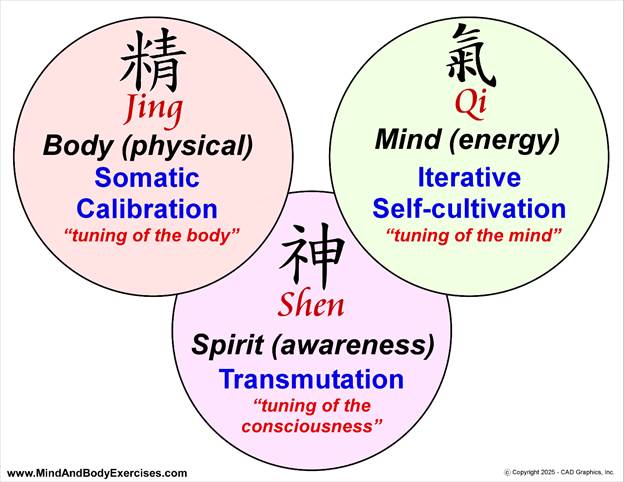
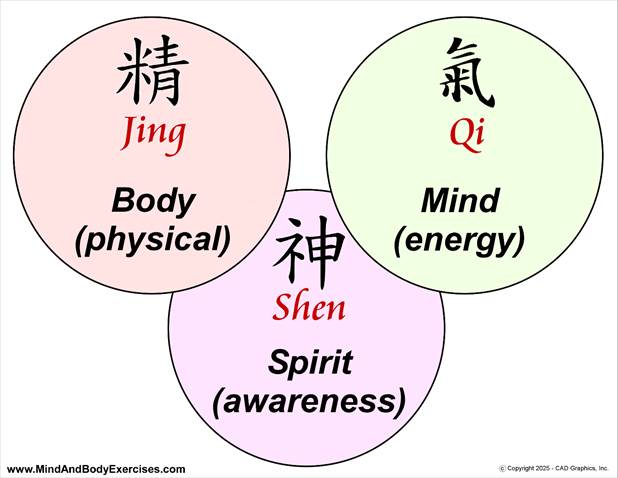
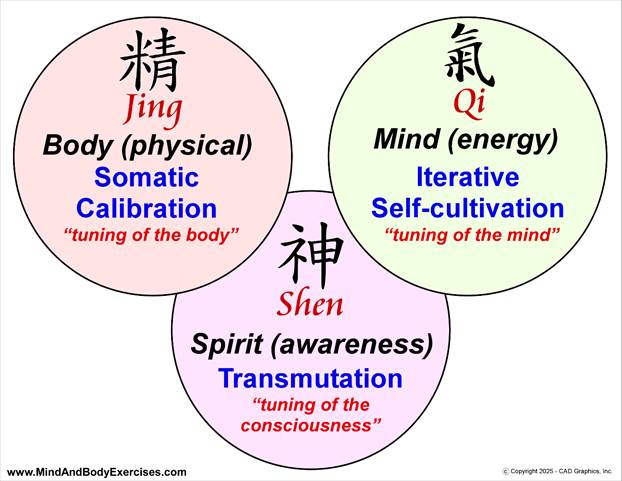
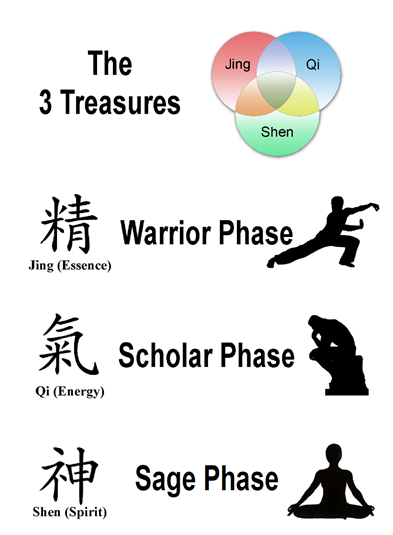
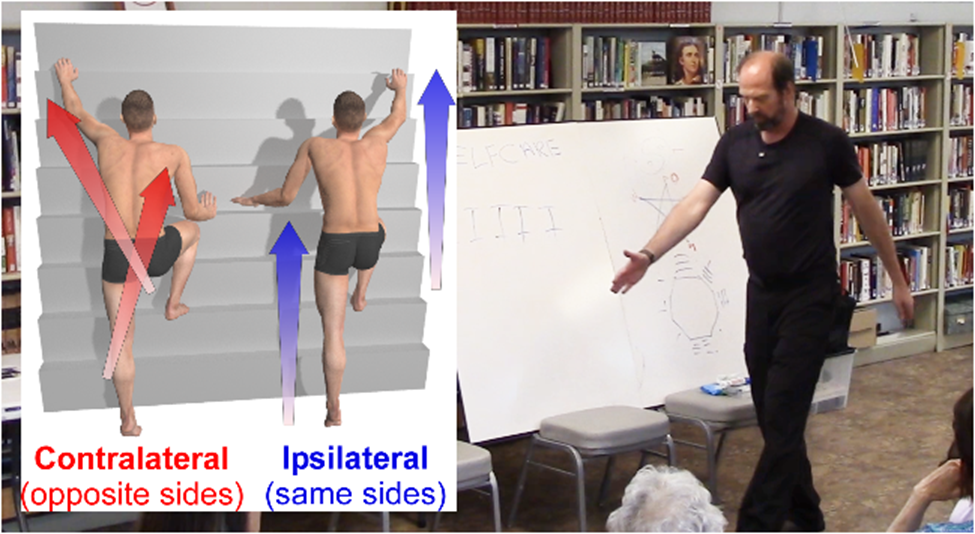
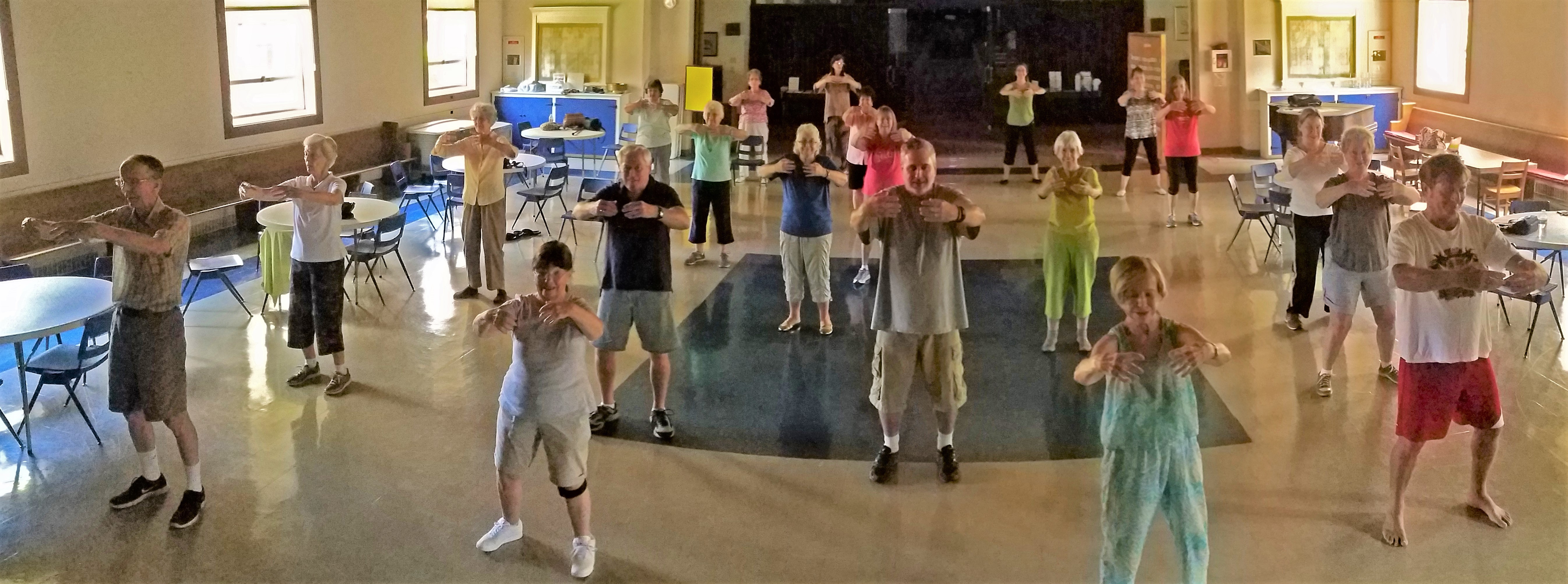
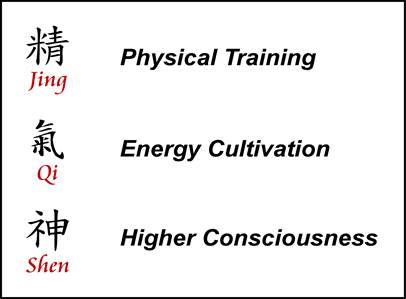
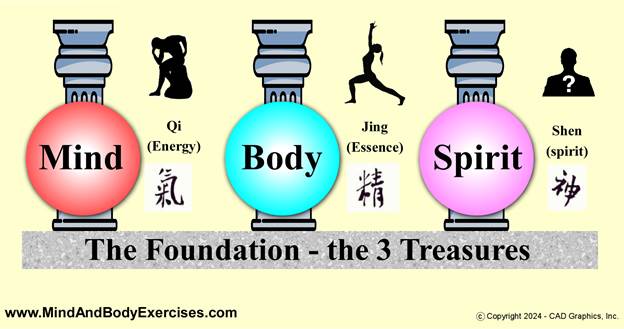
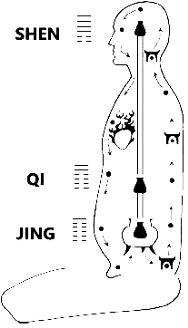
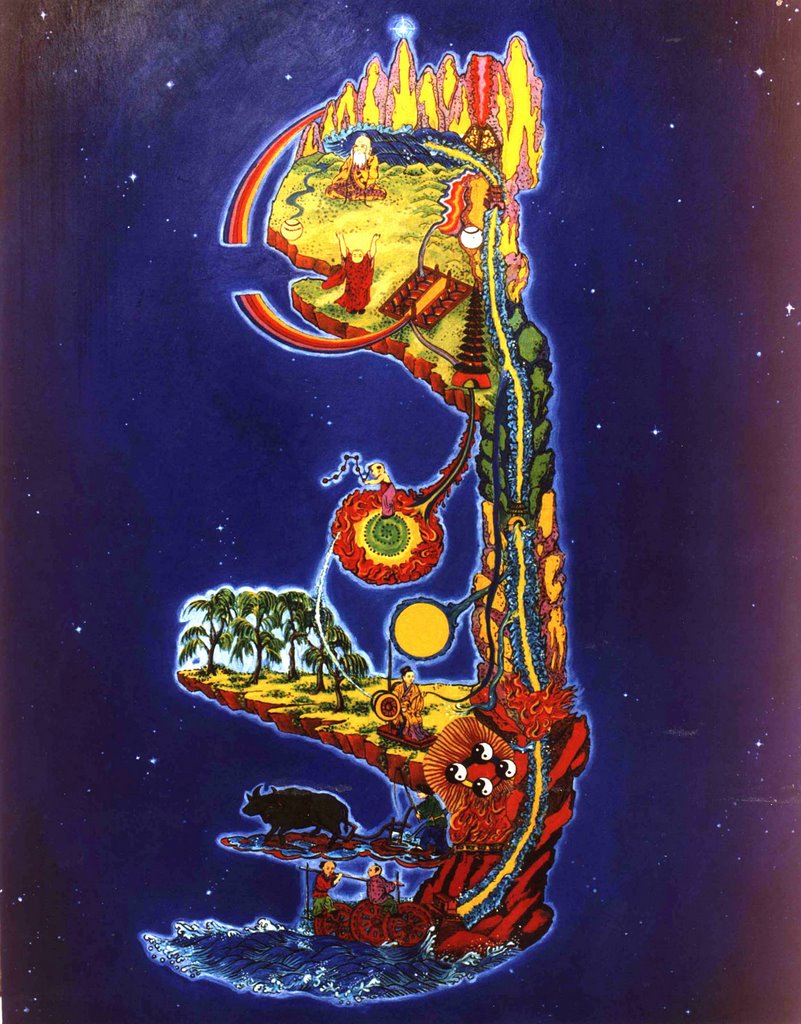
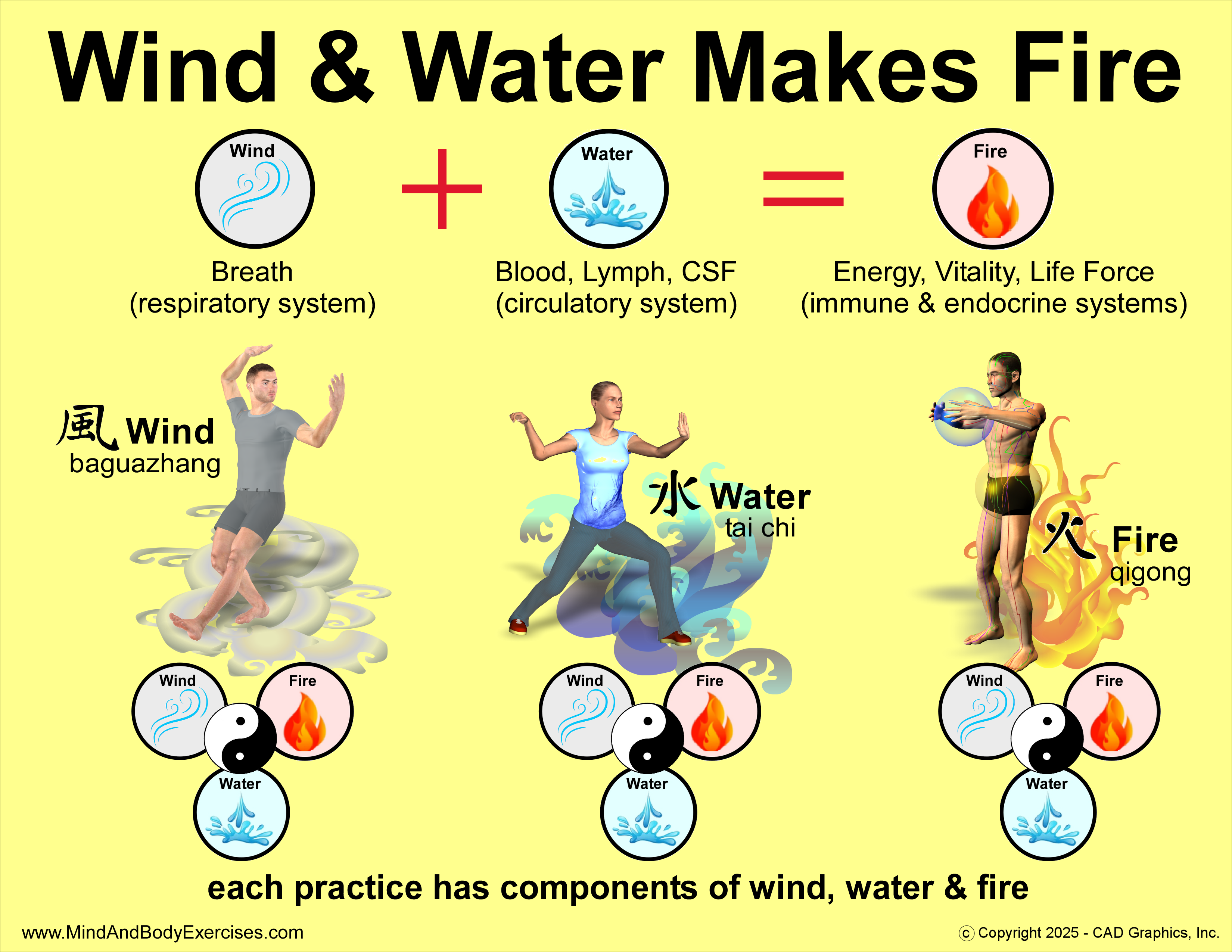
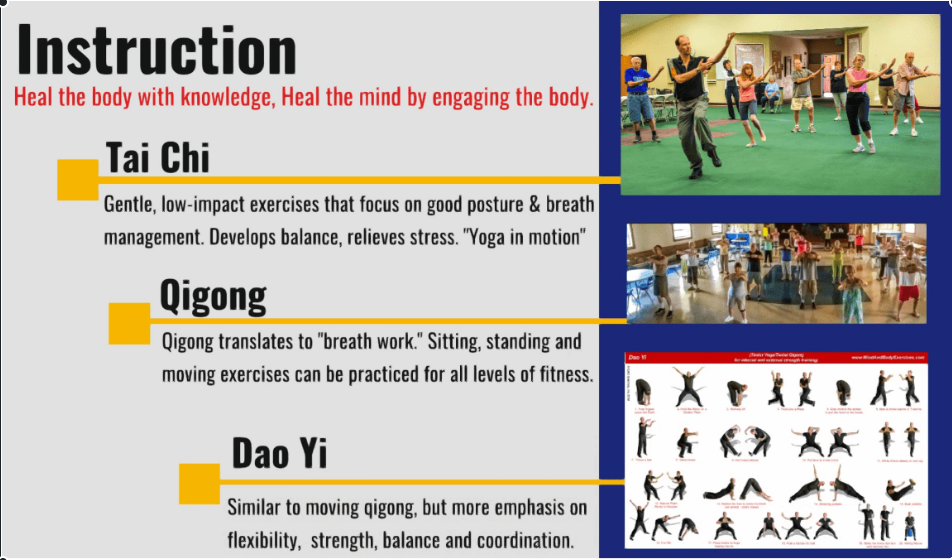
Phase 1 represents the foundational stage where the practitioner learns to attune their physical body, the Jing level, through heightened somatic awareness and physiological regulation. At this level, the focus is on:
Interoception: sensing internal signals such as breath, heartbeat, and muscular tension
Proprioception: detecting body position and micro-adjustments
Regulatory Responsiveness: adjusting posture, breathing, and alignment
Somatic calibration stabilizes the “base material” of the human system. In Taoist internal arts, this is the earliest refinement of Jing: raw essence becoming cleaner, clearer, and more governable.
Neuroscientifically, this phase strengthens communication between the insula (interoceptive awareness), anterior cingulate cortex (attention and motivation), and prefrontal cortex (regulation and decision-making). When these systems integrate, the practitioner becomes capable of sensing imbalances long before they erupt into dysfunction (Khalsa et al., 2018).
This phase is therefore concerned with:
Cultivating “felt sense”
Stabilizing the nervous system
Learning to “hear” the body
Establishing physical coherence
Without Phase 1, progression into deeper phases becomes imbalanced or potentially unsafe.
Once somatic clarity is established, the practitioner advances toward the mental-energetic domain, the Qi level. This phase introduces iterative practice and self-correction, forming the living engine of personal development.
Here, the operating principle is iteration:
Practice → feedback → correction → integration → renewed practice
Across martial arts, meditation, and qigong lineages, this cyclical refinement is recognized as gongfu (kung fu), not mere skill, but the cultivated discipline earned through dedicated repetition. Each iteration reshapes:
Motor pathways
Emotional patterns
Cognitive habits
Energetic circulation
Modern neuroscience parallels this with experience-dependent neuroplasticity or the gradual restructuring of brain networks for resilience, emotional regulation, and attentional stability (Davidson & McEwen, 2012).
Spiritually and philosophically, Phase 2 is where one begins forging de (virtue, cultivated inner power). The practitioner transitions from merely feeling the body to shaping the self.
At this stage, Qi becomes more coherent and directed. Mental habits are tuned, intentions sharpen, and discipline becomes embodied.
Phase 3 transitions from refinement into whole-system synthesis, corresponding to the Shen level, with awareness, meaning, and inner illumination.
Here the practitioner no longer simply adjusts the body (Phase 1) or trains the mind through iteration (Phase 2). Instead, they convert base tendencies into higher capacities. This includes:
fear → insight
pain → empathy
discipline → wisdom
adversity → meaning
This is the essence of transmutation in internal alchemy (neidan):
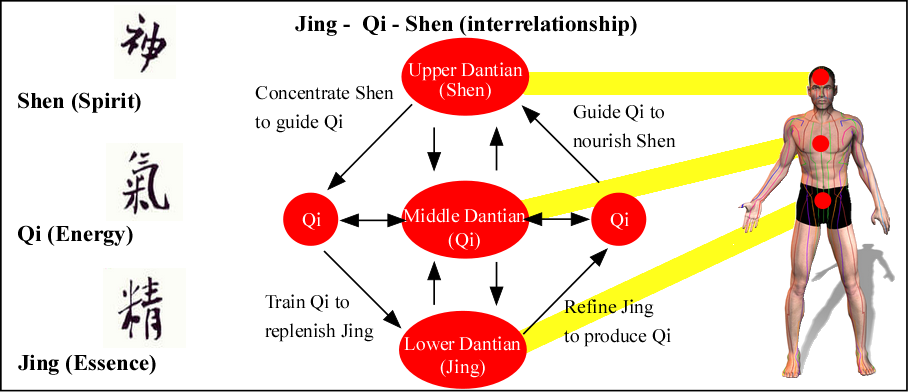
Jing → Qi → Shen → back to emptiness and clarity
Physiologically, this level parallels harmonization of endocrine rhythms, autonomic coherence, and emotional centers that once produced reactivity but now produce calm presence.
Psychologically, the practitioner embodies authenticity rather than performance. Their presence becomes stabilizing to others, as they can become “the light that guides.”
Phase 3 is where:
the body listens
the mind learns
consciousness reorients toward clarity
This is the Shen → illumination transformation.
Bring it all together – the Harmonization (Integration of Jing–Qi–Shen)
My diagrams and progression of images naturally imply a fourth phase, which is the integrative stage where Jing, Qi, and Shen no longer operate as separate domains but revolve in a recursive living spiral.
Here, the practitioner reaches a point where:
Somatic calibration is continuous and automatic
Iterative self-cultivation is self-initiating
Transmutation becomes a way of life
All three influence each other simultaneously
This is the phase where the circle completes itself yet continues upward, a spiral path rather than a linear one.
Maps each classical component into the three functional processes. This is Phase 2 and Phase 3.
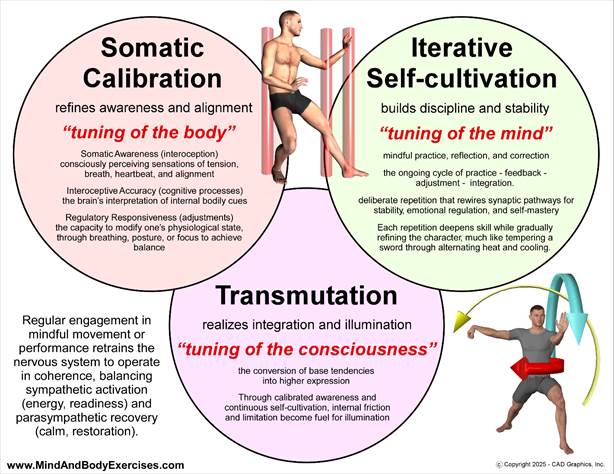
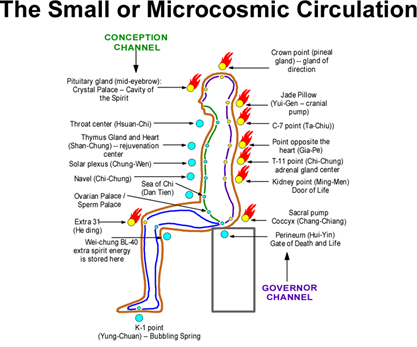
Stage 4 (Full elaborated diagram with figures):
Demonstrates the mature, embodied expression of all three components working in harmony. This represents Phase 4.
Integrated Summary
Phase 1—Somatic Calibration: tuning the body (Jing), establishing stability and awareness.
Phase 2—Iterative Self-cultivation: tuning the mind (Qi), cultivating discipline, neuroplasticity, and virtuous habits.
Phase 3—Transmutation: tuning the consciousness (Shen), converting tendencies into illumination.
Phase 4—Recursive Harmonization: integrating Jing–Qi–Shen into a coherent, unified mode of being.
Together these phases describe a complete developmental alchemical model bridging Taoist tradition, neuroscience, psychology, and embodied martial philosophy.
The phrase “distance between words, space between thoughts” invites contemplation of both communication and consciousness. It suggests that meaning and wisdom arise not merely from the words or thoughts themselves but from the intervals between them, in the pauses, silences, and moments of reflection that allow comprehension to deepen. Just as music depends on silence to shape melody, awareness depends on mental stillness to reveal insight.
Silence Within Speech
Philosophically, language is a double-edged instrument. It enables expression but also confines it. Ludwig Wittgenstein (2013) argued that the limits of our language are the limits of our world; yet within those limits, silence holds a special power, where it points to what words cannot capture. The distance between words represents this silent gap where meaning crystallizes. In conversation, it is the pause that allows listening; in poetry, it is the rhythm that gives emotion room to breathe.
In mindfulness traditions, similar emphasis is placed on the pause between breaths or thoughts. The Yoga Sutras of Patanjali describe mental control not as suppression but as recognition of the stillness between modifications of the mind (citta-vṛtti nirodha). This stillness parallels the spaces between words: both act as boundaries that define expression while inviting contemplation beyond it (Feuerstein, 1989).
The Space Between Thoughts
The space between thoughts is where consciousness reclaims its sovereignty. Neuroscientific studies on meditation suggest that when the brain transitions from active thinking to a resting state, networks associated with self-referential processing, such as the default mode network (DMN), quiet down and allowing awareness to expand beyond habitual mental chatter (Brewer et al., 2011). In this spacious awareness, thoughts can be observed rather than obeyed.
From a Taoist perspective, this reflects the concept of wu wei, or “effortless action” that arises from harmony with the natural flow of existence. When thought pauses, intuition and spontaneous wisdom emerge. Lao Tzu’s Tao Te Ching reminds us that “the usefulness of a pot lies in its emptiness” (Mitchell, 2006). The space is not absence but potential as it allows all forms to exist.
Communication, Presence, and Mindful Dialogue
Applied practically, the distance between words cultivates mindfulness in communication. Modern life is saturated with noise. Such as digital, emotional, and informational, leaving little room for genuine listening. Yet, when one learns to pause before responding, the conversation gains depth. Marshall Rosenberg (2015) emphasized that nonviolent communication begins with awareness of one’s inner state before speaking; silence becomes an ally rather than an awkward void.
Similarly, in contemplative psychology, the space between thoughts allows the practitioner to discern reaction from response. Viktor Frankl (1959) famously wrote, “Between stimulus and response there is a space. In that space lies our power to choose our response.” This power to pause, to inhabit the space between thoughts, grants freedom from reflexive conditioning and opens the door to wisdom.
The Aesthetic of Intervals
Artists, writers, and martial artists alike understand that mastery lies not in constant motion but in timing and the intervals that define rhythm and flow. In calligraphy, the beauty of each stroke depends on the proportion of blank space around it; in tai chi or qigong, the pauses between movements express the continuity of energy rather than its cessation (Shahar, (2008). In both language and life, pacing and silence create balance.
__________
Distancebetweenwordsspacebetweenthoughts
or
Distance Between Words, Space Between Thoughts
__________
The Presence Beyond Thought
Ultimately, distance between words and space between thoughts converge in the practice of presence. When we learn to honor the intervals, whether in speech, thought, or action, we align with a deeper rhythm of consciousness that underlies all form. The wisdom of silence is not emptiness but awareness itself. In those spaces, the mind becomes clear, the heart receptive, and communication authentic.
To live with awareness of the spaces between words, between breaths, between thoughts, is to step into the fullness of being. In that quiet expanse, truth is not spoken but known.
References:
Brewer, J. A., Worhunsky, P. D., Gray, J. R., Tang, Y.-Y., Weber, J., & Kober, H. (2011). Meditation experience is associated with differences in default mode network activity and connectivity. Proceedings of the National Academy of Sciences, 108(50), 20254–20259. https://doi.org/10.1073/pnas.1112029108
“It has always been now, it has always been you, you have always been here, the eternal consciousness momentarily residing in form.”
The Paradox of Presence
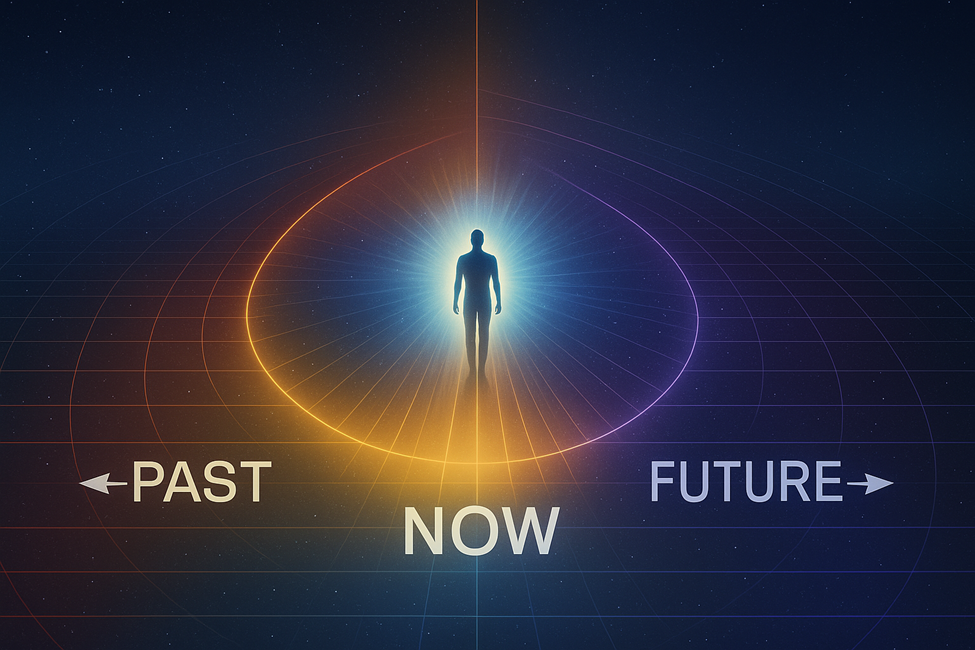
The statement above points to one of the most profound realizations of human existence, that time, identity, and consciousness are not separate phenomena but reflections of a single continuum of awareness. Philosophically, this view resonates with both Eastern metaphysics and Western phenomenology: that reality unfolds perpetually in the now, and that what we call “self” is consciousness temporarily clothed in matter. The phrase invites a dismantling of the illusion of separation between past and future, self and other, body and spirit. What remains when all temporal and spatial distinctions dissolve is pure presence where consciousness experiencing itself through form (Tolle, 1999; Advaita Vedānta, as cited in Deutsch, 1980).
The Illusion of Time and the Continuum of Now
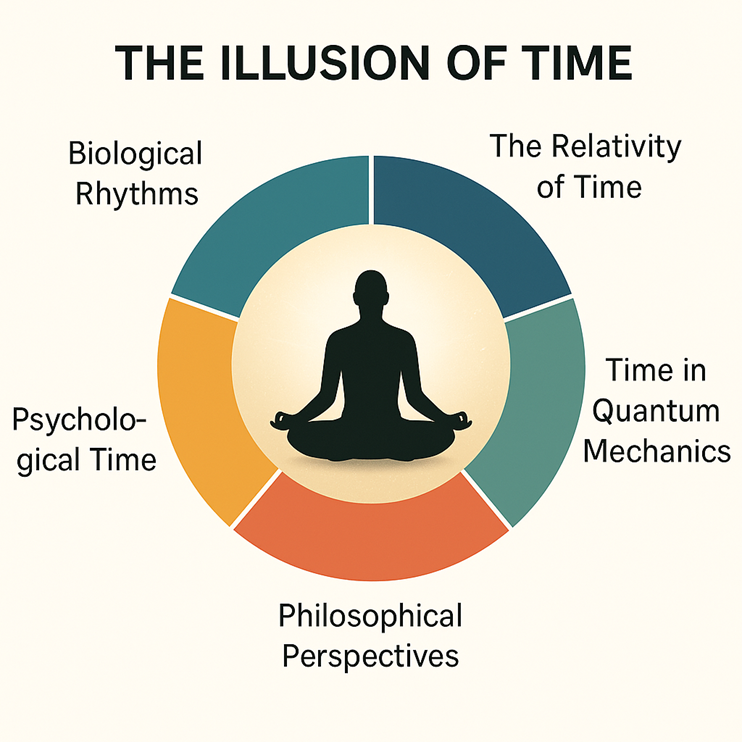
Human cognition evolved to perceive time linearly: a succession of moments divided into past, present, and future. Yet, physics and mysticism alike challenge this perception. Einstein (1955) remarked that the distinction between past, present, and future is a “stubbornly persistent illusion.” From a quantum or relativistic standpoint, all events exist simultaneously in a spacetime continuum. Similarly, Buddhist philosophy teaches that impermanence does not imply temporal fragmentation but the constant flux of a timeless now where each moment birthing the next without true separation (Nagarjuna, as translated in Garfield, 1995).
To say “it has always been now” is to step outside the psychological construct of time and into the living awareness that precedes it. In this state, “now” is not a fleeting instant but an eternal dimension as the background of all experience. Every thought, sensation, and memory arises within this unbroken field of presence. Awareness never departs; only the forms within it shift and fade like clouds across an unchanging sky.
The Self as Eternal Witness
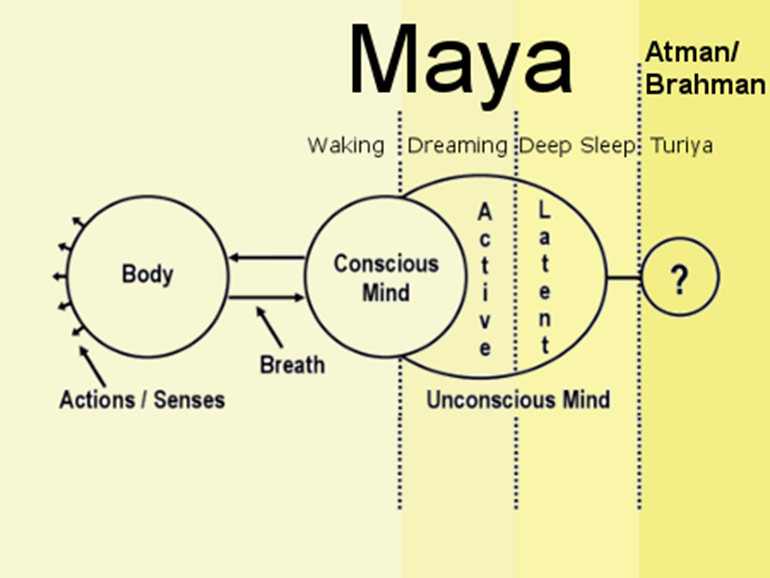
“It has always been you” is not a statement of personal identity but of essential consciousness where we are the observer behind all experiences. In Advaita and Taoist traditions, the self is not the personality but the awareness that perceives both body and mind. This is the “Atman” that is identical with “Brahman,” or the “original face before you were born,” as Zen expresses it (Suzuki, 1956). The conscious witness is silent, unbounded, and ever-present and is the same essence that animates all beings.
(Van Es, 2019)
In Western phenomenology, Husserl and later Sartre described consciousness as “intentionality”: a self-revealing light in which objects appear (Husserl, 1931). That same light is the “you” in the aphorism and not the egoic self but the perceiving essence. When the individual realizes this, the boundary between “me” and “world” dissolves, revealing that both are movements within the same consciousness. As Alan Watts (1966) observed, “You are an aperture through which the universe is looking at and exploring itself.”
The Eternal Return of Being
“You have always been here” expresses the nonlocal and non-temporal quality of consciousness. While the body appears and vanishes in linear time, awareness, as the ground of all perception and has no beginning or end. In Taoist cosmology, the Tao is “formless yet ever-generative,” present before the birth of heaven and earth (Lao Tzu, trans. Mitchell, 1988). Similarly, Christian mysticism speaks of the “Kingdom of Heaven within,” pointing toward an eternal reality accessible through direct awareness rather than belief.
From the standpoint of experiential practices such as meditation, qigong, or contemplative stillness, one discovers that consciousness is not in the body; rather, the body is in consciousness. This reversal reveals that the witness has never left the moment or the universe it perceives. The “here” of consciousness is not a coordinate but a state of being.
Form as Temporary Expression of the Infinite
The final phrase, “the eternal consciousness momentarily residing in form,” brings the insight full circle. It affirms embodiment without attachment in that awareness chooses, or perhaps naturally manifests, as form to know itself. Matter, from this view, is crystallized consciousness; each organism is a unique configuration through which the universal intelligence experiences itself. The Tao manifests as “the ten thousand things,” yet remains unchanged in essence.
From a scientific lens, the body is a temporary aggregation of atoms forged in stars, recycled endlessly through the cosmos. The same elements that compose the body once burned in ancient suns and will again form new worlds (Greene, 2004). To realize this is to understand that life and death are merely transitions in the ongoing dance of energy where consciousness momentarily taking shape to perceive its own reflection.
The Practice of Remembering the Eternal
Philosophical insight becomes transformation only through direct realization. Meditation, breathwork, and mindful presence are methods of reuniting awareness with its source. When the mind ceases its incessant narrative of past and future, one awakens to what has never moved or the now. This awakening does not erase individuality but illuminates it with depth and humility. To live from this awareness is to act without resistance, to see oneself as both participant and witness in the cosmic unfolding.
Conclusion: The Still Point of Being
“It has always been now, it has always been you, you have always been here” points to the truth that existence is not a journey toward some future awakening but the continuous revelation of what already is. Consciousness is eternal, form is transient, and the realization of this unity is liberation. In this recognition, all striving dissolves, not into nihilism, but into reverence. The eternal consciousness does not seek permanence in form; it celebrates the impermanence through which it comes to know itself.
To awaken to this is to stand still at the center of the ever-turning wheel of time and recognize: you were never elsewhere, and you have never been anyone else.
References:
Deutsch, E. (1980). Advaita Vedānta: A Philosophical Reconstruction. University of Hawaii Press.
“When the waters settle, the reflection is clear; when stirred, the light is scattered.” – Taoist proverb
The human mind can be likened to a Christmas snow globe. When resting in stillness, it is calm and transparent, revealing its contents clearly. When shaken, the glittering particles obscure the view until motion ceases and calm returns. In much the same way, the human mind loses clarity when it is agitated by thought, emotion, or distraction. Yet, when stillness is restored, insight becomes visible again.
This analogy is ancient in spirit though modern in form. Taoist, Buddhist, and contemplative traditions have long taught that the unsettled mind is filled with “ten thousand thoughts” and is like muddy water that cannot reflect the sky. When the water is left alone, sediment sinks and the surface becomes clear, mirroring reality without distortion. Neuroscience has since confirmed that mental agitation disrupts attentional networks and self-regulation, whereas calm awareness engages prefrontal regions that enhance clarity and emotional balance (Vago & Silbersweig, 2016).
Agitation, Clarity, and the Nature of Mind
Just as the snowflakes in a globe swirl when shaken, so do thoughts and emotions when the mind is disturbed by stress, fear, or overstimulation. The more one reacts, the longer the “flakes” take to settle. Mindfulness teacher Jillian Pransky (2023) uses this same metaphor to describe how meditation allows the inner “snow” to fall to rest and thus revealing stillness and depth beneath the surface.
In a similar vein, meditation research shows that repeated exposure to calm awareness enhances the brain’s ability to disengage from habitual thinking and recover from agitation (Fox et al., 2016). Thus, stillness is not passivity; it is active regulation, a physiological return to balance. This capacity for returning to center is what Tai Chi and Qigong practitioners seek to cultivate daily.
The Snow Globe and the Internal Arts
In Qigong and Tai Chi, movement arises from stillness and returns to it. Between each form lies a subtle pause or an internal settling. When agitation arises, practitioners are taught to “let the mind sink to the dantian,” mirroring how snow settles to the bottom of the globe. Breath slows, the nervous system calms, and the clarity of awareness expands.
Daoist classics such as the Qingjing Jing emphasize this principle: “If the mind is pure and still, all things will become clear of themselves” (Li, 1981). Stillness (jing) is not an absence of life but the foundation for transformation. Without it, internal energy (qi) becomes scattered, and consciousness (shen) clouded. With it, harmony between body, breath, and mind is restored, a concept echoed in modern psychophysiology as “parasympathetic dominance,” when calm awareness stabilizes physiological rhythms (Mayo Clinic, 2023).
From this lens, the snow globe becomes a teaching instrument:
The glass represents the body—transparent but containing.
The water symbolizes consciousness.
The flakes represent thoughts, memories, and emotions.
The base is the dantian—the center of gravity, both physical and spiritual. When the practitioner “shakes” with stress or emotion, the particles rise and obscure vision. When stillness returns, the scene or the true nature of mind becomes visible once again.
Table: Mind States vs. Snow-Globe States
Aspect
Snow Globe State
Mind State Equivalent
Practical Cultivation Method
Unsettled
Shaken; snow whirling chaotically
Agitated thoughts, anxiety, scattered focus
Pause; deep diaphragmatic breathing; grounding awareness in body
Settling
Flakes gradually fall
Thoughts subside; awareness re-centers
Gentle movement; slow Qigong; rhythmic breathing
Still
Water clear and unmoving
Calm mind; perceptual clarity; inner balance
Meditation; standing post; mindful observation
Re-agitated
Globe shaken again
Emotional disturbance or overstimulation
Recognize trigger; respond with patience and non-reactivity
Restored Clarity
Scene visible again
Insight, creativity, emotional regulation
Continued practice of calm-abiding (samatha) and mindful awareness
Embodied Awareness and the Settling of Qi
In Tai Chi, teachers often say, “Where the mind goes, qi follows.” When the mind is disturbed, the qi scatters; when the mind is calm, qi gathers. The settling of mental “snow” mirrors the condensation of energy within the body’s core. The nervous system reflects this change: heart rate variability improves, cortisol decreases, and attention stabilizes (Fox et al., 2016; Mayo Clinic, 2023).
This internal stillness is not a withdrawal from life, but rather it is refinement. It allows the practitioner to perceive without distortion and to respond without haste. It is what the Zen tradition calls mushin, “no-mind,” where thought does not vanish but becomes transparent and responsive rather than turbulent (Li, 1981). The snow globe thus offers a contemporary bridge between contemplative science and ancient practice, a visualization of how calm leads to wisdom.
Transmutation Through Stillness
The deeper message of this metaphor lies in transformation. When one repeatedly allows the snow to settle, a new pattern of being forms. Neural pathways shift; emotional reactivity decreases; intuition sharpens. In Taoist alchemy, this is nei dan or the refinement of essence (jing) into energy (qi), and energy into spirit (shen). What begins as calming the surface mind evolves into inner transmutation or the awakening of clarity that is no longer dependent on circumstance.
Therefore, to train the mind is not to eliminate its contents but to see through them, to let every swirl of snow reveal rather than obscure. Through stillness, awareness refracts light instead of scattering it. Through daily practice, one learns to set down the globe and simply watch the snow fall.
“The mind once still is capable of reflecting heaven and earth.” – Zhuangzi
References:
Fox, K. C. R., Dixon, M. L., Nijeboer, S., Girn, M., Lifshitz, M., Ellamil, M., Sedlmeier, P., & Christoff, K. (2016). Functional neuroanatomy of meditation: A review and meta-analysis of 78 functional neuroimaging investigations. arXiv preprint arXiv:1603.06342. https://arxiv.org/abs/1603.06342
Fox, K. C. R., Kang, Y., Lifshitz, M., & Christoff, K. (2016). Increasing cognitive-emotional flexibility with meditation and hypnosis: The cognitive neuroscience of de-automatization. arXiv preprint arXiv:1605.03553. https://arxiv.org/abs/1605.03553
Vago, D. R., & Zeidan, F. (2016). The brain on silent: mind wandering, mindful awareness, and states of mental tranquility. Annals of the New York Academy of Sciences, 1373(1), 96–113. https://doi.org/10.1111/nyas.13171
Nei Dan(nae gong, neigong) often translated as “Inner Alchemy,” is one of the most profound and esoteric branches of Daoist cultivation and traditional martial arts training. Unlike Wai Dan (or Wei Dan), or “external alchemy,” which historically referred to concocting elixirs from minerals and herbs, Nei Dan is an internal process of refining and transforming the body’s vital energies (jing, qi, and shen) into higher states of vitality, consciousness, and spiritual realization. This internal alchemical process forms the energetic and philosophical foundation of many advanced martial, meditative, and spiritual practices across Daoist, Chan Buddhist, and certain Confucian lineages.
Historical Origins and Evolution
Daoist Roots (circa 3rd–8th century CE): Nei Dan emerged from early Daoist cosmology and longevity practices (yangsheng), evolving alongside classical texts such as the Dao De Jing, Zhuangzi, and later the Cantong Qi, (The Seal of the Unity of the Three), often considered the foundational text of internal alchemy (Pregadio, 2019). Early Daoist alchemists saw the human body as a microcosm of the cosmos, mirroring the same dynamic interplay of yin and yang, five elements (wuxing), and celestial cycles. The goal was to harmonize and refine these internal forces to return the practitioner to their original, undifferentiated state (yuan jing, yuan qi, yuan shen).
Tang–Song Dynasty Expansion (7th–13th century): During the Tang and Song dynasties, Nei Dan was codified into systematic schools such as the Zhong-Lü and Nanzong lineages. These schools emphasized an internal “elixir” (neidan dan) formed through disciplined meditation, breath regulation, and energetic circulation, paralleling the external alchemical metaphor of refining base metals into gold. At this time, martial traditions, especially those influenced by Daoism and Chan Buddhism (e.g., Shaolin and Wudang), began incorporating these principles into their training as a means of enhancing internal power (nei jin), awareness, and longevity.
Integration into Martial Arts (Ming–Qing era onward): By the late imperial era, Nei Dan principles had become inseparable from Nei Jia Quan (“internal martial arts”) and most notably Taijiquan, Xingyiquan, and Baguazhang. These arts used the body as a vessel for alchemical transformation, with martial techniques functioning as vehicles for energetic refinement and spiritual cultivation. Masters such as Zhang Sanfeng (legendary founder of Taijiquan) and Dong Haichuan (founder of Baguazhang) are often described in Daoist alchemical terms, emphasizing internal stillness, energy transformation, and the unity of movement and spirit.
Core Principles and Goals of Nei Dan
At its essence, Nei Dan is a lifelong path of internal transformation. The traditional Daoist saying — “Refine jing into qi, refine qi into shen, refine shen and return to emptiness” outlines the three fundamental stages:
Refining Jing:
Jing refers to “essence” – the foundational life force associated with physical vitality, sexual energy, and genetic potential.
Practices in this stage focus on conserving and strengthening jing through lifestyle discipline, breath regulation, and daoyin exercises. This builds the “alchemical furnace” in the lower dantian, or the body’s energetic cauldron.
Transforming Qi:
Once jing is stabilized, it is “cooked” into qi, which is the vital energy that flows through the body’s meridians.
Breathwork (tu-na), microcosmic orbit circulation (xiao zhoutian), and standing post practices (zhan zhuang) are common methods. Martial expressions of this phase include issuing power (fa jin) and unifying breath with intent (yi qi heyi).
Refining Shen:
Shen, or “spirit,” is consciousness itself. At this level, practice aims at expanding awareness, cultivating emptiness (xu), and returning to the primordial source (dao).
Deep meditation, visualization, and contemplative stillness are central practices, often accompanied by subtle internal energetic processes described metaphorically as “the embryo of immortality” (shen ying).
Practices and Methods Involved
– Breath and Energy Regulation (Tiao Qi): Controlled breathing (tu-na) is fundamental, teaching practitioners to guide qi consciously through the meridians. The microcosmic orbit (circulating qi along the du and ren vessels) is one of the most well-known techniques.
– Posture and Structure (Tiao Shen): Postural alignment, rooted stance work (zhan zhuang), and slow, continuous movement (e.g., Taiji or daoyin) build the vessel for qi cultivation. Internal martial arts often hide alchemical work within physical movement.
– Mental Focus and Intention (Tiao Xin): Training the mind (yi) to direct energy (qi) is central. Practitioners cultivate stillness (jing), intention (yi), and awareness (shen ming), often through visualization of internal alchemical processes.
– Sexual Alchemy (Fangzhong Shu): Though often misrepresented, sexual alchemy is a legitimate component in many Nei Dan systems. It involves the conservation and refinement of sexual energy (jing), transforming it into spiritual power rather than expending it.
– Meditative and Cosmological Practices: Advanced practitioners engage in meditations synchronizing their internal rhythms with cosmic cycles (e.g., lunar, solar, and seasonal changes) reflecting the Daoist belief in harmonizing microcosm and macrocosm.
4. Nei Dan in Esoteric Martial Arts
In the context of esoteric martial arts, Nei Dan is not simply health practice, but rather it is a method of refining the warrior’s spirit. The martial applications go far beyond fighting techniques:
Enhanced Internal Power: Cultivation of nei jin allows practitioners to issue force with minimal muscular effort.
Heightened Awareness: Refining shen deepens perception, intuition, and responsiveness, essential traits in high-level combat.
Transformation of Self: Martial practice becomes a vehicle for self-mastery, transcending ego and aligning the individual with the Dao.
Some lineages, such as certain Wudang Daoist sects, Xingyi Nei Gong, or the “Eight Immortal Methods” of Baguazhang, embed Nei Dan principles so deeply that combat forms double as alchemical formulas, guiding practitioners through progressive energetic transformations.
5. Legacy and Contemporary Practice
Today, Nei Dan is studied worldwide, both as a martial discipline and a spiritual science. In modern qigong, taiji, and neigong schools, the terminology may vary — yet the underlying process remains unchanged: the transformation of the human being from a coarse, ordinary state to one of luminous awareness and harmonious unity with the Dao.
It is said in the Daoist classics:
“The elixir is not found in mountains or seas. It is found within one’s own body.”
This aphorism encapsulates the essence of Nei Dan: the human being is the laboratory, the mind is the alchemist, and the Dao is the final elixir.
Nei Dan – Three-Stage Map with Methods, Physiology/Energetics, Goals, and Applications
Stage / Term
Core Practice Methods
Physiological / Energetic Focus
Alchemical Goal / Transformation
Martial & Spiritual Applications
Zhújī / Lìdǐng – Laying the Foundation / Setting the Cauldron
“Leak-proof” vessel; clarity of intention; congruent life supports practice
Stable leadership presence; conflict de-escalation; trustworthy teacher-student field
Notes & mini-glossary (for manuscript margin or endnotes)
Sānbǎo: Jing–Qi–Shen — essence, energy, spirit.
Three Dantians: lower (vital/structural), middle (affective/relational), upper (cognitive/awareness).
Micro/Great orbits – conduction along Conception/Governing vessels (small), then through full channel network (great).
Huǒhòu: “Fire timing” — dosage, intensity, and pacing of practice.
Nèi jìn: Internal (elastic) power arising from whole-body integration and refined fascia/pressure dynamics.
Safety: Over-forcing breath, heat, or sexual practices can destabilize mood, sleep, or blood pressure; increase gradually, emphasize recovery.
References:
Despeux, C. (1990). Taoism and Self Cultivation: Transformation and Immortality. In L. Kohn & M. LaFargue (Eds.), Lao-tzu and the Tao-te-ching (pp. 39–52). SUNY Press.
Eskildsen, S. (2008). Daoist Body Cultivation: Traditional Models and Contemporary Practices – Edited by Livia Kohn. Religious Studies Review, 34(3), 230–231. https://doi.org/10.1111/j.1748-0922.2008.00306_4.x
Pregadio, F. (2019). The Seal of the Unity of the Three: A Study and Translation of the Cantong Qi, the Source of the Daoist Way of the Golden Elixir. Golden Elixir Press.
Robinet, I. (1993). Taoist Meditation: The Mao-shan Tradition of Great Purity. State University of New York Press.