The Six Levels of Internal Development in Internal Martial Arts

A Progressive Model of Integration

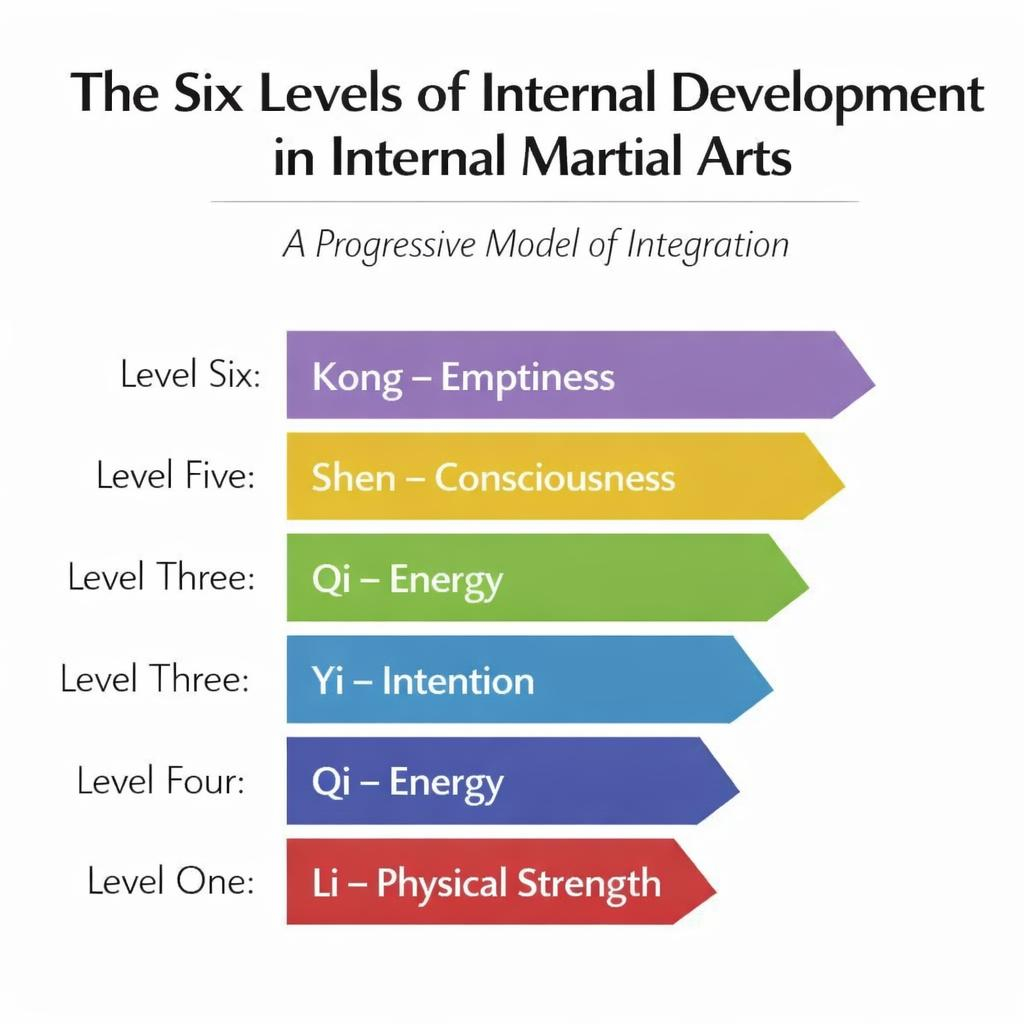
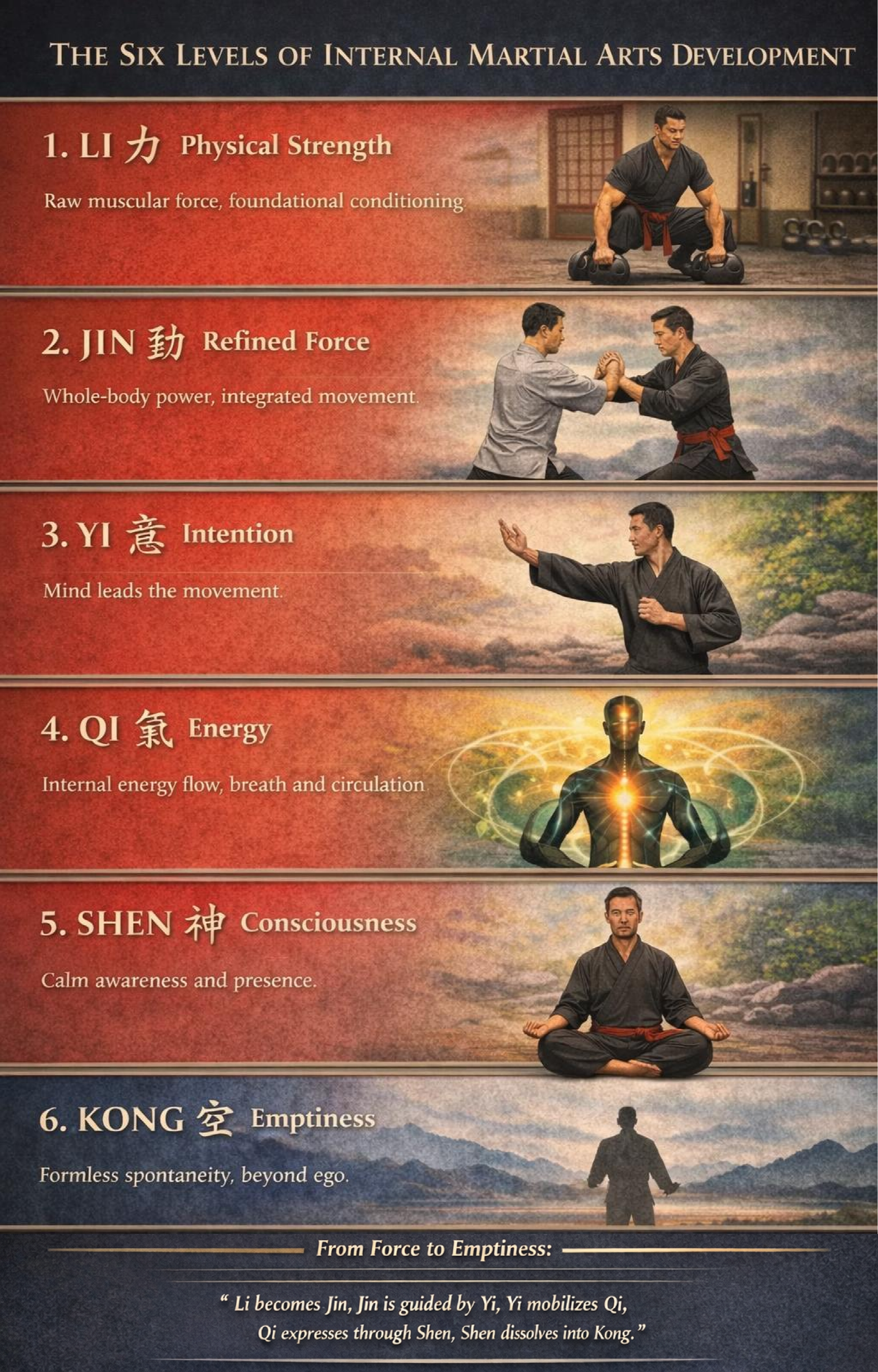
Level One: Li – Physical Strength

Level Two: Jin – Refined Force

Level Three: Yi – Intention

Level Four: Qi – Energy

Level Five: Shen – Consciousness

Level Six: Kong – Emptiness

The internal martial arts, commonly referred to as Neijia, represent a sophisticated system of human development that integrates body, mind, and consciousness through progressive refinement. The three most widely recognized internal martial arts are Hsing Yi, Tai Chi Chuan and BaguaZhang. Within these traditions, a frequently cited developmental model describes six interrelated levels: Li (力), Jin (勁), Yi (意), Qi (氣), Shen (神), and Kong (空). While not universally standardized across all lineages, this framework reflects a coherent synthesis of classical Chinese martial, medical, and philosophical thought (Yang, 1998; Chen, 2004; Kohn, 2008).

These levels are not discrete stages to be completed and abandoned, but rather nested layers of integration, each refining and reorganizing the preceding level. The progression reflects a shift from gross physical force toward subtle awareness and spontaneous action, paralleling Daoist internal alchemical models such as Jing–Qi–Shen–Xu (emptiness) (Kohn, 2008).

Level One: Li (力) – Physical Strength

Li refers to raw muscular strength and mechanical force, representing the most basic level of martial capacity. At this stage, movement is driven primarily by localized muscle contraction, often resulting in segmented and inefficient force production.

From a biomechanical perspective, Li relies heavily on voluntary muscular activation and leverage, with limited integration across the kinetic chain (McGinnis, 2013). While essential as a foundational attribute, Li is inherently limited. It is expendable, fatigue-prone, and easily countered by superior structure or timing.

Traditional training methods emphasize:

  • Static postures (e.g., horse stance, bo stance, twisted stance, etc.)
  • Repetitive conditioning drills
  • Strength and endurance development

Despite its limitations, Li provides the necessary structural and physiological base upon which higher levels are cultivated.

Level Two: Jin (勁) – Refined Force

Jin represents a qualitative transformation of force, from isolated muscular effort to integrated, whole-body power. It is often described as “trained strength” or “refined force,” characterized by efficient transmission of energy through aligned structure and connective tissues (Yang, 1998).

Biomechanically, Jin reflects:

  • Kinetic chain integration
  • Elastic recoil through fascia and tendons
  • Ground-reaction force transmission

This level corresponds with modern understandings of tensegrity and fascialconnectivity, where force is distributed across the entire body rather than generated locally (Myers, 2014).

Classical expressions of Jin include:

  • Peng (expansive, buoyant force)
  • Lu (yielding and redirecting)
  • Ji (pressing)
  • An (sinking)

The transition from Li to Jin marks a critical threshold in internal training: effort decreases while effectiveness increases.

Level Three: Yi (意) – Intention

Yi, often translated as intention or intentional awareness, serves as the directive principle that organizes movement and force. In classical texts, it is said that “Yi leads Qi, and Qi leads the body” (Yang, 1998).

At this level, movement becomes:

  • Less reliant on conscious muscular control
  • More guided by pre-reflective awareness
  • Increasingly efficient and anticipatory

Neuroscientifically, Yi may be understood as the integration of:

  • Motor planning (premotor cortex)
  • Attentional control networks
  • Sensorimotor prediction

This aligns with research demonstrating that intention and attention significantly influence motor coordination and performance efficiency (Wulf & Lewthwaite, 2016).

The practitioner begins to experience a shift from doing movement to allowing movement to be directed internally.

Level Four: Qi (氣) – Functional Energy

Qi is among the most debated concepts in both Eastern and Western discourse. Rather than interpreting Qi as a mystical substance, contemporary scholarship often frames it as a functional integration of physiological systems, including:

  • Breath and respiratory efficiency
  • Circulation and fluid dynamics
  • Neural signaling and proprioception
  • Fascial continuity

From this perspective, Qi represents the emergent coherence of the organism as a unified system (Chen, 2004; Jahnke, 2002).

Empirical studies on Qigong and Tai Chi suggest improvements in:

  • Cardiovascular regulation
  • Balance and coordination
  • Stress reduction and autonomic balance

These findings support the interpretation of Qi as system-wide functional optimization rather than an isolated energy entity (Wayne & Kaptchuk, 2008).

Level Five: Shen (神) – Consciousness and Presence

Shen refers to consciousness, awareness, and the quality of presence. In both Traditional Chinese Medicine and Daoist philosophy, Shen is associated with the clarity and stability of the mind (Kohn, 2008).

At this level:

  • Perception becomes refined and immediate
  • Emotional reactivity diminishes
  • Action arises from calm awareness rather than impulse

Shen is closely related to constructs studied in modern psychology, such as:

  • Mindfulness
  • Meta-awareness
  • Flow states

Research indicates that such states are associated with enhanced performance, reduced stress, and improved cognitive flexibility (Csikszentmihalyi, 1990; Tang et al., 2015).

In martial application, Shen manifests as timing, sensitivity, and effortless responsiveness.

Level Six: Kong (空) – Emptiness

Kong, often translated as emptiness, represents the culmination of internal development. Rooted in both Daoist and Buddhist philosophy, it does not imply nihilism, but rather freedom from attachment, rigidity, and fixed identity (Kohn, 2008).

At this level:

  • Action is spontaneous and uncontrived
  • There is no separation between intention and execution
  • The practitioner is no longer bound by technique or conceptual frameworks

This state parallels advanced descriptions of:

  • Non-dual awareness
  • Effortless action (wu wei)
  • Self-transcendent experience

From a performance standpoint, Kong reflects complete integration, where body, mind, and environment function as a unified field.

Integrative Perspective: From Force to Emptiness

The progression from Li to Kong reflects a continuum of refinement:

  • Li becomes organized into Jin
  • Jin is directed by Yi
  • Yi mobilizes Qi
  • Qi expresses through Shen
  • Shen dissolves into Kong

Importantly, advanced practitioners do not abandon earlier levels; rather, they embody all levels simultaneously, with each functioning in harmony.

This model closely parallels:

  • Daoist internal alchemy (Jing → Qi → Shen → Xu)
  • Psychophysiological integration models
  • Contemporary frameworks of embodied cognition

Implications for Training and Practice

A critical issue in modern practice is the misinterpretation or premature pursuit of higher levels. Many practitioners:

  • Remain at the level of Li while believing they are expressing Jin
  • Seek Qi experiences without structural integrity
  • Conceptualize Yi without embodied application

Effective training requires:

  1. Structural foundation (Li → Jin)
  2. Intentional refinement (Yi)
  3. Physiological integration (Qi)
  4. Conscious awareness (Shen)
  5. Letting go of fixation (Kong)

This progression underscores a central principle of internal arts:

True development is not the accumulation of techniques, but the refinement of the practitioner.

References

Chen, M. (2004). Chen style taijiquan: The source of taiji boxing. New World Press.

Csikszentmihalyi, M. (1990). Flow: the psychology of optimal experience. ResearchGate. https://www.researchgate.net/publication/224927532_Flow_The_Psychology_of_Optimal_Experience

Jahnke, R. (2002). The healing promise of Qi: Creating extraordinary wellness through Qigong and Tai Chi. McGraw-Hill.

Kohn, L. (2008). Chinese Healing Exercises: The Tradition of Daoyin. University of Hawai’i Press. http://www.jstor.org/stable/j.ctt6wqs77

McGinnis, P. M. (2013). Biomechanics of sport and exercise (3rd ed.). Human Kinetics. Biomechanics of Sport and Exercise (3rd Ed)

Myers, T. W. (2014). Anatomy trains: Myofascial meridians for manual and movement therapists (3rd ed.). Elsevier.

Tang, Y. Y., Hölzel, B. K., & Posner, M. I. (2015). The neuroscience of mindfulness meditation. Nature Reviews Neuroscience, 16(4), 213–225. https://doi.org/10.1038/nrn3916

Wayne, P. M., & Kaptchuk, T. J. (2008). Challenges inherent to t’ai chi research: part I–t’ai chi as a complex multicomponent intervention. Journal of alternative and complementary medicine (New York, N.Y.)14(1), 95–102. https://doi.org/10.1089/acm.2007.7170a

Wulf, G., & Lewthwaite, R. (2016). Optimizing performance through intrinsic motivation and attention for learning: The OPTIMAL theory of motor learning. Psychonomic Bulletin & Review, 23(5), 1382–1414. https://doi.org/10.3758/s13423-015-0999-9

Yang, J. M. (1998). The root of Chinese Qigong: Secrets of health, longevity, and enlightenment. YMAA Publication Center.

Energy Flow Within the Body

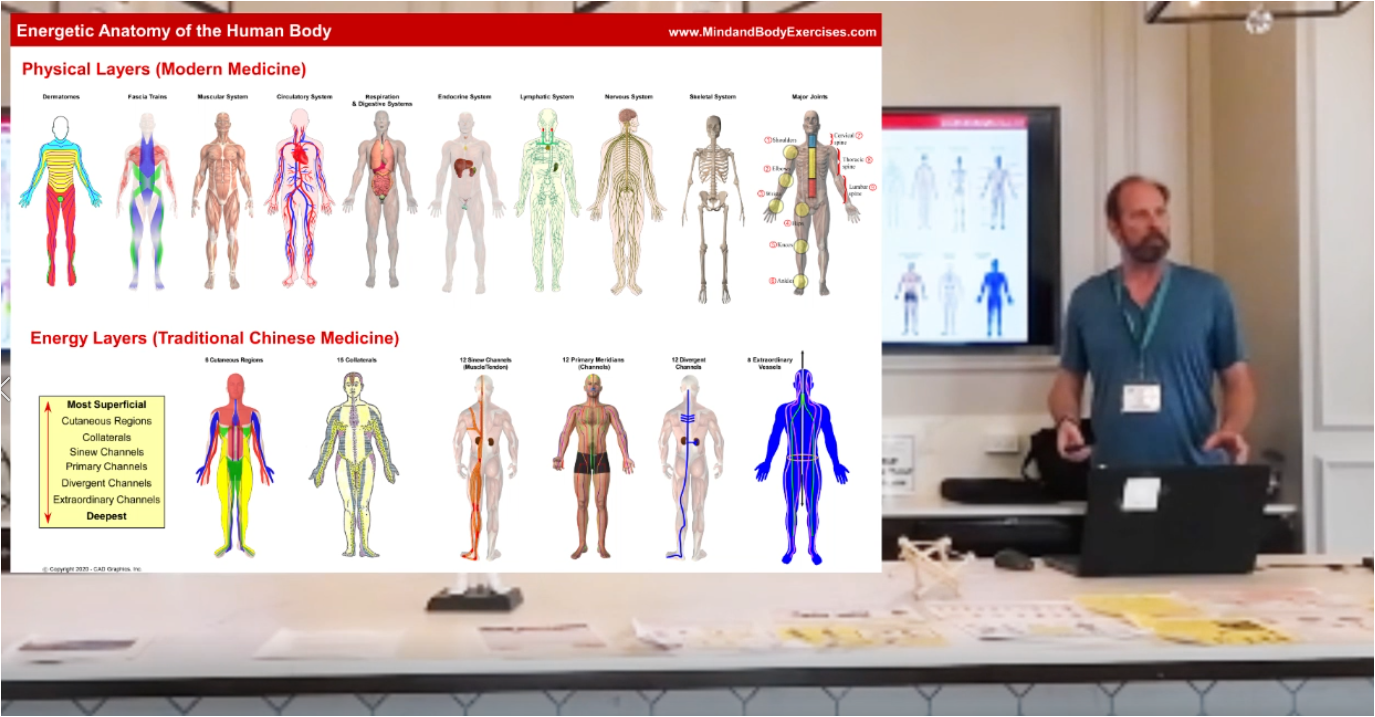
Energy Flow as Organ-to-Organ Transmission: Traditional Chinese Medicine (TCM) teaches that energy or “Qi” flows through the body in interconnected organ-to-organ patterns rather than simply circulating from the heart through the bloodstream. This insight reframes how we understand health and movement, emphasizing harmony and balance over mere exertion. This nuanced insight shifts the understanding of physical health from a single focal point to an interconnected system, encouraging movements designed to stimulate this flow comprehensively. This has profound implications for exercise design, rehabilitation, and even stress management, as it integrates bodily systems rather than isolating them.

Asymmetry Designed for Functionality: Unlike common exercise patterns that often emphasize symmetrical movement for balance, the asymmetrical nature of these movements mimics biological energy pathways and ensures each part of the body receives appropriate stimulation and energy transfer. This ergonomic approach enhances efficiency and may reduce the chance of injury or overuse affecting one side more than the other.

Breath Control and Relaxation Enable Deeper Energy Work: The synchronized breathing with physical movements, breathing in through the nose, out through the nose or mouth, and coordinating the tongue’s position, helps extend breath hold times, deepen relaxation, and conserve energy. The concept that tension reduces breath-holding capacity underscores the importance of mental calmness in physical performance and recovery, highlighting a mind-body connection often overlooked in Western fitness paradigms.

Joint Mobility and Energy Flow are Interlinked: The closing set’s focus on gently bending and releasing the major joints (shoulders, elbows, wrists, hips, knees, ankles) points to the joints as critical nodes for energy flow, not merely as mechanical hinges. This combined physical and energetic approach maintains joint flexibility and promotes a harmonious rhythm throughout the body, potentially preventing stiffness, spasms, and cramping after exercise.

Energy ‘Bank Account’ Metaphor Offers Sustainable Health Insight: By likening the body’s core energy center to a bank account, the practice teaches the value of replenishing energy rather than depleting it exclusively by movement. This metaphor aligns with modern concepts of energy management, self-care, and sustainability, emphasizing rest and recovery as essential for long-term health benefits, key for athletes, seniors, and anyone seeking balanced vitality.

Cultural Philosophy Enriches Physical Practice: The inclusion of the “Bagua,” concept of the figure 8 symbol, at the end of the session introduces a philosophical dimension, uniting physical movement with symbolic meaning. This connection elevates the practice beyond exercise, fostering a deeper sense of continuity, timelessness, and community among participants. It also implies that practice is not just a physical routine but a lifelong commitment to health and awareness.

Longevity and Community Consistency Demonstrate Effectiveness: The fact that this class has been ongoing since 1997 illustrates the adaptability and effectiveness of these principles, as well as the strong community bonds formed among practitioners. The longevity also suggests that such practices can be sustainable and valuable throughout the decades, accommodating newcomers while preserving foundational wisdom. This longevity is a testament to the alignment of tradition with evolving modern health needs.

The video discusses a holistic approach to energy flow in the body, rooted in traditional Chinese medicine and similar philosophies. Unlike typical Western exercise which focuses primarily on cardiovascular activity and the heart, the practice highlighted here emphasizes the flow of energy through a sequence of organs and body parts, following natural patterns rather than symmetrical movements. This method promotes balanced and harmonious movement of energy and blood circulation throughout the body, providing greater overall health benefits.

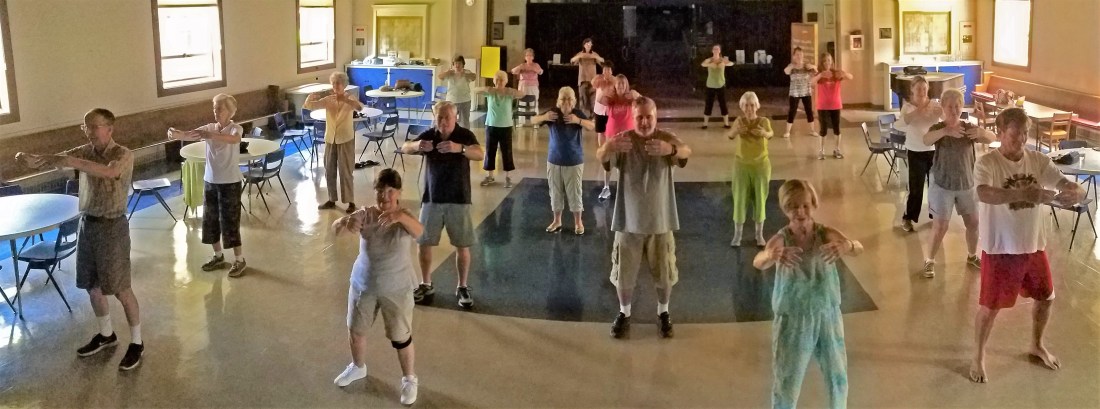
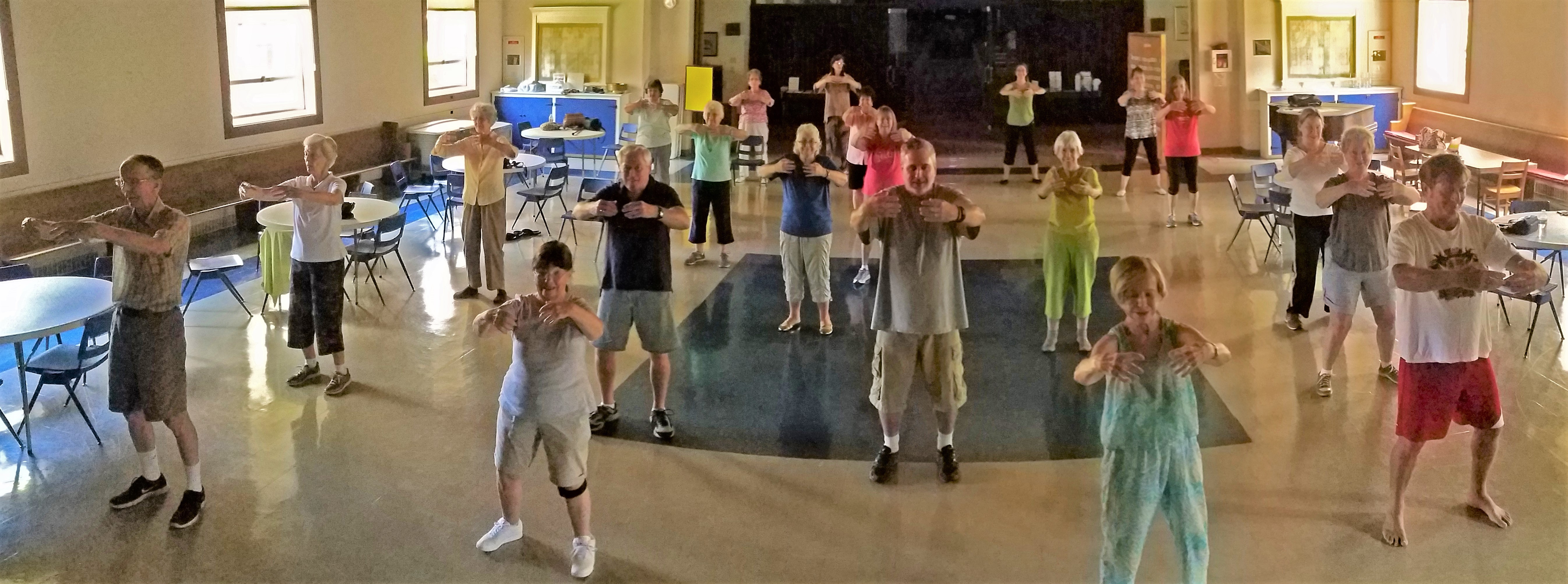
I guided participants through a closing set of movements designed to relax the major joints of the shoulders, elbows, wrists, hips, knees, ankles, while synchronizing breathing with mindful body awareness. This gradual cool-down process helps prevent muscle cramps and spasms common after mild or intense physical activity by gently bringing energy back to the body’s core “battery” or “bank account.” The collective movement and breath control encourage relaxation and prolonged breath holding through deliberate tension and release.

This holistic system blends ancient philosophy, breath work, energy theory, and joint mobility into one integrated practice. Rather than isolating fitness goals, it cultivates harmony between body and mind, reflecting the essence of Traditional Chinese Medicine: balanced energy, sustained vitality, and conscious movement.

Mount Kailash – A Sacred Symbol of Holistic Integration

Mount Kailash, located in the remote western region of the Tibetan Plateau, is not merely a geological marvel but a profound emblem of spiritual, mental, and physical integration. Revered across Hinduism, Buddhism, Jainism, and Bon, it stands as a living symbol of the interconnectedness that lies at the heart of holistic health. Rather than a site of conquest, it is a place of pilgrimage where the journey is inward, and the elevation sought is that of consciousness.

(File:Kailash Mansarover.jpg – Wikimedia Commons, 2006)

Spiritual Significance and Energetic Alignment

In Hindu philosophy, Mount Kailash is believed to be the dwelling place of Lord Shiva, the meditating ascetic who governs transformation and stillness. This vision mirrors a core tenet of holistic wellness, where there exists the need to cultivate inner awareness and transcendent consciousness. Shiva’s presence on the mountaintop symbolizes the crown chakra (sahasrara), representing union with the divine and the unfolding of higher consciousness (Johari, 2000).

Tibetan Buddhists identify the mountain as Kang Rinpoche, a manifestation of Mount Meru, or the cosmic axis believed to connect the heavens, earth, and underworld (Snellgrove, 1987). This symbolic vertical axis represents the human energetic spine in yogic practice and suggests that full alignment (both physical and spiritual) must occur from base to crown, a principle echoed in breathwork, qigong, and tai chi traditions.

In both spiritual and energetic models, Mount Kailash embodies balance and integration not only of body systems but of opposing forces: conscious and unconscious, effort and surrender, yin and yang.

The Kora: Pilgrimage as Mind-Body Practice

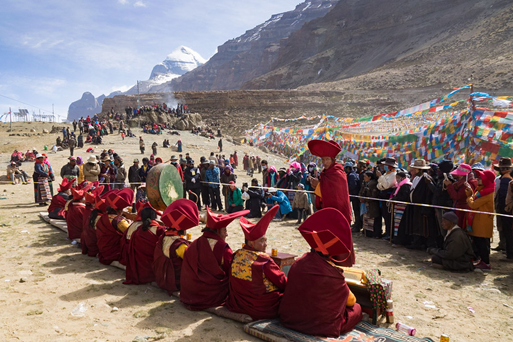
Pilgrims do not climb Mount Kailash. Instead, they perform a kora, which is a sacred circumambulation around the 52-kilometer base. This walking meditation reflects a form of dynamic mindfulness, an embodied spiritual practice that supports both mental clarity and physical endurance. It mirrors similar holistic practices such as walking meditation in Zen (Thich Nhat Hanh, 1991) and labyrinth walking in Western contemplative traditions.

One full kora is believed to absolve a lifetime of negative karma. Completing 108 cycles is said to lead to enlightenment. Regardless of belief system, this structured repetition and ritual movement demonstrate the psychophysiological benefits of contemplative physical exertion, a core aspect of holistic health (Bussing et al., 2012).

(Willaert, n.d.)

Psychosomatic Resonance and Symbolic Terrain

Mount Kailash’s position as the source of four major rivers (Indus, Sutlej, Brahmaputra, and Karnali) flowing in cardinal directions is symbolically rich. In traditional Chinese and Ayurvedic systems, water represents the flow of life force energy (qi or prana), and this geographical phenomenon reinforces Kailash’s status as a central energetic hub, a sacred “heart” of the world (Larre, de la Vallée, & Rochat de la Vallée, 1996).

The nearby lakes of Manasarovar (consciousness) and Rakshastal (unconscious or egoic forces) reflect archetypal and psychological dualities. Together, they offer a map of the inner self, where balance between light and shadow, awareness and instinct, becomes central to healing and integration (Jung, 1969).

Holistic Prohibition: Why Kailash Is Never Climbed

Unlike Everest, Kailash remains unclimbed by human feet, not due to physical danger but because of spiritual reverence. Ancient traditions prohibit accent, not as a denial of physical achievement, but as a call to humility, sacred restraint, and inner elevation. The modern holistic health movement increasingly acknowledges the power of respecting natural limits, recognizing that healing often arises not from forceful action but from honoring cycles, boundaries, and sacred stillness (Kabat-Zinn, 1990).

Myth, Energy, and Inner Ascent

Legends and esoteric traditions refer to Mount Kailash as a spiritual generator or vortex, a site of unexplained energetic phenomena. Though largely anecdotal, some studies of pilgrims’ experiences report states of heightened awareness, clarity, and emotional release, not unlike the effects of deep meditative states (Walach et al., 2005).

Holistically, Kailash becomes more than a destination. It is a mirror of the self, a metaphor for the inner path of transformation. The mountain teaches that healing, like the kora, requires movement around one’s core, integrating all aspects of being of mind, body, and spirit, until inner peace is restored.

Mount Kailash remains one of the Earth’s most revered sites, not because it has been conquered, but because it continues to conquer the ego. As a symbol of holistic integration, it reflects what modern wellness often seeks to rediscover: that true health is a sacred alignment, not just of body systems, but of the human spirit with the cosmos.

References:

Büssing, A., Michalsen, A., Khalsa, S. B. S., Telles, S., & Sherman, K. J. (2012). Effects of yoga on mental and physical health: A short summary of reviews. Evidence-Based Complementary and Alternative Medicine, 2012, 1–7. https://doi.org/10.1155/2012/165410

File:Kailash Mansarover.jpg – Wikimedia Commons. (2006, May 31). https://commons.wikimedia.org/wiki/File:Kailash_mansarover.jpg

Johari, H. (2000). Chakras: Energy centers of transformation. Destiny Books. https://archive.org/details/chakrasenergycen0000joha

Jung, C. G. (1969). Collected Works of C.G. Jung, Volume 9 (Part 1): Archetypes and the Collective Unconscious (G. ADLER & R. F. C. HULL, Eds.). Princeton University Press. http://www.jstor.org/stable/j.ctt5hhrnk

Kabat-Zinn, J. (1990). Full catastrophe living: Using the wisdom of your body and mind to face stress, pain, and illness. Delta. https://archive.org/details/fullcatastrophel00kaba

Larre, C., de la Vallée, E., & Rochat de la Vallée, E. (1996). The eight extraordinary meridians: Spirit of the vessels. Monkey Press.

Snellgrove, D. (1987). Indo-Tibetan Buddhism: Indian Buddhists and their Tibetan successors. Shambhala Publications. https://archive.org/details/indotibetanbuddh00snel/page/n7/mode/2up

Thich Nhat Hanh. (1991). Peace is every step: The path of mindfulness in everyday life. Bantam. https://archive.org/details/PeaceIsEveryStep-ThichNhatHanh

Walach, H., Buchheld, N., Buttenmüller, V., Kleinknecht, N., & Schmidt, S. (2005). Measuring mindfulness—The Freiburg Mindfulness Inventory (FMI). Personality and Individual Differences, 40(8), 1543–1555. https://doi.org/10.1016/j.paid.2005.11.025

Willaert, R. (n.d.). Mount Kailash – Saga Dawa Festival at Tarboche. Flickr. https://www.flickr.com/photos/rietje/19703962839

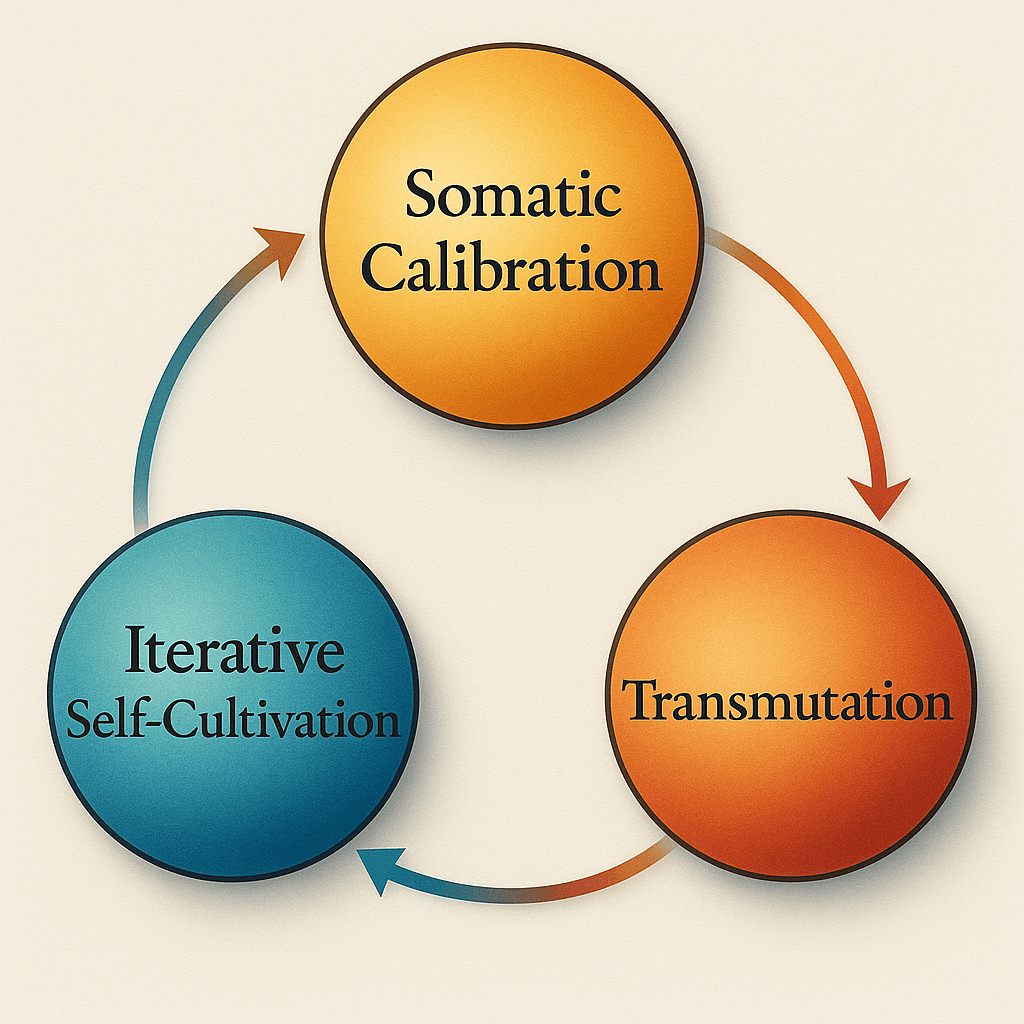
Somatic Calibration, Iterative Self-cultivation, and Transmutation

Somatic Calibration

Somatic calibration is the foundational process of aligning body awareness with inner regulation. It involves refining the nervous system’s perception of tension, balance, and breath so the individual can consciously adjust posture, movement, and energetic flow. Through repeated sensory feedback, such as the proprioceptive and interoceptive signals used in qigong, tai chi, or dao yin, the practitioner learns to listen to the body and respond with precision. This phase trains one’s sensitivity and coherence: the capacity to detect micro-imbalances before they manifest as dysfunction.

In neurophysiological terms, this process strengthens the communication between the insula, anterior cingulate cortex, and prefrontal regions, the areas responsible for awareness, regulation, and decision-making (Khalsa et al., 2018). In Taoist and martial frameworks, this is the stage of refining jing or the raw essence, by bringing unconscious patterns into conscious alignment.

Iterative Self-Cultivation

Once somatic awareness becomes stable, iterative self-cultivation begins. “Iterative” means cyclical—one polishes the self repeatedly through mindful practice, reflection, and correction. In martial and meditative traditions, this is the ongoing cycle of practice → feedback → adjustment → integration. Each repetition deepens skill while gradually refining the character, much like tempering a sword through alternating heat and cooling.

This process embodies the principle of gongfu (功夫), the disciplined accumulation of effort over time. As the practitioner works through layers of physical, emotional, and cognitive conditioning, they develop what Confucian and Daoist classics call de (virtue or cultivated power). Modern psychology parallels this with neuroplastic adaptation—deliberate repetition that rewires synaptic pathways for stability, emotional regulation, and self-mastery (Davidson & McEwen, 2012).

Transmutation

Transmutation represents the culmination of these iterative refinements, the conversion of base tendencies into higher expression. In Taoist alchemy (neidan), it is the transformation of jing → qi → shen—essence into energy into spirit. Through calibrated awareness and continuous self-cultivation, internal friction and limitation become fuel for illumination.

In practical terms, transmutation is both psychological and energetic. It’s the capacity to metabolize fear into courage, pain into empathy, or adversity into wisdom. Physiologically, such transformation parallels shifts in endocrine and autonomic balance, where once-stressful stimuli now trigger coherence rather than reactivity. Spiritually, it marks the emergence of authenticity and radiant presence, the “light that guides others.”

Interconnection of the Three

  • Somatic calibration refines awareness and alignment.
  • Iterative self-cultivation builds discipline and stability.
  • Transmutation realizes integration and illumination.

Together, they form a living spiral rather than a straight line: each turn of cultivation enhances sensitivity (calibration), which allows deeper refinement (iteration), which in turn fuels higher transformation (transmutation). The cycle never ends, but rather it simply ascends toward subtler planes of being.

References:

Davidson, R. J., & McEwen, B. S. (2012). Social influences on neuroplasticity: Stress and interventions to promote well-being. Nature Neuroscience, 15(5), 689–695. https://doi.org/10.1038/nn.3093

Khalsa, S. S., Rudrauf, D., Damasio, A. R., & Davidson, R. J. (2018). Interoceptive awareness and its relationship to anxiety, depression, and well-being. Philosophical Transactions of the Royal Society B, 373(1741), 20170163. https://doi.org/10.1098/rstb.2017.0163

Four-Phase Expansion of the Jing–Qi–Shen Developmental Model

Phase 1 — Foundational Awareness: Somatic Calibration (Jing)

Phase 1 represents the foundational stage where the practitioner learns to attune their physical body, the Jing level, through heightened somatic awareness and physiological regulation. At this level, the focus is on:

  • Interoception: sensing internal signals such as breath, heartbeat, and muscular tension
  • Proprioception: detecting body position and micro-adjustments
  • Regulatory Responsiveness: adjusting posture, breathing, and alignment

Somatic calibration stabilizes the “base material” of the human system. In Taoist internal arts, this is the earliest refinement of Jing: raw essence becoming cleaner, clearer, and more governable.

Neuroscientifically, this phase strengthens communication between the insula (interoceptive awareness), anterior cingulate cortex (attention and motivation), and prefrontal cortex (regulation and decision-making). When these systems integrate, the practitioner becomes capable of sensing imbalances long before they erupt into dysfunction (Khalsa et al., 2018).

This phase is therefore concerned with:

  • Cultivating “felt sense”
  • Stabilizing the nervous system
  • Learning to “hear” the body
  • Establishing physical coherence

Without Phase 1, progression into deeper phases becomes imbalanced or potentially unsafe.

Phase 2 — Cyclical Refinement: Iterative Self-cultivation (Qi)

Once somatic clarity is established, the practitioner advances toward the mental-energetic domain, the Qi level. This phase introduces iterative practice and self-correction, forming the living engine of personal development.

Here, the operating principle is iteration:

Across martial arts, meditation, and qigong lineages, this cyclical refinement is recognized as gongfu (kung fu), not mere skill, but the cultivated discipline earned through dedicated repetition. Each iteration reshapes:

  • Motor pathways
  • Emotional patterns
  • Cognitive habits
  • Energetic circulation

Modern neuroscience parallels this with experience-dependent neuroplasticity or the gradual restructuring of brain networks for resilience, emotional regulation, and attentional stability (Davidson & McEwen, 2012).

Spiritually and philosophically, Phase 2 is where one begins forging de (virtue, cultivated inner power). The practitioner transitions from merely feeling the body to shaping the self.

At this stage, Qi becomes more coherent and directed. Mental habits are tuned, intentions sharpen, and discipline becomes embodied.

Phase 3 — Synthetic Integration: Transmutation (Shen)

Phase 3 transitions from refinement into whole-system synthesis, corresponding to the Shen level, with awareness, meaning, and inner illumination.

Here the practitioner no longer simply adjusts the body (Phase 1) or trains the mind through iteration (Phase 2). Instead, they convert base tendencies into higher capacities. This includes:

  • fear → insight
  • pain → empathy
  • discipline → wisdom
  • adversity → meaning

This is the essence of transmutation in internal alchemy (neidan):

Physiologically, this level parallels harmonization of endocrine rhythms, autonomic coherence, and emotional centers that once produced reactivity but now produce calm presence.

Psychologically, the practitioner embodies authenticity rather than performance. Their presence becomes stabilizing to others, as they can become “the light that guides.”

Phase 3 is where:

  • the body listens
  • the mind learns
  • consciousness reorients toward clarity

Bring it all together – the Harmonization (Integration of Jing–Qi–Shen)

My diagrams and progression of images naturally imply a fourth phase, which is the integrative stage where Jing, Qi, and Shen no longer operate as separate domains but revolve in a recursive living spiral.

Here, the practitioner reaches a point where:

  • Somatic calibration is continuous and automatic
  • Iterative self-cultivation is self-initiating
  • Transmutation becomes a way of life
  • All three influence each other simultaneously

This is the phase where the circle completes itself yet continues upward, a spiral path rather than a linear one.

In this 4th Phase the practitioner embodies:

  1. Physical alignment (Jing)
    Effortless posture, efficient movement, regulated physiology.
  • Mental clarity and energetic coherence (Qi)
    Stable attention, balanced emotions, refined intentions.
  • Spiritual awareness (Shen)
    Insight, compassion, spaciousness, wisdom.
  • Harmonized integration
    The practitioner is no longer “performing techniques” as
    they have become the technique.

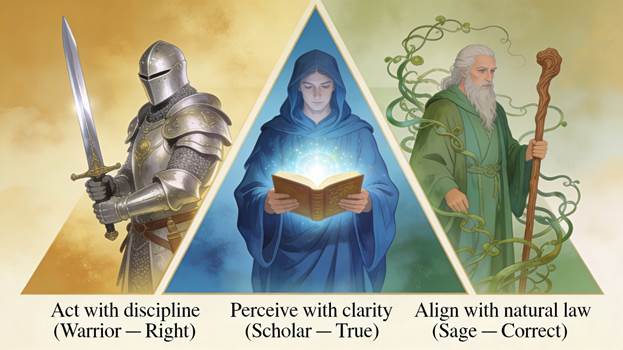
This is the lived outcome of the entire model of the Warrior, Scholar and Sage:

How the Four Phases Correspond to my Diagrams (Stages 1–4)

Stage 1 (Jing/Qi/Shen circles):

Introduces the classical triad, three aspects as separate yet related.


Stage 2 (Physiology/Psychology/Philosophy overlay):

Connects each classical aspect with modern disciplines.
This becomes the foundation of Phase 1.


Stage 3 (Somatic Calibration / Iterative Self-cultivation / Transmutation overlay):

Maps each classical component into the three functional processes.
This is Phase 2 and Phase 3.


Stage 4 (Full elaborated diagram with figures):

Demonstrates the mature, embodied expression of all three components working in harmony.
This represents Phase 4.


Integrated Summary

  • Phase 1—Somatic Calibration: tuning the body (Jing), establishing stability and awareness.
  • Phase 2—Iterative Self-cultivation: tuning the mind (Qi), cultivating discipline, neuroplasticity, and virtuous habits.
  • Phase 3—Transmutation: tuning the consciousness (Shen), converting tendencies into illumination.
  • Phase 4—Recursive Harmonization: integrating Jing–Qi–Shen into a coherent, unified mode of being.

Together these phases describe a complete developmental alchemical model bridging Taoist tradition, neuroscience, psychology, and embodied martial philosophy.