The Seven Energy Centers (Chakras)

The Seven Energy Centers (Chakras)

Chakra is a Sanskrit word that means “wheel.” Chakras and Dimensions are the same thing. Sometimes they will be referred to as the “Seven Dantians.” Coming from traditional Indian medicine, there exist 7 energy centers within the human body. These points are considered the focal points for the reception and transmission of energies. Some believe believe the chakras interact with the body’s ductless endocrine glands and lymphatic system by feeding in positive energies and disposing of unwanted negative energies. Each chakra in your spinal column is believed to influence or direct bodily functions near its region of the spine.

Chakras are energy systems associated with different parts of the body that relay information in the form of energy. It is believed that a chakra is a wheel of energy that spins around its own axis and can spin fast or slowly. These chakras are like spirals of energy, each one relating to the others. A chakra will spin in relation to the energy level of your system, thus understanding your chakras and keeping them in balance can help with all kinds of health and emotional problems.

You can think of chakras as invisible, rechargeable batteries.

Imagine a vertical power current like a fluorescent tube that runs up and down the spine, from the top of the head to the base of the spine. Think of this as your main source of energy. The seven major chakras are in the center of the body and are aligned with this vertical “power line.”

They regulate the flow of energy throughout the electrical network (Meridians) that runs through the physical body. The body’s electrical system resembles the wiring in a house. It allows electrical current to be sent to every part, and is ready for use when needed.

Sometimes chakras become blocked because of stress, emotional or physical problems. If the body’s “energy system” cannot flow freely it islikely that problems will occur. The consequence of irregular energy flow may result in physical illness and discomfort or a sense of being mentally and emotionally out of balance. Blocked energy in our Seven Chakras can often lead to illness so it’s important to understand what each Chakra represents and what we can do to keep this energy flowing freely.

The universe contains an infinite amount of dimensions of existence. There are seven that are part of the “human experience.” There are infinite dimensions above our “7th Dimension” and infinite dimensions below our “1st Dimension.” We can concern ourselves with seven, however it is important to understand that just as the universe keeps expanding, so do the dimensions. You could even say that there are “infinity + 1” dimensions. That statement points to the ever-expanding universe.

Heaven and Earth

Man literally stands in between heaven and earth. Heaven begins at your crown chakra – 1/infinity of an inch above your bahui point. Earth begins at the bottom of your foot (K1). If we look at the “energetic body” we just look at the head, midsection and torso. In other words everything but the arms and legs.

Reference:

Leone M., Campbell J., Moltzan J., (2019), Journey Around the Sun

______

My goal is to present an education that brings awareness to these time-proven methods. With an intent to de-mystify and simplify explanations, hopefully more people can come to realize that we are all accountable for our own well-being.

More video clips, books, posters & resources at:

http://www.mindandbodyexercises.com

https://mindandbodyexercises.wordpress.com

https://www.facebook.com/MindAndBodyExercises

For more info, contact Jim Moltzan at info@mindandbodyexercises.com, 407-234-0119 or through my site at http://www.mindandbodyexercises.com

Why Practice Meditation?

Why Practice Meditation?

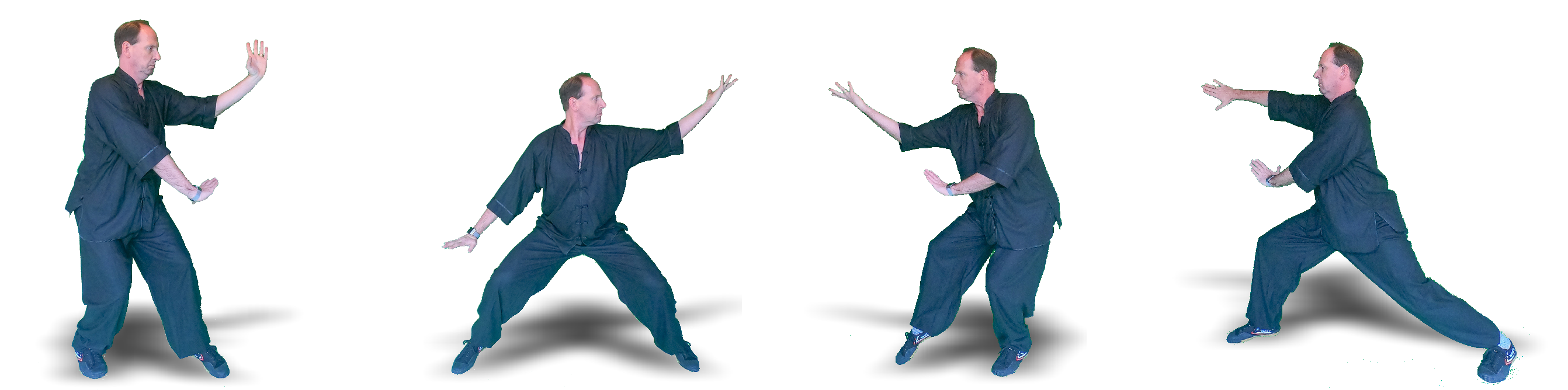
My definition of meditation is practices where an individual train their mind to achieve a mode of consciousness to realize benefits. Meditation does not necessarily need to be done in a lotus position nor, hours of sitting motionless. However, these are methods of meditation. So can walking, gardening, playing an instrument, drawing, painting, journraling, yoga, tai chi, qigong, archery, target shooting and many other methods can be used as meditative practices.

I may have had some second thoughts or skepticism when I first started to learn of meditation practices. However, I was 16 years old at the time and had very little life experience and not much wisdom at this point in my life. Eastern philosophy and meditation practices from martial arts, qigong, yoga and others were not widely accepted in the United States in the early 80’s and definitely not in Midwest suburbia of the Chicago area of Illinois. Martial arts schools at this time in the US were looked upon as being religious, cult-like, or at the very least a cultural-shock to my conservative upbringing.

When we are young, we can often be more influenced and possibly manipulated by others in order to see their viewpoints or beliefs in their personal agenda. I may have experienced some of these issues to some extent. However, in my case this turned out to not be a bad thing but rather a life-changing event that allowed me to gain benefits from meditation for decades forward.

Whatever reluctance I held at the time for these methods, soon diminished as I was able to see and feel the benefits of my training, while I saw my elders and peers’ health and well-being suffer from years of unregulated emotional stress and physical tension.

Meditation practices can offer so much in relation to cultivating the mind, body and spiritual harmony that many seek to achieve but really have no plan, method or goal as to where meditation can guide them to. I have been able to build and nurture (cultivate) a relationship with my mental thought process, my physical being and my spiritual awareness of something bigger and more profound than the mundane life we often possess and accept.

Meditation has offered me so much. Specifically, on the mental level I have been able to release mental stress and achieve consistent focus and clarity. On the physical level I have learned to be able to recognize and release muscular tension by slowing my breath rate, heart rate and blood pressure. On the spiritual level I have been able to enter into a deeper sense of self-awareness and realization that our life is a series of lessons to be learned to hopefully serve a greater purpose. We can go find religious or spiritual leaders to help guide us through this journey. Or we can venture inward and go direct to the source if this is where we choose to put our efforts. Meditation is not a replacement for one’s faith but rather a way to enhance and understand it. Meditation is a tool to be used for the benefit of the practitioner. Based upon these concepts, I feel that my meditation practices have much more to offer me in my next stages of life.

Be well, become healthier, be wiser.

________________

I write often about topics that affect our health and well-being. Additionally, I teach and offer lecture about qigong, tai chi, baguazhang, and yoga.

For more info, contact Jim Moltzan at info@mindandbodyexercises.com, 407-234-0119 or through my site at http://www.mindandbodyexercises.com
We Know What Needs to be Done

Choices – we almost always have choices. However, we usually don’t like the options.

– junk & fast food vs. healthy unprocessed foods

– elevators vs. stairs

– responsible alcohol consumption vs. drinking to become drunk

– smoking tobacco vs. never even starting

– drive vs. walk

– sit vs. stand

– lounge vs. exercise or activity

– smartphone vs. face-to-face interactions

– watching news or other disturbing info vs. turning it off

– becoming aggravated over things which we have no control vs. controlling what we actually can affect

We know these issues to be true, but many don’t have the will power (in the moment) or self-discipline (structured and consistent). Some people innately have self-discipline, while others need to learn and cultivate it. Control the body with the mind. Manage the mind by disciplining the body, through physical activity. Learn to be more active, eat healthier, sleep better, stress less – these are the key components to maintaining a strong mind, body, immune system, and outlook on life.

I am currently offering wellness lectures and classes for group, small group & private instruction in Wekiva, Longwood and Winter Park.

Mind and Body Exercises on Google: https://posts.gle/aD47Qo

Jim Moltzan

407-234-0119

www.MindAndBodyExercises.com

____________

I write often about topics that affect our health and well-being. Additionally, I teach and offer lecture about qigong, tai chi, baguazhang, and yoga.

For more info, contact Jim Moltzan at info@mindandbodyexercises.com, 407-234-0119 or through my site at http://www.mindandbodyexercises.com

Our Breath is the Link to the Mind-Body Connection

Our Breath is the Link to the Mind-Body Connection

Our mental, physical and spiritual health – all comes down to the quality of our breath. Most people see their breath as an involuntary physiological process that they have little or no control over. While it is the first thing our bodies do when we are born and the last action before our physical body dies, there is a whole life of breathing in between. Every emotion affects the breath, just as managing breaths can affect the emotions, yin and yang in all things. Every respiration affects the body chemistry with hormones that are regulated by the “fight or flight” (sympathetic nervous system) and “rest and digest” (parasympathetic nervous system) mechanisms. Spending too much time in one zone or the other affects the balance of the nervous system, which affects organ functions, affecting the quality of life. Life is all about the breath and quality of it.

“Breath-work” is the new buzzword for mindful management of the breathing mechanism. Actually, breath-work has been practiced for thousands of years in methods from Yoga as Pranayama and its branches of qigong, as practiced through Traditional Chinese Medicine, tai chi and other martial arts.

Yogis and Buddhist practitioners of pranayama have long understood that our breath is an especially appropriate object of focus for meditation. The usage of the breath over other possible options came about, presumably because respiration offers a readily available object to focus upon. Additionally, specific aspects of respiration can be observed as the breath adjusts in particular ways relative to emotions and attention (Wager & Cox, 2009). There are various types of Yogic breathing techniques of Pranayama, each offering differing benefits and goals. A few types would include long deep breathing, individual/alternating nostril breathing, and fast breathing.

With managed and regulated breathing practices (such as pranayama, qigong and others), there is evidence that these practices creates air oscillations which can increase nitric oxide (NO) through the rise in exchange of air between the nasal cavity and the paranasal sinuses. The paranasal sinuses can then produce larger amounts of nitric oxide which increase oxygen uptake. Nitric oxide aids in nonspecific host defense against infections stemming from bacteria, viruses, fungi, and parasites (Trivedi & Saboo, 2021). Nitric oxide was discovered in 1998 by Dr Robert F. Furchgott, Louis J. Ignarro and Ferid Murad for which they were awarded a Nobel prize. Nitric Oxide (NO) is a molecule that is produced in the nose naturally, as well as throughout the human body. NO has anti-inflammatory, antiviral, antibacterial effects. NO is a very strong vasodilator that causes blood vessels to dilate (widen) while also stimulating the certain hormones to be released, such as human growth hormone and insulin. Nitric oxide is also used as a pharmacological inhalant as well for various other ailments (India, 2020).

Our breath is the driving force of the spirit. People get caught up on the word “spirit” and often gravitate towards it being religious in its meaning. I understand (and teach) spirit as being ones self-awareness and further, the awareness that we are not our thoughts but rather the observer to our thoughts. Monitoring and observing our breath allows the individual into the window of their thoughts. Often people will say that they are mad, sad, happy or other emotional states. Really, they are none of these things but rather experiencing anger, sadness, happiness, etc. An example would be when we see something disturbing come about and we can take a few slow deep breaths and then consciously engage our thoughts to think, “NO I’m not going to engage in negative thoughts.” Maybe we change up the environment or conversation thereby making it upbeat and positive. We can consciously change are thought patterns.

The breathwork can be addressed on the physiology level too, to get the conversation away from the religious or metaphysical aspects of being spiritual. In this narrative we can understand that the monitoring and regulating of the breath affects the thoughts which can affect our emotions, which affects the autonomic nervous system and thereby adjusts the blood chemistry and internal organs and their functions, which circles back to affecting our moods and thoughts once again. So really spirit (or self-awareness) can come down to chemistry and how we can use it as a tool to reach our goals, whether of physical, mental or spiritually based.

References:

Wager, K., & Cox, S. (2009). Auricular Acupuncture and Addiction. Elsevier Gezondheidszorg.

Trivedi, G. Y., & Saboo, B. (2021). Bhramari Pranayama – A simple lifestyle intervention to reduce heart rate, enhance the lung function and immunity. Journal of Ayurveda and Integrative Medicine, 12(3), 562–564. https://doi-org.northernvermont.idm.oclc.org/10.1016/j.jaim.2021.07.004

India, D. T. (2020, October 29). Nitric Oxide- the Nobel prize winning molecule, can play . . . Dental Tribune India. https://in.dental-tribune.com/news/nitric-oxide-the-nobel-prize-winning-molecule-can-play-a-critical-role-in-the-covid-19-cure-2/

_______________

I write often about topics that affect our health and well-being. Additionally, I teach and offer lecture about qigong, tai chi, baguazhang, and yoga.

For more info, contact Jim Moltzan at info@mindandbodyexercises.com, 407-234-0119 or through my site at http://www.mindandbodyexercises.com

Chiropractic and Naturopathic Medicine – a basic summary

Chiropractic and Naturopathic Medicine – a basic summary

In 1895 Daniel David Palmer founded chiropractic healthcare based primarily on the importance of the physical structure of the human body and its effects on the vascular system. Also, chiropractic was to have emphasis on the manipulation of the spine due to subluxations or misalignments of the vertebrae (Micozzi, 2018). Chiropractors believe that the nervous system’s signals are transmitted through autonomic pathways to the muscles and internal organs. These signals can cause pain throughout the body and consequently should be able to reduce pain by way of spinal manipulation. Chiropractic draws upon other cultures’ ancient “bonesetting” techniques.The allopathic profession was also becoming stronger in the early 1900’s in establishing a monopoly on medical training and licensure. Allopathic practitioners and the American Medical Association began to forcefully oppose the new chiropractic professions well into the 2nd half of the 20th century (Micozzi, 2018). Chiropractic practitioners’ focus has been mostly to treat neuromusculoskeletal issues, including but not limited to pain in the back, neck, and in the joints of the arms or legs. The main philosophies of using drug free methods of manipulation as a means to promote whole body healing has not changed for chiropractors.

The naturopathy healthcare modality formed in the United States around the early 1900’s, with emphasis on disease prevention and treatment by way of pursuing a healthy lifestyle with the body’s own innate healing abilities. Naturopathic medicine seeks to diagnosis and treat the root cause of the patient as a whole being, rather than treating the pieces and parts of the person (Millstone, 2019).

Naturopathic doctors may use a variety of therapy methods such as:

  • Management of diet through nutritional supplements and medicinal herbs
  • Acupuncture
  • Physical therapies (heat or cold therapy, ultrasonography, and massage)
  • Hydrotherapy (warm-water or cold-water applications)
  • Mind-body therapies
  • Exercise therapy (Millstone, 2019)

Naturopathy also follows a Natural Order of Appropriate Therapeutic Intervention, where:

 1. Reestablish the basis for health:

  • Remove obstacles to healing.
  • Establish a healthy environment.
  • Address inborn susceptibility.

 2. Stimulate the healing power of nature.

 3. Tonify and nourish weakened systems.

 4. Correct deficiencies in structural integrity.

 5. Prescribe specific substances and modalities for specific conditions and biochemical pathways (e.g., botanicals, nutrients, acupuncture, homeopathy, hydrotherapy, counseling).

 6. Prescribe pharmaceutical substances.

 7. Use radiation, chemotherapy, and surgery (Micozzi, 2018).

Be well!

References:

Micozzi, M. S. (2018). Fundamentals of complementary and alternative medicine (6th ed.). Philadelphia: Saunders.

https://www.hoosiernaturopath.org/blog/taking-steps-two-at-a-time

Diamond, W. John. The Clinical Practice of Complementary, Alternative, and Western Medicine. CRC Press, 2001

Millstine By Denise Millstine, Denise. “Naturopathy – Special Subjects.” Merck Manuals Consumer Version, Merck Manuals, Feb. 2019, www.merckmanuals.com/home/special-subjects/integrative-complementary-and-alternative-medicine/naturopathy.

________________

I write often about topics that affect our health and well-being. Additionally, I teach and offer lecture about qigong, tai chi, baguazhang, and yoga.

For more info, contact Jim Moltzan at info@mindandbodyexercises.com, 407-234-0119 or through my site at http://www.mindandbodyexercises.com

If you are looking for a reputable chiropractor, contact https://www.holisticwellnessnow.com/