
Through my exploration of the neuroscience of dopamine, I’ve come to appreciate its profound role in our emotional lives. Dopamine is far more than a “pleasure molecule”; it is essential for motivation, movement, and maintaining the delicate balance between pleasure and pain in the brain (Volkow & Morales, 2015). Understanding this balance has helped me see why addiction and mood disorders are so difficult to overcome.
One key insight is that our experience of pleasure or pain depends on fluctuations from a baseline level of dopamine, rather than absolute levels themselves. Chronic overstimulation, whether from substances, gambling, or social media, lowers this baseline over time, creating a dopamine-deficit state that can manifest as depression, anxiety, or compulsive behaviors (Koob & Le Moal, 2008; Grace, 2000).
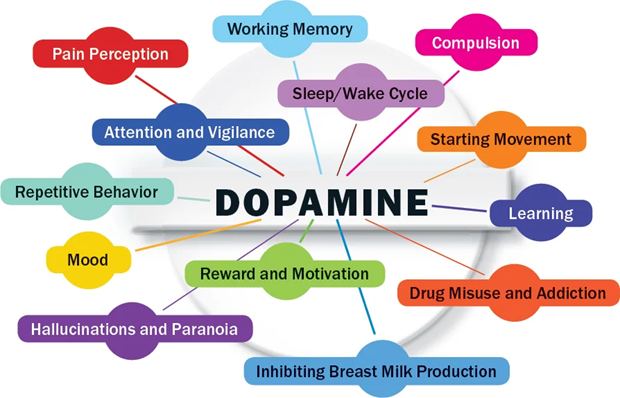
The “pleasure-pain balance” in the brain acts like a seesaw: when dopamine surges from a pleasurable experience, the brain compensates by tilting toward pain to maintain homeostasis (Lembke, 2021). This explains why repeated highs can paradoxically lead to emotional lows, trapping people in cycles of craving and withdrawal.
It’s also clear to me that individual differences, including genetics, temperament, and life experiences, can play a powerful role in addiction vulnerability. For example, impulsiveness, a trait that may have been beneficial for survival in ancient environments, becomes a liability in today’s world of constant sensory stimulation, increasing the risk of addiction (Bickel et al., 2006).
Recognizing the value of a “dopamine reset,” I see the clinical wisdom in recommending about 30 days of abstinence from addictive substances or behaviors. This period allows dopamine receptor sensitivity and transmission to recover, helping restore emotional balance and reduce cravings. The first two weeks are typically the most challenging, but pushing through this phase can reset dopamine pathways and improve mood (Lembke, 2021).
Another powerful realization is that truth-telling can be a therapeutic tool. Honesty engages the prefrontal cortex, the part of the brain responsible for self-control and planning, helping to regulate the limbic system’s reward circuits and reducing the risk of relapse (Goldstein & Volkow, 2011). Even small daily acts of honesty can strengthen these neural pathways.
In addition, the emerging use of psychedelic-assisted therapy with substances like MDMA or psilocybin shows promise for treating addiction, but it is not a one-size-fits-all solution. These treatments must be approached cautiously and conducted in clinical settings with appropriate oversight to ensure safety and efficacy (Carhart-Harris & Goodwin, 2017).
Finally, I’ve come to view social media as a potent dopamine stimulator engineered to exploit the brain’s reward system in ways strikingly similar to addictive drugs. Excessive use can fragment attention, lower baseline dopamine, and erode real-life social connections. Intentional boundaries are crucial to prevent compulsive patterns and protect mental health in our increasingly digital world (Montag et al., 2019).
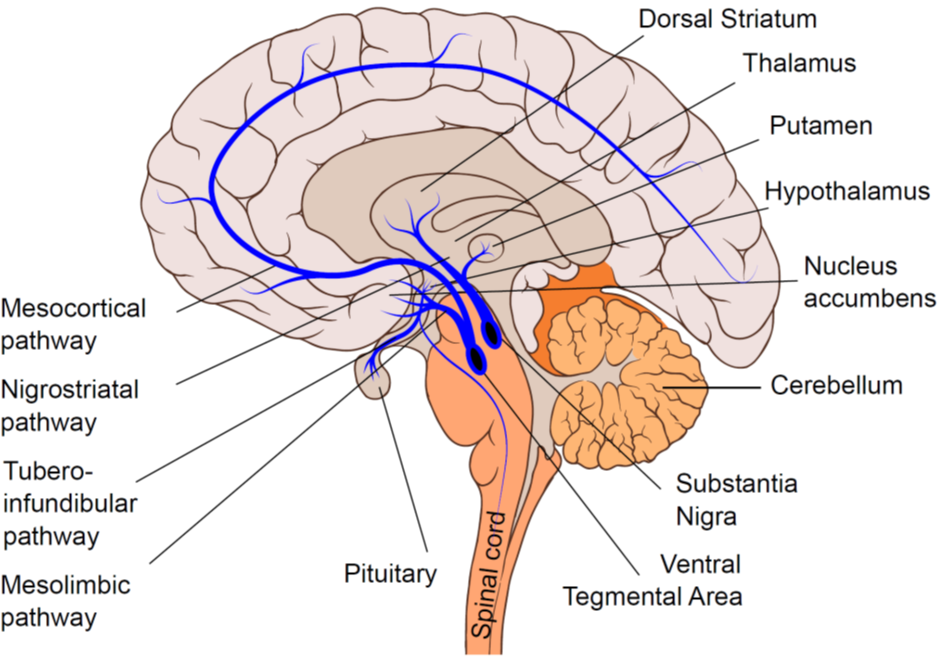
Key Takeaways
- Dopamine is critical for motivation, movement, and pleasure; dysfunction disrupts mood and drive (Palmiter, 2008).
- The brain’s pleasure-pain balance means each dopamine high is followed by a compensatory low, explaining emotional crashes after overstimulation (Lembke, 2021).
- A “30-day dopamine reset” can restore healthy dopamine signaling and emotional stability (Lembke, 2021).
- Truth-telling engages prefrontal circuits, strengthening self-regulation and supporting recovery (Goldstein & Volkow, 2011).
- Psychedelic-assisted therapy shows promise but must be approached carefully with professional supervision (Carhart-Harris & Goodwin, 2017).
- Social media exploits dopamine systems, requiring intentional boundaries to protect focus and well-being (Montag et al., 2019).
Conclusion
Reflecting on the neuroscience of dopamine has deepened my understanding of how pleasure and pain are intimately linked in the brain. Recognizing the risks of chronic overstimulation and the power of tools like dopamine resets, radical honesty, and mindful technology use provides a path forward in maintaining emotional health and resilience. These insights offer practical ways to navigate today’s dopamine-saturated world with greater awareness and balance.
References
Bickel, W. K., Miller, M. L., Yi, R., Kowal, B. P., Lindquist, D. M., & Pitcock, J. A. (2006). Behavioral and neuroeconomics of drug addiction: Competing neural systems and temporal discounting processes. Drug and Alcohol Dependence, 90, S85–S91. https://doi.org/10.1016/j.drugalcdep.2006.09.016
Carhart-Harris, R. L., & Goodwin, G. M. (2017). The therapeutic potential of psychedelic drugs: Past, present, and future. Neuropsychopharmacology, 42(11), 2105–2113. https://doi.org/10.1038/npp.2017.84
Goldstein, R. Z., & Volkow, N. D. (2011). Dysfunction of the prefrontal cortex in addiction: Neuroimaging findings and clinical implications. Nature Reviews Neuroscience, 12(11), 652–669. https://doi.org/10.1038/nrn3119
Grace, A. (2000). Gating of information flow within the limbic system and the pathophysiology of schizophrenia. Brain Research Reviews, 31(2–3), 330–341. https://doi.org/10.1016/s0165-0173(99)00049-1
Koob, G. F., & Le Moal, M. (2008). Addiction and the brain antireward system. Annual Review of Psychology, 59, 29–53. https://doi.org/10.1146/annurev.psych.59.103006.093548
Lembke, A. (2021). Dopamine nation: Finding balance in the age of indulgence. Dutton.
Montag, C., Wegmann, E., Sariyska, R., Demetrovics, Z., & Brand, M. (2019). How to overcome taxonomical problems in the study of Internet use disorders and what to do with “smartphone addiction”? Journal of Behavioral Addictions, 9(4), 908–914. https://doi.org/10.1556/2006.8.2019.59
Palmiter, R. D. (2008). Dopamine signaling in the dorsal striatum is essential for motivated behaviors: Lessons from dopamine-deficient mice. Annals of the New York Academy of Sciences, 1129(1), 35–46. https://doi.org/10.1196/annals.1417.003
Volkow, N. D., & Morales, M. (2015). The brain on drugs: From reward to addiction. Cell, 162(4), 712–725. https://doi.org/10.1016/j.cell.2015.07.046


