Uri, Jeong, Qing, and Camaraderie: A Cross-Cultural Study of Emotional Bonds

URI: The Language of Togetherness Across Cultures

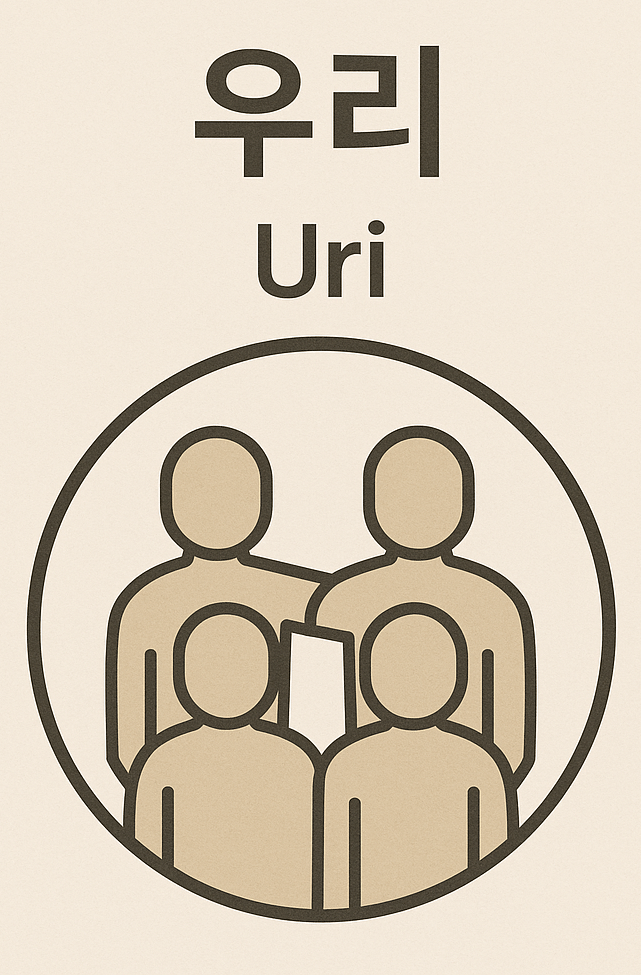
In Korean culture, one of the most powerful words is also one of the simplest: Uri, meaning “we” or “our.” But Uri is far more than a pronoun. It is a window into how Koreans understand relationships, group identity, and emotional belonging. Within traditional Korean martial arts circles, especially under the guidance of masters who emphasize discipline and loyalty, Uri is often used to describe the unshakable camaraderie and shared identity between students and instructors, forged through hardship, challenge, and growth.

Uri: More Than “We”

In English, “we” is often just a grammatical term, used to distinguish from “I” or “you.” But in Korean, Uri is embedded deeply in the language and mindset, often used even when referring to something that belongs to oneself:

  • uri jip – our house, not my house
  • uri eomma – our mom, not my mom
  • uri hakgyo – our school, not my school

This reflects a collectivist worldview in which individuals see themselves as part of a larger whole, whether that’s a family, class, team, or nation (Kim & Choi, 1994).

In martial arts dojangs (training halls),Uri expresses more than membership; it expresses loyalty, mutual care, and emotional bonding. When a teacher speaks of “our students” or “our school,” it reinforces unity and shared responsibility.
Uri and Jeong: The Emotional Core

Complementing Uri is the concept of Jeong, a deep, enduring emotional bond that forms over time through shared life, hardship, and loyalty. Jeong isn’t easily expressed in words. It shows up in quiet sacrifice, remembered favors, unspoken forgiveness, and decades of unwavering care (Kim, 2025).

In the martial arts setting, Jeong may grow silently between a student and teacher over years of training, discipline, and shared struggle. It does not need to be spoken, it is understood.

So, while Uri reflects group identity, Jeong is the emotional glue within that group.

Related Cultural Concepts

Korea’s rich cultural emphasis on relational harmony and group belonging has echoes in neighboring traditions:

ConceptCultureMeaning
Uri (우리)Korean“We” / “Our” – shared identity and belonging
Jeong (정)KoreanEmotional bond of affection and loyalty
Qíng (情)ChineseSentiment, emotion in social and familial roles (Li, 2016)
Rénqíng (人情)ChineseSocial etiquette, reciprocal human feelings (Yan, 1996)
CamaraderieAmerican/WesternFriendly solidarity from shared experiences
Brotherhood/SisterhoodUniversalLoyalty forged through common hardship

While these concepts vary, they all point to a human need for belonging, connection, and emotional safety, particularly in groups bound by purpose, like martial arts, military service, or community living.
Uri in the Dojang: A Warrior’s Bond

In martial arts, Uri reflects a mindset of shared struggle and mutual respect. It means:

  • We endure hardship together
  • We uphold the dignity of the group, not just the self
  • We protect and support each other in and out of training

A Korean master might speak of Uri when referring to the lineage, the school’s mission, or the bond between instructors and students who have faced hardship side-by-side.

Even in moments of silence, when no words are spoken, Uri is felt, in a bowed head, a shared meal, or the gentle correction of a form done poorly but with heart.

Uri vs. Western Individualism

Western cultures often emphasize personal agency, independence, and distinct identity (“I did it,” “my house,” “my success”). In contrast, Uri reflects a Korean cultural mindset in which the group defines the individual, not the other way around.

This is not about erasing personal identity, but rather about honoring relationships as central to identity.

Conclusion: Uri as a Way of Life

In the end, Uri is more than a word. It is a cultural philosophy, one that holds that we are strongest together, that emotional ties matter, and that belonging is essential to the human experience. In a martial arts context, it is the thread that weaves through every bowed head, every shared hardship, every correction given with care.

As we compare Uri with concepts like Jeong, Qing, and camaraderie, we discover that while the language may differ, the longing for connection is universal. The Korean term Uri offers us a powerful lens through which to reexamine not just how we speak, but how we live, with and for each other.

References

Kim, J. K. (2025). Deconstructing the Marginalized Self: A Homiletical Theology of URI for the Korean American Protestant Church in the Multicultural American context. Religions, 16(2), 249. https://doi.org/10.3390/rel16020249

Kim, U., & Choi, S.-H. (1994). Individualism, collectivism, and child development: A Korean perspective. In P. M. Greenfield & R. R. Cocking (Eds.), Cross-cultural roots of minority child development (pp. 227–257). Lawrence Erlbaum Associates, Inc.

Li, J. (2023). Confucian affect (Qing 情) as the foundation for mutual care and moral elevation. https://philarchive.org/rec/LICAQM

Yan, Y. (1996). The Flow of Gifts: Reciprocity and Social Networks in a Chinese Village. Stanford University Press.

The Misogi Challenge

A Modern Rite of Passage for Mind, Body, and Spirit

In today’s comfort-saturated world, we often forget what we’re capable of. We live behind screens, within routines, and beneath our potential. But what if, once a year, you did something so challenging, so outrageous that it forced you to face your limits and break through them? That’s the spirit of “Misogi.”

What Is Misogi?

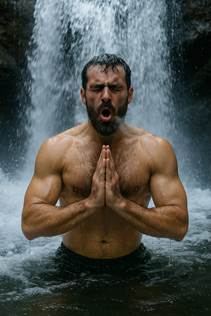
Misogi is an ancient Shinto purification ritual originating in Japan. Traditionally performed under icy waterfalls or in natural bodies of water, it involves cold-water immersion, breath control, and chanting to wash away impurities, not just physical dirt, but emotional, mental, and spiritual stagnation. It’s about cleansing the soul, aligning with nature, and stepping into renewed awareness.

“Misogi is not about strength; it’s about sincerity.” – Japanese proverb

From Ritual to Challenge: The Modern Misogi

In recent years, Misogi has evolved beyond religious rituals into a deliberate act of voluntary hardship. Misogi is a physical and mental challenge that reclaims the spirit of transformation. Spearheaded by thinkers like Dr. Marcus Elliott, the modern Misogi is a once-a-year event so difficult that there’s a 50% chance of failure.

The Rules of Modern Misogi:

  1. It should be physically and/or mentally extreme.
  2. There should be a real risk of not finishing.
  3. No audience. This is not for social media likes.
  4. It should change one’s perspective on the way you see the rest of their life.

Holistic Health Benefits of Misogi

From a holistic wellness standpoint, the Misogi Challenge is more than a test of will, it’s a full-spectrum recalibration:

Mental Fortitude

Pushing beyond perceived limits activates the prefrontal cortex, engages deep concentration, and can restructure your relationship with fear and discomfort (Tse et al., 2007).

Physical Resilience

Strenuous, unfamiliar tasks force the body to adapt, strengthen, and detoxify, stimulating lymphatic flow, cardiovascular function, and musculoskeletal balance (Nieman, 2003).

Energetic Alignment

Like cold plunges in Taoist and Ayurvedic cleansing rituals, Misogi resets energetic flow (Qi or prana), breaking through stagnation that can lead to disease (Larre et al., 1996).

Spiritual Renewal

Letting go of the ego, expectations, and habitual comforts creates space for inner clarity and reconnection to purpose. It becomes a form of sacred self-inquiry.

Designing a Misogi Challenge for Different Wellness Levels

Seniors or Holistic Wellness Groups

  • Challenge: 12-hour digital fast with 6-hour silent walking meditation
  • Why: Encourages mindfulness, self-awareness, and reconnection with breath and body
  • Modify with: Journaling and gentle breathwork (e.g., qigong or walking tai chi)

Moderate Fitness Level

  • Challenge: 20-mile nature hike with water-only fasting
  • Why: Combines physical exertion, solitude, and environmental reconnection
  • Modify with: Breaks for seated meditation or breath practice every 5 miles

Advanced Practitioners or Athletes

  • Challenge: Carrying a heavy object (rock, sandbag) across natural terrain for 2–3 hours in silence
  • Why: Deeply tests body and mind under primal conditions
  • Modify with: Incorporate chants, breath pacing, or visualization

Integration Is Key

A true Misogi doesn’t end when the task is complete. The reflection period is just as important:

  • Journal about what arose emotionally and physically
  • Meditate on what you let go of and what you discovered
  • Ask yourself: Who was I before this, and who am I now?

Misogi in the Modern World

While Misogi may sound extreme, it addresses a modern spiritual hunger or the need for voluntary adversity (strategic trauma) that leads to inner growth. We lack rites of passage in our society, and so our transformation remains stunted. Misogi reclaims this space and offers a framework for regeneration, not just resilience.

In the end, Misogi isn’t about conquest. It’s about coming clean with your body, your breath, your fears, and your forgotten strength. Misogi is less about proving you can finish and more about remembering what’s possible when you try.

Even once a year, stepping into something so bold, uncomfortable, and transformative can reset your relationship with fear, complacency, and the stories you tell yourself. Misogi is a sacred dare to become fully alive.

Last year, I committed to a 3-month rigorous physical training regimen to prepare for a 10-day hiking expedition across Utah’s Mighty Five national parks. A journey that demanded not only endurance but also mental clarity and emotional resilience. In many ways, it became my own version of a Misogi Challenge.

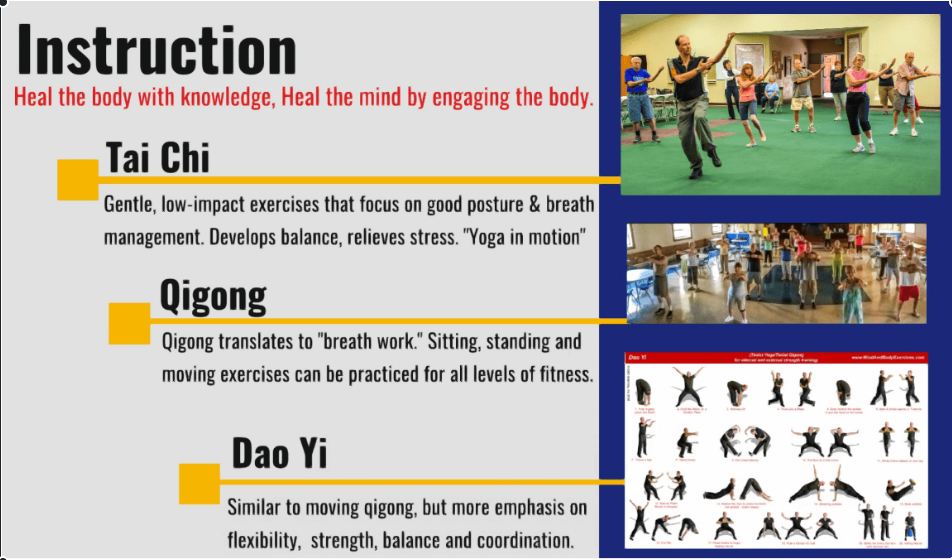
Drawing from decades of experience in Tai Chi, Qigong, and other time-tested fitness and wellness systems, I developed a holistic training protocol that addressed balance, breath, posture, flexibility, and mindset. This integrative approach not only strengthened my body for the miles ahead but also deepened my presence and appreciation for the journey itself.

I now help others design their own Misogi-style challenges, whether it’s a hiking goal, a fitness milestone, or a personal rite of passage, using adaptable practices rooted in Eastern movement arts and modern wellness science. You don’t need to be an elite athlete; you only need the willingness to step beyond comfort and toward transformation.

References

Larre, C., de la Vallée, E., & Rochat de la Vallée, E. (1996). The Eight Extraordinary Meridians: Spirit of the Vessels. Monkey Press.

Nieman, D. C. (2003). Current perspective on exercise immunology. Current Sports Medicine Reports, 2(5), 239–242. https://doi.org/10.1249/00149619-200310000-00001

Tse, D., Langston, R. F., Kakeyama, M., Bethus, I., Spooner, P. A., Wood, E. R., … & Morris, R. G. (2007). Schemas and memory consolidation. Science, 316(5821), 76-82. https://doi.org/10.1126/science.1135935

A Wake-Up Call to Modern Comfort

Review and Reflections on Huberman Lab’s Interview with Michael Easter

I recently watched a deeply insightful episode of the Huberman Lab podcast featuring Michael Easter, author of The Comfort Crisis, and I found myself nodding along with many of the points raised, especially given my own decades-long work in health, wellness, and personal growth.

What stood out immediately was the central premise: modern comfort is making us weaker, mentally and physically. Easter explains, and Andrew Huberman underscores, how we humans evolved in environments defined by discomfort, unpredictability, and physical effort. Those stressors shaped not only our physiology but our brain’s ability to focus, regulate emotion, and build resilience. In contrast, today’s frictionless, temperature-controlled, screen-dominated world removes nearly every challenge we once faced.

Easter offers the concept of “evolutionary mismatch”, a term that deserves more attention in wellness circles. Simply put, our bodies and brains are wired for adversity, such as movement, cold, hunger, boredom, and effort. Without these, we lose our edge. Chronic illness, obesity, depression, and anxiety may be symptoms of comfort, not just bad luck or bad genes. This echoes themes I’ve taught for years: growth comes through effort, not ease.

One of Easter’s personal anecdotes involves his month-long expedition to the Arctic, an experience that reconnected him to the primal challenge of survival and the small joys of modern life (like a hot shower or warm food). While not everyone can take such a dramatic journey, he proposes smaller, more accessible methods of reintroducing challenge, like his “2% rule”: in any given moment, maybe only 2% of people choose the harder but better path (e.g., stairs over the escalator). That idea resonated. How often do we bypass growth opportunities in the name of ease?

A major thread in the discussion is neurotransmitter dopamine, which Huberman expertly frames as a currency of motivation. Easter emphasizes that we’re increasingly “spending” our dopamine on empty, passive rewards like social media, sports betting, and slot-machine-style apps, rather than “investing” it in meaningful activities that require effort and yield long-term satisfaction, like exercise, creative pursuits, deep conversation, and reflection. This is a critical insight I believe we should all sit with. Our collective dopamine habits are shaping not just our behavior, but our baseline mental health and resilience.

One term Easter introduces is “misogi” which is a powerful idea for personal transformation. Derived from ancient purification rituals, misogi in this context refers to undertaking a yearly challenge so difficult it has only a 50/50 chance of success. The point isn’t to show off but to dig deep, confront limits, and emerge changed. As someone who has practiced and taught martial arts and internal training for over four decades, I see misogi as a contemporary form of rite of passage, which seems to be something sorely missing in modern American life. It’s not about ego; it’s about emergence.

Easter also champions “rucking” or walking with a weighted backpack, as a primal and functional form of exercise that builds both endurance and strength. It mimics what our ancestors did daily: carrying tools, food, and children across rough terrain. Rucking, when done correctly, is accessible, scalable, and deeply human. For those seeking a simple yet powerful shift in physical health, it’s worth trying.

Another key moment in the conversation was the validation of boredom as a tool for creativity and self-regulation. In our overstimulated culture, we’ve lost our tolerance for stillness. But Easter reminds us that boredom isn’t a problem to escape, it’s a message: a prompt to seek novelty, reflection, or meaning. I often teach this in the context of meditation and tai chi, where mental stillness is the foundation of insight. Allowing the brain space to wander without digital interruption can lead to greater emotional regulation and problem-solving capacity.

The episode closes with a discussion on community and connection. Digital interaction, while convenient, often lacks depth. Easter advocates for real, in-person experiences with shared purpose, whether through hobbies, group recovery, martial practice, or service. In my own work with seniors, fitness groups, and spiritual circles, I’ve witnessed the profound healing power of face-to-face presence. We are social creatures, and isolation, often masked as “independence” is a silent killer of well-being.

Takeaways Worth Reflecting On:

  • Discomfort is not the enemy – it’s the catalyst for growth. Modern life has insulated us from it, and we’re paying the price.
  • Dopamine needs to be earned, not stolen. Mindless scrolling and easy rewards burn us out. Meaningful effort renews us.
  • Functional movement like rucking connects us to our ancestral roots and trains strength and stamina in one practice.
  • Boredom is a gift – a doorway to creativity and presence if we stop running from it.
  • Misogi reminds us what we’re made of. Once a year, challenge yourself to something that might break you and remake you.
  • True connection heals. Community, shared struggle, and meaningful interaction will always outperform virtual validation.

This episode is well worth your time. It affirms much of what holistic health teaches: that well-being is earned through challenge, presence, and connection. Easter and Huberman deliver a grounded, research-informed, and deeply human message. I’ll be recommending it widely.

Reference

Andrew Huberman. (2025, June 16). How to grow from doing hard things | Michael Easter [Video]. YouTube. https://www.youtube.com/watch?v=SsKkZTjUJEk

Mastery in the World of Form: Integrating Wealth, Health, and Spirit

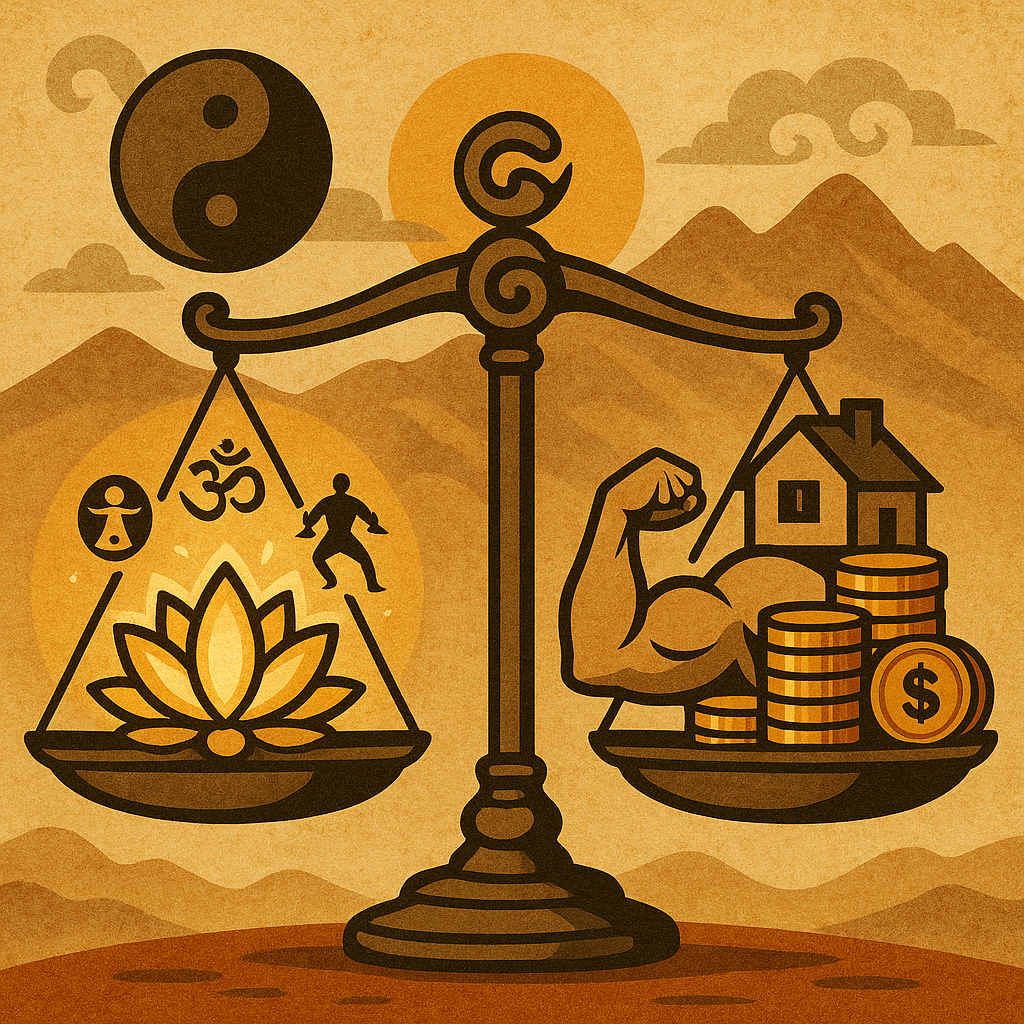
In the pursuit of personal evolution, many traditions emphasize the renunciation of material wealth as a path to spiritual enlightenment. Yet this view may overlook an essential truth: the mastery of life requires full engagement with both the spiritual and material realms. Rather than rejecting worldly success, a more holistic path invites individuals to develop discipline, embrace responsibility, and integrate spiritual realization with material abundance.

A balanced life requires strength across physical, emotional, and spiritual dimensions. True power, especially in men, is not measured by dominance or accumulation alone, but by maturity and restraint. Without discipline, power can become dangerous, giving rise to instability and harm. Therefore, self-mastery begins with a commitment to personal responsibility, training the body, focusing the mind, and cultivating inner peace.

One foundational concept in this approach is the idea that wealth and health are not opposites of spiritual life but necessary stages in the ladder of awakening. Through conscious acquisition and enjoyment of material pleasures—followed by the ability to release attachment—one gains not only experience but freedom from the cycles of craving and aversion. This path requires mastering the “world of form,” learning to participate in it fully without being controlled by it. Those who avoid or bypass this stage may find themselves spiritually incomplete. If one believes in reincarnation, this situation may lead to further experiences in future lifetimes to fully integrate these unlearned lessons.

Conscious development can be mapped through the lens of energy centers or chakras, where each stage corresponds to an essential life lesson: from physical grounding and pleasure to peace, joy, love, compassion, and ultimately ecstatic or blissful states of awareness. These are not mere metaphors but practical tools for tracking one’s evolution. A person who cannot access joy or inner peace may need to revisit the foundations of health, safety, and stability before advancing into higher spiritual states.

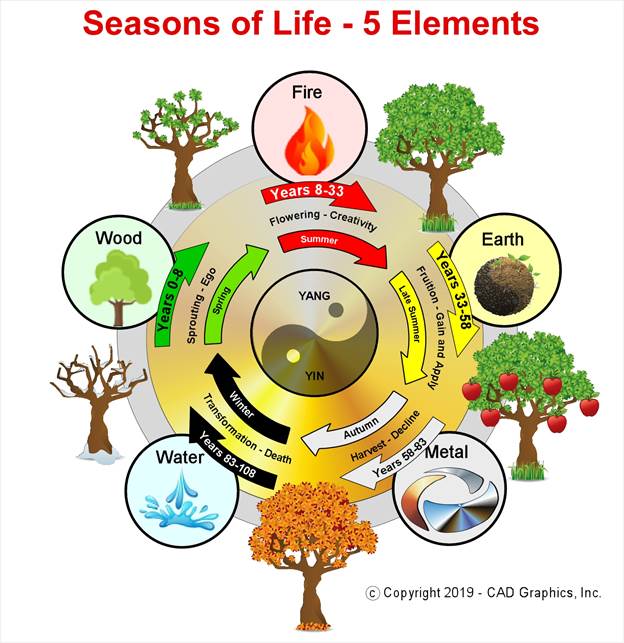
Central to this journey is the rejection of victimhood. Blaming society, circumstances, or others for one’s failures hinders growth. Only by accepting full responsibility for one’s health, finances, relationships, and spiritual development can one initiate true transformation. This principle applies across life stages, which can be seen as cycles: childhood (0–8), adolescence and young adulthood (8–33), fruition (33–58), correction (58–83), and ultimately the sage or spirit phase (83–108). Each phase carries its own lessons and demands appropriate effort and reflection.

In later life, aging should not be viewed as decay, but as a biological and spiritual opportunity. With proper practice through breathwork, meditation, physical cultivation, and mental clarity, many signs of aging can be reversed or mitigated. The aim is to remain vibrant, focused, and spiritually prepared for death, which, when acknowledged consciously, becomes a motivator for authentic living.

The role of family, lineage, and tradition is also pivotal. Respect for one’s parents and ancestors does not require blind obedience or emotional entanglement but calls for honoring their place in one’s development. This maturity fosters generational healing and sets an example for those who follow.

Integration of spiritual wisdom with material responsibility is not unique to any one culture. Whether through Christian parables, Taoist discipline, or Buddhist insight, timeless truths emerge: the value of discipline, the importance of presence, the need for compassion, and the certainty of death. When viewed through this inclusive lens, spirituality becomes less about belief and more about the embodiment of universal principles.

The ideal individual, a strong, wise, and compassionate being, embodies the archetype of the strategist and warrior. Not through brute strength or spiritual aloofness, but through the unification of effort, enjoyment, reflection, and humility. Mastery is not found in a cave or an office alone, but in the weaving of both. When one lives fully, without excuses or illusions, the path reveals itself not above the world, but through it.

Exploring Wei Dan, Qigong, and Nei Dan

A Detailed Summary to Daoist Alchemy from Chinese and Korean Internal Arts

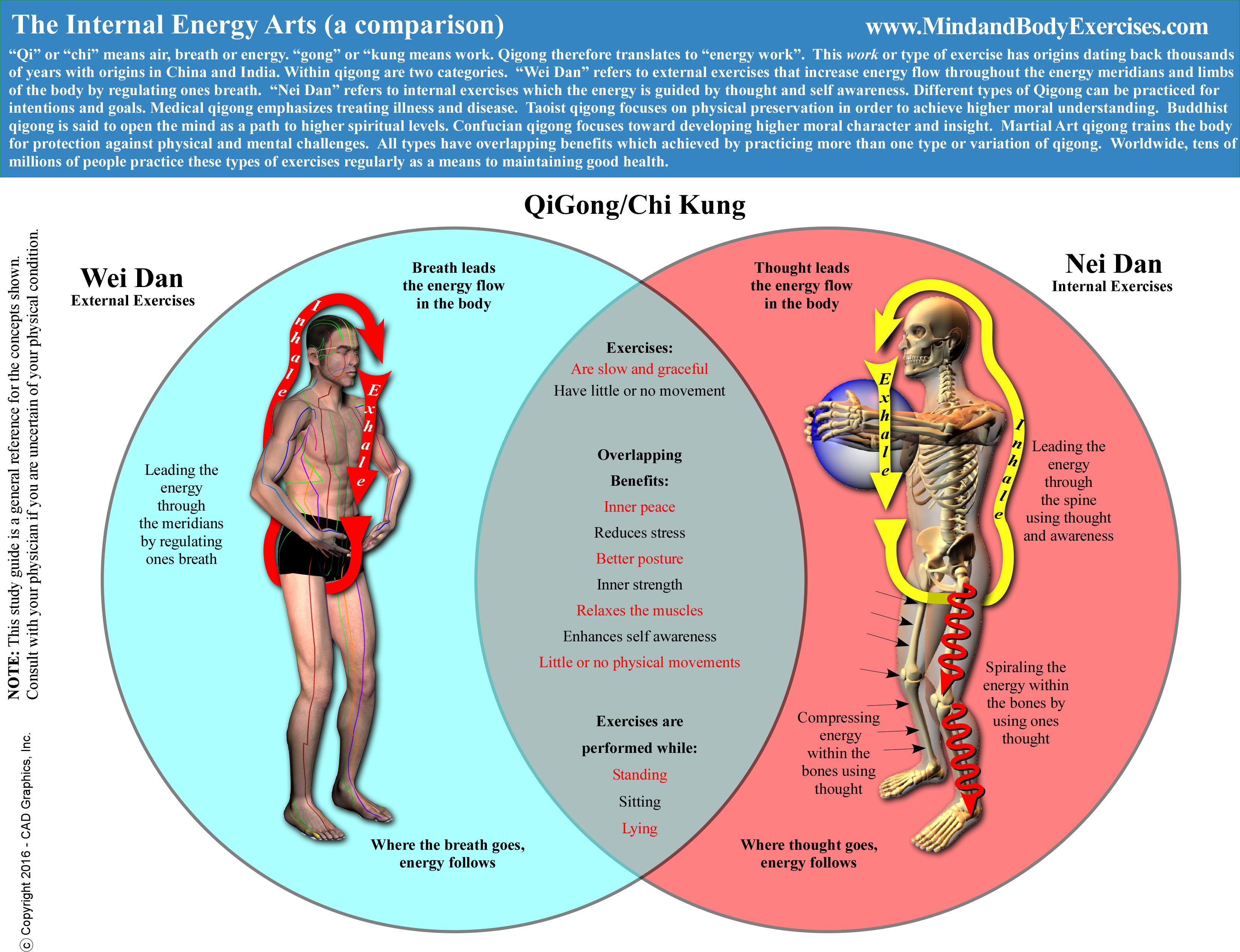
Traditional Chinese internal arts offer a rich system of physical, energetic, and spiritual practices. Key concepts include Wei Dan (外丹), Qigong (气功), and Nei Dan (内丹). Understanding these three terms alongside their Korean martial arts parallels, clarifies important distinctions in the pursuit of health, self-mastery, and spiritual growth.

Definition: “Outer Elixir.” Wei Dan refers to ancient Daoist alchemical practices that sought to create physical elixirs for longevity or immortality by processing minerals and herbs externally (Pregadio, 2018).

Methods: Involves chemical experimentation with substances like mercury, arsenic, and cinnabar, (often highly toxic) which were ingested or used topically in pursuit of physical immortality.

Goals: Attain longevity or immortality by altering the body through external means.

Philosophy: Belief that the secrets of life and transformation can be discovered and harnessed in the material world outside the practitioner, reflecting an outward search for transcendence.

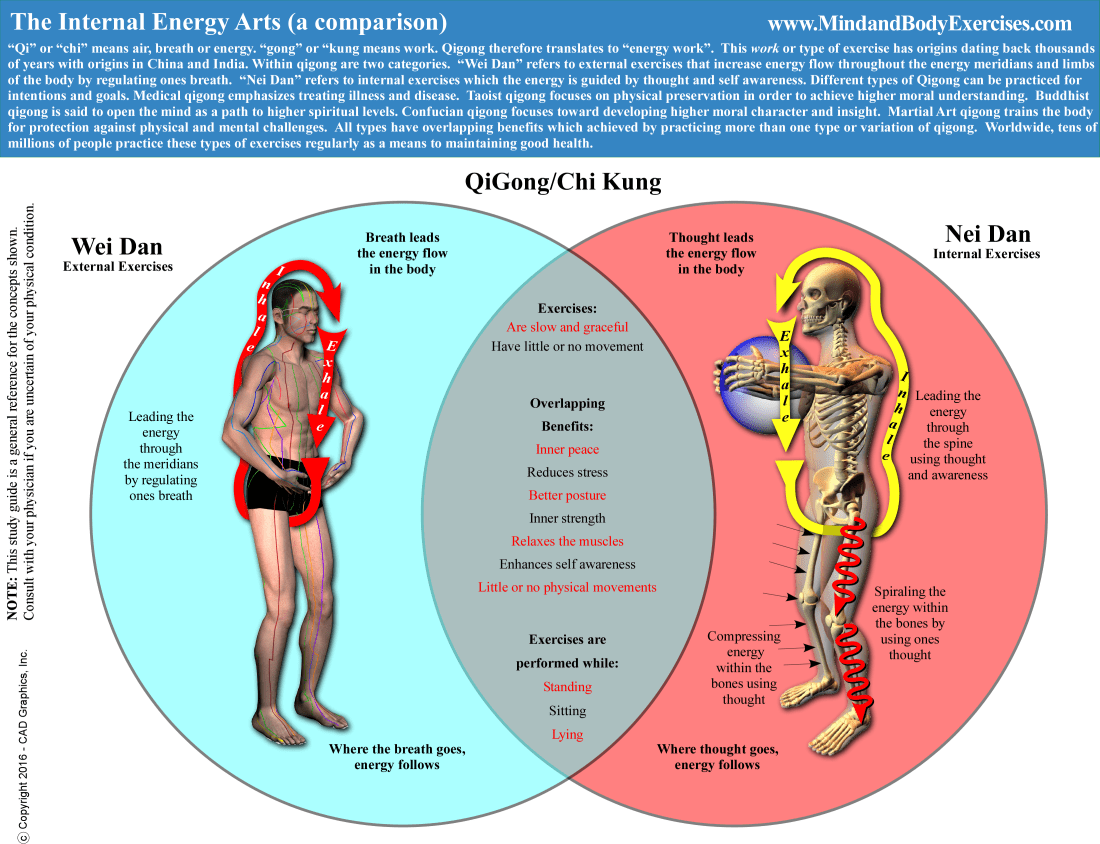
Definition: “Energy Work.” Qigong encompasses practices that combine breath control, movement, visualization, and meditation to regulate and cultivate qi, the vital energy believed to animate life (Jahnke, 2002).

Method: Includes dynamic routines (e.g., Ba Duan Jin), static postures (e.g., Zhan Zhuang), breath regulation, and mental focus to circulate qi along the body’s meridians.

Goals: Promote health, increase vitality, balance emotions, and prepare body and mind for advanced practices.

Philosophy: The human body is a microcosm of the universe, and by harmonizing breath, movement, and mind, practitioners align themselves with natural laws (Yang, 1997).

Definition: “Inner Elixir.” Nei Dan is the highest level of Daoist internal cultivation, dedicated to refining one’s essence (jing), energy (qi), and spirit (shen) through advanced meditative and energetic practices (Mitchell, 2011).

Method: Involves breath retention, microcosmic orbit meditation, sexual energy control, visualization of energy flows, and progressive transformation of jing → qi → shen → emptiness (xu).

Goals: Achieve spiritual immortality, realization of one’s true nature, and union with the Dao.

Philosophy: Transformation must occur internally; by purifying one’s own mind-body-spirit, practitioners embody the Daoist ideal of returning to original emptiness and harmony with the cosmos.

Comparing Chinese and Korean Terms

Korean martial arts use similar-sounding terms of Wae Gong, Gi Gong, and Nae Gong, which overlap but don’t always match the Chinese Daoist meanings:

Korean TermHangul / HanjaSimilar Chinese ConceptSame Practice?Notes
Wae Gong외공 / 外功Wei Dan (外丹)NoRefers to physical conditioning in martial arts, not Wei Dan’s alchemy
Gi Gong기공 / 氣功Qigong 气功YesPractices are nearly identical; focuses on breath, energy, and movement
Nae Gong내공 / 內功Nei Dan 内功PartiallyInternal energy work similar to Nei Gong; not necessarily advanced Nei Dan alchemy (Yang, 2007).

Etymological Breakdown of Chinese Characters

Understanding the roots of the Chinese characters deepens appreciation of these arts:

  • 外 (Wài): 6 strokes. Components 夕 (evening) + 卜 (divination) → symbolizes seeking knowledge outside oneself.
  • 气 (Qì): 4 strokes. Ancient forms depict swirling vapor → breath, vital energy.
  • 内 (Nèi): 4 strokes. 冂 (enclosure) + 人 (person) → shows a person inside boundaries → introspection.

These etymologies reflect core Daoist themes of balancing inside (内) and outside (外), and cultivating qi (气) to align with the Dao (Qiu, 2000).

Integrated Comparison Table

AspectWei Dan (外丹)Qigong (气功)Nei Dan (内丹)
MeaningExternal elixir/alchemyEnergy skill/cultivationInternal elixir/alchemy
MethodChemical concoctionsBreath, movement, meditationAdvanced meditative transformation
GoalPhysical immortalityHealth, vitality, stress reliefSpiritual immortality/enlightenment
Korean ParallelWae Gong (not equivalent)Gi Gong (equivalent)Nae Gong (partially equivalent)

Conclusion

Wei Dan, Qigong, and Nei Dan represent distinct layers of Daoist health and spiritual practices: Wei Dan’s external focus, Qigong’s energy cultivation, and Nei Dan’s profound internal alchemy. Meanwhile, Korean martial arts terms like Wae Gong, Gi Gong, and Nae Gong reflect overlapping ideas but emphasize martial conditioning, energy work, and internal strength, respectively.

Understanding these differences empowers practitioners to choose a path aligned with their goals, whether health, martial skill, or spiritual awakening.

References

Jahnke, R. (2002). The Healing Promise of Qi: Creating Extraordinary Wellness Through Qigong and Tai Chi. Contemporary Books.

Mitchell, D. (2011). Daoist Nei Gong: The Philosophical Art of Internal Alchemy. Singing Dragon

Pregadio, F. (2018). The Taoist Alchemy: Nei Dan and Wei Dan in Chinese Tradition. Golden Elixir Press.

Qiu, X. (2000). Chinese Writing. The Society for the Study of Early China & The Institute of East Asian Studies.

Yang, J. M. (2007). Qigong for Health & Martial Arts: Exercises & Meditation. YMAA Publication Center.

Note: I could find no single authoritative English-language source compiling the terminology of Wae Gong, Gi Gong, and Nae Gong. These terms are part of Korean martial arts oral traditions and school teachings, with meanings overlapping but not identical to the Chinese concepts discussed here.