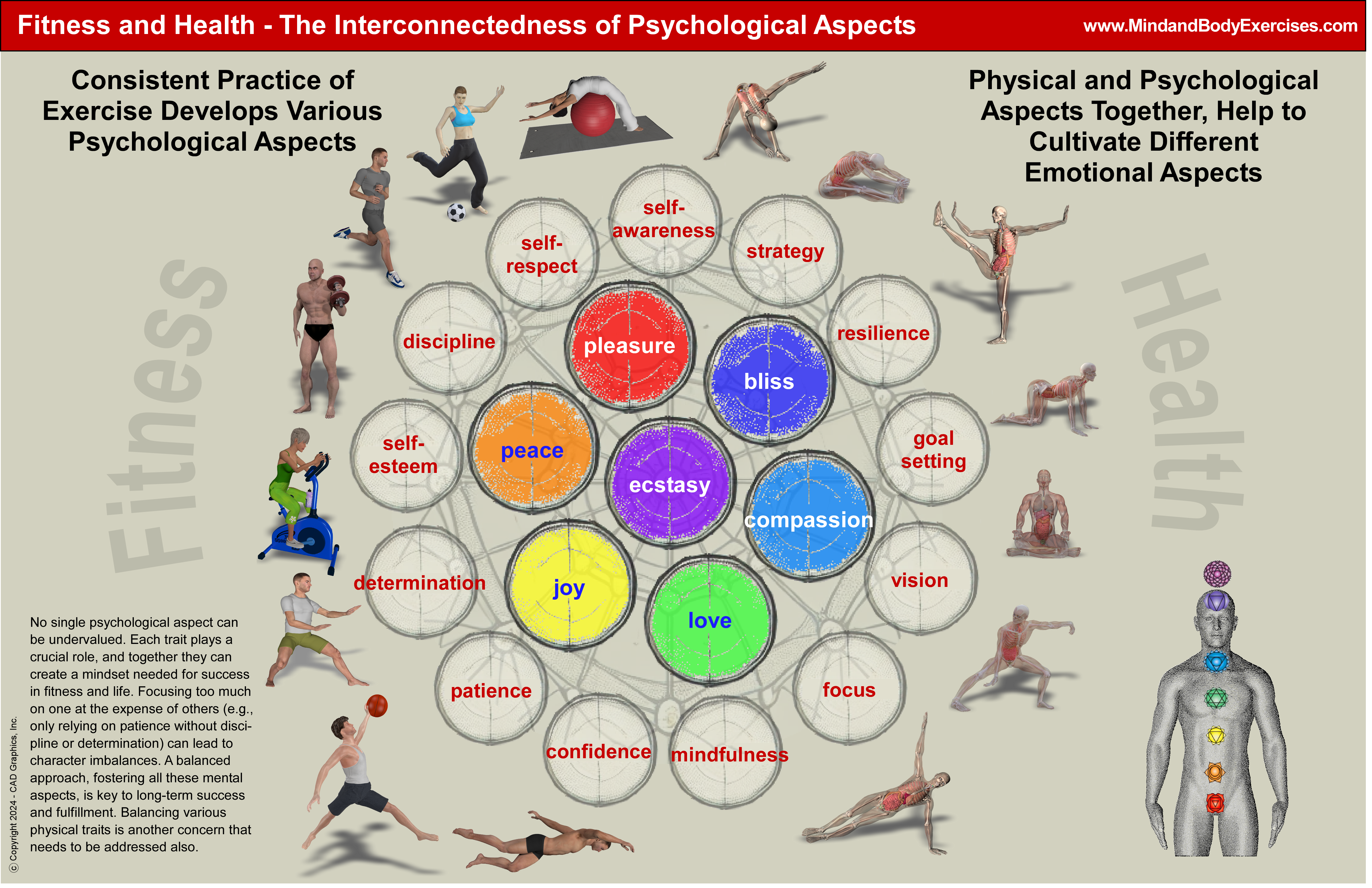

Mental and psychological aspects of fitness are as interconnected as the physical components. Each plays a crucial role in supporting not only physical training but overall well-being. Let’s look at these mental attributes in the context of fitness training, their importance, and how they influence one another.
1. Determination (Perseverance)
- How: The ability to stick with a fitness routine and push through challenges, even when motivation wanes.
- Why: Determination is essential for achieving long-term goals. It’s the driving force that helps you overcome obstacles like fatigue, frustration, or setbacks. Without it, progress stalls when the going gets tough.
2. Focus
- How: The ability to concentrate on a specific task, whether it’s executing proper form during an exercise or staying on track with fitness goals.
- Why: Focus is critical for making the most of workouts and for avoiding distractions that can hinder progress. It ensures that you give your best effort, improving both efficiency and performance during training.
3. Confidence
- How: Belief in your own ability to succeed, whether in reaching fitness milestones or mastering a new skill.
- Why: Confidence is key for pushing boundaries and trying new things. It helps you trust in your physical capabilities, which in turn supports better performance and a more positive experience with exercise. Confidence grows as you achieve goals, fueling further progress.
4. Self-Esteem
- How: The overall sense of self-worth or value, often influenced by body image, fitness achievements, and general well-being.
- Why: Self-esteem is closely tied to mental health and motivation. People with healthy self-esteem are more likely to stick to their fitness routines because they feel good about their efforts and outcomes. Low self-esteem, on the other hand, can lead to negative thinking patterns, discouraging progress.
5. Resilience
- How: The ability to recover quickly from setbacks, whether it’s a physical injury or a period of demotivation.
- Why: Resilience helps you bounce back from failures or obstacles without giving up. In fitness, this means returning to your program after illness, injury, or emotional challenges, rather than letting those issues derail progress.
6. Discipline
- How: The ability to maintain consistency with workouts, nutrition, and recovery, even when it’s not easy or convenient.
- Why: Discipline is foundational to any fitness journey. It bridges the gap between intention and action, helping you stick to your program even when motivation fades. Without discipline, fitness goals are harder to achieve because they require sustained effort over time.
7. Patience
- How: The ability to recognize that results take time and to persist without frustration or rushing the process.
- Why: Patience is critical for long-term success. Fitness gains often come slowly, and without patience, it’s easy to get discouraged or try to fast-track results, which can lead to injury or burnout.
8. Self-Awareness
- How: The ability to assess your own thoughts, emotions, and behaviors in relation to fitness goals and progress.
- Why: Self-awareness helps you understand your limits, strengths, and areas for improvement. It’s essential for setting realistic goals, avoiding overtraining, and recognizing when adjustments need to be made in your routine.
9. Mindfulness
- How: The ability to be fully present and engaged in the current moment, whether during a workout or throughout the day.
- Why: Mindfulness enhances focus and reduces stress. When applied to fitness, it helps you connect with your body, prevent injuries, and make intentional choices in your movements. It also fosters a healthier relationship with exercise, avoiding compulsive behaviors.
10. Goal-Setting (Vision)
- How: The ability to establish clear, achievable objectives and a vision for where you want to go.
- Why: Without clear goals, it’s easy to drift in your fitness journey. Goal-setting provides direction, helps maintain motivation, and offers a sense of purpose in your efforts. It also gives a framework for measuring progress, which builds confidence and determination.
Interconnected Nature:
- Determination supports discipline and resilience; without it, it’s hard to remain consistent through challenges.
- Focus helps improve self-awareness and mindfulness, allowing you to make better decisions during training.
- Confidence feeds into self-esteem, as success in fitness tasks increases self-worth and encourages further progress.
- Patience and resilience go hand-in-hand, ensuring that setbacks or slow progress do not deter long-term success.
- Discipline keeps you on track even when motivation wanes, ensuring that patience and goal-setting are upheld.
Prioritization of Mental Aspects:
- For Sustained Progress:
- Determination, Discipline, Focus, Patience
- These traits help ensure consistency in efforts, overcoming plateaus and sticking to long-term plans.
- Determination, Discipline, Focus, Patience
- For Building Confidence and Positive Self-Perception:
- Self-Esteem, Resilience
- Developing confidence and self-esteem through small wins and resilience in the face of setbacks is essential for long-term mental well-being.
- Self-Esteem, Resilience
- For Better Daily Performance:
- Focus, Mindfulness, Self-Awareness
- These help you stay present during workouts, manage stress, and stay aligned with your goals, ensuring efficiency and enjoyment in training.
- Focus, Mindfulness, Self-Awareness
Conclusion:
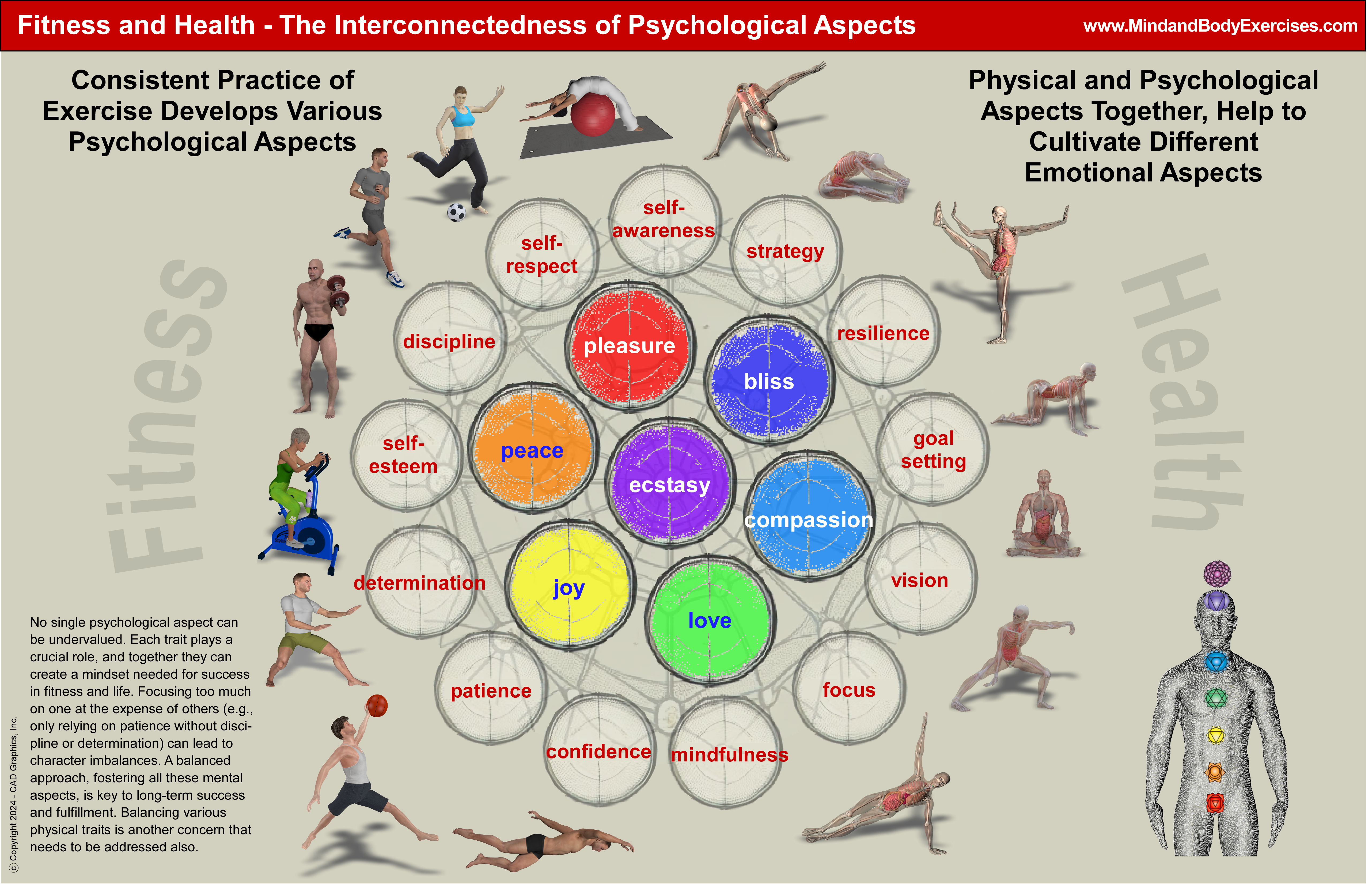
Just as with physical fitness, no single mental or psychological aspect can be undervalued. Each trait plays a crucial role, and together they create the mindset needed for success in fitness and life. Focusing too much on one at the expense of others (e.g., only relying on discipline without self-awareness or resilience) can lead to burnout or frustration. A balanced approach, fostering all these mental aspects, is key to long-term success and fulfillment.
I look forward to further sharing more of my message by partnering with hospitals, wellness centers, VA centers, schools on all levels, businesses, and individuals who see the value in building a stronger nation through building a healthier population.
I also have hundreds of FREE education video classes, lectures, and seminars available on my YouTube channel at:
https://www.youtube.com/c/MindandBodyExercises
Many of my publications can be found on Amazon at:
http://www.Amazon.com/author/jimmoltzan
My holistic health blog is available at:
https://mindandbodyexercises.wordpress.com/
http://www.MindAndBodyExercises.com
Mind and Body Exercises on Google: https://posts.gle/aD47Qo
Jim Moltzan
407-234-0119