Somatic Calibration

Turning Bodily Awareness into Conscious Regulation

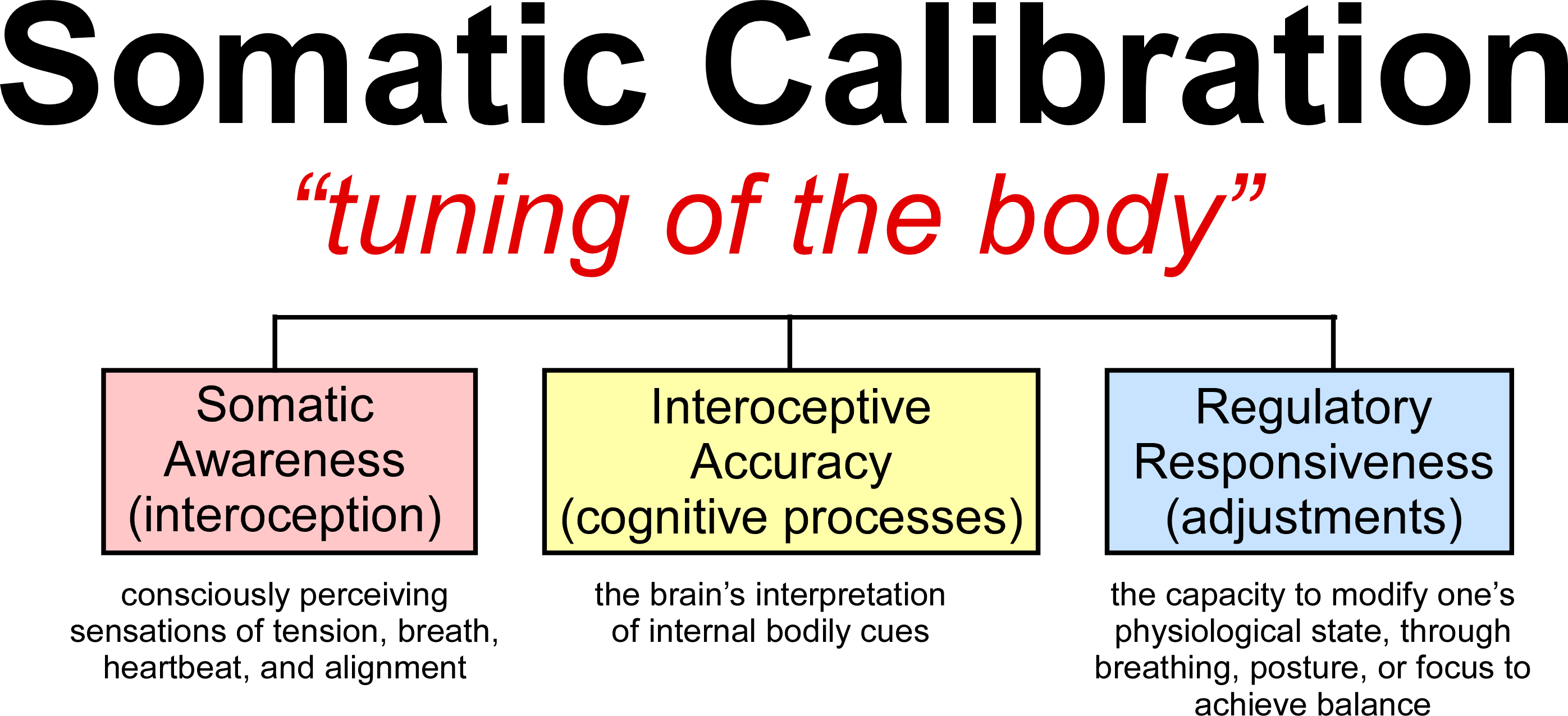
Across disciplines of psychology, physiology, and embodied practice, there is growing recognition that the body is not merely a vessel for the mind. The physical body is an active participant in perception, emotion, and cognition. The emerging concept of somatic calibration describes the process by which a person develops refined awareness of internal bodily states (interoception), interprets them accurately, and adjusts posture, movement, or breath to maintain physical and psychological balance. This calibration is literally, “bringing the body into tune” and is essential for resilience, emotional regulation, and well-being (Fogel, as cited in Taylor, 2023). It can be deliberately trained and strengthened through mind–body disciplines such as yoga, qigong, tai chi, and baguazhang, as well as through musical and kinesthetic arts that require fine motor control, proprioceptive precision, and mindful attention.
Understanding Somatic Calibration

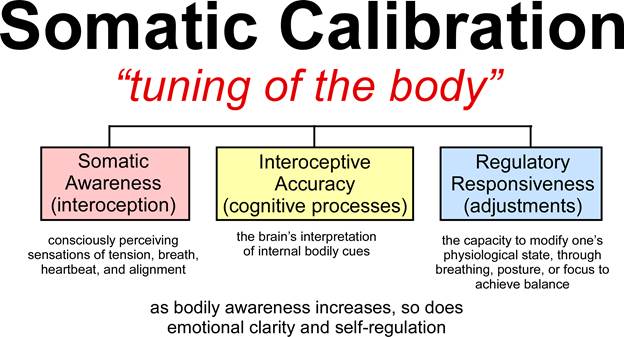
Somatic calibration merges three interdependent processes: somatic awareness, interoceptive accuracy, and regulatory responsiveness. Somatic awareness involves consciously perceiving sensations of tension, breath, heartbeat, and alignment. Interoception represents the brain’s interpretation of internal bodily cues, mediated largely by the insula and anterior cingulate cortex (Khalsa et al., 2018). Regulatory responsiveness describes the capacity to modify one’s physiological state—through breathing, posture, or focus to achieve balance.

When an individual becomes proficient in these domains, they can effectively tune their body like an instrument, sensing when they are “out of tune” (stressed, fatigued, tense) and adjusting accordingly. Somatic calibration thus serves as a biofeedback loop connecting the physical and psychological realms: as bodily awareness increases, so does emotional clarity and self-regulation (Mehling et al., 2011).

Yoga and Interoceptive Refinement

Yoga has long been recognized as a powerful practice for enhancing somatic awareness. Through sustained postures (āsanas), controlled breathing (prāṇāyāma), and meditative attention (dhyāna), practitioners learn to inhabit the body more fully, developing both interoceptive sensitivity and cognitive calm. Research shows that yoga increases vagal tone and improves regulation of the autonomic nervous system, thereby enhancing both physiological and emotional stability (Streeter et al., 2012). In the context of somatic calibration, yoga acts as a systematic alignment practice, and a method of perceiving subtle internal feedback from muscles, joints, and breath to fine-tune both movement and mind.
Qigong, Tai Chi, and the Subtle Body

Qigong and tai chi, rooted in Traditional Chinese Medicine, emphasize the coordinated movement of qi (vital energy) through the body’s meridian pathways. These practices require precise synchronization of breath, posture, and intention (yi), creating a cyclical feedback between proprioceptive and interoceptive systems (Jahnke et al., 2010). Tai chi and qigong improve kinesthetic sensitivity and help practitioners perceive micro-adjustments in balance, muscular tension, and internal energy flow, all core aspects of somatic calibration. A meta-analysis by Wayne et al. (2014) found that tai chi enhances balance, proprioception, and body awareness in older adults, while also reducing anxiety and depression, demonstrating how refining body mechanics concurrently refines emotional and mental regulation.

Baguazhang and Dynamic Calibration

Among the Chinese internal martial arts, BaguaZhang (Eight Trigram Palm) represents a dynamic, circular system of continuous transformation. Its spiraling steps, shifting weight, and changing palm positions require constant micro-adjustment of the spine, hips, and limbs. This active calibration of movement with breath and intention cultivates adaptive interoceptive intelligence, or the ability to sense and modulate physiological responses during complex motion. Internal martial arts like baguazhang promote “somatic intelligence,” where awareness, movement, and perception operate as one. Each turning step becomes a moment of recalibration strives to balance yin and yang, tension and release, stillness and motion.

Martial Arts as Applied Somatic Discipline

Beyond the meditative aspects, martial arts more broadly embody somatic calibration through functional stress-testing. The practitioner learns to manage fear, aggression, and arousal through breath and structure, while maintaining equilibrium under pressure. Studies show that martial arts training enhances proprioceptive acuity, sensorimotor coordination, and self-regulation (Lakes & Hoyt, 2004). This aligns with modern somatic psychology’s premise that body-based mastery helps integrate emotional control and cognitive clarity. Each strike, stance, or transition offers an opportunity to refine how the nervous system responds to stress, literally training the body-mind to self-regulate in motion.

Playing Musical Instruments and Fine Motor Calibration

Somatic calibration extends beyond movement disciplines into musicianship and performance arts, which demand acute proprioceptive and interoceptive tuning. Professional musicians display higher sensorimotor awareness, cortical plasticity, and fine-motor coordination than non-musicians (Herholz & Zatorre, 2012). Learning an instrument requires sensing pressure, breath, timing, and resonance, developing a nuanced relationship between internal cues and external feedback. In this way, musical practice mirrors somatic calibration: constant attunement between perception and output, between inner signal and outer sound.

Mechanisms of Mind–Body Calibration

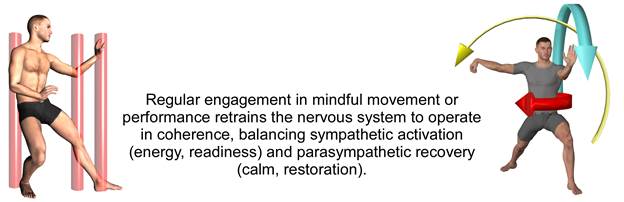
The unifying mechanism underlying all these disciplines lies in sensorimotor feedback loops that strengthen awareness and adaptability. Regular engagement in mindful movement or performance retrains the nervous system to operate in coherence, balancing sympathetic activation (energy, readiness) and parasympathetic recovery (calm, restoration). Slow, deliberate movement is characteristic of tai chi or yoga and allows the practitioner to perceive otherwise subtle cues such as joint angle, muscle tone, or internal vibration. As these perceptions sharpen, the practitioner gains conscious influence over states that were once automatic, such as tension, breath rate, or postural asymmetry (Mehling et al., 2011).

Through repeated practice, this refined self-perception translates into emotional and cognitive domains. For instance, noticing a tightening diaphragm before anxiety arises offers a chance to intervene somatically to slow the breath and prevent escalation. This is the essence of somatic calibration: turning bodily awareness into conscious regulation.
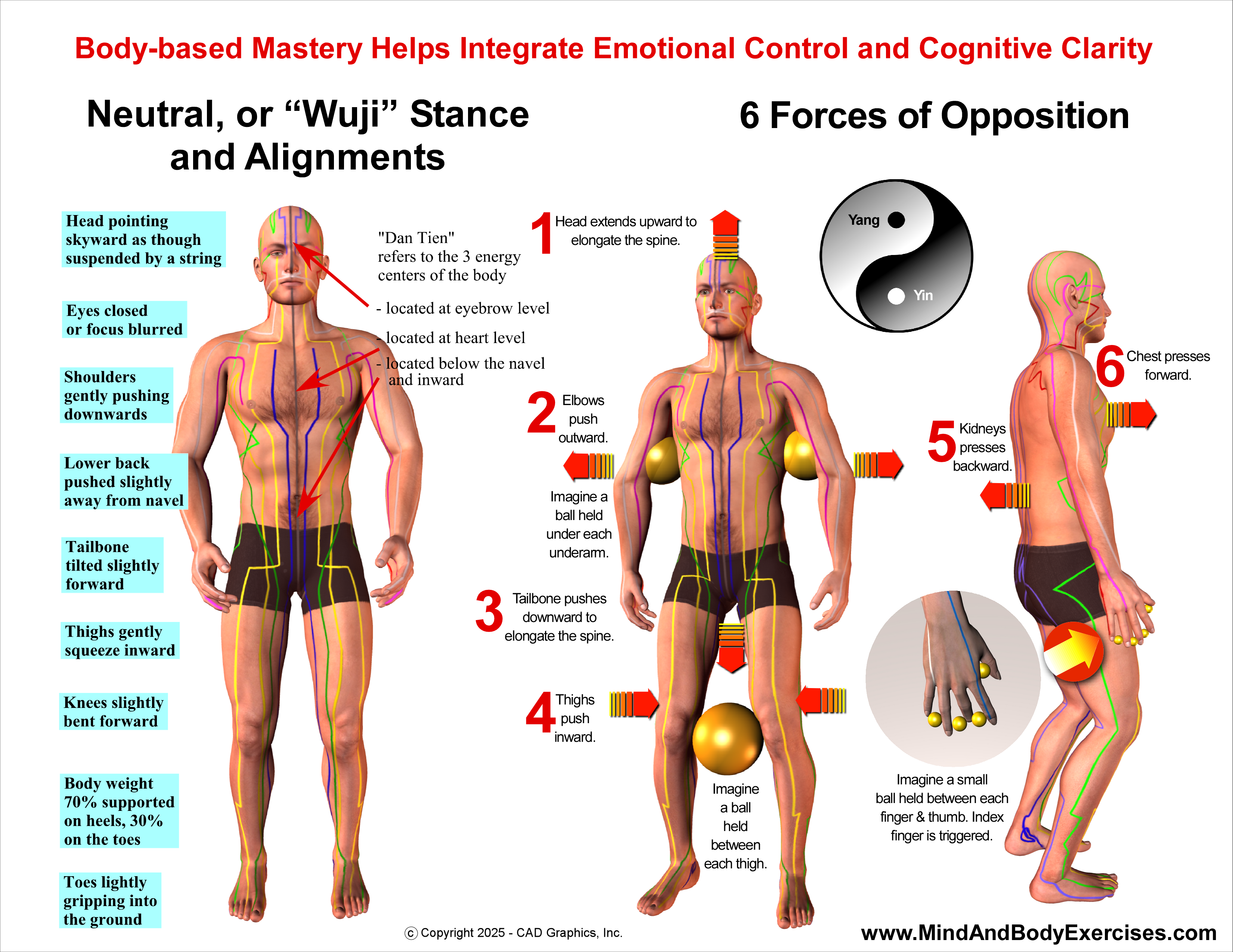
Somatic calibration represents a modern articulation of ancient principles: that self-mastery begins with bodily awareness. By refining perception and control of internal processes, one cultivates a harmonious relationship between the body and mind. Practices such as yoga, qigong, tai chi, and baguazhang, as well as musical training and other precise movement arts, can act as living laboratories for this process. They transform awareness into action, and action into alignment.

Ultimately, somatic calibration is not limited to therapy or training, but rather it is a lifelong practice of attuning to the ever-changing signals of one’s internal and external environment. In a world that often prioritizes cognition over embodiment, somatic calibration restores equilibrium, offering a path toward resilience, integration, and inner harmony.

References:

Herholz, S. C., & Zatorre, R. J. (2012). Musical training as a framework for brain plasticity: Behavior, function, and structure. Neuron, 76(3), 486–502. https://doi.org/10.1016/j.neuron.2012.10.011

Jahnke, R., Larkey, L., Rogers, C., Etnier, J., & Lin, F. (2010). A comprehensive review of health benefits of qigong and tai chi. American journal of health promotion : AJHP, 24(6), e1–e25. https://doi.org/10.4278/ajhp.081013-LIT-248

Khalsa, S. S., Adolphs, R., Cameron, O. G., Critchley, H. D., Davenport, P. W., Feinstein, J. S., … Paulus, M. P. (2018). Interoception and mental health: A roadmap. Biological Psychiatry: Cognitive Neuroscience and Neuroimaging, 3(6), 501–513. https://doi.org/10.1016/j.bpsc.2017.12.004

Lakes, K. D., & Hoyt, W. T. (2004). Promoting self-regulation through school-based martial arts training. Journal of Applied Developmental Psychology, 25(3), 283–302. https://doi.org/10.1016/j.appdev.2004.04.002

Mehling, W. E., Price, C., Daubenmier, J., Acree, M., Bartmess, E., & Stewart, A. (2011). The Multidimensional Assessment of Interoceptive Awareness (MAIA). PLoS ONE, 7(11), e48230. https://doi.org/10.1371/journal.pone.0048230

Streeter, C. C., Gerbarg, P. L., Saper, R. B., Ciraulo, D. A., & Brown, R. P. (2012). Effects of yoga on the autonomic nervous system, gamma-aminobutyric-acid, and allostasis in epilepsy, depression, and post-traumatic stress disorder. Medical Hypotheses, 78(5), 571–579. https://doi.org/10.1016/j.mehy.2012.01.021

Taylor, J. (2023). What is somatic awareness? Retrieved from https://janetaylor.net/what-is-somatic-awareness/

Wayne, P. M., & Yeh, G. Y. (2014). Effect of Tai Chi on cognitive performance in older adults: A systematic review. Journal of the American Geriatrics Society, 62(1), 25–39. https://pubmed.ncbi.nlm.nih.gov/24383523/

The Student Becomes the Master, and the Master Becomes the Student

Across human history, the progression from student to master has symbolized growth, transformation, and the unfolding of wisdom. This dynamic relationship is not a simple ascent from ignorance to knowledge but a cyclical process of continual renewal. The journey encompasses humility, discipline, and self-realization, leading to a profound paradox: when the student attains mastery, the master must again become a student. This recursive pattern reflects the principles of Eastern philosophy, particularly Taoist and Confucian thought and aligns with modern educational theories emphasizing lifelong learning and self-reflection.

The Student’s Path Toward Mastery

The journey begins with a recognition of one’s limitations and a willingness to learn. Confucius emphasized humility and perseverance as the foundations of wisdom, observing that “to learn without thinking is labor lost; to think without learning is perilous” (Analects 2:15; Confucius, trans. 1997). In this early stage, the student relies on imitation and structured practice. The discipline of repetition is common to both martial and academic traditions, laying the groundwork for understanding.

According to Dreyfus and Dreyfus’s (1980) model of skill acquisition, learners progress through stages from novice to expert, eventually developing intuition born of experience. In martial arts or philosophy, this phase marks the transition from external technique (jing) to internal essence (shen). As the student refines skill through practice and reflection, understanding becomes embodied knowledge, not merely intellectual comprehension.

Taoist philosophy describes this evolution as harmony between wu wei (effortless action) and ziran (naturalness), where mastery manifests as unselfconscious expression (Laozi, trans. 1963). The master no longer performs from memory but from presence. This state of integration unites form and spirit, leading to authentic mastery.

The Master’s Return to Studenthood

True mastery dissolves the illusion of finality. As Zen teachings remind us, “In the beginner’s mind there are many possibilities, but in the expert’s there are few” (Suzuki, 1970, p. 21). The master who clings to certainty ceases to evolve. Thus, mastery demands a return to humility, with a willingness to once again become the student.

In this reversal, the teacher learns from experience, from new disciplines, and from students themselves. This concept parallels Schön’s (1992) model of reflective practice, wherein professionals continually re-examine their assumptions and adapt to changing circumstances. The act of teaching becomes itself a form of learning; the master refines understanding through articulating, demonstrating, and witnessing the struggles of learners.

Taoism and Zen Buddhism alike emphasize the cyclical nature of wisdom: knowledge transforms into unknowing, fullness returns to emptiness, and mastery flows back into inquiry (Watts, 1957). The wise master recognizes that wisdom is inexhaustible, and therefore, every conclusion opens new questions.

The Yin–Yang of Learning and Teaching

The relationship between student and master reflects the balance of yin and yang. The student, receptive and absorptive, represents yin, the principle of stillness and potential. The master, expressive and guiding, represents yang, the principle of activity and realization. Yet within each is the seed of the other. When yin and yang harmonize, growth continues.

In Confucian tradition, learning (xue) and reflection (si) are inseparable (Confucius, trans. 1997). Similarly, in martial philosophy, the practitioner cycles between discipline and spontaneity, form and formlessness. The process ensures that wisdom remains fluid rather than rigid, evolving with each generation. As the master learns anew from teaching, the lineage of knowledge remains living and dynamic in a continuous circle rather than a vertical hierarchy.

Conclusion

The transformation from student to master and back to student encapsulates the eternal rhythm of growth. Both roles coexist within the same individual, manifesting as phases in an endless cycle of becoming. Mastery is not the termination of learning but its most refined form. A state of perpetual openness and renewal.

As modern educators and ancient sages alike affirm, the essence of wisdom lies in humility. The student becomes the master by integrating knowledge into being. The master becomes the student by recognizing that learning never ends. Thus, the truest path of mastery is circular, infinite, and alive reflecting the natural flow of the Tao itself.

References:

Confucius. (1997). The Analects of Confucius (A. Waley, Trans.). Vintage Classics. https://archive.org/details/theanalectsconfucius

Dreyfus, S., & Dreyfus, H. L. (1980). A Five-Stage model of the mental activities involved in directed skill acquisition. ResearchGate. https://www.researchgate.net/publication/235125013_A_Five-Stage_Model_of_the_Mental_Activities_Involved_in_Directed_Skill_Acquisition

Laozi. (1963). Tao Te Ching (D. C. Lau, Trans.). Penguin Books. https://archive.org/details/taoteching0000laoz/page/n9/mode/2up

Schön, D.A. (1992). The Reflective Practitioner: How Professionals Think in Action (1st ed.). Routledge. https://doi.org/10.4324/9781315237473

Suzuki, S. (1970). Zen mind, beginner’s mind. Weatherhill. https://archive.org/details/ZenMindBeginnersMind-ShunruyuSuzuki

Watts, A. (1957). The way of Zen. Pantheon Books. https://archive.org/details/wayofzen0000alan/page/n5/mode/2up

Drinking from the Well, Denying the Source

The Conscious Exploiter: When Awareness Replaces Gratitude

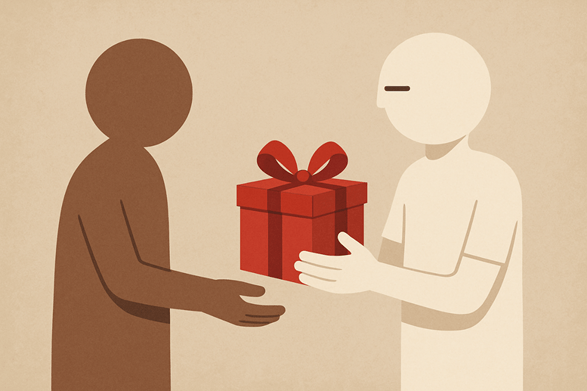
In human relationships, it is natural to give and to hope that our giving is met with acknowledgment, respect, or at the very least basic appreciation. But what happens when someone receives generously, with full awareness of the giver’s effort or sacrifice, yet responds with silence, indifference, or calculated detachment?

This is the subtle, unsettling behavior of what we may call a conscious exploiter. A person who takes with mindfulness but withholds gratitude by choice.

Unlike the oblivious or socially inept, the conscious exploiter is often intellectually aware and emotionally capable but operates with an internal moral economy that excludes reciprocation. Their mindset resembles a form of calculated opportunism, wherein taking becomes justified through rationalizations, entitlements, or social positioning. As psychologist George Simon explains in In Sheep’s Clothing (2010), manipulative personalities often know what they’re doing but frame their actions to appear innocent or justified, making their ingratitude seem subtle or even acceptable (Simon, 2010).

Gratitude as a Marker of Moral Awareness

Gratitude is more than a polite gesture; it’s a sign of mutual recognition, emotional intelligence, and social maturity. Psychologist Robert Emmons, a leading researcher in gratitude science, describes it as “a relationship-strengthening emotion” that connects giver and receiver in a mutual bond of awareness (Emmons & McCullough, 2003). When someone consciously receives but fails to show appreciation, they break the cycle of relational reciprocity, often creating emotional imbalance and mistrust.

Yet in modern society, especially in competitive environments or hierarchical communities, this behavior can become normalized. When success or advantage is prioritized above virtue, even intelligent and aware individuals may suppress expressions of gratitude to maintain power, status, or detachment.

The Ethical Cost of Calculated Ingratitude

From a philosophical lens, this conduct undermines ethical living. The Stoics, such as Seneca, warned of taking without gratitude as a sign of moral decline, arguing that “he who receives a benefit with gratitude repays the first installment on his debt” (On Benefits, trans. Basore, 1935). In Taoist tradition, the natural flow of energy (or qi) depends on balance and reciprocity, not unilateral absorption. To receive while withholding thanks is to disrupt the harmonious flow that underpins healthy relationships.

Such individuals may outwardly maintain charm, social grace, or even spiritual language, but their inner posture remains self-serving. They are “courteous faces masking consuming hearts,” quietly draining emotional resources from those around them.

Recognizing the Pattern

The conscious exploiter is not always easy to identify. Their ingratitude is not loud; it is quiet, measured, and often cloaked in charisma or deflection. You may notice:

  • They accept help readily but never inquire about your well-being.
  • They benefit from your time, knowledge, or effort, yet leave without acknowledgment.
  • They strategically maintain relationships that serve their needs, but dissolve or ignore those that ask for emotional investment.

Unlike the unaware, these individuals choose not to give back. Not out of inability, but out of intention.

Healing the Pattern

For those affected by such dynamics, healing begins with clear boundaries, conscious awareness, and a return to self-honoring. Recognize the signs not with bitterness, but with clarity. You are not obliged to pour into vessels that give nothing in return. As spiritual teacher Gabor Maté emphasizes, boundaries are not walls, but necessary structures to protect your energy and values (Maté, 2022).

References:

  • Emmons, R. A., & McCullough, M. E. (2003). Counting blessings versus burdens: An experimental investigation of gratitude and subjective well-being in daily life. Journal of Personality and Social Psychology, 84(2), 377–389. https://doi.org/10.1037/0022-3514.84.2.377
  • Maté, G. (2022). The Myth of Normal: Trauma, Illness & Healing in a Toxic Culture. Avery.
  • Seneca L. (1935). On Benefits (trans. Aubrey Stewart & E.H. Warmington, Loeb Classical Library). Harvard University Press.
  • Simon, G. (2010). In Sheep’s Clothing: Understanding and Dealing with Manipulative People. Parkhurst Brothers Publishers.

Unseen Wounds: How Emotional Trauma Shapes Our Health

Despite living in an age of advanced medicine and rising health awareness, chronic illness, emotional suffering, and addiction continue to rise. This contradiction invites us to question not just our treatments but also the mindset and motivations behind them. Increasingly, research and lived experience point to unprocessed pain and trauma as the core drivers of both psychological and physiological illness.

Medicine’s Narrow Focus: Suppressing Symptoms Instead of Healing

Contemporary medical practices often focus on symptom suppression rather than root-cause healing. For example, elevated cortisol, a hormone associated with stress, is frequently managed with pharmaceuticals that reduce inflammation but fail to address the underlying source of distress (Sapolsky, 2004). In cases of chronic illness, especially cancer, mainstream interventions often fall back on drastic methods: cutting (surgery), poisoning (chemotherapy), or burning (radiation), with minimal inquiry into psychosomatic or emotional contributors.

The pharmaceutical industry has also come under scrutiny for prioritizing profit-driven solutions that treat stress biochemically without offering tools for actual emotional or relational healing (Gabor Maté, 2010).

A Society Obsessed with Health Yet Unwell

We live in a paradoxical society: obsessed with fitness, diet, and health optimization, yet disconnected from authentic well-being. Emotional pain is frequently seen as a personal failure, and expressions of vulnerability are often equated with weakness. Shame becomes a hidden driver of behavior, shaping identity through internalized messages like “I’m not enough” or “My needs don’t matter” (Brown, 2012).

The metaphor of the “monster” within, like the transformation of Bruce Banner into the Hulk, illustrates how repressed emotions can erupt when unacknowledged. We often assume that other people’s issues are about us, leading to further internal conflict and disconnection.

Trauma: The Root Cause of Addiction and Illness

Pain, especially unresolved emotional pain, is at the root of many afflictions. According to trauma expert Gabor Maté (2008), addiction is not a disease or choice but a response to deep suffering. Whether through substances, work, food, or achievement, people are often trying to soothe pain they may not even fully understand.

Social disconnection, abandonment, and lack of emotional education perpetuate trauma across generations. Society offers little support or guidance for managing grief, shame, or stress. Many turn to coping mechanisms without the tools to process their trauma, which is especially evident in marginalized communities where chronic stress is linked to disproportionately higher rates of illness (Williams & Mohammed, 2009).

The Cost of Disconnection and the Need for Authenticity

In professional fields like medicine, unresolved trauma is common. Some individuals pursue high-achieving careers not from passion but to compensate for feelings of inadequacy or unlovability. Emotional detachment, often a survival strategy in childhood, becomes normalized in adulthood. This disconnection between mind and body leads to chronic stress, illness, and burnout (Van der Kolk, 2014).

Authentic healing requires honoring two essential human needs: attachment and authenticity. When these needs are in conflict, as they often are in trauma survivors, authenticity is usually sacrificed for the sake of relational survival. Reconnecting with one’s truth, expressing anger constructively, and embracing emotional honesty are key steps toward transformation.

Healing the Generational Wounds

Trauma doesn’t disappear. It is often passed from one generation to the next, not just through genetics but through behavior, belief systems, and emotional suppression. Children absorb the stress of their caregivers. Without awareness and intervention, these patterns replicate over time (Yehuda & Lehrner, 2018).

What may appear as weakness, in hypervigilance, dissociation, emotional volatility, is often a response to longstanding unmet needs. Healing begins by naming these patterns and allowing space for expression and integration.

A Shift Toward Integration and Compassion

The healing path is not just clinical, it is relational, emotional, and spiritual. Psychedelic-assisted therapy, somatic practices, plant medicines like ayahuasca, and trauma-informed psychotherapy are gaining traction because they center empathy, connection, and emotional truth (Carhart-Harris & Goodwin, 2017).

As we reevaluate addiction, trauma, and illness through this lens, we begin to see that these challenges are not signs of brokenness. Rather, they are indicators of what needs acknowledgment, healing, and reintegration. Addiction, far from being a moral failure or inherited defect, can be seen as a solution to an emotional problem, a cry for help that must be understood before it can be addressed.

References

Brown, B. (2012). DARING GREATLY. In GOTHAM BOOKS. GOTHAM BOOKS. https://site.ieee.org/sb-nhce/files/2021/06/Brene-brown-book1.pdf

Carhart-Harris, R. L., & Goodwin, G. M. (2017). The therapeutic potential of psychedelic drugs: Past, present, and future. Neuropsychopharmacology, 42(11), 2105–2113. https://doi.org/10.1038/npp.2017.84

Maté, G. (2008). In the realm of hungry ghosts: Close encounters with addiction. Knopf Canada. https://drgabormate.com/book/in-the-realm-of-hungry-ghosts/

Maté, G. (2010). When the body says no: The cost of hidden stress. Wiley. When the Body Says No – Dr. Gabor Maté

Sapolsky, R. (2004). Why Zebras don’t get Ulcers: The acclaimed Guide to Stress, Stress-Related Diseases, and Coping. ResearchGate. https://www.researchgate.net/publication/272161275_Why_Zebras_Don’t_Get_Ulcers_The_Acclaimed_Guide_to_Stress_Stress-Related_Diseases_and_Coping

Van der Kolk, B. (2014). The body keeps the score: Brain, mind, and body in the healing of trauma. Viking. The body keeps the score: Brain, mind, and body in the healing of trauma.

Williams, D. R., & Mohammed, S. A. (2009). Discrimination and racial disparities in health: Evidence and needed research. Journal of Behavioral Medicine, 32(1), 20–47. https://doi.org/10.1007/s10865-008-9185-0

Yehuda, R., & Lehrner, A. (2018). Intergenerational transmission of trauma effects: Putative role of epigenetic mechanisms. World Psychiatry, 17(3), 243–257. https://doi.org/10.1002/wps.20568

Death Begins in the Big Toe

Physiological, Psychological, and Spiritual Dimensions of a Classical Koan

The aphorism “Death begins in the big toe” is a deceptively simple statement drawn from the long tradition of Chinese medical wisdom and Zen contemplative practice. Like many koans and proverbial sayings from classical East Asian thought, its brevity conceals a depth of layered meaning. At the surface level, it speaks to the observable fact that physiological decline often begins at the extremities. On a subtler level, it gestures toward psychological processes of neglect and dissociation that accompany aging and decay. At its deepest level, the phrase serves as a spiritual teaching about impermanence, awareness, and the cyclic nature of existence.

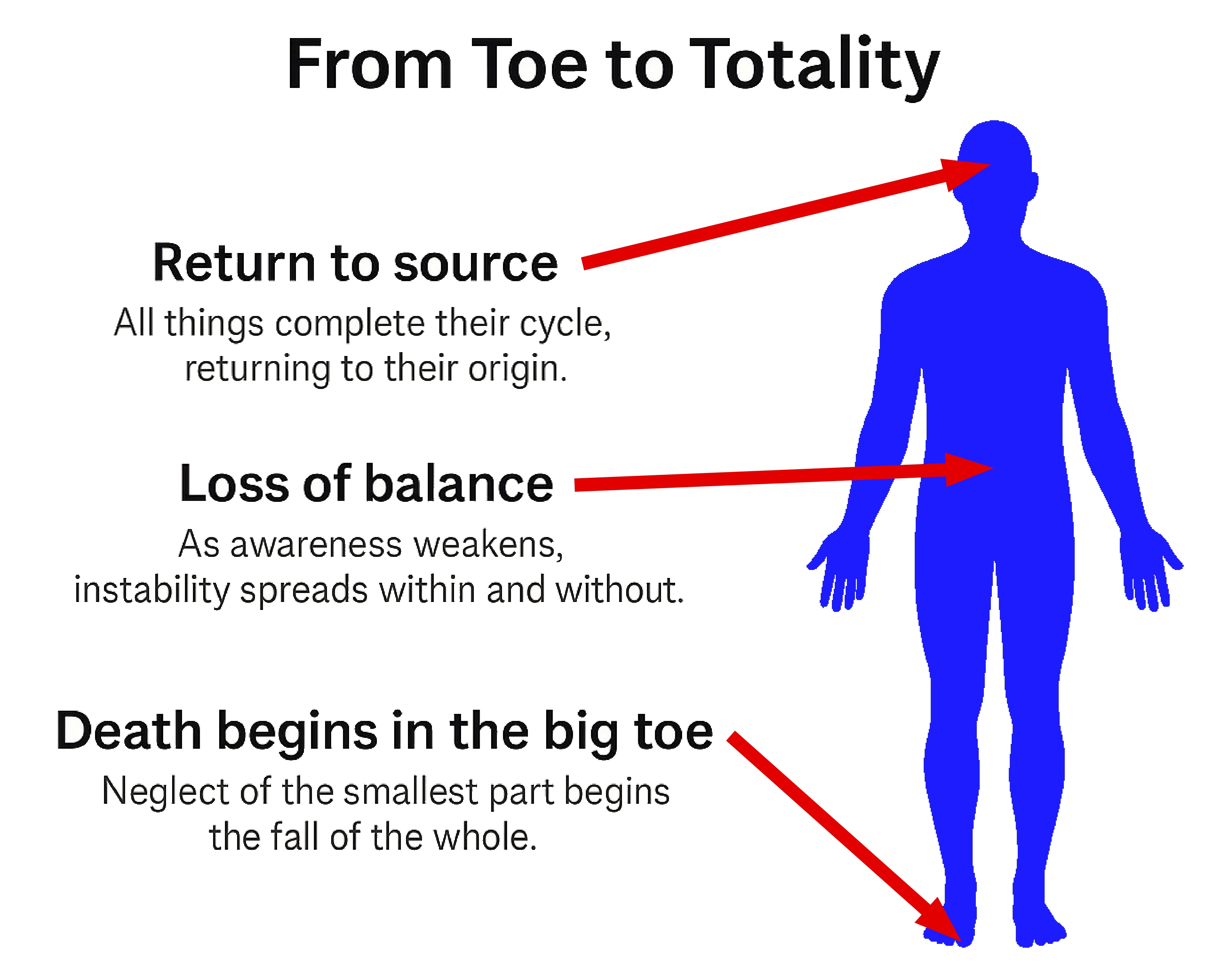
In Taoist medicine and Chan Buddhist teaching alike, the body is seen as a microcosm of the cosmos, and every small detail reflects the whole. The “big toe” in this aphorism symbolizes more than just anatomy: it is the farthest reach of circulation from the heart, the starting or ending point of many meridians, and the first part of the body to meet the earth with each step. That death might begin there is not a literal prediction but a metaphor for the way life’s endings emerge subtly at the margins before manifesting at the center.

Historical Origins of the Koan

Although the precise origin of the saying is difficult to trace, its spirit can be found in early Chinese medical classics and Zen writings. The Huangdi Neijing (Yellow Emperor’s Inner Canon), compiled between the 2nd century BCE and 2nd century CE, repeatedly emphasizes that “illness arises in the extremities before it reaches the organs” and that “to know the distant is to protect the center” (Unschuld, 2003). Similarly, Taoist texts such as the Dao De Jing highlight the principle that great change arises from subtle beginnings: “A tree as great as a man’s embrace springs from a tiny sprout. A journey of a thousand miles begins beneath one’s feet” (Laozi, trans. Addiss & Lombardo, 1993).

In Chan Buddhism, koans often use ordinary body parts as metaphors for the process of awakening or decay. The Tang-era master Yunmen famously remarked, “The toe that touches earth is the whole universe touching earth” (Cleary, 1998), pointing to the subtlety with which the infinite is revealed in the infinitesimal. Over centuries, the saying “death begins in the big toe” entered the shared vocabulary of physicians, monks, and martial artists alike, a succinct reminder that mortality’s first signs are often peripheral and easily overlooked.

Peripheral Circulation and Aging

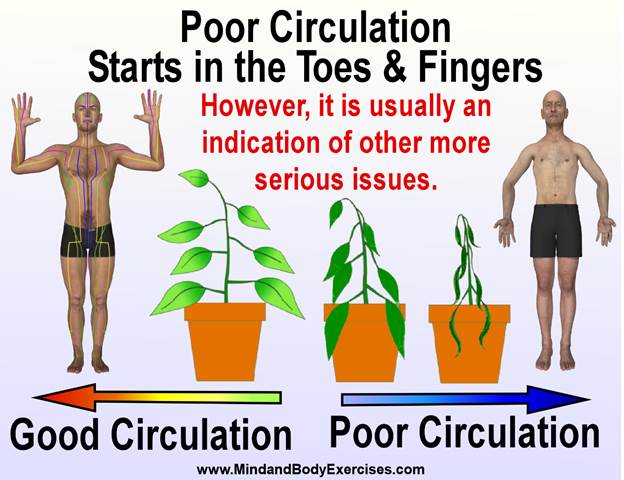
From a biomedical perspective, the big toe is not merely metaphorical. It is literally among the first regions to reveal systemic decline because it sits at the farthest point of the circulatory network. As the heart ages and vascular elasticity decreases, peripheral perfusion diminishes, often manifesting as cold, numb, or discolored toes long before symptoms appear elsewhere (Hamburg & Benjamin, 2009). Peripheral arterial disease, a common condition in older adults, often begins in the feet and toes and is associated with a significant increase in all-cause mortality (Criqui & Aboyans, 2015).

These physiological realities lend empirical support to the ancient observation. If “death” is defined as the progressive failure of the body’s regulatory systems, then it is indeed accurate to say that it begins in the places farthest from the heart and brain. The big toe, as the most distal point of the lower extremities, is the proverbial “canary in the coal mine” for vascular health.

Mobility, Balance, and Longevity

Mobility is another physiological dimension that links the toe to mortality. The toes and particularly the hallux, or great toe, play a crucial role in balance, propulsion, and gait. Degenerative changes, neuropathy, or muscular weakness that impair toe function can reduce walking speed, a biomarker strongly correlated with lifespan (Studenski et al., 2011). Gait speed below 0.8 m/s in older adults is associated with significantly increased risk of disability, hospitalization, and death (Abellan van Kan et al., 2009).

The simple ability to rise from a chair, stand on one’s toes, or walk briskly requires integrated function across multiple physiological systems of the musculoskeletal, nervous, and cardiovascular. Physical decline often first appears subtly in the toes and feet as reduced sensation, proprioception, or push-off strength. Once these diminish, the cascade toward frailty begins. As gerontologist Luigi Ferrucci observed, “Mobility is the most fundamental expression of independence, and its loss is the beginning of the end” (Ferrucci et al., 2016).

Meridians and Vital Energy Flow

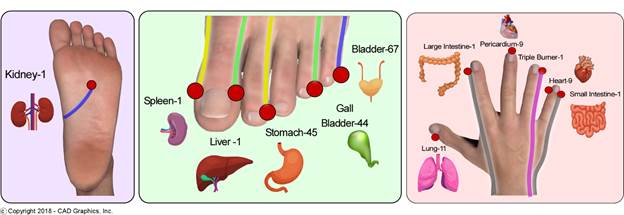
Traditional Chinese medicine (TCM) expresses similar insights through the language of qi (vital energy) and meridians. Several of the body’s primary channels, including the Liver, Spleen, Stomach, Kidney, and Bladder, either begin or end at the toes (Maciocia, 2015). These meridians govern vital processes such as digestion, reproduction, and detoxification. Disruption of flow at the periphery is believed to reverberate inward, creating systemic disharmony.

As the Lingshu Jing (a companion text to the Neijing) states, “When the qi of the extremities is blocked, the organs within will suffer” (trans. Wu, 2008). In this paradigm, coldness, stagnation, or numbness in the toes are not trivial complaints but early signs of declining vitality, the first whispers of death’s approach.

While the physiological layer of the aphorism highlights the body’s peripheral signals as early indicators of decline, the psychological dimension explores how awareness, or lack thereof shapes that process. In this context, “death” represents not just physical decay but the gradual erosion of vitality, engagement, and responsiveness to life’s subtleties.

Dissociation and Embodiment

Modern psychology has increasingly recognized the importance of embodiment, the lived experience of inhabiting one’s physical body, as essential to mental health and cognitive function (Durt, et al (2017). Yet, in contemporary societies characterized by sedentary lifestyles and disembodied digital existence, many people lose sensitivity to their physical selves. The feet and toes, distant from the brain and often ignored, become metaphors for the neglected peripheries of awareness.

This dissociation is not benign. Studies have shown that reduced proprioception and interoception, the senses of bodily position and internal state, correlate with anxiety, depression, and diminished cognitive function (Khalsa et al., 2018). In Jungian psychology, the shadow represents the disowned or unconscious aspects of the self. In a similar way, the body’s extremities can symbolize the “shadow” of bodily awareness, parts of ourselves we rarely think about but that profoundly shape our experience. Neglecting them reflects a broader neglect of the unconscious and the subtle.

The Psychology of Small Beginnings

The aphorism also teaches that decline begins with small lapses in attention. Cognitive-behavioral theorists note that habits, both constructive and destructive can emerge gradually through repeated micro-decisions (Neal et al., 2012). In the same way, death “beginning” in the big toe symbolizes the cumulative effect of minor neglect. A blister ignored becomes an infection; a sedentary day becomes a sedentary year. The toe, seemingly insignificant, becomes the starting point of a larger process of decay.

Zen teachings mirror this concept. Master Dōgen wrote, “To neglect the small is to betray the great” (Shōbōgenzō, trans. Nishijima & Cross, 1994). Psychologically, the lesson is clear: by training awareness toward the smallest and most peripheral phenomena, the sensations in the toes, the first signs of imbalance, the whispers of discontent, one cultivates a capacity to intervene before decay becomes inevitable.

At the spiritual level, “death begins in the big toe” is neither a physiological warning nor a psychological metaphor but a profound statement about impermanence and the nature of life itself.

Impermanence and the Gradual Approach of Death

Buddhist philosophy emphasizes that impermanence (anicca) is the fundamental characteristic of all conditioned phenomena. Life does not end abruptly but is a continuous unfolding of change, a river flowing toward the ocean of dissolution. Just as the body’s vitality wanes first at its extremities, so too does the soul’s departure begin subtly in the smallest changes of breath, the faintest shifts in sensation.

The Diamond Sutra reminds practitioners that “All conditioned things are like a dream, an illusion, a bubble, a shadow” (Red Pine, 2001). The big toe, as the furthest point from the body’s “center,” becomes a symbol of these subtle transitions. Death is not a singular event but a process that begins long before the final breath and the wise cultivate awareness of this process without fear.

The Circle of Return

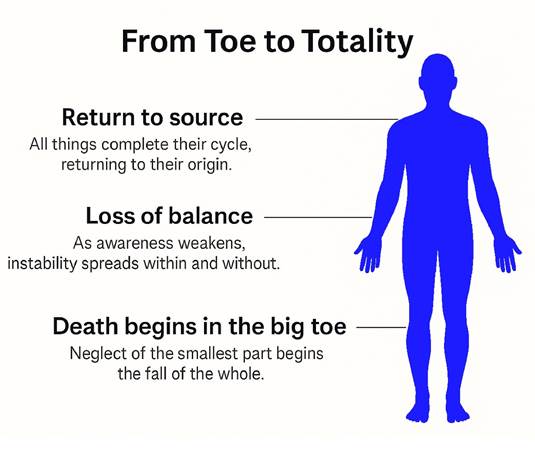
Taoist cosmology frames death not as an end but as a return to the source. “Returning is the motion of the Dao,” Laozi wrote (Tao Te Ching, trans. Addiss & Lombardo, 1993). In this framework, the toe is the starting point of walking while also becoming the place where the journey ends. The path that began with the first step returns to the same ground.

This cyclical vision is echoed in many traditional arts. In Taijiquan, for example, practitioners speak of “returning to the root” where physical, energetic, and spiritual processes are symbolized by grounding through the feet. As the root weakens with age, the spirit begins its return to the Dao. “Death begins in the big toe” thus becomes a poetic recognition of the natural rhythm of return: from periphery to center, from earth to heaven, from form to formlessness.

Integrative Perspective: Caring for the Small to Preserve the Whole

Across all three dimensions. physiological, psychological, and spiritual, a single principle emerges: the state of the whole is revealed in the condition of the periphery. The big toe, distant from the heart and often neglected, becomes both a literal and metaphorical early warning system. It tells us about the integrity of our circulation, the sharpness of our awareness, and the depth of our spiritual understanding.

In preventive medicine, this principle underlies the emphasis on foot care in diabetic patients, where early interventions at the level of the toes can prevent systemic complications (Boulton et al., 2005). In psychology, mindfulness practices that cultivate awareness of the body from the ground up improve interoception and reduce emotional dysregulation (Mehling et al., 2011). In spiritual disciplines, practices like walking meditation (baguazhang), standing meditation (zhanzhuang), and barefoot qigong remind practitioners to anchor their consciousness in the humblest and forgotten parts of the body.

To say that “death begins in the big toe” is therefore to issue a call for radical attentiveness — to the smallest sensations, the earliest signs of imbalance, and the often-ignored peripheries of our existence. It is a koan not about death, but about life: a reminder that to live fully is to remain awake even to the faintest signals of change.

DimensionMeaning of “Death Begins in the Big Toe”Key Insights & Applications
PhysiologicalEarly signs of systemic decline often appear first in the extremities (coldness, numbness, circulation issues, mobility loss).– Toe and foot health reflect cardiovascular and neurological function. – Loss of gait speed or balance predicts mortality. – Meridians begin/end at the toes, blockages here affect the entire body. – Preventive care (mobility, balance, circulation) can slow aging.
PsychologicalNeglect and dissociation often begin with the smallest, least noticed aspects of the self – the “periphery” of awareness.– Reduced body awareness correlates with anxiety, depression, and cognitive decline. – Small acts of neglect accumulate into larger patterns of decay. – Training awareness of subtle sensations builds mindfulness and resilience. – Attention to the “shadow” parts of the self, fosters wholeness.
SpiritualDeath is a gradual return to source, beginning subtly and symbolically at the periphery – a process to be observed, not feared.– Impermanence is revealed in subtle transitions. – The journey that begins with the first step returns to the same ground. – Awareness of small changes leads to acceptance of life’s cycles. – Practices like walking meditation and grounding cultivate spiritual presence.

Conclusion

The Chinese saying “death begins in the big toe” is more than a quaint proverb. It is a concise expression of a deep and timeless truth: that decline, decay, and death all begin subtly, in places and ways we are least likely to notice. Physiologically, the toe is the frontier where circulatory weakness, neuropathy, and frailty first manifest. Psychologically, it symbolizes the peripheries of awareness, where neglect and dissociation take root. Spiritually, it represents the cosmic rhythm of impermanence, where the journey back to the source begins in the smallest steps.

Ultimately, the koan invites us to approach life with a heightened sensitivity, to honor the periphery as we do the center, to care for the small as we do the great. It teaches that the path to vitality, wisdom, and even enlightenment often begins not with dramatic gestures but with the humble act of noticing what is happening beneath our feet.

References:

Abellan van Kan, G., Rolland, Y., Andrieu, S., Bauer, J., Beauchet, O., Bonnefoy, M., Cesari, M., Donini, L. M., Gillette Guyonnet, S., Inzitari, M., Nourhashemi, F., Onder, G., Ritz, P., Salva, A., Visser, M., & Vellas, B. (2009). Gait speed at usual pace as a predictor of adverse outcomes in community-dwelling older people an International Academy on Nutrition and Aging (IANA) Task Force. The journal of nutrition, health & aging, 13(10), 881–889. https://doi.org/10.1007/s12603-009-0246-z

Addiss, S., & Lombardo, S. (Trans.). (1993). Tao Te Ching. Hackett.

Boulton, A. J. M., Armstrong, D. G., Albert, S. F., Frykberg, R. G., Hellman, R., Kirkman, M. S., … & Sanders, L. J. (2005). Comprehensive foot examination and risk assessment: A report of the task force of the foot care interest group of the American Diabetes Association. Diabetes Care, 31(8), 1679–1685. https://doi.org/10.2337/dc08-9021

Cleary, T. (1998). Zen Essence: The Science of Freedom. Shambhala.

Criqui, M. H., & Aboyans, V. (2015). Epidemiology of peripheral artery disease. Circulation research, 116(9), 1509–1526. https://doi.org/10.1161/CIRCRESAHA.116.303849

Durt, C., Fuchs, T., & Tewes, C. (Eds.). (2017). Embodiment, enaction, and culture: Investigating the constitution of the shared world. Boston Review. https://psycnet.apa.org/record/2017-28670-000

Ferrucci, L., Cooper, R., Shardell, M., Simonsick, E. M., Schrack, J. A., & Kuh, D. (2016). Age-Related Change in Mobility: Perspectives From Life Course Epidemiology and Geroscience. The journals of gerontology. Series A, Biological sciences and medical sciences, 71(9), 1184–1194. https://doi.org/10.1093/gerona/glw043

Hamburg, N. M., & Benjamin, E. J. (2009). Assessment of endothelial function using digital pulse amplitude tonometry. Trends in cardiovascular medicine, 19(1), 6–11. https://doi.org/10.1016/j.tcm.2009.03.001

Khalsa, S. S., Adolphs, R., Cameron, O. G., Critchley, H. D., Davenport, P. W., Feinstein, J. S., … & Zucker, N. (2018). Interoception and mental health: A roadmap. Biological Psychiatry: Cognitive Neuroscience and Neuroimaging, 3(6), 501–513. https://doi.org/10.1016/j.bpsc.2017.12.004

Laozi. (1993). Tao Te Ching (S. Addiss & S. Lombardo, Trans.). Hackett. https://archive.org/details/taoteching0000laoz_l1p2

Maciocia, G. (2015). The Foundations of Chinese Medicine: A Comprehensive Text for Acupuncturists and Herbalists (3rd ed.). Elsevier.

Mehling, W. E., Wrubel, J., Daubenmier, J. J., Price, C. J., Kerr, C. E., Silow, T., Gopisetty, V., & Stewart, A. L. (2011). Body Awareness: a phenomenological inquiry into the common ground of mind-body therapies. Philosophy, ethics, and humanities in medicine : PEHM, 6, 6. https://doi.org/10.1186/1747-5341-6-6

Neal, D. T., Wood, W., & Quinn, J. M. (2006). Habits—A Repeat Performance. Current Directions in Psychological Science, 15(4), 198-202. https://doi.org/10.1111/j.1467-8721.2006.00435.x

Nishijima, G., & Cross, C. (1994). Shōbōgenzō: The True Dharma Eye Treasury (Vol. 1). Windbell.

Red Pine. (2001). The Diamond Sutra: The Perfection of Wisdom. Counterpoint.

Studenski, S., Perera, S., Patel, K., Rosano, C., Faulkner, K., Inzitari, M., Brach, J., Chandler, J., Cawthon, P., Connor, E. B., Nevitt, M., Visser, M., Kritchevsky, S., Badinelli, S., Harris, T., Newman, A. B., Cauley, J., Ferrucci, L., & Guralnik, J. (2011). Gait speed and survival in older adults. JAMA, 305(1), 50–58. https://doi.org/10.1001/jama.2010.1923

Unschuld, P. U., Jr. (2003). Huang Di nei jing su wen. University of California Press. https://ia801208.us.archive.org/9/items/huang-di-nei-jing-su-wen/Huang%20Di%20nei%20jing%20su%20wen.pdf

Wu, J. (2008). Ling Shu: The Spiritual Pivot. University of Hawaii Press.