The Dual Nature of Virtue

How Our Greatest Strengths Become Our Greatest Weaknesses

Human nature is inherently paradoxical. The very traits that empower individuals to succeed, lead, and create meaning in life often carry within them the seeds of their undoing. This reality, that one’s best qualities can also become one’s greatest liabilities reflects the profound wisdom of the yin-yang principle, a foundational concept in classical Chinese philosophy. Yin and yang are not simply opposites; they are complementary, interdependent forces that define and transform one another. Just as light is known only in contrast to darkness, strength becomes fully understood only when we recognize how it can slip into weakness.
Yin and Yang: Interdependent Forces

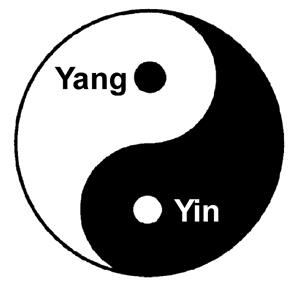
The Tao Te Ching teaches that the universe is governed by the continuous interplay of yin (receptive, passive, yielding) and yang (active, assertive, dynamic) energies. These forces are not antagonistic but mutually defining, each containing the seed of the other (Tao Te Ching, trans. Lau, 1963). This principle applies not only to the natural world but also to human psychology and character. In the same way that excess yang can result in aggression and burnout, or excessive yin in stagnation and withdrawal, personal strengths become vulnerabilities when pushed to extremes.

Aristotle expressed a similar idea in his theory of the “golden mean.” Virtue, he argued, lies between two extremes: deficiency and excess (Aristotle, trans. Irwin, 1999). Courage, for example, is the balance between cowardice and recklessness; generosity lies between stinginess and extravagance. When a trait exceeds its proper measure, it ceases to be a virtue. This echoes the yin-yang insight that balance, not absolute dominance, is the source of harmony and strength.

When Strength Turns to Weakness

Confidence and Arrogance
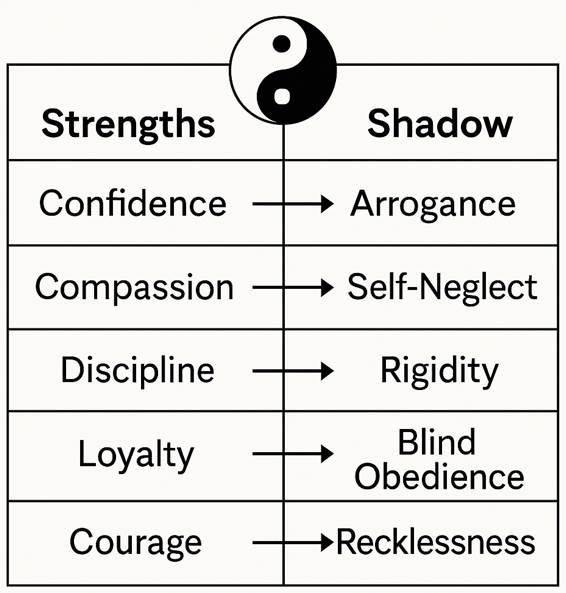
Confidence is essential to growth and achievement. It enables people to take risks, speak truthfully, and persist through adversity. Yet, unchecked confidence easily becomes arrogance, a refusal to accept feedback or recognize limitations (Peterson & Seligman, 2004). The same force that drives leadership can blind a person to alternative perspectives, eroding relationships and stifling growth.

Compassion and Self-Neglect
Compassion is one of humanity’s highest virtues, binding individuals and societies through empathy and care. However, compassion without boundaries can lead to emotional exhaustion, codependence, or enabling harmful behaviors (Figley, 2002). In caring for others, one may neglect oneself, demonstrating how yin’s softness can dissolve into weakness if not balanced by yang’s firmness.

Discipline and Rigidity
Discipline builds resilience and mastery. But when discipline ossifies into inflexibility, it inhibits creativity and adaptability (Dweck, 2017). Martial artists often repeat the adage: “Be firm but not unyielding; flexible but not weak.” Like a tree that bends in the wind, human character must adapt to changing circumstances or risk breaking under pressure.

Loyalty and Blind Obedience
Loyalty fosters trust and cohesion. Yet blind loyalty, devotion without discernment, has fueled countless injustices throughout history. Jung (1959) warned that unexamined virtues often mask hidden “shadows,” unconscious impulses that distort behavior. Loyalty’s shadow is the surrender of critical thought, allowing unethical actions to persist under the guise of fidelity.

The Shadow and the Self

Carl Jung’s concept of the shadow offers a psychological lens for understanding this paradox. Every conscious virtue has an unconscious counterpart that, if unacknowledged, can manifest destructively (Jung, 1959). The perfectionist’s pursuit of excellence may hide a fear of inadequacy; the truth-teller’s bluntness may conceal a need for control. To achieve wholeness, what Jung termed individuation, individuals must confront and integrate these hidden aspects rather than deny them.
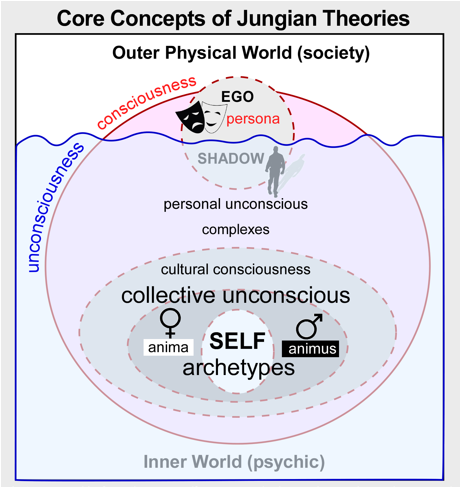
This process mirrors the yin-yang symbol, where each half contains a seed of its opposite. Strength and weakness are not distinct categories but fluid states that transform into one another depending on context, awareness, and intention.
Cultivating Balance and Wisdom

Recognizing the dual nature of virtue is not meant to discourage the cultivation of strengths but to deepen self-awareness. True wisdom lies in practicing moderation, context sensitivity, and ongoing reflection. Strategies for maintaining this balance include:

  • Self-Observation: Mindfulness and introspection can reveal when a strength is tipping into excess.
  • Feedback and Dialogue: Honest input from trusted sources helps counter blind spots.
  • Flexibility: Adapting behavior to context allows traits to express themselves constructively rather than rigidly.

By embracing the yin-yang dynamic within ourselves, we learn to wield our strengths with discernment, preventing them from becoming self-defeating forces.

Harmony Over Extremes

The paradox that one’s best trait can also be one’s worst enemy is not a flaw in human design but a reflection of deeper universal patterns. As yin and yang continuously transform into one another, so too do strength and weakness. The path to mastery — of self, of relationships, of life — lies not in eliminating our shadows but in integrating them, not in suppressing our virtues but in balancing them. In doing so, we cultivate wisdom that transcends dualities and reflects the natural harmony of the Tao.

References:

Aristotle. (1999). Nicomachean ethics (T. Irwin, Trans.). Hackett Publishing. (Original work published ca. 350 BCE)  https://archive.org/details/isbn_9780872204645

Dweck, C. S. (2017). Mindset: The new psychology of success. Ballantine Books. https://psycnet.apa.org/record/2006-08575-000

Figley, C. R. (2002). Compassion fatigue: Psychotherapists’ chronic lack of self-care. Journal of Clinical Psychology, 58(11), 1433–1441. https://doi.org/10.1002/jclp.10090

Jung, C. G. (1959). Aion: Researches into the phenomenology of the self (R. F. C. Hull, Trans.). Princeton University Press. https://www.academia.edu/19686702/Carl_Jung_Aion_Researches_into_the_Phenomenology_of_the_Self_pdf_

Laozi. (1963). Tao te ching (D. C. Lau, Trans.). Penguin Classics.

Peterson, C., & Seligman, M. E. P. (2004). Character strengths and virtues: A handbook and classification. Oxford University Press. https://psycnet.apa.org/record/2004-13277-000

Faith, Philosophy, and Science

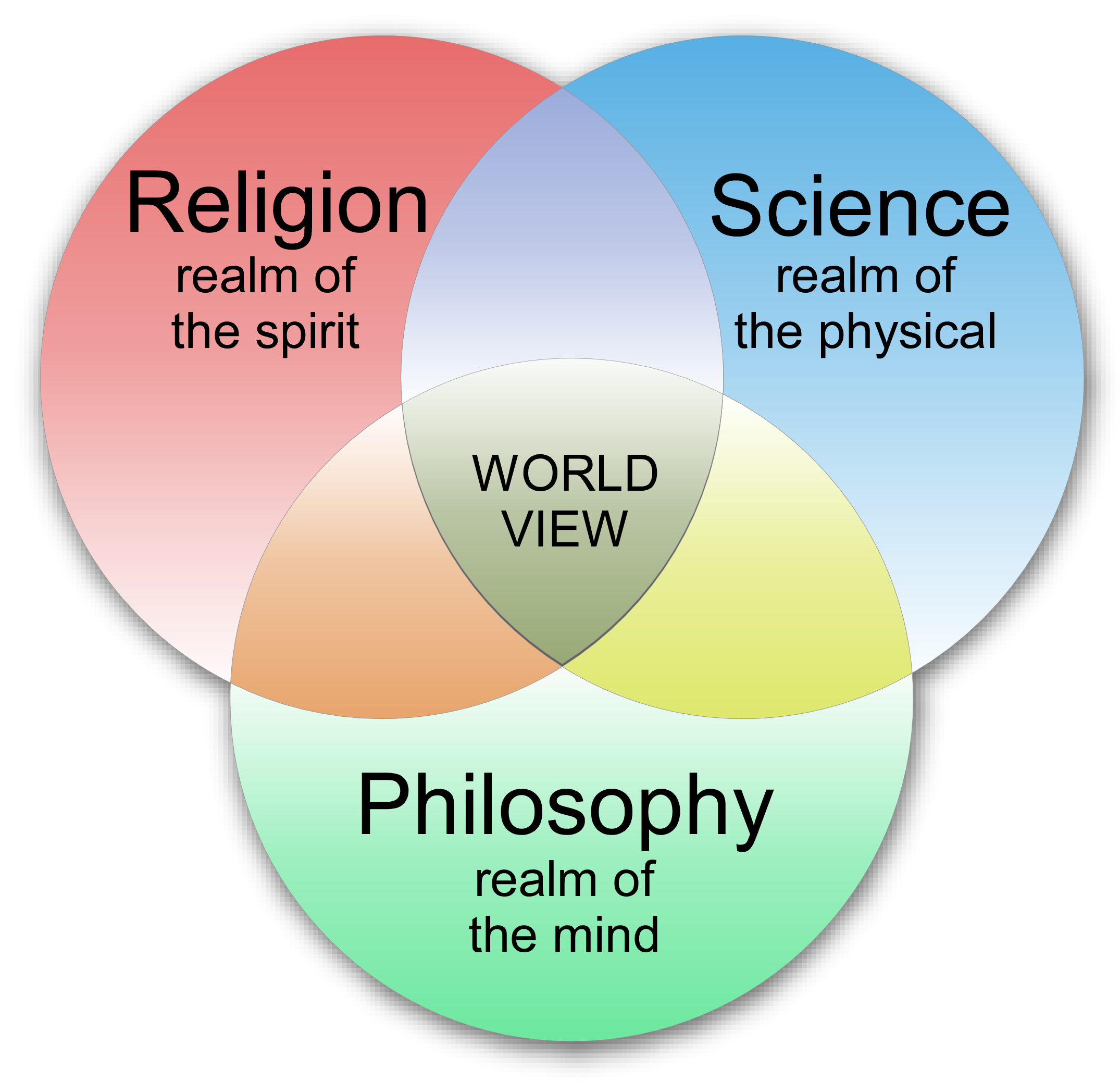
Throughout human history, the quest to understand existence, purpose, and the nature of reality has taken many forms. While these explorations often overlap, they can generally be organized into three interrelated systems of inquiry: faith-based systems, philosophical systems, and scientific systems. Each provides a unique lens through which humanity seeks truth. Faith appeals to divine or spiritual revelation, philosophy relies on reason and reflection, and science depends on observation and empirical validation (Capra, 1975; Wilber, 2000). Together, they represent the triadic foundation of human knowledge and understanding (Russell, 1945; Hawking, 1988). I must comment that some may debate what specific systems fall under what labels.

Faith-based systems are rooted in spiritual conviction and the belief in realities that transcend material experience (Eliade, 1959). They have shaped civilizations, moral codes, and social structures, offering meaning beyond the tangible (Smith, 1991). Whether through monotheism, polytheism, or animism, these systems establish a bridge between the human and the divine (Armstrong, 2006). Faith systems often focus on transformation through belief, ritual, and devotion. They frame life as a sacred journey, interweaving myth, morality, and transcendence into the human story (Otto, 1917/1958; Campbell, 1949).

Major World Religions

  • Christianity
  • Islam
  • Judaism
  • Hinduism
  • Buddhism
  • Sikhism

Indigenous / Ethnic Traditions

  • Shinto (Japan)
  • Taoism (China)
  • Confucianism (often straddles philosophy & faith)
  • Native American spiritual traditions
  • African traditional religions (e.g., Yoruba, Akan)
  • Aboriginal Dreamtime spirituality

Mystical / Esoteric Systems

  • Gnosticism
  • Kabbalah (Jewish mysticism)
  • Sufism (Islamic mysticism)
  • Christian Mysticism
  • Hermeticism
  • Theosophy
  • New Age and Neo-Pagan movements

Philosophy occupies the middle ground between belief and empirical proof. It explores the “why” and “how” of existence through logic, introspection, and dialogue (Russell, 1945). Philosophical inquiry provides a rational structure for understanding ethics, consciousness, and the principles underlying all experience (Nagel, 1986). Philosophy seeks coherence and meaning through thought rather than faith yet often converges with both spirituality and science in its pursuit of truth. It serves as the bridge between the unseen convictions of religion and the measured observations of science (Wilber, 2000; Capra, 1975).

Classical Philosophy

  • Greek: Platonism, Aristotelianism, Stoicism, Epicureanism
  • Indian: Vedanta, Samkhya, Nyaya, Yoga, Jain philosophy, Buddhist philosophy
  • Chinese: Taoism, Confucianism, Legalism, Mohism

Medieval & Theological Philosophy

  • Scholasticism (Thomas Aquinas, Augustine)
  • Islamic philosophy (Avicenna, Averroes)
  • Jewish philosophy (Maimonides)

Modern Philosophy

  • Rationalism (Descartes, Spinoza, Leibniz)
  • Empiricism (Locke, Berkeley, Hume)
  • Idealism (Kant, Hegel)
  • Existentialism (Kierkegaard, Sartre)
  • Pragmatism (Peirce, James, Dewey)
  • Phenomenology (Husserl, Merleau-Ponty)
  • Structuralism & Postmodernism (Foucault, Derrida)

Eastern Philosophy

  • Taoist metaphysics (Yin–Yang, Wu Wei)
  • Zen and Chan Buddhism
  • Confucian ethics
  • Advaita Vedanta
  • Tibetan philosophy (Madhyamaka, Yogācāra)

Science represents the empirical branch of human understanding through testing, measuring, and analyzing the natural world (Popper, 1959). It aims not to interpret meaning but to uncover mechanisms. Rooted in observation and experimentation, scientific disciplines have revolutionized how humanity interacts with the universe (Kuhn, 1962). Through experimentation and evidence, science strives for predictability and control. Yet, even in its rigor, it leaves open the mystery of “why,” which returns the seeker to the realms of philosophy and faith (Einstein, 1930/2005).

Natural Sciences

  • Physics
  • Chemistry
  • Biology
  • Astronomy
  • Geology
  • Ecology

Formal Sciences

  • Mathematics
  • Logic
  • Computer Science
  • Statistics

Social Sciences

  • Psychology
  • Sociology
  • Anthropology
  • Economics
  • Political Science
  • Linguistics

Applied Sciences

  • Medicine
  • Engineering
  • Environmental Science
  • Neuroscience
  • Health Sciences

Emerging / Interdisciplinary Fields

  • Cognitive Science
  • Systems Theory
  • Biophysics
  • Artificial Intelligence
  • Quantum Information Science

Faith, philosophy, and science form a triad that has guided human civilization toward deeper understanding and evolution. Faith gives meaning to existence, philosophy refines thought and ethics, and science illuminates the mechanics of reality. When harmonized, they represent the full spectrum of human inquiry, in body, mind, and spirit in dynamic equilibrium (Wilber, 2000; Capra, 1996). The synthesis of these systems invites a more holistic comprehension of life itself, reminding us that truth may not lie in one domain alone, but in the dialogue between them (Hawking, 1988; Nasr, 2007).

References:

Armstrong, K. (2006). The great transformation: The beginning of our religious traditions. Knopf. https://psycnet.apa.org/record/2006-07760-000

Campbell, J. (1949). The hero with a thousand faces. Princeton University Press.

Capra, F. (1975). The Tao of physics. Shambhala. https://archive.org/details/the-tao-of-physics_202504

Capra, F. (1996). The web of life: A new scientific understanding of living systems. Anchor Books. https://archive.org/details/weboflifenewscie00capr

Eliade, M. (1959). The sacred and the profane: The nature of religion. Harcourt Brace. https://archive.org/details/sacredprofanenat00elia

Einstein, A. (2005). Ideas and opinions. Crown. (Original work published 1930)

Hawking, S. (1988). A brief history of time. Bantam Books. https://archive.org/details/briefhistoryofti0000hawk

Kuhn, T. S. (1962). The structure of scientific revolutions. University of Chicago Press.

Nagel, T. (1986). The view from nowhere. Oxford University Press.

Nasr, S. H. (2007). Religion and the order of nature. Oxford University Press.

Otto, R. (1958). The idea of the holy. Oxford University Press. (Original work published 1917)

Popper, K. R. (1959). The logic of scientific discovery. Hutchinson. https://philotextes.info/spip/IMG/pdf/popper-logic-scientific-discovery.pdf

Russell, B. (1945). A history of Western philosophy. Simon & Schuster.

Smith, W. C. (1991). The Meaning and End of Religion. Augsburg Fortress. https://doi.org/10.2307/j.ctv1hqdhgt

Wilber, K. (2000). A theory of everything: An integral vision for business, politics, science, and spirituality. Shambhala.

Traditional Korean Buddhist Clerical Attire

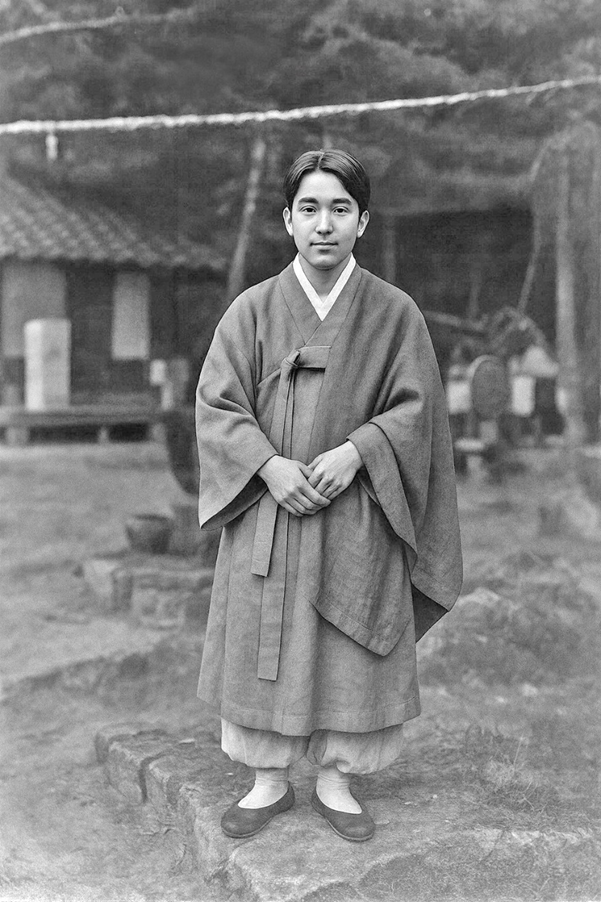
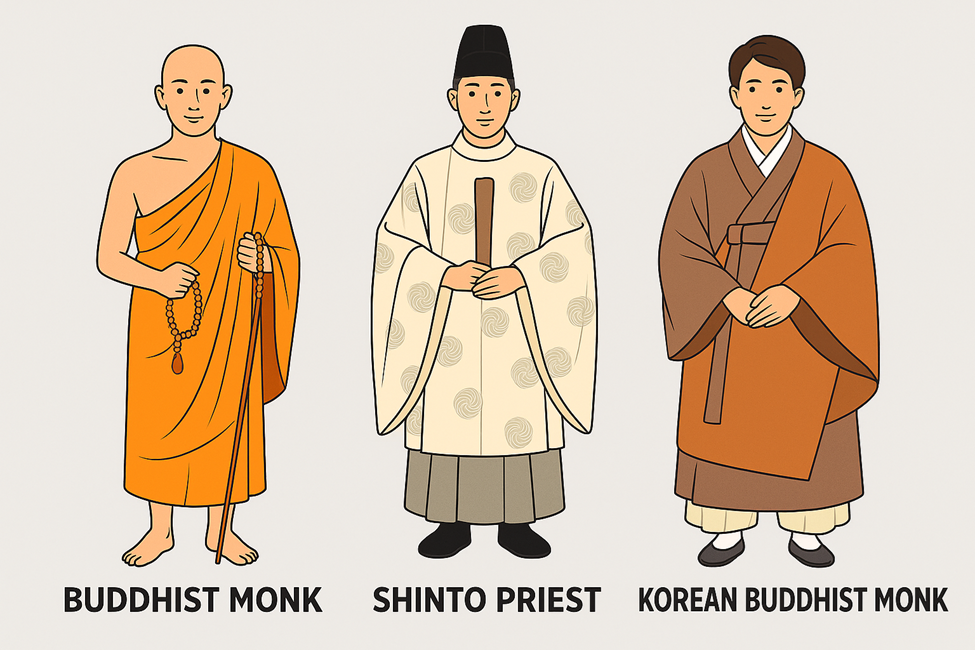
In my research of Eastern culture, traditions and even more specifically, martial arts, I have come across some interesting images and photographs warranting further scrutiny and discussion. The mid-20th century image below under discussion captures a seemingly young male in clerical-style robes. At first glance, the formality of the garment, the draped outer layer, and the posture may evoke comparison to Japanese Shinto vestments. However, closer historical and cultural examination reveals that the attire aligns more strongly with Korean Buddhist clerical dress of the period, particularly in the late 1940s. This distinction is significant in interpreting the individual’s identity, role, and cultural context.

This photograph shows mid-20th-century rural Korea, depicting a young Buddhist lay scholar standing within a temple courtyard. The tiled-roof structure in the background reflects traditional hanok temple architecture, while the rough stonework beneath his feet signifies a liminal space between the secular and sacred. The rope strung across the upper frame (cheonjul), likely a ceremonial boundary, demarcates the area used for purification or seasonal rites. Together with the surrounding forested setting, these details express Korea’s enduring Seon (Zen) Buddhist aesthetic in simplicity, natural harmony, and introspection. The young man’s attire is a jangsam robe layered beneath a seungbok and possibly a lightweight durumagi, signifies Buddhist devotion without full ordination, embodying humility and continuity of native spiritual traditions in the years following Japanese occupation (Buswell & Lopez, 2014; Jogye Order of Korean Buddhism, 2016; Victoria and Albert Museum, n.d.; Lee, 2007).

Korean Buddhist Attire: Core Garments

In Korea, Buddhist monks and clerics were distinguished by a layered system of robes that combined both functionality and symbolism (Jogye Order of Korean Buddhism, 2016):

  • Jangsam: The jangsam was a long-sleeved robe commonly worn by monks in both formal and ritual settings. It served as the foundational clerical garment, similar in form to other East Asian monastic robes but adapted to Korean stylistic preferences. Its ample sleeves and length conveyed dignity and solemnity, reflecting the Buddhist ideal of detachment from worldly vanity (Jogye Order of Korean Buddhism, 2016).
  • Seungbok: The seungbok was the formal robe, typically heavier in material and reserved for ceremonies. This garment marked elevated ritual occasions and reinforced the clerical role of the wearer. Unlike Japanese Shinto robes (sokutai or jōe), the Korean seungbok emphasized simplicity and austerity rather than ornamental layering (Buswell & Lopez, 2013).
  • Durumagi: Over the jangsam or seungbok, Korean monks sometimes wore a durumagi, or an outer coat especially common in colder months or crafted from lightweight ramie during hot summers. The use of ramie, a breathable fabric, reflects both regional textile traditions and the pragmatic adaptation of Buddhist attire to Korea’s humid climate (Lee, 2007; Victoria and Albert Museum, n.d.)

Distinctive Markers of Korean Buddhism

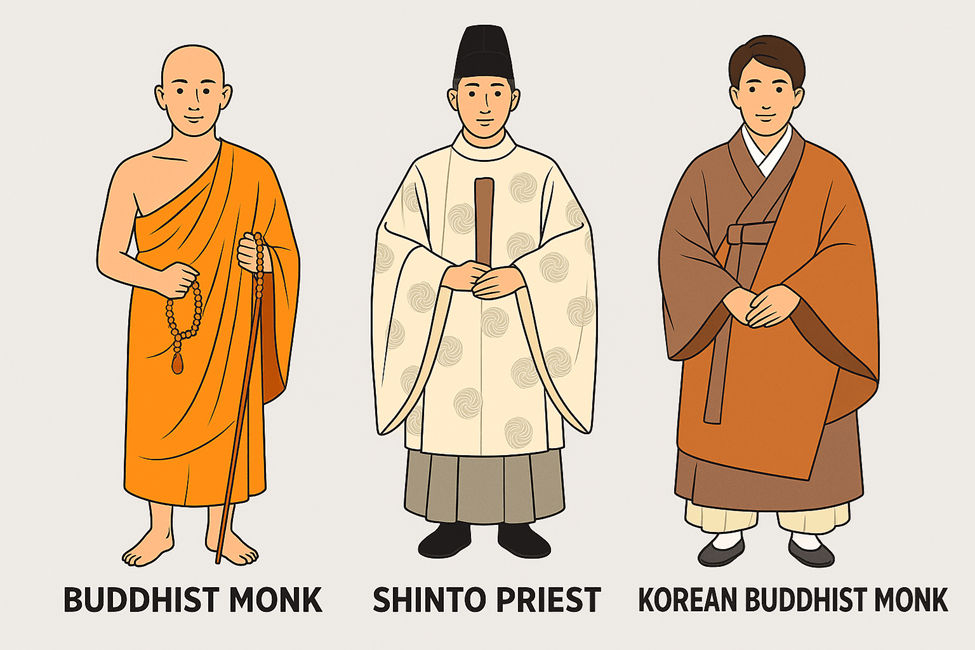
Several key features help distinguish the Korean Buddhist clerical identity in this image from that of a Japanese Shinto priest:

  1. Garment Structure: Korean monks layered jangsam and seungbok, sometimes with a durumagi, rather than the sokutai and white hakama of Shinto priests.
  2. Hands and Objects: Korean monks traditionally held the sash (kasa belt) or ribbons of their robes (Buswell & Lopez, 2014). By contrast, Shinto priests often carried a shaku, a flat wooden baton symbolizing authority and ritual meditation (Grapard, 1984).
  3. Head: A shaved head was a Buddhist marker (Buswell & Lopez, 2014), symbolizing renunciation of worldly attachments. This stands in contrast to Shinto priests, who wore their hair and covered it with the black lacquered eboshi hat, itself a courtly remnant of Japan’s Heian era.
  4. Color Palette: Korean Buddhist robes were often white, gray, or natural-toned, with colors representing humility and impermanence. In summer, ramie fabric offered a light, breathable weave. This muted aesthetic differs from the brightly layered silks or symbolic colors of Shinto ceremonial vestments.

Historical Context: Korea in the 1940s

The timing of this photograph (circa 1947) is particularly significant. Korea had just emerged from Japanese colonial rule (1910–1945). During the occupation, Japanese cultural and religious symbols, including Shinto shrines, were imposed on the Korean populace. However, Buddhist traditions persisted and adapted.

Thus, while an initial reading of the robes might suggest Japanese Shinto influence, the more accurate interpretation is that these garments represent Korean Buddhist continuity, emphasizing tradition over imposed cultural forms. For a young novice or lay practitioner-scholar, wearing such robes symbolized dedication to the Dharma, education in Buddhist doctrine, and participation in monastic life.

Significance of the Image

This image, therefore, is more than an image of an individual; it embodies a cultural and historical dialogue:

  • It reflects Korean Buddhism’s resilience in maintaining distinctive clerical attire despite decades of Japanese cultural hegemony.
  • It demonstrates the formalized roles of youth in Buddhist practice, as young novices (sometimes in their teens) trained in monastic settings.
  • It highlights the visual markers of identity, robe layering, and sash handling that firmly locate the figure in Korean Buddhist tradition rather than Shinto ritual practice.

The attire in this mid-20th century Korean image should not be mistaken for Japanese Shinto garb. Instead, it exemplifies the distinctive markers of Korean Buddhism: the jangsam, seungbok, and durumagi, worn with simplicity and practicality; the handling of robe sashes. While Shinto may serve as a useful comparative foil, the clothing and cultural cues here strongly support a Buddhist clerical identity in post-liberation Korea (Jogye Order of Korean Buddhism, 2016; Victoria and Albert Museum, n.d.).

Three Traditions of East Asian Clerical Attire

FeatureShinto Priest (Japan)General Buddhist Monk (China/India lineage)Korean Buddhist Monk (Korea)
Core RobeJōe or sokutai: layered silk robes of court style.Kasaya: orange/yellow robe draped over one shoulder.Jangsam: long-sleeved daily/ritual robe.
Formal GarmentSokutai: formal court-style vestment.Kasaya folded with underrobe for ceremonies.Seungbok: heavier robe for formal services.
Outer LayerKariginu or outer mantle.Optional shoulder robe or upper wrap.Durumagi: outer coat, ramie in summer.
Fabric & ColorBright silks, symbolic colors.Cotton/silk, saffron or orange tones.Ramie/hemp, muted grays or whites.
HeadNatural hair with eboshi cap.Shaved head (Vinaya tradition).Usually shaved, but lay novices may retain hair.
Hands / ObjectShaku (flat baton).Empty hands or mala beads.Holds robe sash (kasa belt).
SymbolismPurity, hierarchy, link to imperial rites.Renunciation, simplicity, discipline.Humility, devotion, continuity of tradition.

References:

Buswell, R. E., Lopez, D. S., Ahn, J., Bass, J. W., Chu, W., Goodman, A., Ham, H. S., Kim, S.-U., Lee, S., Pranke, P., Quintman, A., Sparham, G., Stiller, M., & Ziegler, H. (2014). The Princeton Dictionary of Buddhism. Princeton University Press. http://www.jstor.org/stable/j.ctt46n41q

GRAPARD, A. G. (1992). The Protocol of the Gods: A Study of the Kasuga Cult in Japanese History (1st ed.). University of California Press. https://doi.org/10.2307/jj.2392282

Jogye Order of Korean Buddhism. (2016, July 15). Gasa and Jangsam (가사, 장삼). https://jokb.org/bbs/board.php?bo_table=1020&wr_id=12

Lee, P. H. (2007). Sources of Korean Tradition, Vol. 1: From Early Times Through the Sixteenth Century. Columbia University Press.

Victoria and Albert Museum. (n.d.). Hanbok – Traditional Korean Dress (Notes on Durumagi). https://www.vam.ac.uk/articles/hanbok-traditional-korean-dress

The Recipe of Life

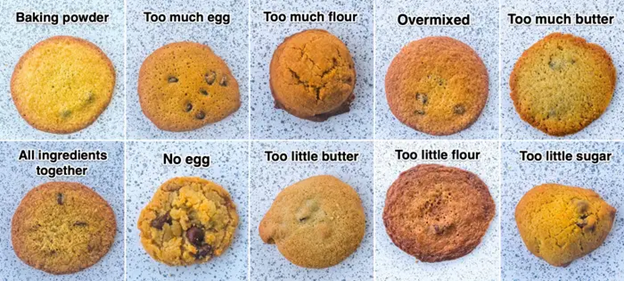
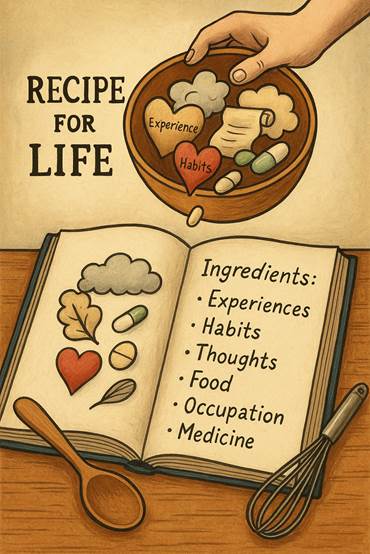
Life, in many ways, is a recipe, as an ever-evolving mixture of choices, habits, relationships, thoughts, and actions. Just as a baker combines flour, sugar, butter, and eggs to produce a cookie, each of us blends experiences, beliefs, and intentions to create our unique outcomes. The image of imperfect cookies illustrates this beautifully: each variation may have too much flour, too little sugar, or overmixing. This reveals how imbalance, excess, or neglect in one area can affect the entire result. Our bodies, minds, and spirits are the ovens in which this recipe bakes, and the quality of what we put in determines what eventually comes out (Seligman, 2011).

The Ingredients of Life

Every life begins with a set of core ingredients: genetic inheritance, environment, education, relationships, nutrition, movement, and purpose. These are our “flour, sugar, and eggs.” Each represents a dimension of well-being that requires mindful measurement.

Flour might symbolize structure and stability, in the routines, responsibilities, and moral foundations that give life its form. Too little structure leads to chaos; too much, and we become rigid, losing spontaneity. Sugar represents pleasure, creativity, and joy, or the sweetness that makes life enjoyable. Depriving ourselves of it can make us bitter, but too much can lead to dependency or self-indulgence. Butter conveys warmth, compassion, and connection; when it is lacking, life becomes dry and crumbly, devoid of emotional cohesion. And eggs, which bind everything together, mirror our inner consciousness, or the vital essence that integrates all experiences into a unified self (Csikszentmihalyi, 2008).

In Traditional Chinese Medicine (TCM), health is sustained through balance among elements such as yin and yang or the Five Elements (wood, fire, earth, metal, water), which interact like ingredients that must be properly harmonized. When one dominates or depletes another, imbalance arises, similar to a recipe gone wrong (Kaptchuk, 2000). Thus, the ingredients of our lives require ongoing awareness, proportion, and calibration.

Mixing the Ingredients: Balance and Awareness

The act of mixing is where mindfulness enters the recipe. Overmixing the batter of life mirrors overthinking and overcontrolling. These are states that psychologists associate with anxiety and emotional exhaustion (Kabat-Zinn, 2013). Undermixing, conversely, reflects inattention, or a lack of integration between body, mind, and purpose.

In Taoist and holistic thought, balance is not about equal measures but appropriate harmony. The Dao De Jing teaches that “to be too rigid is to break, to be too soft is to lose form” (Lao-Tzu, trans. 2006). Similarly, the recipe for a fulfilling life requires constant recalibration. What nourished us at twenty may not suit us at fifty. The wise “cook” observes the body’s responses, the mind’s tendencies, and the spirit’s needs to adjust accordingly.

Just as mindful eating can transform the physiological experience of food (Bays, 2017), mindful living transforms our relationship to every experience. Awareness becomes the spoon that stirs the bowl; it integrates, blends, and unifies the ingredients into a coherent whole.

Cooking: Transformation Through Heat and Pressure

Once ingredients are combined, heat completes the transformation. In the kitchen, heat activates hidden properties and deepens flavor. In life, heat symbolizes challenge or the friction, stress, and adversity that refine our raw experiences into resilience and wisdom (Frankl, 2006).

The process parallels the Taoist concept of Nei Dan, or inner alchemy, where the practitioner refines the course into the pure through disciplined effort and patience. Similarly, psychologists describe “post-traumatic growth” as the phenomenon in which adversity fosters new strength, perspective, and appreciation (Tedeschi & Calhoun, 2004).

A life without heat remains underdeveloped; too much heat, however, can scorch the spirit. Practices such as qigong, tai chi, and meditation serve as thermoregulators for the psyche by balancing sympathetic activation with parasympathetic restoration (Wayne & Kaptchuk, 2008). The goal is not to eliminate stress but to transmute it into transformation, just as dough becomes a golden cookie through precisely applied warmth.

Presentation: The Art of Serving Our Lives

When the cookie emerges from the oven, it reflects every decision made along the way. Its color, texture, and taste are records of process and intention. In human terms, this is the stage of expression and legacy. How our inner work manifests in our actions, relationships, and contributions to others.

Some lives are underbaked, never given enough time or courage to fully develop. Others are overdone and burnt by perfectionism, resentment, or the relentless pursuit of approval. Yet even an imperfect cookie can nourish when crafted with sincerity and love. The key lies in presence: being aware of what we are serving to others and what we are ingesting ourselves, be it thoughts, emotions, or energy.

Adjusting the Recipe

The beauty of the metaphor lies in its invitation to adjust. If life tastes too bitter, add sweetness through gratitude and forgiveness. If it feels too dry, soften it with compassion and rest. If it is heavy, add air through breathwork, laughter, or creativity.

This reflects the principle of iterative self-cultivation: continuous refinement through reflection and adaptation. Neuroscience supports this metaphor as habits and behaviors can be reshaped through neuroplasticity, the brain’s capacity to reorganize itself in response to intentional change (Doidge, 2007). Like a baker improving with each batch, we learn to align ingredients and timing more skillfully over time.

The Final Dish of a Life Well-Lived

The image of the imperfect cookies reminds us that every life is an experiment in balance. Some batches fail; others surprise us. With awareness, patience, and courage, we can create a recipe that embodies authenticity and harmony. The ultimate goal is not perfection but nourishment, for ourselves and those we touch.

In the end, we are both the chef and the dish; the baker and the baked. Every thought, emotion, meal, and relationship becomes part of our flavor profile. By tending carefully to the ingredients of life, we ensure that when our final recipe is complete, it will satisfy not only the hunger for happiness but the deeper longing for meaning and wholeness.

References:

Bays, J. C. (2017). Mindful eating: A guide to rediscovering a healthy and joyful relationship with food (2nd ed.). Shambhala Publications.

Csikszentmihalyi, M. (2008). Flow: The psychology of optimal experience. Harper Perennial. https://archive.org/details/flowpsychologyof2008csik

Doidge, N. (2007). The brain that changes itself: Stories of personal triumph from the frontiers of brain science. Viking. https://psycnet.apa.org/record/2006-23192-000

Frankl, V. E. (2006). Man’s search for meaning. Beacon Press. https://archive.org/details/viktor-emil-frankl-mans-search-for-meaning

Kabat-Zinn, J. (2013). Full catastrophe living: Using the wisdom of your body and mind to face stress, pain, and illness (2nd ed.). Bantam.

Kaptchuk, T. J. (2000). The web that has no weaver: Understanding Chinese medicine. McGraw-Hill.

Lao-Tzu. (2006). Tao Te Ching (S. Mitchell, Trans.). Harper Perennial. https://ia600209.us.archive.org/16/items/taoteching-Stephen-Mitchell-translation-v9deoq/taoteching-Stephen-Mitchell-translation-v9deoq_text.pdf

Seligman, M. E. P. (2011). Flourish: A visionary new understanding of happiness and well-being. Free Press. https://psycnet.apa.org/record/2010-25554-000

Tedeschi, R. G., & Calhoun, L. G. (2004). Posttraumatic growth: Conceptual foundations and empirical evidence. Psychological Inquiry, 15(1), 1–18. https://doi.org/10.1207/s15327965pli1501_01

Wayne, P. M., & Kaptchuk, T. J. (2008). Challenges inherent to t’ai chi research: part I–t’ai chi as a complex multicomponent intervention. Journal of alternative and complementary medicine (New York, N.Y.), 14(1), 95–102. https://doi.org/10.1089/acm.2007.7170a

Reflections on Emoto’s Water Hypothesis

Consciousness, Quantum Physics, and the Mind–Matter Debate

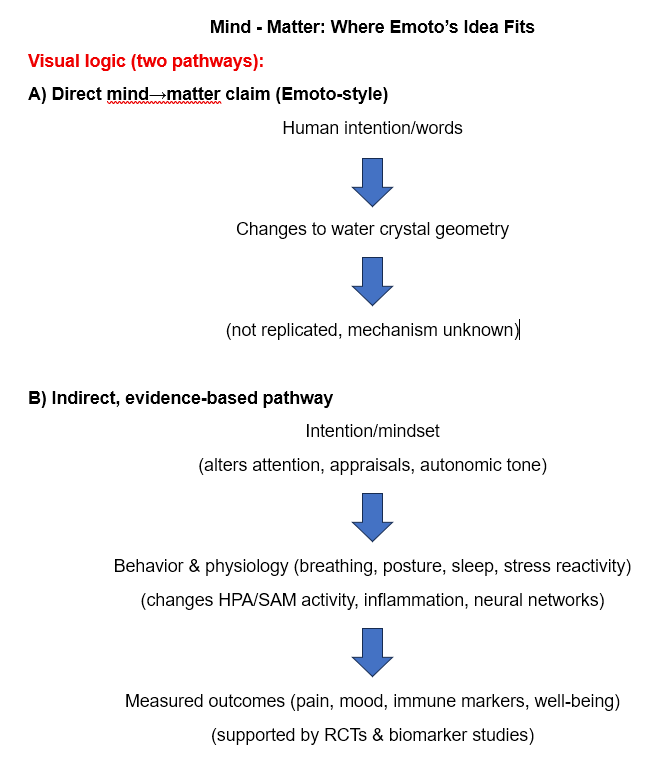
Masaru Emoto’s assertion that thoughts and emotions can influence the crystalline structure of water provoked wide interest across both scientific and metaphysical communities. Although his findings lack empirical verification, they echo long-standing philosophical and scientific debates about the relationship between consciousness and physical reality, a question that modern quantum theory has occasionally reignited.

The Conceptual Parallel: Observation and Reality in Quantum Physics

Quantum mechanics revolutionized classical physics by demonstrating that subatomic particles exist in probabilistic states until observed, a phenomenon encapsulated in the wave–particle duality and the observer effect. In the double-slit experiment, for example, electrons act as waves when unobserved but collapse into particle-like behavior when measured (Heisenberg, 1927; Bohr, 1935). This led some theorists and philosophers to speculate that conscious observation might play a role in shaping physical outcomes.

However, mainstream physicists interpret this differently. The “observer” in quantum mechanics generally refers to a measurement apparatus interacting with a quantum system, not necessarily a conscious mind (Rosenblum & Kuttner, 2011). Nonetheless, the philosophical ambiguity of the observer’s role created fertile ground for metaphysical interpretations suggesting that mind and matter may be intertwined.

From Quantum Observation to Emoto’s Conscious Water Hypothesis

Emoto’s experiments symbolically extend this idea: if observation can influence quantum particles, perhaps human consciousness can influence the molecular structure of matter (Emoto, 2004). This notion aligns with quantum mysticism, a movement that seeks to bridge consciousness studies with quantum phenomena (Zohar, 1990).

Advocates argue that intention and emotion represent subtle forms of energy capable of resonating with molecular vibrations. This idea is philosophical rather than empirical, positing that reality itself might be participatory, a concept popularized by physicist John Archibald Wheeler’s “participatory anthropic principle,” which implies that the universe requires observers to exist in a determinate state (Wheeler, 1990).

Scientific and Philosophical Challenges

Despite poetic parallels, the application of quantum mechanics to macroscopic systems like water remains scientifically unsupported. The thermal and molecular motion within liquid water occurs at scales and energies far removed from quantum coherence effects. Quantum measurement phenomena occur in controlled, near-zero-temperature environments, not within warm biological or environmental systems (Tegmark, 2000).

Furthermore, studies in psychokinesis and distant intention, fields that attempt to experimentally test mind-matter interaction, show inconsistent and statistically weak results (Radin, 2006; Jahn & Dunne, 2011). While intriguing, these findings fall short of establishing causal evidence that consciousness can directly alter molecular geometry.

Philosophically, however, Emoto’s premise resonates with panpsychism and idealism, which propose that consciousness is a fundamental property of the universe rather than an emergent product of the brain (Strawson, 2006; Goff, 2019). Within these frameworks, Emoto’s water crystals might be interpreted as metaphors for the relational fabric between thought, emotion, and matter.

Integrative and Symbolic Interpretations

From a holistic perspective, Emoto’s work continues to inspire inquiry into the psychosomatic and energetic dimensions of human life. Even if his findings lack scientific validation, they serve as a symbolic model of how emotional and cognitive states influence environmental harmony, echoing principles in Taoist and Buddhist thought regarding the unity of mind and nature.

In this sense, Emoto’s “water consciousness” reflects a metaphoric truth: our internal states do shape the world we inhabit, psychologically, socially, and ecologically, even if not at the level of hydrogen bonding or crystal symmetry. His hypothesis can thus be viewed as a moral and ecological allegory for mindfulness, intention, and gratitude, consistent with holistic and spiritual paradigms.

Conclusion

While Masaru Emoto’s experimental methods do not meet scientific standards of reproducibility or objectivity, his ideas underscore a profound question that remains unresolved in modern physics and philosophy: what is the role of consciousness in the unfolding of reality? Quantum physics hints that observation and existence are interlinked, but the leap from subatomic measurement to human thought influencing matter remains metaphoric rather than mechanistic.

Nonetheless, Emoto’s message that consciousness, emotion, and intention matter, continues to resonate as an invitation toward greater harmony between human awareness and the physical world.

Comparison table

Domain / ClaimCore ideaEvidence levelTypical methodsRepresentative sourcesKey caveats
Emoto’s water hypothesisThoughts/words change water crystal geometryLow (non-replicated; methodological issues)Crystal “beauty” ratings; photographic selectionEmoto (2004); critiques: Ball (2008)Lack of blinding, subjective scoring, no mechanism
Quantum measurement (mainstream)Measurement disturbs quantum systems; “observer” = apparatusHigh (foundational physics)Double-slit, interferometry, decoherence theoryHeisenberg (1927); Bohr (1935); Tegmark (2000)Does not require conscious mind; scaling to warm, wet systems is non-trivial
Quantum consciousness (interpretive)Consciousness participates in “collapse”SpeculativeConceptual analyses; small experimental programsRosenblum & Kuttner (2011); Wheeler (1990)Philosophical; no consensus or robust empirical support
Mind–matter (parapsychology)Intention can affect matter at a distanceControversial/weakRNG/PK, double-blind intention trialsRadin (2006)Small effects; replication disputes
Placebo/nocebo psychobiologyBeliefs shape symptoms & physiologyHighExpectancy manipulations; analgesia paradigmsColloca & Benedetti (2007, 2009)Context-dependent; not “mind over molecules” per se
Mindfulness/meditation → brain/immuneTraining attention/regulation alters networks & markersModerate–HighRCTs; EEG/fMRI; cytokines/antibodiesDavidson et al. (2003); Goyal et al. (2014); Hölzel et al. (2011)Effects vary by dose, population, protocol
Stress-reduction & inflammationPsychosocial stress ↔ inflammatory signalingHighCohort & intervention studies; IL-6, CRPBlack & Slavich (2016)Causality clearer in RCTs than observational

How to use this table:

  • If you want credible, actionable routes by which mind influences body, focus on the indirect, evidence-based pathway: attention training, stress appraisal, breath/HRV regulation, sleep, social context → measurable neural and immune changes.
  • Emoto’s claim remains a metaphor for intention and care. Treat it as symbolic, not mechanistic chemistry.
(Carter, 2023)

References:

Ball, P. (2008). H2O: A biography of water. Weidenfeld & Nicolson.

Black, D. S., & Slavich, G. M. (2016). Mindfulness meditation and the immune system: A systematic review of randomized controlled trials. Annals of the New York Academy of Sciences, 1373(1), 13–24. https://doi.org/10.1111/nyas.12998

Bohr, N. (1935). Can quantum-mechanical description of physical reality be considered complete? Physical Review, 48(8), 696–702. https://doi.org/10.1103/PhysRev.48.696

Carter, B. (2023, November 27). Exploring Water Studies, Dr. Masaru Emoto’s research, and homeopathy. https://peticare.co.nz/2023/11/27/exploring-the-interconnected-threads-of-water-studies-dr-masaru-emotos-research-and-homeopathy/?srsltid=AfmBOopgvuF-KVXBG0GoWNdx3LPFT7pBBXWI4lVVZ_QWjujR7lHjHSoF

Colloca, L., & Benedetti, F. (2007). Nocebo hyperalgesia: How anxiety is turned into pain. Current Opinion in Anesthesiology, 20(5), 435–439. https://doi.org/10.1097/ACO.0b013e3282b972fb

Colloca, L., & Benedetti, F. (2009). Placebo analgesia induced by social observational learning. Pain, 144(1-2), 28–34. https://doi.org/10.1016/j.pain.2009.01.033

Davidson, R. J., Kabat-Zinn, J., Schumacher, J., Rosenkranz, M., Muller, D., Santorelli, S. F., Urbanowski, F., Harrington, A., Bonus, K., & Sheridan, J. F. (2003). Alterations in brain and immune function produced by mindfulness meditation. Psychosomatic medicine, 65(4), 564–570. https://doi.org/10.1097/01.psy.0000077505.67574.e3

Emoto, M. (2004). The hidden messages in water. Beyond Words Publishing. https://archive.org/details/hiddenmessagesin00emot

Goff, P. (2019). Galileo’s error: Foundations for a new science of consciousness. Pantheon Books.

Goyal, M., Singh, S., Sibinga, E. M. S., et al. (2014). Meditation programs for psychological stress and well-being: A systematic review and meta-analysis. JAMA Internal Medicine, 174(3), 357–368. https://doi.org/10.1001/jamainternmed.2013.13018

Heisenberg, W. (1927). Über den anschaulichen Inhalt der quantentheoretischen Kinematik und Mechanik. Zeitschrift für Physik, 43(3–4), 172–198. https://doi.org/10.1007/BF01397280

Hölzel, B. K., Carmody, J., Vangel, M., et al. (2011). Mindfulness practice leads to increases in regional brain gray matter density. Psychiatry Research: Neuroimaging, 191(1), 36–43. https://doi.org/10.1016/j.pscychresns.2010.08.006

Jahn, R. G., & Dunne, B. J. (2011). Consciousness and the source of reality: The PEAR odyssey. ICRL Press. https://archive.org/details/consciousnesssou0000jahn

Radin, D. (2006). Entangled minds: Extrasensory experiences in a quantum reality. Simon & Schuster.

Rosenblum, B., & Kuttner, F. (2011). Quantum enigma: Physics encounters consciousness (2nd ed.). Oxford University Press.

Strawson, G. (2006). Realistic monism. In Journal of Consciousness Studies (Vol. 13, Issue No. 10-11, pp. 3–31). Imprint Academic. https://web.ics.purdue.edu/~drkelly/StrawsonRealisticPhysicalism2006.pdf

Tegmark, M. (2000). Importance of quantum decoherence in brain processes. Physical Review E, 61(4), 4194–4206. https://doi.org/10.1103/PhysRevE.61.4194

Wheeler, J. A. (1990). Information, physics, quantum: The search for links. In W. Zurek (Ed.), Complexity, entropy, and the physics of information (pp. 3–28). Addison-Wesley.

Zohar, D. (1990). The quantum self: Human nature and consciousness defined by the new physics. William Morrow. https://archive.org/details/quantumself00dana