The “Naegong House”: Internal Energy, Transmission, and the Reality Behind Esoteric Martial Traditions

Within the worlds of Neidan, Daoist cultivation, and certain internal martial arts traditions, there are recurring references to building an internal “house,” “furnace,” “cauldron,” or “vessel” capable of storing and refining cultivated energy. While terminology varies among lineages, the underlying concept remains remarkably consistent: before one can safely cultivate higher levels of internal development, one must first develop the structure capable of containing it.

In some traditions this concept is associated with Nei Dan (internal alchemy), while in Korean systems it may be discussed under Naegong or internal power cultivation. Although modern practitioners sometimes interpret these teachings literally or mystically, many of the ideas may also correspond to practical physiological, psychological, and neurological adaptations developed through long-term training.
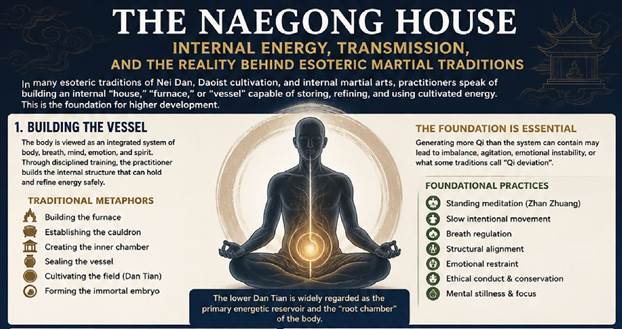
Building the Vessel

Traditional internal systems often describe the body as more than flesh and bone. The practitioner is viewed as an integrated system of body, breath, mind, emotion, and spirit. Through years of disciplined training, the individual gradually “builds the vessel” capable of stabilizing cultivated internal force.

Classical Daoist literature frequently uses symbolic language such as:

  • Building the furnace
  • Establishing the cauldron
  • Creating the inner chamber
  • Sealing the vessel
  • Cultivating the field
  • Forming the immortal embryo

These metaphors are generally associated with the development of the Dan Tian, especially the lower Dan Tian, which many traditions regard as the primary energetic reservoir of the body (Kohn, 2008).

The concept is not merely about accumulating “energy,” but about refining and integrating the practitioner as a whole. Traditional teachers often warned that attempting advanced energetic practices without sufficient preparation could result in imbalance, emotional instability, agitation, or what some systems referred to as “Qi deviation” (Despeux & Kohn, 2003).

For this reason, authentic systems historically emphasized foundational practices such as:

  • Standing meditation (Zhan Zhuang)
  • Slow intentional movement
  • Breath regulation
  • Structural alignment
  • Emotional restraint
  • Ethical conduct
  • Mental stillness
  • Conservation of vitality

In martial systems, these methods were believed to strengthen the body’s capacity to tolerate increased internal pressure, focus, and energetic intensity.

A Modern Physiological Perspective

Although traditional terminology uses the language of Qi and internal energy, some aspects of these practices may correlate with modern understandings of human physiology and psychology.

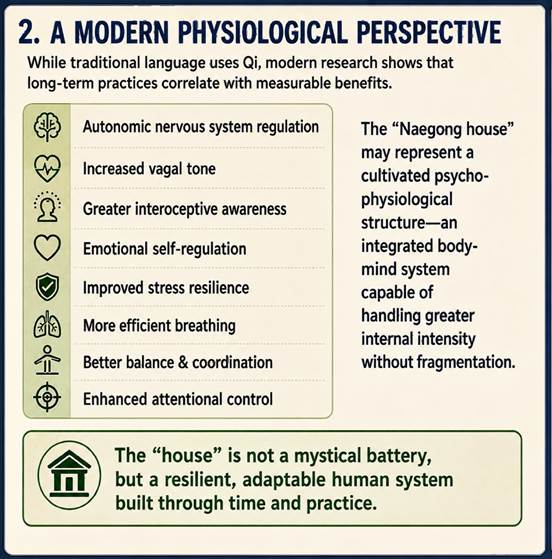
Long-term breath training, posture work, meditative focus, and slow movement practices have been associated with improvements in:

  • Autonomic nervous system regulation
  • Vagal tone
  • Interoceptive awareness
  • Emotional self-regulation
  • Stress resilience
  • Breath efficiency
  • Balance and coordination
  • Attentional control

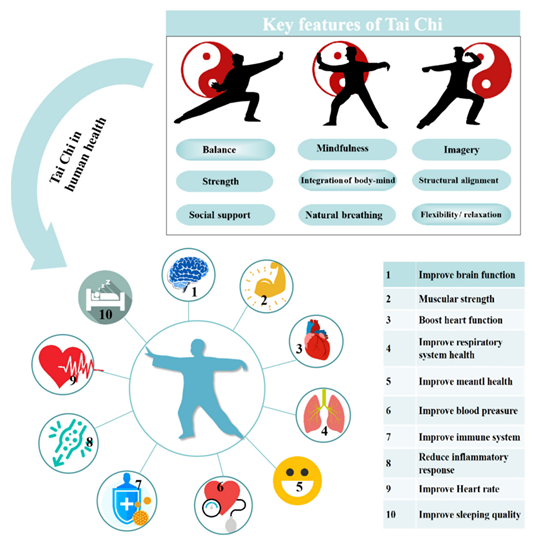
Research on contemplative movement systems such as Tai Chi and Qigong has shown measurable effects on stress reduction, mood regulation, balance, and psychophysiological health (Wayne & Kaptchuk, 2008; Wang et al., 2010).

From this perspective, the “Naegong house” may represent a metaphor for developing a more integrated and resilient body-mind system. The practitioner gradually becomes capable of handling greater internal intensity without fragmentation, impulsivity, or emotional instability.

In other words, the “house” may not be a mystical battery storing supernatural force, but rather a cultivated psychophysiological structure developed through years of disciplined practice.

Can Internal Energy Be Passed to Another Person?

One of the more controversial aspects of internal martial and alchemical traditions involves the belief that cultivated energy or internal force can be transmitted from teacher to student.
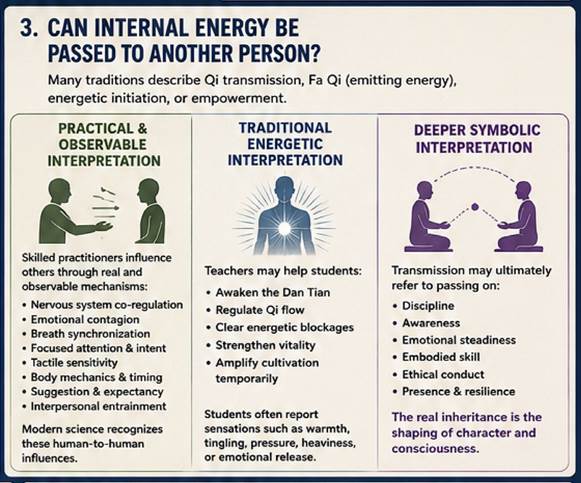
Many traditional systems discuss concepts such as:

  • Qi transmission
  • Fa Qi (“emitting energy”)
  • Energetic initiation
  • Empowerment
  • Transmission of the “seed”
  • Establishing the furnace
  • Opening the channels

Some practitioners report sensations during such experiences including warmth, tingling, heaviness, emotional release, pressure, or involuntary movement. These reports are common across many contemplative and spiritual traditions worldwide.

However, interpretations of these experiences vary significantly.

The Practical and Observable Interpretation

A grounded interpretation suggests that experienced practitioners can indeed strongly influence others through mechanisms that are entirely real and observable.

These include:

  • Nervous system co-regulation
  • Emotional contagion
  • Breath synchronization
  • Focused attention
  • Tactile sensitivity
  • Body mechanics
  • Suggestion and expectancy
  • Interpersonal entrainment

Modern neuroscience and psychology recognize that human beings constantly influence one another physiologically and emotionally (Porges, 2011). A calm and highly regulated practitioner may affect another person’s breathing patterns, muscular tension, emotional state, and sense of safety.

Likewise, highly skilled internal martial artists often demonstrate remarkable efficiency through coordinated biomechanics, fascial connectivity, timing, and intent rather than brute muscular force alone.

To an outside observer, these effects may appear mysterious or “energetic,” even when rooted primarily in refined physical and neurological skill.
The Risk of Mystification

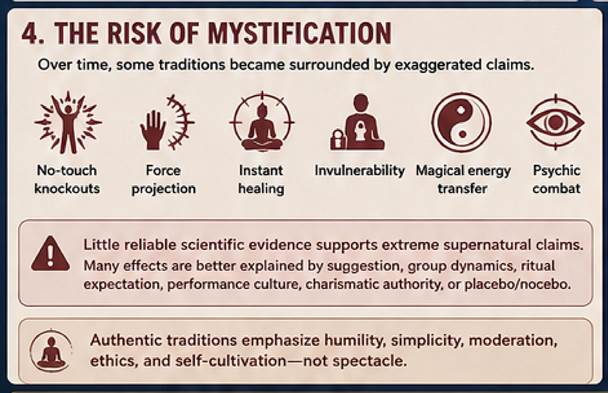
As with many esoteric traditions, internal martial arts also accumulated layers of mythologizing over time. Stories emerged involving:

  • No-touch knockouts
  • Supernatural force projection
  • Psychic combat
  • Instant healing abilities
  • Magical energy transfer
  • Invulnerability

While such claims remain popular in some circles, there is little reliable scientific evidence supporting extreme supernatural interpretations.

Many demonstrations of extraordinary “Qi powers” have failed under controlled testing conditions. In some cases, the effects may be better explained by:

  • Suggestion
  • Group dynamics
  • Compliance
  • Ritual expectation
  • Performance culture
  • Charismatic authority
  • Placebo and nocebo responses

This becomes especially important in high-control environments where mystical narratives can reinforce hierarchy, dependency, and unquestioned authority.

Historically, many authentic traditions actually warned against obsession with displays of power. Classical Daoist teachings frequently emphasized humility, simplicity, moderation, ethics, and self-cultivation over spectacle (Kohn, 2008).
The Deeper Meaning of Transmission

At its highest level, the idea of “passing the house” may not refer to transferring mystical energy at all. Instead, it may symbolize the transmission of cultivated human qualities developed through disciplined practice and lived experience.

A mature teacher may pass on:

  • Emotional steadiness
  • Discipline
  • Awareness
  • Presence
  • Resilience
  • Embodied knowledge
  • Ethical conduct
  • Refined perception

These qualities profoundly affect students over time.

In this sense, the real “transmission” may not be supernatural energy storage, but the gradual shaping of the practitioner’s nervous system, awareness, behavior, and character through years of intentional cultivation.

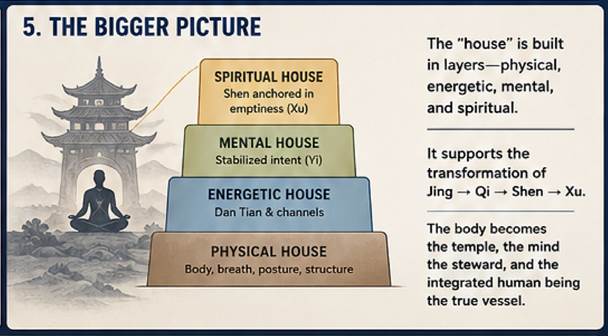
The body becomes the temple, the mind becomes the steward, and the “house” becomes the integrated human being itself.
References

Despeux, C., & Kohn, L. (2003). Women in Daoism. Three Pines Press. https://archive.org/details/womenindaoism0000desp

Kohn, L. (2008). Chinese healing exercises: The tradition of Daoyin. University of Hawai‘i Press. https://archive.org/details/chinesehealingex0000kohn

Porges, S. W. (2011). The polyvagal theory: Neurophysiological foundations of emotions, attachment, communication, and self-regulation. W. W. Norton & Company. https://archive.org/details/polyvagaltheoryn0000porg

Wang, C., Collet, J. P., & Lau, J. (2004). The effect of Tai Chi on health outcomes in patients with chronic conditions. Archives of Internal Medicine, 164(5), 493–501. https://doi.org/10.1001/archinte.164.5.493

Wang, F., Lee, E. K. O., Wu, T., Benson, H., Fricchione, G. L., Wang, W., & Yeung, A. S. (2010). The effects of Tai Chi on depression, anxiety, and psychological well-being: A systematic review and meta-analysis. International Journal of Behavioral Medicine, 17(4), 261–271. https://www.ncbi.nlm.nih.gov/books/NBK164598/

Wayne, P. M., & Kaptchuk, T. J. (2008). Challenges inherent to T’ai Chi research: Part I—T’ai Chi as a complex multicomponent intervention. Journal of Alternative and Complementary Medicine, 14(1), 95–102. https://doi.org/10.1089/acm.2007.7170A

Beyond the Books

How Travel Expands Cognition, Perspective, and Present-Moment Awareness

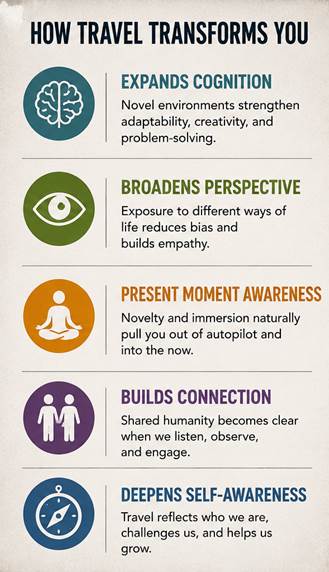
Many people read books, study history, watch documentaries, and intellectually explore the customs, politics, and philosophies of other nations. These pursuits are valuable and often essential. Through literature, education, and observation, one can gain important knowledge about geography, economics, religion, language, and cultural behavior. However, there remains a profound difference between learning about a culture and physically stepping into it. To travel is not merely to relocate the body across geographical boundaries; it is often to reposition the mind beyond habitual assumptions, challenge personal perspectives, and invite a deeper awareness of oneself and others.

Having traveled throughout much of the United States, while also visiting Canada, the Bahamas, and parts of Europe, I have repeatedly observed that travel offers something books alone cannot fully replicate: lived immersion. One can read about how societies differ, but standing within those environments by walking unfamiliar streets, hearing another language, adapting to different social norms, witnessing architecture shaped by centuries of history, and observing how people move through daily life, often provides a far deeper education. Travel becomes more than movement; it becomes embodied learning.

The Difference Between Knowing and Experiencing

Cognitive psychologists have long distinguished between declarative knowledge (facts and concepts) and experiential knowledge (learning through direct interaction and experience) (Kolb, 1984). Reading about another country may build intellectual understanding, but physically experiencing a place often integrates emotional, sensory, and contextual learning that deepens retention and insight.

A traveler who studies France may understand historical facts, social systems, or cuisine. Yet walking through neighborhoods in Paris, observing social etiquette, public transportation rhythms, street culture, and local behavioral norms creates a multidimensional learning experience. The brain does not simply process information through abstraction; it interprets experience through sensory and emotional encoding.

This aligns with experiential learning theory, which suggests that concrete experience followed by reflection produces stronger adaptation and understanding than passive acquisition alone (Kolb, 1984). In many ways, the traveler becomes both student and participant.

Travel and Cognitive Flexibility

One of the greatest psychological benefits of travel is enhanced cognitive flexibility, where one develops the ability to adapt thinking, shift perspectives, and respond effectively to unfamiliar situations. Routine environments often reinforce fixed patterns of thought. Travel disrupts these patterns.

Unfamiliar currencies, transportation systems, languages, social customs, food practices, and interpersonal expectations require the brain to continuously reassess, compare, and adapt. This process challenges rigid thinking and may strengthen executive functioning associated with attention, working memory, and adaptive reasoning (Diamond, 2013).

Research suggests that multicultural exposure and international experiences can improve creativity and cognitive complexity because individuals are forced to reconcile multiple viewpoints and behavioral frameworks (Maddux & Galinsky, 2009). Exposure to difference can expand problem-solving capacity by reducing overly simplistic “one-way” thinking.

From the perspective of the Scholar, travel becomes cognitive training.

Travel as a Means to Put Oneself “In the Moment”

Modern life often places people on cognitive autopilot. Familiar roads, repetitive schedules, predictable environments, and habitual routines can reduce conscious attention. Many individuals move through daily life physically present, yet mentally elsewhere, thinking about deadlines, obligations, worries, or digital distractions.

Travel often interrupts this pattern.

When one enters an unfamiliar city, boards a train in another country, navigates a foreign airport, or walks through a cultural district unlike anything at home, attention naturally heightens. The brain becomes alert because novelty demands engagement.

This is one of travel’s overlooked benefits: it places people in the moment.

Psychological research suggests that novelty increases attentional engagement and memory encoding because unfamiliar stimuli require more active cognitive processing (Kandel et al., 2013). A person walking through a market in another country notices sounds, accents, smells, architecture, body language, and social rhythms more consciously than they may notice their own neighborhood.

This resembles mindfulness—not necessarily formal meditation, but situational presence.

Instead of operating through habitual mental drift, the traveler becomes more aware of:

  • surroundings
  • movement
  • sensory detail
  • interpersonal behavior
  • timing
  • uncertainty
  • emotional responses

In Eastern traditions, awareness is often cultivated through presence, observation, and reduction of unnecessary mental distraction. Taoist and contemplative systems emphasize alignment with reality as it unfolds rather than attachment to internal agitation or distraction (Lao Tzu, trans. 1988). Travel can unintentionally foster this state by requiring full engagement with the immediate environment.

From the lens of the Warrior, travel sharpens awareness.

Embodied Learning and Sensory Cognition

Travel is not merely intellectual. It is somatic.

The body learns through movement, orientation, climate adaptation, fatigue, rhythm, and sensory immersion. Walking unfamiliar streets, standing in long transit lines, climbing hills, adjusting to jet lag, hearing non-native speech patterns, tasting unfamiliar foods, and experiencing different physical spaces all contribute to embodied cognition.

Embodied cognition theory suggests that cognition is deeply influenced by physical interaction with the environment rather than existing solely as abstract mental processing (Wilson, 2002). This means learning through travel is partly neurological and partly physiological.

When people physically experience different climates, infrastructure, public norms, and spatial organization, they often understand societal differences in a much deeper way.

From the Scholar and Sage, travel teaches through both observation and embodiment.

Humility, Perspective, and Reduced Ethnocentrism

Travel also challenges egocentric and ethnocentric assumptions.

Many individuals unconsciously view their own societal norms as “normal” or superior simply because they are familiar. Exposure to different systems of governance, transportation, food culture, social etiquette, family dynamics, healthcare, work-life patterns, and public behavior can challenge narrow assumptions.

This does not require idealizing other nations. Every society carries strengths, weaknesses, contradictions, and complexities. Yet observing other systems often reminds us that our worldview is only one lens among many.

Intercultural exposure has been associated with increased openness, empathy, and reduced social rigidity (Nguyen & Benet-Martínez, 2013). Perspective broadening may help individuals better tolerate ambiguity and diversity.

From the Sage, travel cultivates humility.

Travel, Time Perception, and Richer Memory

One fascinating cognitive phenomenon is that travel often makes time feel fuller.

Routine compresses memory. Repetitive days blend together because the brain encodes fewer distinct markers. Novel experiences, however, often create stronger episodic memory formation.

This helps explain why one week abroad may feel psychologically richer than several ordinary weeks at home.

Novel environments create stronger hippocampal encoding, which contributes to vivid recall and perceived experiential depth (Kandel et al., 2013). Travel may therefore enhance not only memory, but the felt richness of life.

Being “in the moment” contributes to this effect.

Travel as a Mirror of Self-Awareness

Perhaps one of travel’s most powerful lessons is not what we discover about other cultures, but what we discover about ourselves.

Unfamiliar environments often reveal:

  • patience or impatience
  • fear or courage
  • gratitude or entitlement
  • adaptability or rigidity
  • curiosity or resistance
  • emotional resilience under uncertainty

Without familiar comforts, many internal patterns become visible. Travel can therefore serve as a mirror.

The Warrior learns resilience.
The Scholar gains perspective.
The Sage develops humility.

A Holistic View of Travel and Human Development

From a holistic wellness perspective, meaningful travel can support cognitive growth, emotional intelligence, sensory awareness, adaptability, humility, and present-moment engagement.

Books educate the intellect.
Travel educates the whole person.

To read is valuable.
To study is essential.
To immerse oneself is transformative.

When approached mindfully, travel becomes more than recreation. It becomes a practice of awareness, a disruption of autopilot living, and an opportunity to refine perspective. In a world increasingly shaped by digital observation rather than lived participation, stepping physically into unfamiliar places may be one of the most practical ways to strengthen cognition, deepen empathy, and reconnect with the present moment.

Sometimes the greatest education begins when we leave the familiar behind.

References

Diamond, A. (2013). Executive functions. Annual Review of Psychology, 64, 135–168. https://doi.org/10.1146/annurev-psych-113011-143750

Kandel, E. R., Schwartz, J. H., Jessell, T. M., Siegelbaum, S. A., & Hudspeth, A. J. (2013). Principles of neural science (5th ed.). McGraw-Hill.

Kolb, D. A. (1984). Experiential learning: Experience as the source of learning and development. Prentice Hall.

Lao Tzu. (1988). Tao Te Ching (S. Mitchell, Trans.). Harper Perennial.

Maddux, W. W., & Galinsky, A. D. (2009). Cultural borders and mental barriers: The relationship between living abroad and creativity. Journal of Personality and Social Psychology, 96(5), 1047–1061. https://doi.org/10.1037/a0014861

Nguyen, A. M. D., & Benet-Martínez, V. (2013). Biculturalism and adjustment: A meta-analysis. Journal of Cross-Cultural Psychology, 44(1), 122–159. https://doi.org/10.1177/0022022111435097

Wilson, M. (2002). Six views of embodied cognition. Psychonomic Bulletin & Review, 9(4), 625–636. https://doi.org/10.3758/BF03196322

Dom/Dam – Trapped Air and Energetic Stagnation

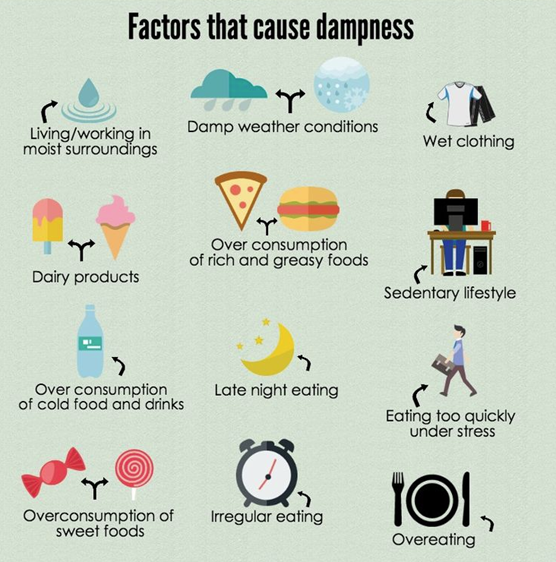
In some Korean martial and healing traditions, the term dom (often a variant of dam) describes a condition thought to arise from exposure to cold drafts or sleeping with a window open. Symptoms include lack of vitality, discomfort, heaviness, and energetic stagnation. While not commonly discussed in English by this name, the concept closely parallels the Traditional Chinese Medicine (TCM) categories of phlegm–dampness and wind–cold invasion.

Traditional Medical Background

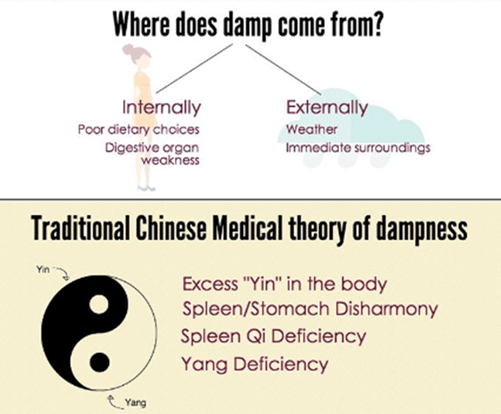
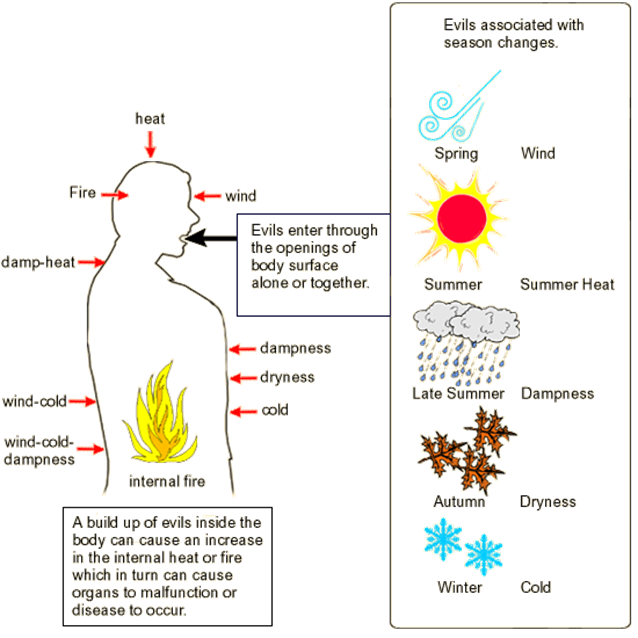
In TCM, pathogenic factors such as wind and cold are considered external influences that can enter the body when its defenses are lowered. This invasion disrupts the circulation of qi (vital energy) and blood, leading to stiffness, fatigue, and discomfort (Dashtdar et al., 2016). Similarly, dampness and phlegm are understood as byproducts of impaired fluid metabolism, often linked to cold exposure or digestive weakness. These accumulations obstruct energetic pathways, creating heaviness, fogginess, and stagnation (Zhang et al., 2020).

The Korean medicine concept of dam-eum, or “phlegm fluids,” corresponds to these pathological states, describing the presence of stagnant fluids that may not be visible but are experienced as internal fullness, lack of energy, or digestive discomfort (Li et al., 2012). Martial and Taoist teachers often simplified this into the shorthand dom, framing it as “trapped air” or “blocked energy.”

Symptoms and Manifestations

English language descriptions of phlegm–dampness and wind–cold invasion list many of the same features attributed to dom/dam:

  • Fatigue, sluggishness, and heaviness in the body (Wang et al., 2013).
  • Cold sensitivity, stiffness, and discomfort after exposure to drafts (Me & Qi, 2023).
  • Digestive issues such as bloating and poor appetite, associated with damp accumulation (Zhang et al., 2020).
  • Mental cloudiness or lack of clarity, often linked to phlegm obstructing the head and chest (Dashtdar et al., 2016).

Prevention and Treatment Approaches

Traditional approaches emphasize prevention, such as avoiding exposure to drafts during sleep, especially after exertion or sweating. Lifestyle recommendations include warming foods, avoiding raw or cold diets, and using movement or breathwork to restore circulation (Allina Health, 2023). In clinical TCM practice, herbal formulas like Er Chen Tang for phlegm–dampness or Ma Huang Tang for wind–cold invasion are applied (Me & Qi, 2023).

TCM/Korean‐medicine TermWhat It Means / RoleHow It Relates to Dom/Dam
Wind-Cold InvasionAn external pathogenic factor (wind + cold) enters the body’s surface (defensive Qi layer), disturbing the balance, causing symptoms like chills, stiffness, aversion to cold, lack of warmth, heaviness.The triggering condition in dom/dam is often cold or draft exposure. The cold “invasion” idea explains how external air (wind/cold) is believed to penetrate and cause internal stagnation. Sources: Me & Qi (“Wind-Cold invading the Lungs”) overview. (meandqi.com)
Phlegm-Dampness / phlegm-damp)When the body’s fluid metabolism is impaired (often via weak spleen/stomach function in TCM), fluids accumulate, become turbid, sticky, heavy. These can become invisible but felt as heaviness, fullness, sluggishness, obstructing Qi flow. Also called “damp-phlegm.”Dom/dam’s description of “trapped air,” heaviness, discomfort matches many symptoms of phlegm-dampness. Also, sleep in damp/cold drafts can promote formation of dampness + phlegm in TCM doctrine. Sources: Phlegm-Dampness Constitution studies; “What is Phlegm?” overview. (Wang et al., 2013)
Exterior Cold / Tai Yang PatternIn the Six Stages theory (e.g. Shang Han Lun), exposure to cold at the exterior (surface) level can produce Tai Yang syndromes: stiff neck or muscles, chills, sensitivity to cold, no sweat, etc. Early cold invasion that, if not resolved, can lead to deeper pathology. (Wikipedia)Dom/dam appears sometimes as a mild or chronic form of cold exposure: not always acute chills or fever, more an ongoing discomfort, stagnation, and lowered function. This maps to weaker or lingering exterior cold/dampness invasion.

The martial arts term dom can thus be understood as a culturally adapted expression of the broader East Asian medical concepts of phlegm–dampness and wind–cold invasion. It highlights the belief that environmental exposure, particularly to cold drafts, can impair vitality, obstruct energy flow, and lead to discomfort or stagnation. In both martial and medical contexts, the focus is on protecting the body from harmful influences while maintaining balance through lifestyle, environment, and practice.

References:

Allina Health. (2023). Fight the cold and flu with Chinese medicine. Allina Health. https://www.allinahealth.org/healthysetgo/care/fight-the-cold-and-flu-with-chinese-medicine

Chan, D., & Chan, D. (2023, October 14). Dampness – Everything you need to know |. ‣. https://dougleschan.com/health/dampness/

Dashtdar, M., Dashtdar, M. R., Dashtdar, B., Kardi, K., & Shirazi, M. K. (2016). The concept of wind in traditional Chinese medicine. Journal of Pharmacopuncture, 19(4), 293–302. https://doi.org/10.3831/kpi.2016.19.030

Me & Qi. (2023). Wind–cold invading the lungs. Me & Qi Traditional Chinese Medicine Education Center. https://www.meandqi.com/tcm-education-center/patterns/wind-cold-invading-the-lungs

Wang, J., Wang, Q., Li, L., Li, Y., Zhang, H., Zheng, L., Yang, L., Zheng, Y., Yang, Y., Peng, G., Zhang, Y., & Han, Y. (2013). Phlegm-Dampness Constitution: Genomics, Susceptibility, Adjustment and Treatment with Traditional Chinese Medicine. The American Journal of Chinese Medicine, 41(02), 253–262. https://doi.org/10.1142/s0192415x13500183

Wikipedia contributors. (2025, May 6). Shanghan Lun. Wikipedia. https://en.wikipedia.org/wiki/Shanghan_Lun?utm_source=chatgpt.com

Zhang, Y., Wang, Z., Zhang, Y., Tong, H., Zhang, Y., & Lu, T. (2020). Potential mechanisms for traditional Chinese medicine in treating airway mucus hypersecretion associated with coronavirus Disease 2019. Frontiers in Molecular Biosciences, 7. https://doi.org/10.3389/fmolb.2020.577285

Reflections on Dopamine, Addiction, and Mental Health

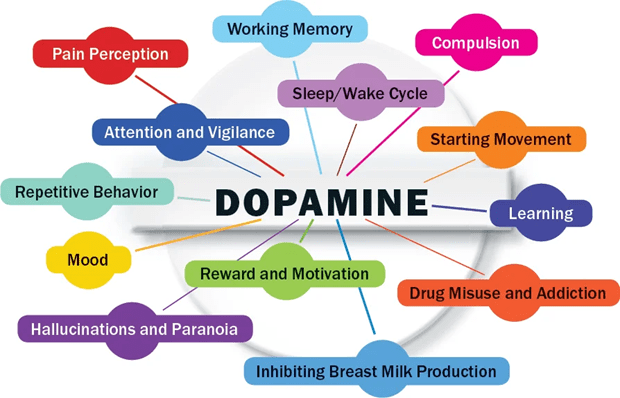
Through my exploration of the neuroscience of dopamine, I’ve come to appreciate its profound role in our emotional lives. Dopamine is far more than a “pleasure molecule”; it is essential for motivation, movement, and maintaining the delicate balance between pleasure and pain in the brain (Volkow & Morales, 2015). Understanding this balance has helped me see why addiction and mood disorders are so difficult to overcome.

One key insight is that our experience of pleasure or pain depends on fluctuations from a baseline level of dopamine, rather than absolute levels themselves. Chronic overstimulation, whether from substances, gambling, or social media, lowers this baseline over time, creating a dopamine-deficit state that can manifest as depression, anxiety, or compulsive behaviors (Koob & Le Moal, 2008; Grace, 2000).

The “pleasure-pain balance” in the brain acts like a seesaw: when dopamine surges from a pleasurable experience, the brain compensates by tilting toward pain to maintain homeostasis (Lembke, 2021). This explains why repeated highs can paradoxically lead to emotional lows, trapping people in cycles of craving and withdrawal.

It’s also clear to me that individual differences, including genetics, temperament, and life experiences, can play a powerful role in addiction vulnerability. For example, impulsiveness, a trait that may have been beneficial for survival in ancient environments, becomes a liability in today’s world of constant sensory stimulation, increasing the risk of addiction (Bickel et al., 2006).

Recognizing the value of a “dopamine reset,” I see the clinical wisdom in recommending about 30 days of abstinence from addictive substances or behaviors. This period allows dopamine receptor sensitivity and transmission to recover, helping restore emotional balance and reduce cravings. The first two weeks are typically the most challenging, but pushing through this phase can reset dopamine pathways and improve mood (Lembke, 2021).

Another powerful realization is that truth-telling can be a therapeutic tool. Honesty engages the prefrontal cortex, the part of the brain responsible for self-control and planning, helping to regulate the limbic system’s reward circuits and reducing the risk of relapse (Goldstein & Volkow, 2011). Even small daily acts of honesty can strengthen these neural pathways.

In addition, the emerging use of psychedelic-assisted therapy with substances like MDMA or psilocybin shows promise for treating addiction, but it is not a one-size-fits-all solution. These treatments must be approached cautiously and conducted in clinical settings with appropriate oversight to ensure safety and efficacy (Carhart-Harris & Goodwin, 2017).

Finally, I’ve come to view social media as a potent dopamine stimulator engineered to exploit the brain’s reward system in ways strikingly similar to addictive drugs. Excessive use can fragment attention, lower baseline dopamine, and erode real-life social connections. Intentional boundaries are crucial to prevent compulsive patterns and protect mental health in our increasingly digital world (Montag et al., 2019).

Key Takeaways

  • Dopamine is critical for motivation, movement, and pleasure; dysfunction disrupts mood and drive (Palmiter, 2008).
  • The brain’s pleasure-pain balance means each dopamine high is followed by a compensatory low, explaining emotional crashes after overstimulation (Lembke, 2021).
  •  A “30-day dopamine reset” can restore healthy dopamine signaling and emotional stability (Lembke, 2021).
  • Truth-telling engages prefrontal circuits, strengthening self-regulation and supporting recovery (Goldstein & Volkow, 2011).
  • Psychedelic-assisted therapy shows promise but must be approached carefully with professional supervision (Carhart-Harris & Goodwin, 2017).
  • Social media exploits dopamine systems, requiring intentional boundaries to protect focus and well-being (Montag et al., 2019).

Conclusion

Reflecting on the neuroscience of dopamine has deepened my understanding of how pleasure and pain are intimately linked in the brain. Recognizing the risks of chronic overstimulation and the power of tools like dopamine resets, radical honesty, and mindful technology use provides a path forward in maintaining emotional health and resilience. These insights offer practical ways to navigate today’s dopamine-saturated world with greater awareness and balance.

References

Bickel, W. K., Miller, M. L., Yi, R., Kowal, B. P., Lindquist, D. M., & Pitcock, J. A. (2006). Behavioral and neuroeconomics of drug addiction: Competing neural systems and temporal discounting processes. Drug and Alcohol Dependence, 90, S85–S91. https://doi.org/10.1016/j.drugalcdep.2006.09.016

Carhart-Harris, R. L., & Goodwin, G. M. (2017). The therapeutic potential of psychedelic drugs: Past, present, and future. Neuropsychopharmacology, 42(11), 2105–2113. https://doi.org/10.1038/npp.2017.84

Goldstein, R. Z., & Volkow, N. D. (2011). Dysfunction of the prefrontal cortex in addiction: Neuroimaging findings and clinical implications. Nature Reviews Neuroscience, 12(11), 652–669. https://doi.org/10.1038/nrn3119

Grace, A. (2000). Gating of information flow within the limbic system and the pathophysiology of schizophrenia. Brain Research Reviews, 31(2–3), 330–341. https://doi.org/10.1016/s0165-0173(99)00049-1

Koob, G. F., & Le Moal, M. (2008). Addiction and the brain antireward system. Annual Review of Psychology, 59, 29–53. https://doi.org/10.1146/annurev.psych.59.103006.093548

Lembke, A. (2021). Dopamine nation: Finding balance in the age of indulgence. Dutton.

Montag, C., Wegmann, E., Sariyska, R., Demetrovics, Z., & Brand, M. (2019). How to overcome taxonomical problems in the study of Internet use disorders and what to do with “smartphone addiction”? Journal of Behavioral Addictions, 9(4), 908–914. https://doi.org/10.1556/2006.8.2019.59

Palmiter, R. D. (2008). Dopamine signaling in the dorsal striatum is essential for motivated behaviors: Lessons from dopamine-deficient mice. Annals of the New York Academy of Sciences, 1129(1), 35–46. https://doi.org/10.1196/annals.1417.003

Volkow, N. D., & Morales, M. (2015). The brain on drugs: From reward to addiction. Cell, 162(4), 712–725. https://doi.org/10.1016/j.cell.2015.07.046

Mind–Body Practices and Regulation of the Limbic System in Pain and Emotional Processing

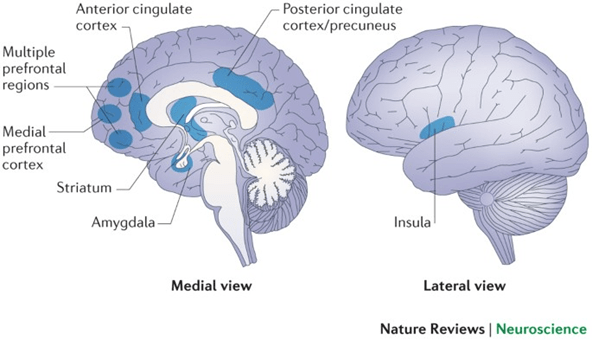
Mind-body practices such as Tai Chi, Qigong, yoga, meditation, and breathwork have shown compelling effects on both pain regulation and emotional stability. These effects are largely mediated by changes in limbic system activity, particularly in the amygdala and anterior cingulate cortex (ACC), two structures centrally involved in the affective dimension of pain and mood modulation.

1. Downregulation of the Amygdala and Emotional Reactivity

The amygdala plays a critical role in emotional salience, particularly in the fear and anxiety components of pain. Mind–body interventions appear to reduce hyperactivity in the amygdala, which is often elevated in chronic pain conditions and mood disorders.

  • Mindfulness-based practices have been shown to reduce amygdala activation during exposure to emotional or painful stimuli (Hölzel et al., 2010).
  • This downregulation of emotional reactivity leads to a less catastrophizing and more neutral interpretation of pain, shifting the experience from distressing to manageable.
  • Long-term meditators often show reduced amygdala volume and improved emotional regulation (Taren et al., 2013).

2. Modulation of the Anterior Cingulate Cortex (ACC): Pain Unpleasantness and Attention

The ACC, which governs pain-related distress and motivational escape behaviors, is also modulated by focused mind–body training.

  • Regular practice of yoga or Tai Chi is associated with enhanced ACC activation during pain regulation, suggesting greater top-down control over emotional responses (Villemure et al., 2014).
  • The ACC is engaged during focused attention and cognitive reappraisal, key skills developed through qigong, breath regulation, and meditation.
  • By enhancing attentional control, practitioners can shift perception away from pain or reinterpret its meaning, reducing suffering even when nociceptive input remains constant.

3. Interoception and Limbic-Cortical Integration

Mind-body practices foster interoceptive awareness, or the ability to perceive internal bodily states, which is linked to insula, ACC, and medial prefrontal cortex activity.

  • Improved interoceptive accuracy allows for early recognition of emotional arousal or pain-related tension, enabling better regulation through breath or posture (Farb et al., 2013).
  • Tai Chi and Qigong practices emphasize sensing and refining internal energy (Qi), which can be seen as cultivating precise interoceptive sensitivity that buffers limbic reactivity.

4. Reduction in Mood Swings and Affective Dysregulation

Since pain and mood are tightly coupled in limbic circuits, emotional mood swings often accompany pain flare-ups. Mind-body practices support mood stability through:

  • Autonomic regulation (improved vagal tone, parasympathetic dominance),
  • Cognitive reappraisal (enhanced prefrontal-limbic communication),
  • And hormonal modulation (reduced cortisol, increased endorphins and oxytocin).

This leads to more resilient stress responses, fewer negative ruminations, and less affective volatility.

Summary Table: Effects of Mind–Body Practices on Limbic Pain Modulation

PracticeTarget AreaEffect on Pain/Mood
Meditation / MindfulnessAmygdala, ACC, mPFCReduced emotional reactivity, improved pain tolerance
Tai Chi / QigongACC, Insula, PAGImproved interoception, emotional regulation, reduced chronic pain
Yoga / BreathworkACC, Brainstem, Vagal SystemIncreased parasympathetic tone, mood stabilization, decreased pain unpleasantness

Regular practice of mind–body disciplines such as Tai Chi and Qigong appear to reduce emotional distress and negative affect, which are mediated by limbic structures including the amygdala and ACC (Xu, Baker, & Ren, 2021). By combining gentle movement with mental focus and breath regulation, Tai Chi engages both somatosensory and emotional‑regulatory brain circuits, potentially dampening the emotional component of pain and improving mood stability.

References:

Farb, N. A. S., Segal, Z. V., & Anderson, A. K. (2013). Attentional modulation of primary interoceptive and exteroceptive cortices. Cerebral Cortex, 23(1), 114–126. https://doi.org/10.1093/cercor/bhr385

Hölzel, B. K., et al. (2010). Stress reduction correlates with structural changes in the amygdala. Social Cognitive and Affective Neuroscience, 5(1), 11–17. https://doi.org/10.1093/scan/nsp034

Leknes, S., & Tracey, I. (2008). A common neurobiology for pain and pleasure. Nature Reviews Neuroscience, 9(4), 314–320. https://doi.org/10.1038/nrn2333.

Tang, Y., Hölzel, B. K., & Posner, M. I. (2015). The neuroscience of mindfulness meditation. Nature Reviews. Neuroscience, 16(4), 213–225. https://doi.org/10.1038/nrn3916

Taren, A. A., Creswell, J. D., & Gianaros, P. J. (2013). Dispositional mindfulness co-varies with smaller amygdala and caudate volumes in community adults. PLoS ONE, 8(5), e64574. https://doi.org/10.1371/journal.pone.0064574

Villemure, C., Čeko, M., Cotton, V. A., & Bushnell, M. C. (2014). Insular cortex mediates increased pain tolerance in yoga practitioners. Cerebral Cortex, 24(10), 2732–2740. https://doi.org/10.1093/cercor/bht124

Xu, S., Baker, J. S., & Ren, F. (2021). The Positive Role of Tai Chi in Responding to the COVID-19 Pandemic. International Journal of Environmental Research and Public Health, 18(14), 7479. https://doi.org/10.3390/ijerph18147479