A Holistic Perspective on Service, Responsibility, and Personal Well-Being
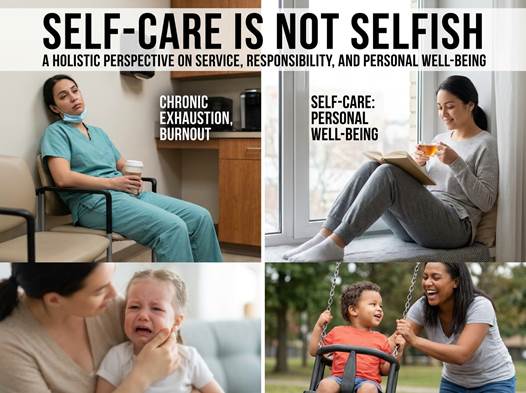
One of the most misunderstood concepts in modern culture is the distinction between self-care and selfishness. The two are often confused, particularly by individuals who dedicate their lives to serving others. Parents, caregivers, healthcare professionals, teachers, clergy, first responders, and countless others frequently place the needs of others ahead of their own. While such sacrifice can be noble, it can also become problematic when it leads to chronic exhaustion, resentment, burnout, declining health, or even a loss of personal identity.
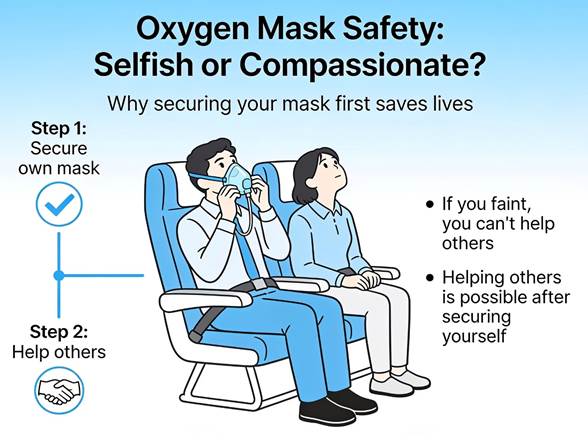
There is a reason why airline safety instructions universally tell passengers to secure their own oxygen mask before attempting to assist anyone else. At first glance, this advice may appear selfish. Yet upon closer examination, it is profoundly practical and compassionate. If you lose consciousness from lack of oxygen, you become incapable of helping anyone. By ensuring your own survival first, you preserve your ability to assist others afterward. This simple principle extends far beyond air travel. It applies to nearly every aspect of life.
The Myth of Endless Giving
Many people have been conditioned to believe that good people always put others first. While generosity, compassion, and service are admirable qualities, there is a critical distinction between healthy service and self-destructive sacrifice.
In my own observations, many individuals become so focused on helping, rescuing, fixing, or saving others that they neglect their own physical, emotional, mental, and spiritual well-being. Over time, this imbalance often leads to fatigue, frustration, cynicism, and burnout.
The irony is that the very people who wish to help others often become less capable of doing so because they have neglected themselves.
From a holistic perspective, the body, mind, and spirit function as an integrated system. When one component becomes depleted, the entire system suffers. Chronic stress weakens immune function, impairs decision-making, reduces emotional resilience, and diminishes our ability to respond effectively to challenges (McEwen, 2007).
The individual who never rests eventually has little energy to give.
The person who never exercises eventually loses physical capacity.
The person who never reflects becomes emotionally reactive.
The person who never nurtures their own spirit may eventually lose their sense of purpose.
In each case, neglecting oneself ultimately limits one’s ability to serve others.
The Yin and Yang of Giving and Receiving
Eastern philosophy provides a useful framework for understanding this dynamic. Within the concept of yin and yang, all things exist in a state of dynamic balance. Giving and receiving are complementary forces. Action and recovery, work and rest, output and replenishment all depend upon one another.
Excessive giving without adequate restoration creates imbalance. Likewise, excessive focus on oneself without concern for others creates a different form of imbalance. The ideal lies somewhere between these extremes.
A healthy parent understands that maintaining their own health allows them to better care for their children. A physician who exercises, sleeps well, and manages stress is often more effective than one who is chronically exhausted. A first responder who maintains physical fitness and emotional resilience is better prepared for emergencies. A teacher who continues learning remains more capable of educating others. In each example, self-care is not separate from service. It is a prerequisite for it.
The Taoist principle of balance reminds us that depletion eventually gives rise to collapse, while proper restoration sustains growth and longevity.

The Caregiver’s Paradox
Researchers frequently describe a phenomenon known as caregiver burden. Individuals who spend significant amounts of time caring for others often experience increased rates of stress, depression, anxiety, sleep disturbances, and physical illness (Schulz & Sherwood, 2008).
The paradox is that caregivers often know the importance of healthy habits yet struggle to apply those principles to themselves. Many feel guilty when they take time for exercise, relaxation, recreation, meditation, or personal interests. They may perceive these activities as selfish or indulgent. In reality, these practices function more like preventive maintenance.
Most people would not drive a vehicle continuously without changing the oil, replacing worn tires, or refueling the tank. Yet many attempt to operate their own bodies and minds under precisely those conditions.
The consequences are predictable. Performance declines. Health deteriorates. Relationships suffer. Eventually, the capacity to help others diminishes as well.
When the Savior Needs Saving
Perhaps one of the most important lessons in personal growth is recognizing when our desire to save others masks our own unresolved issues.
Psychologists sometimes describe a “rescuer” tendency in which individuals derive meaning, identity, or self-worth primarily through helping others. While helping behaviors are often positive, problems arise when one’s sense of value depends entirely upon being needed (Karpman, 1968). Some individuals become so focused on rescuing others that they avoid examining their own wounds, fears, insecurities, or shortcomings.
Helping others can become a distraction from helping oneself. The individual may appear strong and selfless on the surface, yet privately struggle with exhaustion, loneliness, poor health, or emotional distress.
This does not mean helping others is wrong. Quite the opposite. It means that authentic service begins with self-awareness.
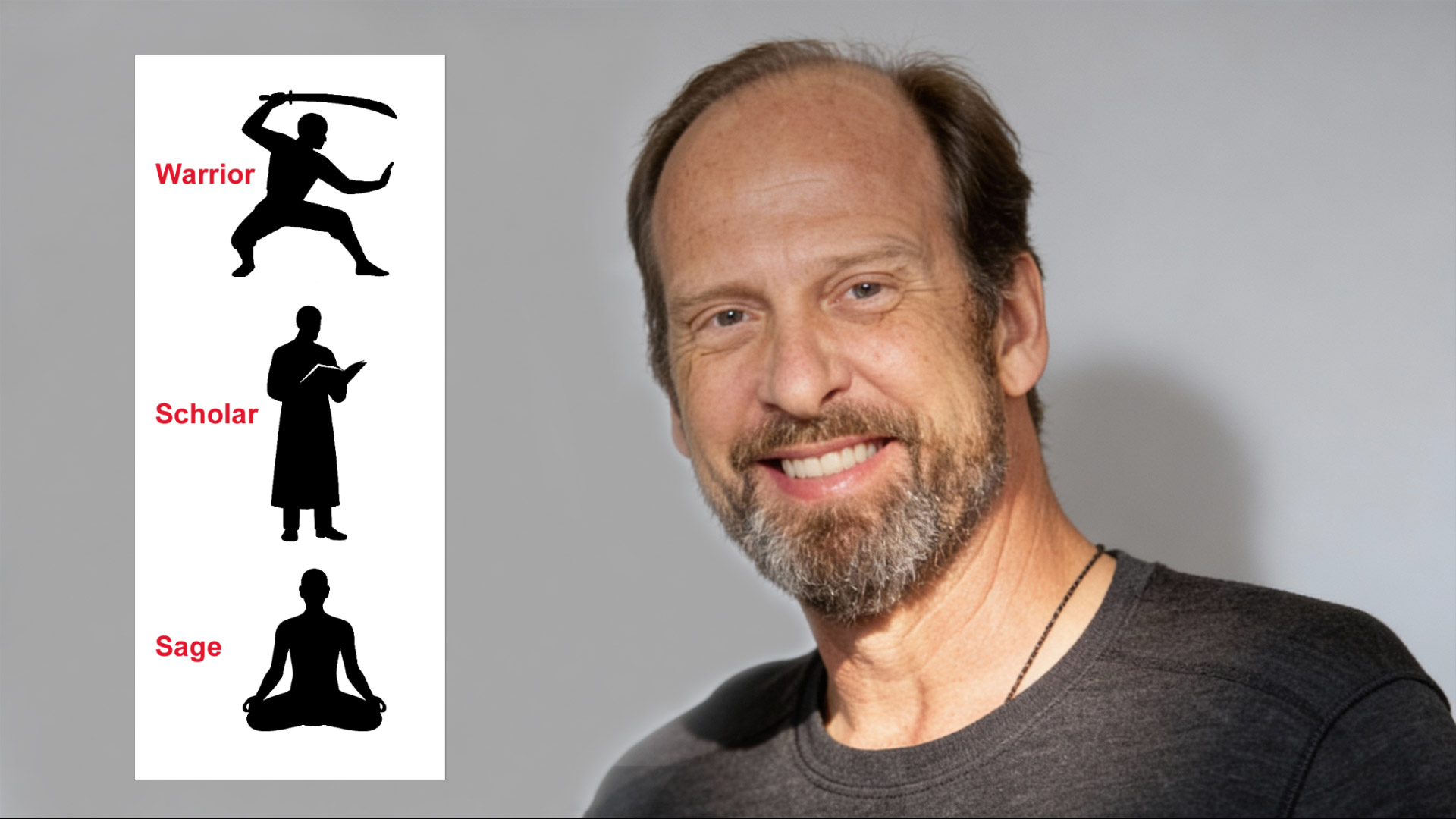
The Warrior, Scholar, and Sage each understand this principle differently. The Warrior cultivates strength so that they can protect and serve. The Scholar continually learns so that they can share wisdom and insight. The Sage develops self-understanding so that their actions emerge from clarity rather than ego. In all three cases, personal cultivation precedes meaningful contribution.
Self-Care as Responsibility
True self-care extends far beyond bubble baths, vacations, or occasional indulgences.
From a holistic perspective, self-care includes:
- Maintaining physical fitness and mobility.
- Eating nutritious foods.
- Managing stress effectively.
- Prioritizing quality sleep.
- Cultivating meaningful relationships.
- Setting healthy boundaries.
- Continuing personal education.
- Engaging in reflection, meditation, prayer, or spiritual practice.
- Seeking help when needed.
- Living in accordance with one’s values.
These practices are not selfish luxuries. They are responsibilities. Just as a craftsman maintains their tools, we must maintain the body and mind through which all of our actions are expressed. When we neglect ourselves, everyone around us eventually feels the consequences. When we care for ourselves wisely, everyone around us benefits.
In summary, the oxygen mask principle offers a simple yet profound lesson. You are not helping others by destroying yourself in the process. You are not selfish for exercising, resting, learning, reflecting, or taking care of your health. You are preserving your capacity to contribute. Self-care is not the opposite of service. It is the foundation of sustainable service.
The goal is not to choose between caring for yourself or caring for others. The goal is to cultivate sufficient physical vitality, mental clarity, emotional resilience, and spiritual grounding that you can do both.
In a culture that often celebrates exhaustion as a badge of honor, perhaps true wisdom is recognizing that the strongest, most effective, and most compassionate people are often those who have learned to put on their own oxygen mask first. Not because they care less about others. But because they understand that doing so allows them to care more effectively for everyone around them.

References
Karpman, S. (1968). Fairy tales and script drama analysis. Transactional Analysis Bulletin, 7(26), 39–43. https://karpmandramatriangle.com/pdf/DramaTriangle.pdf
McEwen, B. S. (2007). Physiology and neurobiology of stress and adaptation: Central role of the brain. Physiological Reviews, 87(3), 873–904. https://doi.org/10.1152/physrev.00041.2006
Schulz, R., & Sherwood, P. R. (2008). Physical and mental health effects of family caregiving. American Journal of Nursing, 108(9 Suppl.), 23–27. https://doi.org/10.1097/01.NAJ.0000336406.45248.4c