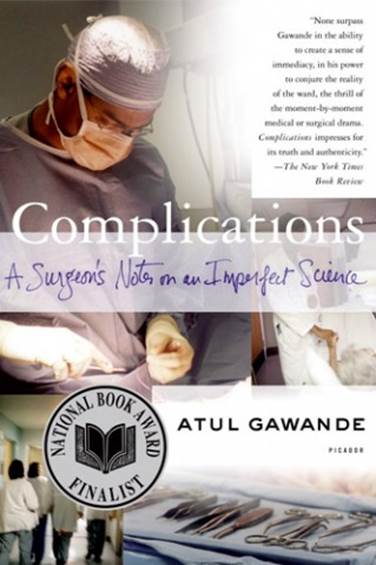
Summary of: Complications – A Surgeon’s Notes on an Imperfect Science

In Complications, surgeon-writer Atul Gawande draws on his own experiences during general-surgery residency to explore the complex realities, ethical dilemmas, and human fallibility in modern medicine. The book is organized into three broad parts of Fallibility, Mystery, and Uncertainty, each of which interrogates how medicine is practiced, how doctors learn, and how patients and physicians navigate risk, error, and the limits of knowledge (Gawande, 2002; Pai, 2002). Gawande does not aim to indict the profession so much as to bring forth its human dimension: that surgery and medicine are “imperfect science”.
  • In “Education of a Knife,” Gawande recounts his own nervousness as a new resident asked to make the first incision. He reflects on how surgical education demands real patients, which inherently means novices will perform procedures with less experience. He observes the tension between patient expectation (that the doctor knows what they are doing) and the reality (that medicine is a craft learned by doing) (Gawande, 2002).
  • In subsequent essays (“When Doctors Make Mistakes,” “Nine Thousand Surgeons,” and “When Good Doctors Go Bad”), he discusses how errors occur not only from gross negligence, but from judgment calls, incomplete information, and institutional culture. He argues that the common view of medical error (a “bad doctor” ruling) is too simplistic; rather, human fallibility and systemic vulnerabilities matter (Gawande, 2002).
  • Gawande also addresses the pressure on surgeons to perform flawlessly, and how the operating-room environment can reinforce denial of error. By bringing candid narrative of his own missteps, he humanizes the profession and encourages transparency (Barksdale, 2012).

Key insights

  • No matter how skilled, physicians are subject to error.
  • Training requires novices; the system must reconcile patient safety and physician learning.
  • A culture of concealment around mistakes undercuts improvement; openness fosters learning.
  • Examples include “The Pain Perplex” (on chronic pain whose causes elude clear biomedical models), “The Man Who Couldn’t Stop Eating” (on gastric-bypass patients for whom the appetite system seems dysregulated), and “Blushing” (on the phenomenon of extreme blushing and its psychosocial dimension) (Cheng, 2020).
  • Gawande uses these cases to argue that medicine often deals in probabilities, not certainties, and that physicians must sometimes act when the science is partial. He shows how rare conditions or atypical presentations challenge protocols and demand humility (Gawande, 2002).
  • These stories reveal the interface between biology, psychology, and social context and how patient experience cannot always be reduced to textbook categories.

Key insights

  • Many medical problems reside in the “gray zone” of neither fully knowable nor entirely random.
  • Physicians sometimes must combine scientific knowledge, intuition, and ethical judgment.
  • Acknowledging mystery undermines over-confidence and fosters more honest communication with patients.

  • In “Whose Body Is It, Anyway?” Gawande explores patient autonomy versus physician authority. One case he recounts concerns a terminal patient who initially refuses ventilatory support but later opts for a risky surgery to save a leg, raising questions of consistency, hope, and decision-making in the face of uncertain outcomes (Gawande, 2002) (Barksdale, 2012).
  • In “Final Cut” and “The Case of the Red Leg,” he addresses misdiagnosis, autopsy revelations, and rare life-threatening infections such as necrotizing fasciitis. These chapters illustrate how even with modern medicine, physicians cannot guarantee success—and must make decisions under risk (Gawande, 2002).
  • Gawande argues that medicine’s truths are provisional; that the model of doctor-as-all-knowing is outdated; and that a better stance is one of “responsible humility” — acknowledging what we don’t know, what we can’t control, and the importance of judgment (Pai, 2002)

Key insights

  • Decision-making in medicine is inherently uncertain, involving risks, trade-offs, and patient values.
  • The idea of perfect, error-free medicine is unrealistic; systems and culture must adapt to this reality.
  • Ethical practice includes admitting uncertainty and involving patients as partners in care.
  1. Human fallibility: Surgeons and doctors are not infallible; training, fatigue, bias, and system constraints matter.
  2. Limits of science: Despite advances, much remains unknown; patients and practitioners contend with ambiguity.
  3. Ethics of practice: Questions of responsibility, autonomy, informed consent, and risk are central.
  4. Learning and improvement: By telling personal stories of error and near-miss, Gawande suggests that the path to progress lies in transparency, reflection, and system redesign (Gawande, 2002; Pai, 2002).
  5. Culture and the operating room: Developing a culture that acknowledges uncertainty, supports learning and avoids punitive reactions to mistakes can improve outcomes.

For practitioners, educators, and patients alike, the book calls for a more realistic, humble approach to medicine, one that recognizes the art as well as the science of healing; that welcomes patient involvement; and that strives for excellence while accepting imperfection.

Given my interests in holistic health, martial arts philosophy, and human development, Complications offers a compelling parallel: just as spiritual/physical cultivation acknowledges the imperfect nature of the self and embraces ongoing growth, so does medicine recognize its own imperfection and the value of lifelong learning. The humility, ethical awareness, and systems-level thinking in Gawande’s work aligns with my theme of the warrior-scholar-sage development, where mastery is a process, not a destination.

Complications underscores points such as:

  • The importance of humility in teaching (just as young surgeons must learn).
  • The value of acknowledging uncertainty rather than pretending to have control (a common theme in martial arts/spiritual cultivation).
  • The ethics of teacher-student relationships, of living systems rather than mechanistic models.
  • The role of narrative and case-study as a teaching tool (paralleling martial arts story, lineage, and real-life struggles).

Complications: A Surgeon’s Notes on an Imperfect Science is a thoughtful, well-written exploration of what happens when doctors confront the limits of knowledge, the inevitability of error, and the moral weight of care. Gawande invites readers whether they are patients, or practitioners, to drop the myth of infallibility and embrace the complicated, demanding nature of medicine with integrity, reflection, and compassion. In doing so, he offers a model of professional and ethical maturity that resonates far beyond surgery.

References:

Barksdale, A. (2012, February 9). Book Review: Complications by Atul Gawande – Flat Hat News. Flat Hat News. https://flathatnews.com/2008/12/01/book-review-complications-atul-gawande/?utm_source=chatgpt.com

Cheng, A. (2020, November 20). Complications Book Summary, by Atul Gawande – Allen Cheng. Allen Cheng. https://www.allencheng.com/complications-book-summary-atul-gawande/?utm_source=chatgpt.com.

Gawande, A. (2002). Complications: A surgeon’s notes on an imperfect science. Henry Holt & Co.

Pai S. A. (2002). Complications: A Surgeon’s Notes on an Imperfect Science. BMJ : British Medical Journal325(7365), 663.
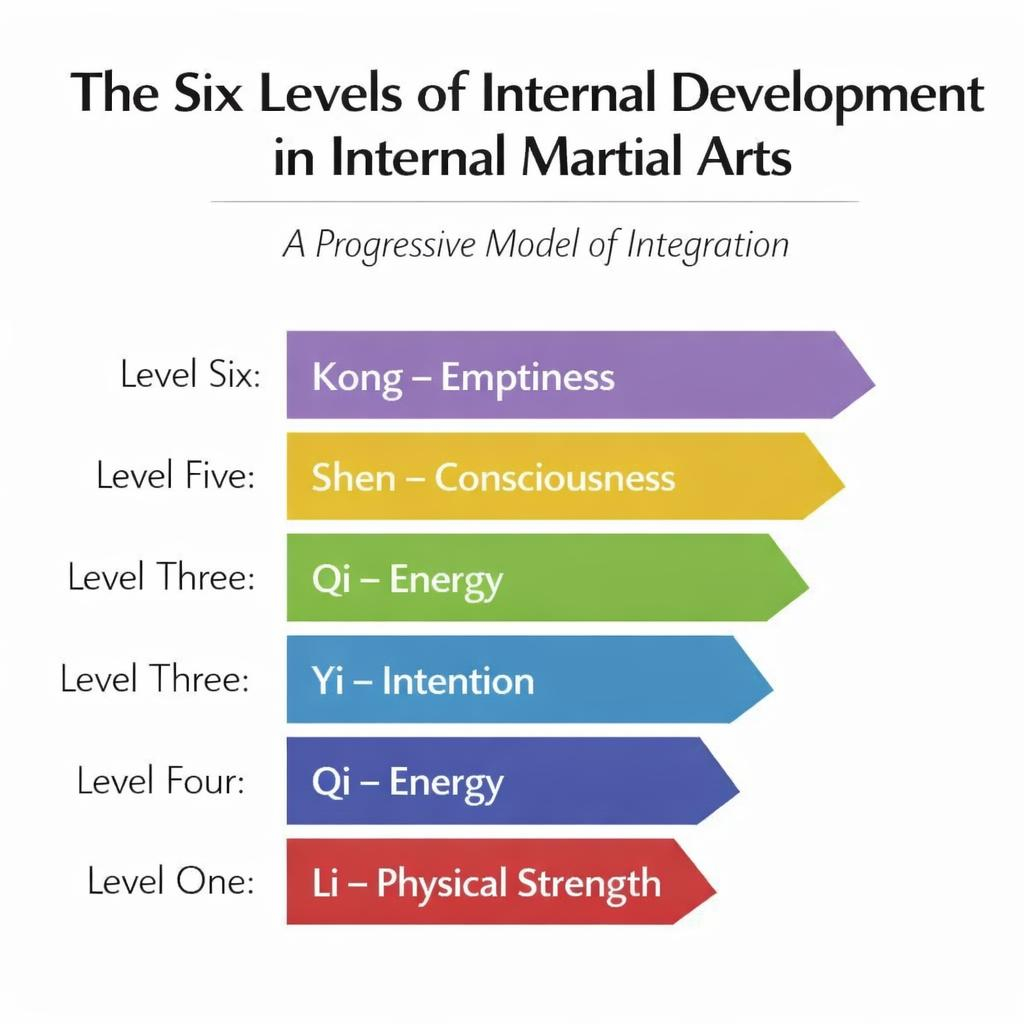
The Six Levels of Internal Development in Internal Martial Arts

A Progressive Model of Integration

Level One: Li – Physical Strength

Level Two: Jin – Refined Force

Level Three: Yi – Intention

Level Four: Qi – Energy

Level Five: Shen – Consciousness

Level Six: Kong – Emptiness

The internal martial arts, commonly referred to as Neijia, represent a sophisticated system of human development that integrates body, mind, and consciousness through progressive refinement. The three most widely recognized internal martial arts are Hsing Yi, Tai Chi Chuan and BaguaZhang. Within these traditions, a frequently cited developmental model describes six interrelated levels: Li (力), Jin (勁), Yi (意), Qi (氣), Shen (神), and Kong (空). While not universally standardized across all lineages, this framework reflects a coherent synthesis of classical Chinese martial, medical, and philosophical thought (Yang, 1998; Chen, 2004; Kohn, 2008).

These levels are not discrete stages to be completed and abandoned, but rather nested layers of integration, each refining and reorganizing the preceding level. The progression reflects a shift from gross physical force toward subtle awareness and spontaneous action, paralleling Daoist internal alchemical models such as Jing–Qi–Shen–Xu (emptiness) (Kohn, 2008).

Level One: Li (力) – Physical Strength

Li refers to raw muscular strength and mechanical force, representing the most basic level of martial capacity. At this stage, movement is driven primarily by localized muscle contraction, often resulting in segmented and inefficient force production.

From a biomechanical perspective, Li relies heavily on voluntary muscular activation and leverage, with limited integration across the kinetic chain (McGinnis, 2013). While essential as a foundational attribute, Li is inherently limited. It is expendable, fatigue-prone, and easily countered by superior structure or timing.

Traditional training methods emphasize:

  • Static postures (e.g., horse stance, bo stance, twisted stance, etc.)
  • Repetitive conditioning drills
  • Strength and endurance development

Despite its limitations, Li provides the necessary structural and physiological base upon which higher levels are cultivated.

Level Two: Jin (勁) – Refined Force

Jin represents a qualitative transformation of force, from isolated muscular effort to integrated, whole-body power. It is often described as “trained strength” or “refined force,” characterized by efficient transmission of energy through aligned structure and connective tissues (Yang, 1998).

Biomechanically, Jin reflects:

  • Kinetic chain integration
  • Elastic recoil through fascia and tendons
  • Ground-reaction force transmission

This level corresponds with modern understandings of tensegrity and fascialconnectivity, where force is distributed across the entire body rather than generated locally (Myers, 2014).

Classical expressions of Jin include:

  • Peng (expansive, buoyant force)
  • Lu (yielding and redirecting)
  • Ji (pressing)
  • An (sinking)

The transition from Li to Jin marks a critical threshold in internal training: effort decreases while effectiveness increases.

Level Three: Yi (意) – Intention

Yi, often translated as intention or intentional awareness, serves as the directive principle that organizes movement and force. In classical texts, it is said that “Yi leads Qi, and Qi leads the body” (Yang, 1998).

At this level, movement becomes:

  • Less reliant on conscious muscular control
  • More guided by pre-reflective awareness
  • Increasingly efficient and anticipatory

Neuroscientifically, Yi may be understood as the integration of:

  • Motor planning (premotor cortex)
  • Attentional control networks
  • Sensorimotor prediction

This aligns with research demonstrating that intention and attention significantly influence motor coordination and performance efficiency (Wulf & Lewthwaite, 2016).

The practitioner begins to experience a shift from doing movement to allowing movement to be directed internally.

Level Four: Qi (氣) – Functional Energy

Qi is among the most debated concepts in both Eastern and Western discourse. Rather than interpreting Qi as a mystical substance, contemporary scholarship often frames it as a functional integration of physiological systems, including:

  • Breath and respiratory efficiency
  • Circulation and fluid dynamics
  • Neural signaling and proprioception
  • Fascial continuity

From this perspective, Qi represents the emergent coherence of the organism as a unified system (Chen, 2004; Jahnke, 2002).

Empirical studies on Qigong and Tai Chi suggest improvements in:

  • Cardiovascular regulation
  • Balance and coordination
  • Stress reduction and autonomic balance

These findings support the interpretation of Qi as system-wide functional optimization rather than an isolated energy entity (Wayne & Kaptchuk, 2008).

Level Five: Shen (神) – Consciousness and Presence

Shen refers to consciousness, awareness, and the quality of presence. In both Traditional Chinese Medicine and Daoist philosophy, Shen is associated with the clarity and stability of the mind (Kohn, 2008).

At this level:

  • Perception becomes refined and immediate
  • Emotional reactivity diminishes
  • Action arises from calm awareness rather than impulse

Shen is closely related to constructs studied in modern psychology, such as:

  • Mindfulness
  • Meta-awareness
  • Flow states

Research indicates that such states are associated with enhanced performance, reduced stress, and improved cognitive flexibility (Csikszentmihalyi, 1990; Tang et al., 2015).

In martial application, Shen manifests as timing, sensitivity, and effortless responsiveness.

Level Six: Kong (空) – Emptiness

Kong, often translated as emptiness, represents the culmination of internal development. Rooted in both Daoist and Buddhist philosophy, it does not imply nihilism, but rather freedom from attachment, rigidity, and fixed identity (Kohn, 2008).

At this level:

  • Action is spontaneous and uncontrived
  • There is no separation between intention and execution
  • The practitioner is no longer bound by technique or conceptual frameworks

This state parallels advanced descriptions of:

  • Non-dual awareness
  • Effortless action (wu wei)
  • Self-transcendent experience

From a performance standpoint, Kong reflects complete integration, where body, mind, and environment function as a unified field.

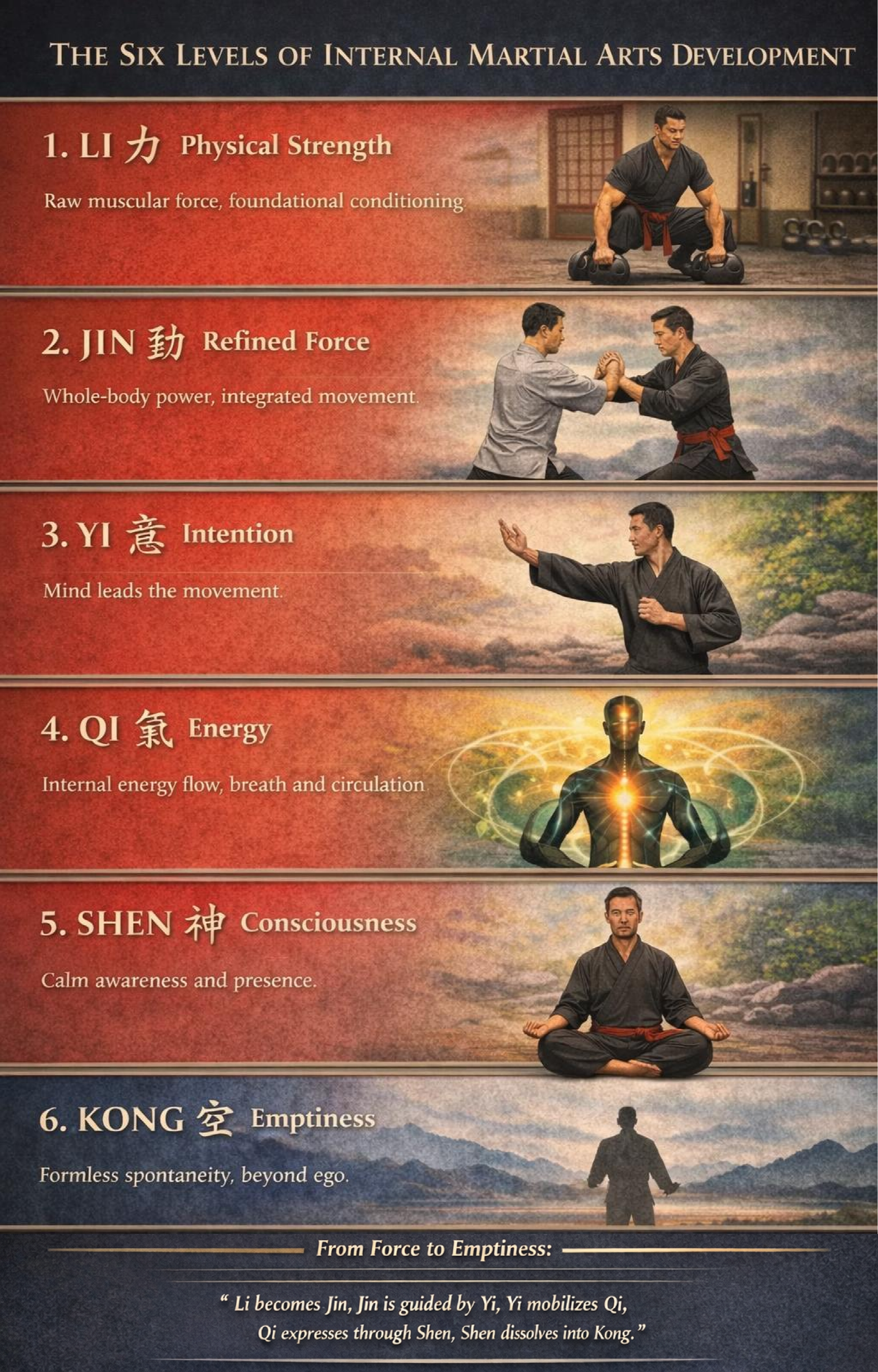
Integrative Perspective: From Force to Emptiness

The progression from Li to Kong reflects a continuum of refinement:

  • Li becomes organized into Jin
  • Jin is directed by Yi
  • Yi mobilizes Qi
  • Qi expresses through Shen
  • Shen dissolves into Kong

Importantly, advanced practitioners do not abandon earlier levels; rather, they embody all levels simultaneously, with each functioning in harmony.

This model closely parallels:

  • Daoist internal alchemy (Jing → Qi → Shen → Xu)
  • Psychophysiological integration models
  • Contemporary frameworks of embodied cognition

Implications for Training and Practice

A critical issue in modern practice is the misinterpretation or premature pursuit of higher levels. Many practitioners:

  • Remain at the level of Li while believing they are expressing Jin
  • Seek Qi experiences without structural integrity
  • Conceptualize Yi without embodied application

Effective training requires:

  1. Structural foundation (Li → Jin)
  2. Intentional refinement (Yi)
  3. Physiological integration (Qi)
  4. Conscious awareness (Shen)
  5. Letting go of fixation (Kong)

This progression underscores a central principle of internal arts:

True development is not the accumulation of techniques, but the refinement of the practitioner.

References

Chen, M. (2004). Chen style taijiquan: The source of taiji boxing. New World Press.

Csikszentmihalyi, M. (1990). Flow: the psychology of optimal experience. ResearchGate. https://www.researchgate.net/publication/224927532_Flow_The_Psychology_of_Optimal_Experience

Jahnke, R. (2002). The healing promise of Qi: Creating extraordinary wellness through Qigong and Tai Chi. McGraw-Hill.

Kohn, L. (2008). Chinese Healing Exercises: The Tradition of Daoyin. University of Hawai’i Press. http://www.jstor.org/stable/j.ctt6wqs77

McGinnis, P. M. (2013). Biomechanics of sport and exercise (3rd ed.). Human Kinetics. Biomechanics of Sport and Exercise (3rd Ed)

Myers, T. W. (2014). Anatomy trains: Myofascial meridians for manual and movement therapists (3rd ed.). Elsevier.

Tang, Y. Y., Hölzel, B. K., & Posner, M. I. (2015). The neuroscience of mindfulness meditation. Nature Reviews Neuroscience, 16(4), 213–225. https://doi.org/10.1038/nrn3916

Wayne, P. M., & Kaptchuk, T. J. (2008). Challenges inherent to t’ai chi research: part I–t’ai chi as a complex multicomponent intervention. Journal of alternative and complementary medicine (New York, N.Y.)14(1), 95–102. https://doi.org/10.1089/acm.2007.7170a

Wulf, G., & Lewthwaite, R. (2016). Optimizing performance through intrinsic motivation and attention for learning: The OPTIMAL theory of motor learning. Psychonomic Bulletin & Review, 23(5), 1382–1414. https://doi.org/10.3758/s13423-015-0999-9

Yang, J. M. (1998). The root of Chinese Qigong: Secrets of health, longevity, and enlightenment. YMAA Publication Center.

Embodied Discipline and the Path to Self-Mastery

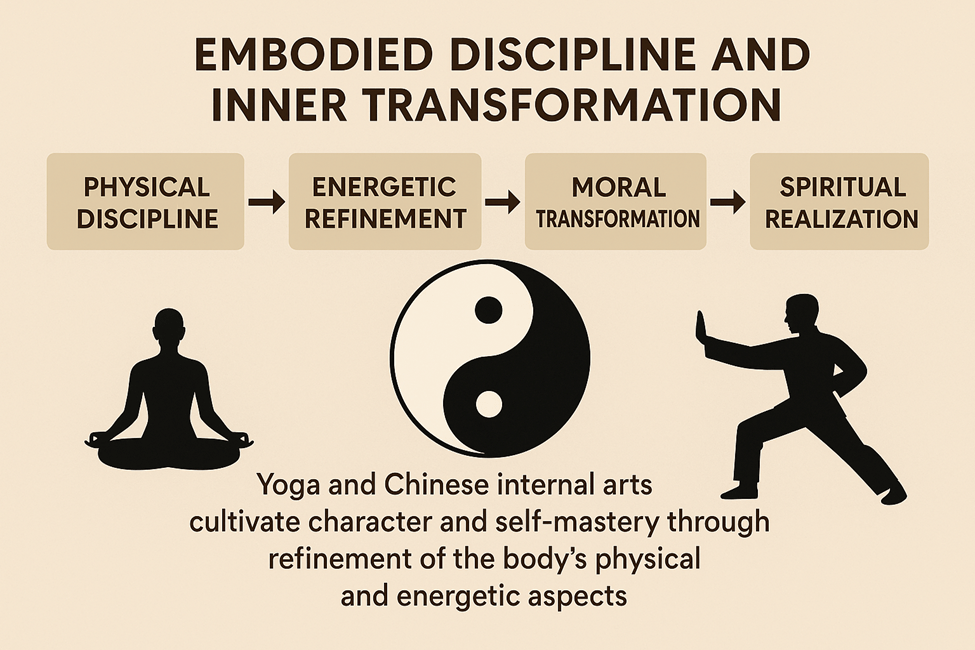
Throughout human history, disciplined movement has served as more than a means to physical fitness. It has been a gateway to moral, psychological, and spiritual development. Systems such as Yoga, Qigong, Tai Chi Chuan, Baguazhang, and Xing Yi Quan all share a common philosophical core:

The body becomes both the field and the instrument of transformation. Through sustained discipline, these arts cultivate awareness, moral rectitude, and self-regulation that extend beyond the training hall into all aspects of life.

The Body as a Mirror of the Mind

Ancient Eastern traditions view the body and mind as inseparable. In Yoga, the concept of asana (postures) is not merely a stretch but a condition for the stilling of the mind (Yoga Sutras 1.2). Similarly, in Chinese internal arts, the cultivation of qi through structured movement harmonizes the physical form (xing), the energetic field (qi), and the consciousness (shen). Each posture, breath, and intention becomes a reflection of one’s internal state. Thus, disciplining the body becomes a way to reveal and reshape the contents of the mind (Kleinman, 2023).

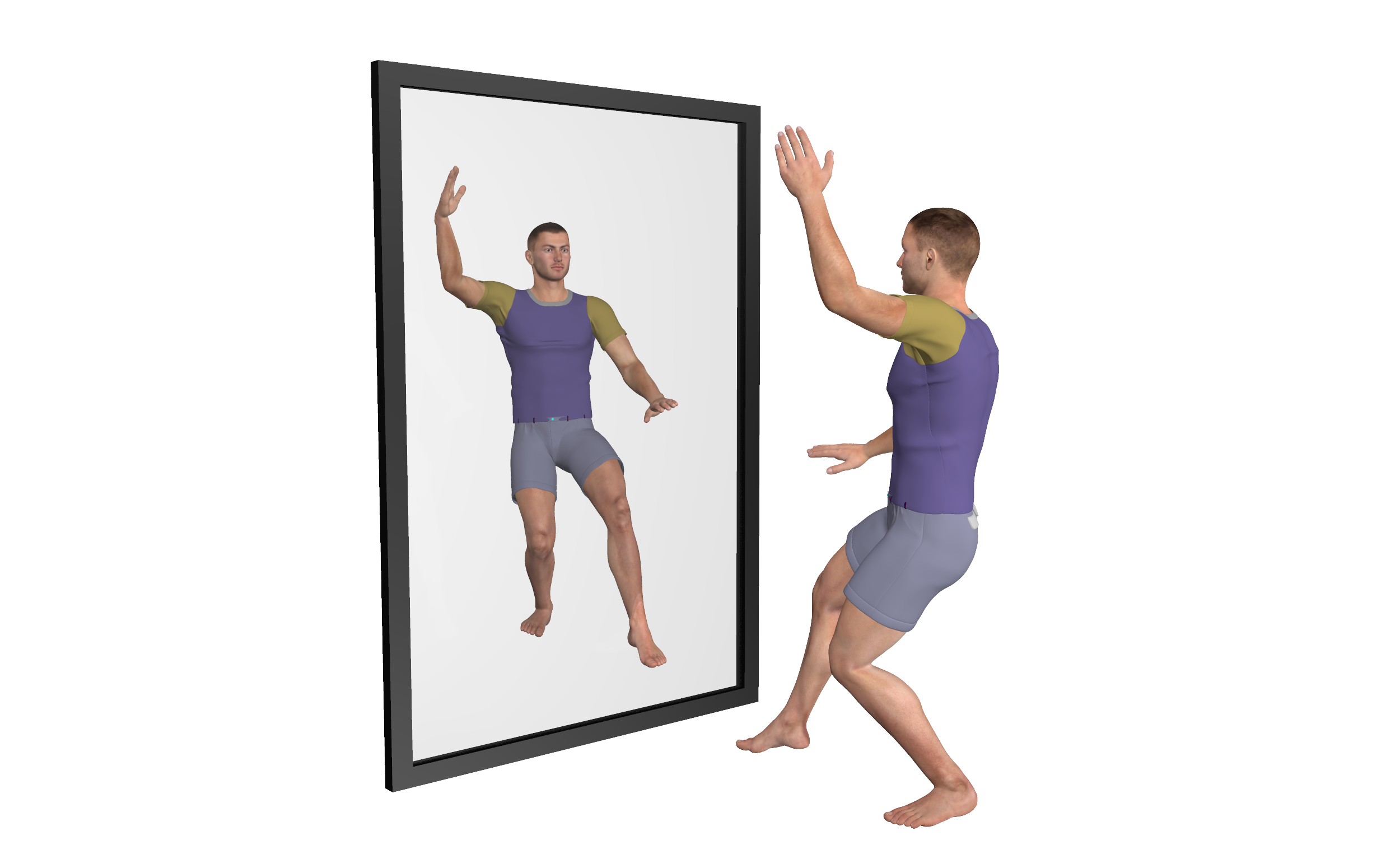
The process of consciously adjusting and fine-tuning the body’s components of its joints, spine, breath, and balance points, serves as a living metaphor for the refinement of one’s inner world. Each alignment demands the practitioner’s full attention, creating a bridge between external structure and internal awareness. This deliberate somatic calibration teaches the mind to observe without judgment and to respond with precision rather than impulse. Through this practice, bodily alignment becomes a mirror for mental alignment, cultivating stability and composure that extend into one’s emotional life.

In this sense, the act of refining posture, balance, and breath becomes a direct method for managing the subtle movements of thought and emotion, which are often more complex and volatile than the body itself. As the practitioner learns to coordinate intention with structure, thoughts become organized, and emotions are diffused through awareness rather than suppressed. Over time, these micro-adjustments train the nervous system to shift from reactivity to responsiveness, an embodied mindfulness that transforms self-regulation into second nature.

Practitioners quickly learn that the body resists tension, imbalance, and rigidity exposing internal conflict or emotional strain. As posture corrects, breathing deepens, and awareness refines, inner stillness and integrity naturally follow. The principle “as within, so without” is not poetic but experiential: mastery of motion becomes mastery of emotion.

Qigong, Tai Chi, and the Internal Alchemy of Transformation

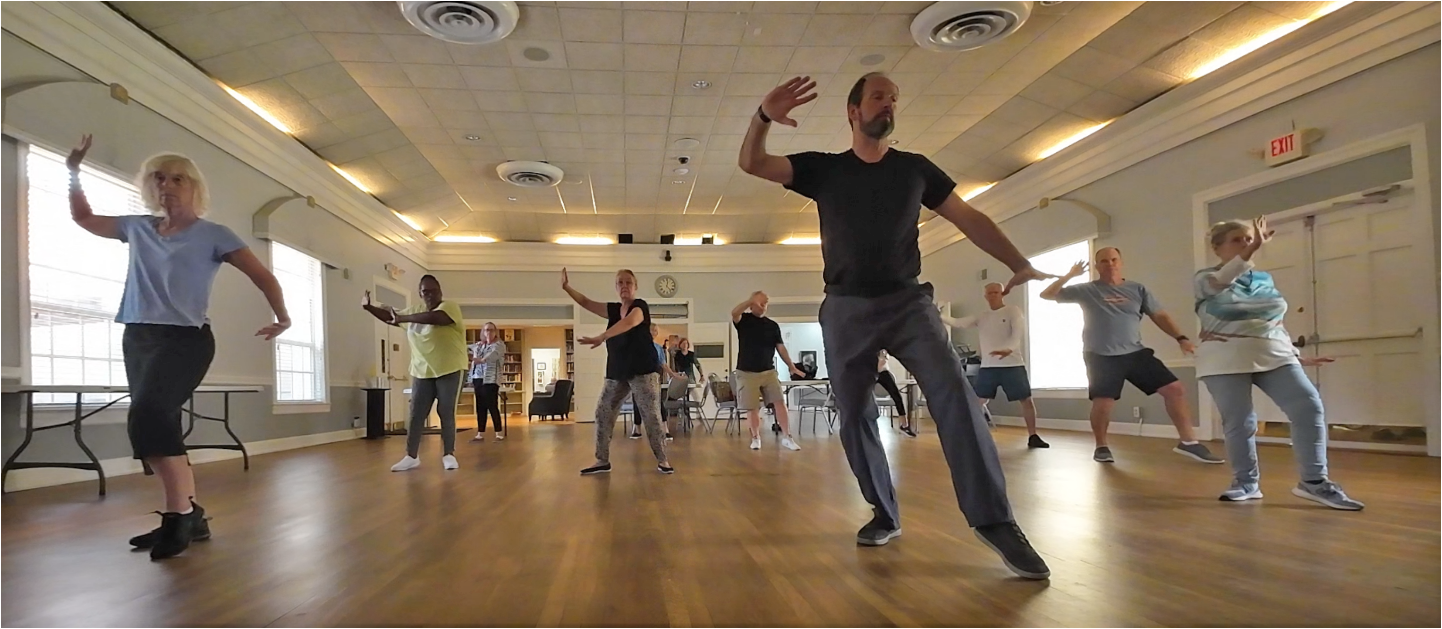
Qigong and Tai Chi are expressions of Daoist alchemy, using the body as a crucible for transformation. The triad of jing–qi–shen (essence–energy–spirit) describes a process of refining vital substance into consciousness. Through slow, deliberate movement, practitioners develop song (relaxed awareness), dissolving mechanical tension and egoic striving. This cultivates balance between yin and yang, seen in aspects such as yielding and firmness, rest and action, all mirroring the Daoist understanding of harmony with nature (Wile, 1996).

Similarly, Baguazhang employs circular walking and “palm changes” or transitional exercises, as a metaphor for the ever-changing cycles of life. The practitioner learns adaptability, humility, and responsiveness. The external circle mirrors the internal one: thoughts orbit awareness, but do not dominate it. Xing Yi Quan, in contrast, channels focused, linear intent (yi) through structured forms or sets of exercises linked together. The simplicity of its five-element theory trains directness, sincerity, and willpower, qualities of both combative efficiency and moral integrity.

These arts embody an essential truth:

By repeating forms that express balance, alignment, and flow, practitioners literally encode these virtues into their nervous systems.

Yoga and the Integration of Body, Mind, and Spirit

Yoga’s physical discipline (hatha) was historically conceived as preparation for spiritual awakening (raja yoga). By mastering the breath (pranayama), the practitioner learns to govern the subtle forces of life, taming desire and restlessness. The practice builds tapas, a purifying inner heat of discipline that burns away impurities of character. In this sense, asana and breathwork are tools of ethical refinement (Feuerstein, 1998).

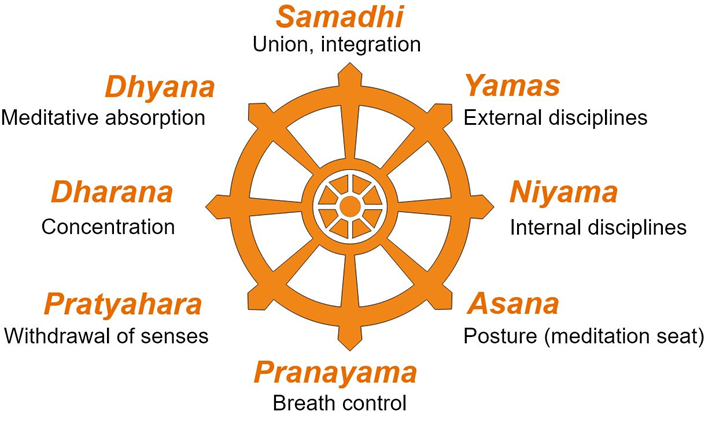
Moreover, the “eight limbs of yoga” outline a sequential refinement process: moral precepts (yama and niyama), physical posture, breath control, sensory withdrawal, concentration, meditation, and ultimately absorption (samadhi). Each step disciplines a different layer of being, ensuring that bodily control is never divorced from ethical self-cultivation.

From Discipline to Transformation

Discipline in these traditions is not punishment, but rather it is a path toward liberation through self-regulation. Through repetition and perseverance, one transcends laziness, fear, and egoic fragmentation. Neuroscientific research supports this: consistent somatic mindfulness modifies neural pathways associated with emotion regulation, empathy, and resilience (Davidson & McEwen, 2012). In effect, the physical arts train meta-awareness, or the capacity to observe one’s impulses and choose conscious response over reactivity.

True mastery, therefore, is not domination of the body but integration of the self. The martial artist, yogi, or qigong practitioner becomes calm yet alert, strong yet supple, humble yet confident. The disciplined body becomes a ritual language through which character is silently expressed.

The body is the gateway to transformation because it is the most immediate expression of consciousness. By cultivating precise movement, rhythm, and stillness, disciplines such as Yoga, Qigong, Tai Chi, Baguazhang, and Xing Yi transform instinct into intention, effort into grace, and discipline into virtue. They embody the timeless principle found across Taoist, Confucian, and Yogic traditions: that self-mastery begins with mastery of the vessel through which spirit acts. The practitioner who polishes the body as one polishes the sword finds that, in the end, it is the soul itself that shines.

References:

Davidson, R. J., & McEwen, B. S. (2012). Social influences on neuroplasticity: Stress and interventions to promote well-being. Nature Neuroscience, 15(5), 689–695. https://doi.org/10.1038/nn.3093

Feuerstein, G. (1998). The Yoga Tradition: Its History, Literature, Philosophy and Practice. Hohm Press. https://archive.org/details/yogatraditionits0000feue

Kleinman, A. (2023). Patients and healers in the context of culture. https://doi.org/10.2307/jj.2711689

Wile, D. (1996). Lost T’ai-chi Classics from the Late Ch’ing Dynasty. State University of New York Press. https://doi.org/10.2307/jj.18255579

Introducing a New Series: The Architecture of the Human Journey

In a world saturated with fragmented advice on health, fitness, and personal development, there remains a need for something more complete, structured, integrated, and grounded in both lived experience and timeless principles.

Over the course of several decades of study, practice, and teaching across the fields of holistic health, martial arts, and human development, a unifying framework has gradually taken shape. This framework does not isolate the body from the mind, nor the mind from the spirit. Instead, it recognizes that human growth unfolds through the dynamic interaction of multiple systems of physical, biological, energetic, behavioral, and philosophical.

It is from this perspective that a new six-part book series emerges:

The Architecture of the Human Journey

This series is not simply a collection of books. It is a structured exploration of what it means to develop as a human being: physically, mentally, energetically, and ethically within the realities of modern life.

Each volume builds upon the others, forming a progressive pathway toward greater awareness, resilience, and self-mastery.

Book 1: The Self-Healing Body

The journey begins with the body—not as a machine to be pushed or punished, but as a living system designed for adaptation, repair, and resilience.

The Self-Healing Body explores the foundational principles of movement, posture, breathing, and recovery. It challenges the modern tendency toward inactivity and over-reliance on external interventions, instead emphasizing the body’s innate capacity to restore balance when given the proper conditions.

Readers are guided toward a deeper understanding of how daily habits of sitting, standing, walking, breathing shape long-term health outcomes. The message is clear: the body is not broken; it is often simply underused, misused, or misunderstood.

Book 2: The Biological Mind

If the body is the foundation, the mind is the regulator.

The Biological Mind examines how thoughts, emotions, stress responses, and neurological patterns influence both behavior and physiology. Rather than viewing the mind as something abstract or separate, this book presents it as a biological system, deeply connected to the nervous system, hormones, and physical health.

Topics include stress conditioning, attention, perception, and the ways in which modern environments can dysregulate natural mental processes. Readers are encouraged to recognize how their internal dialogue and external inputs shape their lived experience.

Book 3: The Energetic Body

Beyond the physical and biological lies a more subtle, yet equally important dimension: the energetic system.

The Energetic Body draws from Traditional Chinese Medicine, Daoist practices, and internal martial arts to explore concepts such as qi, meridians, breath, and internal flow. While often overlooked in Western models, these systems have guided health and movement practices for thousands of years.

This volume bridges the gap between ancient insight and modern understanding, offering practical ways to cultivate energy through breathwork, posture, and intentional movement.

Book 4: Embodied Discipline

Knowledge without application remains incomplete.

Embodied Discipline focuses on the integration of body, mind, and energy through consistent practice. It is here that theory becomes lived experience. Discipline is reframed not as rigid control, but as the steady cultivation of habits that align with one’s values and goals.

Drawing from martial arts training, this book explores how structure, repetition, and intentional challenges build not only physical capacity, but mental clarity and emotional resilience.

Book 5: The Healthcare Paradox

Modern healthcare offers remarkable advancements, yet widespread chronic illness continues to rise.

The Healthcare Paradox examines this contradiction. It explores how systems designed to treat disease often overlook the foundational behaviors that prevent it. Nutrition, movement, stress, environment, and personal responsibility all play a role, yet are frequently underemphasized.

This book does not reject modern medicine but rather places it within a broader context. One that encourages individuals to become active participants in their own health rather than passive recipients of care.

Book 6: The Human Journey

The final volume steps back to consider the broader question: What is all of this for?

The Human Journey explores meaning, purpose, relationships, and the realities of growth over a lifetime. It integrates the lessons of the previous volumes into a larger philosophical perspective, drawing from both Eastern and Western traditions.

It recognizes that strength, clarity, and health are not ends in themselves, but tools that support a more meaningful and connected life.

A Complete Framework for Modern Living

Taken together, these six books form a cohesive system:

  • The body provides structure
  • The mind provides direction
  • The energy system provides flow
  • Discipline provides integration
  • Awareness of systems provides context
  • Meaning provides purpose

This is the architecture – not of a building, but of a life.

In a time when information is abundant, but wisdom is scattered, The Architecture of the Human Journey offers a way to reconnect the pieces. It invites readers not just to learn, but to observe, reflect, and ultimately take responsibility for their own development.

This is not a quick fix or a temporary program. It is a long-term approach to living with greater awareness, strength, and integrity.

The journey is ongoing. The architecture is yours to build.

Finding the Body’s Secret Cooling Switches

When I listened to this episode of Huberman Lab Essentials, I felt like I was getting a masterclass in how our bodies really deal with heat and cold. Dr. Andrew Huberman was speaking with Dr. Craig Heler, an expert in neurobiology and ophthalmology, about cold exposure, and not just the trendy ice bath kind of talk, but the deeper science and practical ways it affects performance, physiology, and thermoregulation.

As I absorbed their discussion, I realized how much of my own thinking about cooling was based on half-truths or misleading sensations. They broke down the different physiological responses to cold showers versus ice baths, how aerobic and anaerobic exercise interact with temperature stress, and why heat buildup in muscles is often the true limiter of performance.

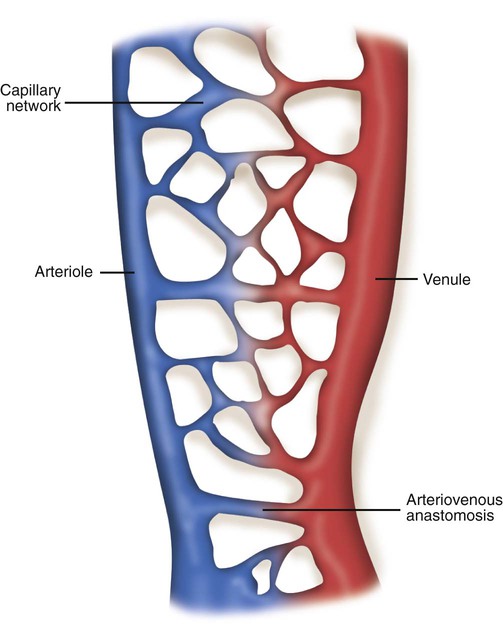
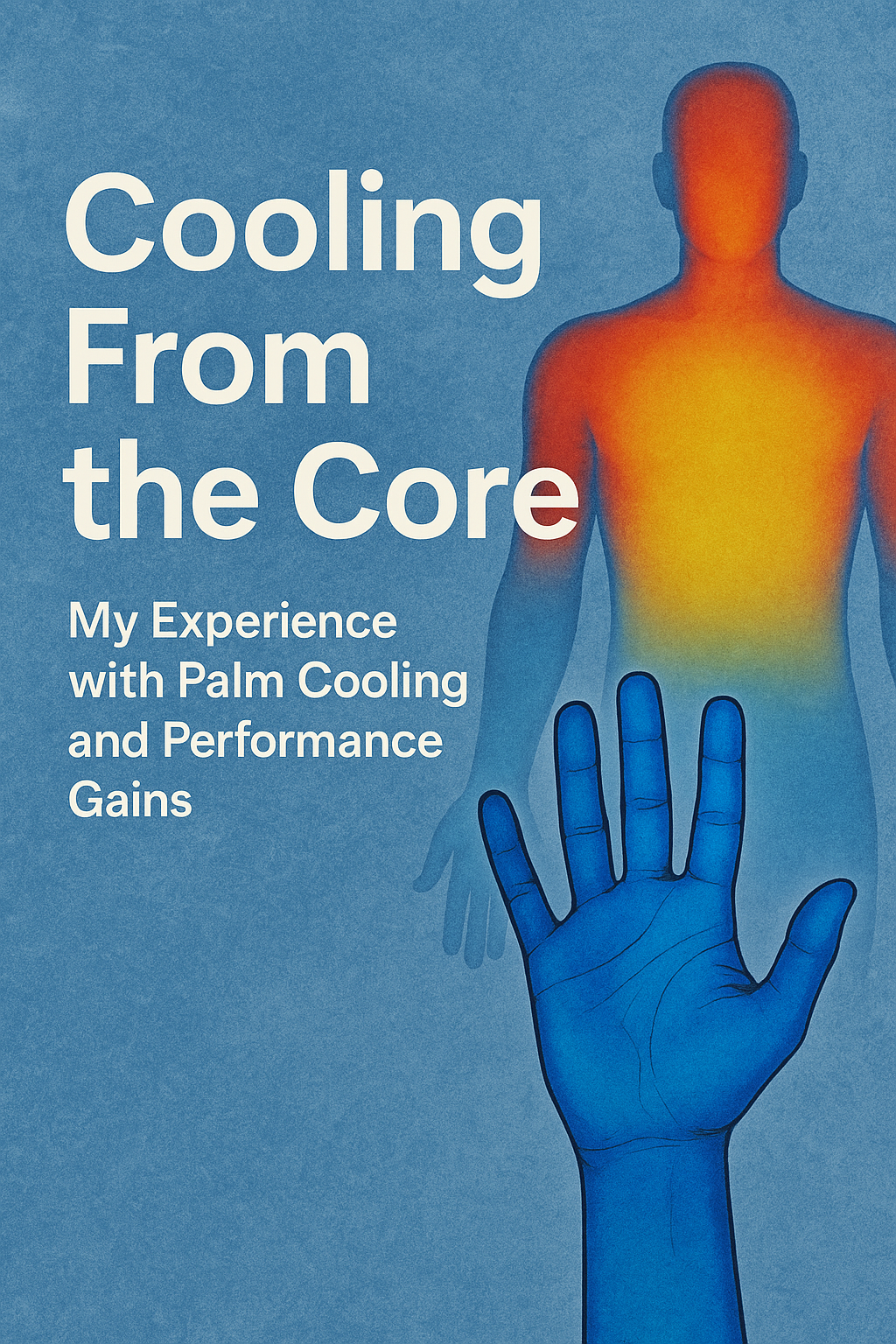
One of the biggest takeaways for me was learning about specialized heat loss portals in glabrous skin, orthe hairless areas like our palms, the soles of our feet, and our upper face. These areas have unique blood vessel shunts (arterio-venous anastomoses) that let blood bypass capillaries for rapid heat exchange. It’s an evolutionary adaptation, and when you target these portals for cooling, you can dramatically increase endurance and work capacity.

(The Cardiovascular System, 2025)

I found it fascinating and slightly frustrating, to learn that a lot of common cooling methods, like cold towels or ice packs, aren’t just less effective, they can actually work against you. They might feel good, but they can cause vasoconstriction that traps heat inside the body. Dr. Heler shared research and even pro athlete examples where palm cooling allowed people to double or triple their workout volume. I was struck by one story where an athlete’s dip count jumped from around 150 to over 300 by using this method.

What really stuck with me was the idea that muscle fatigue during anaerobic work is often due to local overheating, not just lactic acid buildup or lack of willpower. Once muscles hit around 39.5°C (103.1°F), a key enzyme for fuel supply shuts down, and the body simply won’t let you keep going. Cooling these heat loss portals between sets helps prevent that shutdown and keeps you in the game longer.

I also learned that you have to be careful not to overcool. If you make the skin too cold, you close off the very pathways you’re trying to use. The CoolMitt technology they discussed solves this by cooling palms to the optimal temperature. Cool enough to pull heat quickly, but not so cold that it causes vasoconstriction. About three minutes of cooling hits the sweet spot before diminishing returns set in.

What’s surprising is how much faster these glabrous skin areas can cool the body compared to the usual medical focus points like the armpits or groin. Cooling the palms, soles, and face can work about twice as fast, which makes me think medical protocols for heat stroke and athletic recovery might need to be revisited or updated.

Beyond the sports and martial arts communties, I see the potential for this science in the military, for outdoor workers, or anyone dealing with extreme heat. Even without specialized gear, Dr. Heler suggested experimenting with cold packs or frozen items on the palms during rest intervals.

One subtle but important insight was that cooling the head or neck might make you feel cooler but doesn’t necessarily lower your core temperature. That psychological trick can be dangerous if it leads you to push harder while your body is still overheating.

For me, this episode was a clear reminder of how much performance and safety comes down to understanding the body’s systems rather than relying on what feels good in the moment. Knowing that muscle temperature, glabrous skin cooling, and careful avoidance of overcooling can be the difference between fatigue and peak performance has given me a whole new set of tools to experiment with.

In the end, I learned both practical strategies and a deeper appreciation for the science. Cooling the right places, in the right way, can change the game not just for athletes, but for anyone who wants to perform at their best in challenging environments.

References:

Andrew Huberman. (2025, August 7). Essentials: Increase Strength & Endurance with Cooling Protocols | Dr. Craig Heller [Video]. YouTube. https://www.youtube.com/watch?v=aZklQpFa2kE

The cardiovascular system. (2025, April 22). Clinical Gate. https://clinicalgate.com/the-cardiovascular-system-6/