If Jesus Returned Today: A Holistic Look at Faith, Skepticism, and the Human Response to the Divine

Written for seekers, skeptics, and believers alike, this article invites deeper reflection on the mystery of faith, the struggle of transformation, and the timeless power of the human spirit.

Easter is one of the most widely celebrated religious holidays across the globe, observed by billions of people through both spiritual and cultural traditions. For Christians, it commemorates the resurrection of Jesus Christ; an event central to the faith and steeped in mystery, reverence, and awe. Yet, when we peel back the layers of devotion and ritual, deeper questions arise:

  • What exactly happened leading up to the crucifixion?
  • Why did Jesus die?
  • If Jesus were alive today, would He be embraced or dismissed as a fraud?
  • Would He be celebrated or condemned all over again?

These questions may seem theological at first glance, but they also probe into human psychology, sociology, and the nature of our collective consciousness. Let’s explore this landscape more fully.

The Life and Death of Jesus: A Brief Chronology

The crucifixion of Jesus was not a random act of violence but the culmination of escalating tension. His teachings challenged the religious elite and threatened both Roman and Jewish political structures. Betrayed by Judas Iscariot, arrested in the Garden of Gethsemane, and denied three times by Peter, Jesus was ultimately condemned, scourged, and crucified under Roman law.

According to the Gospels, He died a slow, excruciating death, most likely from a combination of blood loss, asphyxiation, and shock. His body was placed in a tomb, and yet, three days later, reports of His resurrection spread. For the next 40 days, Jesus appeared to His disciples and followers in various places, teaching and preparing them before ascending into heaven.

But His post-resurrection appearances were not always public or easily verified, likely to avoid immediate conflict with His enemies. This subtle presence helped build the early Christian movement without triggering another wave of persecution, yet it also raises timeless questions.

Would Jesus Be Accepted Today?

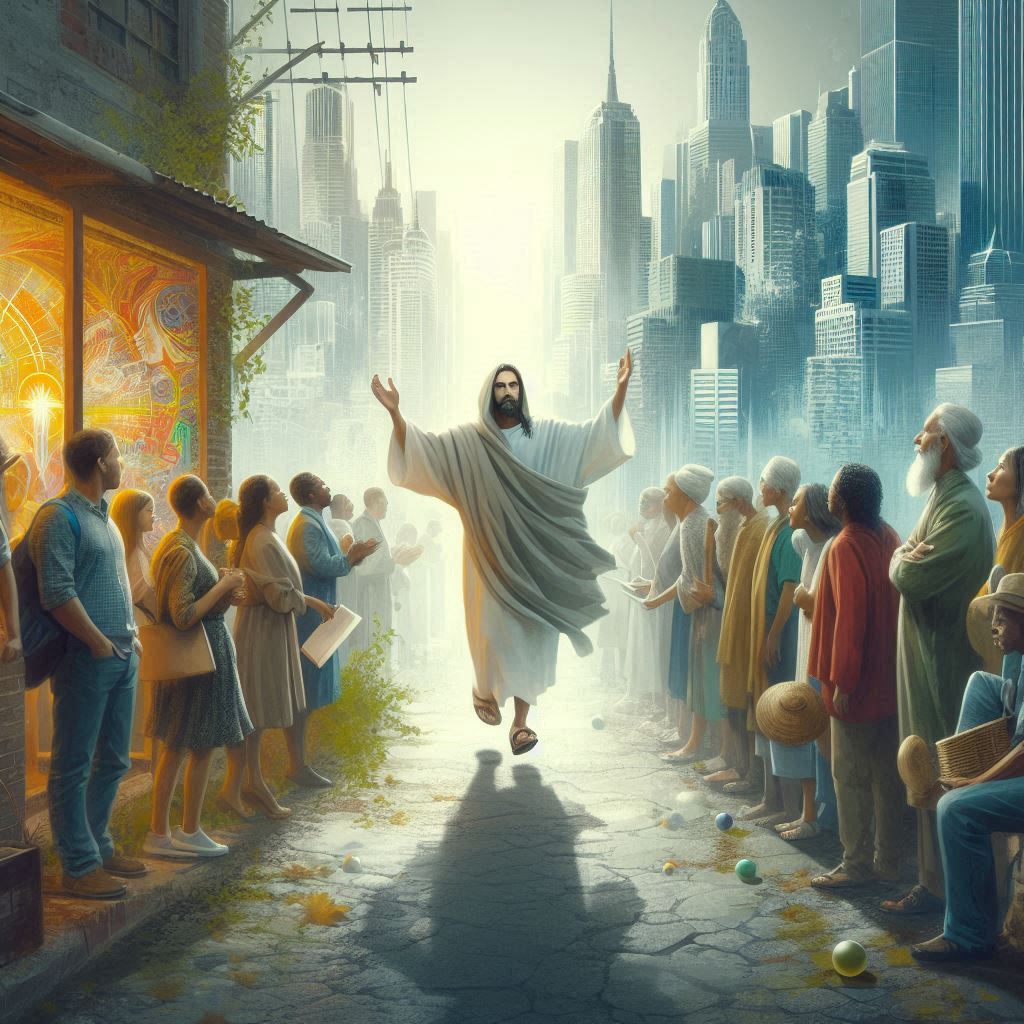
Imagine Jesus walking the Earth today, preaching love, repentance, and divine truth. Would He be revered? Or ridiculed?

For many devout Christians, His return is not only expected but deeply hoped for. But it’s also possible that His reappearance would challenge modern religious institutions, political ideologies, and cultural norms. His radical message of loving enemies, renouncing materialism, forgiving unconditionally, and living humbly runs counter to consumer culture, tribalism, and vengeance-based systems of justice.

In a secular and scientific age, He might be dismissed as delusional, cult-like, or mentally unstable. Social media would amplify both the adoration and the condemnation. News outlets would scrutinize every word. Authorities might intervene. Even some who claim to follow Him might not recognize Him if He failed to fit their expectations.
Miracles, Demons, and the Modern Lens

Jesus’ time was filled with accounts of miracles such as healing the sick, calming storms, walking on water, and casting out demons. But how do we interpret those today?

It’s worth asking: were demon possessions more common in antiquity, or was there simply a lack of medical and psychological understanding? Conditions we now label as epilepsy, schizophrenia, or PTSD may have once been seen through a spiritual lens. That doesn’t necessarily disprove the spiritual dimension, it just reminds us that knowledge evolves, and perception is always shaped by context.

Many ancient cultures viewed health holistically, body, mind, and spirit as inseparable. In that light, Jesus’ healing work can still be seen as deeply integrative, restoring not just physical health, but emotional, mental, and spiritual balance.

Do People Still Celebrate Easter as a Religious Holiday?

In the United States, Easter remains a significant holiday, but often more as a cultural celebration than a sacred observance. About 81% of Americans celebrate Easter (Statista, 2025), but only around 30% attend religious services (Jones, 2025). For many, Easter involves candy, egg hunts, spring fashion, and family meals more than deep spiritual reflection.

Globally, however, Easter remains a central pillar for over two billion Christians, and even those who don’t consider themselves religious often participate in its communal and festive traditions.

The Pattern of Human Response to Visionaries

Jesus was not the only historical figure to be rejected in His time and revered later. In fact, history repeats itself with uncanny regularity:

FigureDuring Their LifeNow Remembered As
Jesus ChristExecuted as a criminal and hereticSavior, Son of God, Redeemer
SocratesSentenced to death for corrupting the youthFather of Western Philosophy
Martin Luther King Jr.Monitored and opposed; assassinatedCivil Rights Icon
Joan of ArcBurned at the stake for heresyCatholic Saint and French Heroine
Galileo GalileiPlaced under house arrest for scientific beliefsFather of Modern Science
Nelson MandelaImprisoned as a dissidentGlobal Symbol of Peace and Freedom
Mother TeresaCriticized and praisedCanonized Saint and Humanitarian

This pattern teaches us something vital: those who carry truth, challenge norms, or disrupt unjust systems are often rejected in their own time, only to be honored by future generations once the world has caught up.

Final Reflection

If Jesus Christ were to return today, not as a celebrity preacher or political figure, but as the humble, radical healer Jesus was, there’s a strong chance he would face the same resistance that he did 2,000 years ago.

Yet, the holistic view reminds us that truth transcends time. While forms change, principles remain. Whether we view Jesus through a spiritual, symbolic, or historical lens, His life challenges us to look inward, to seek compassion, and to live from the soul rather than the ego.

The deeper question isn’t whether the world would accept Jesus, but whether we would recognize Him in our own lives, our own thoughts, and the strangers we encounter daily.

References:

Statista. (2025, March 3). Share of Americans celebrating Easter from 2009-2023. https://www.statista.com/statistics/221108/share-of-americans-celebrating-easter-since-2007/

Jones, B. J. M. (2025, March 26). Church attendance has declined in most U.S. religious groups. Gallup.com. https://news.gallup.com/poll/642548/church-attendance-declined-religious-groups.aspx?utm_source=chatgpt.com

I teach and offer lectures about holistic health, physical fitness, stress management, human behavior, meditation, phytotherapy (herbs), music for healing, self-massage (acupressure), Daoyin (yoga), qigong, tai chi, and baguazhang.

Please contact me if you, your business, organization, or group, might be interested in hosting me to speak on a wide spectrum of topics relative to better health, fitness, and well-being.

I look forward to further sharing more of my message by partnering with hospitals, wellness centers, VA centers, schools on all levels, businesses, and individuals who see the value in building a stronger nation through building a healthier population.

I also have hundreds of FREE education video classes, lectures, and seminars available on my YouTube channel at:

https://www.youtube.com/c/MindandBodyExercises

Many of my publications can be found on Amazon at:

http://www.Amazon.com/author/jimmoltzan

My holistic health blog is available at:

https://mindandbodyexercises.wordpress.com/

http://www.MindAndBodyExercises.com

Mind and Body Exercises on Google: https://posts.gle/aD47Qo

Jim Moltzan

407-234-0119

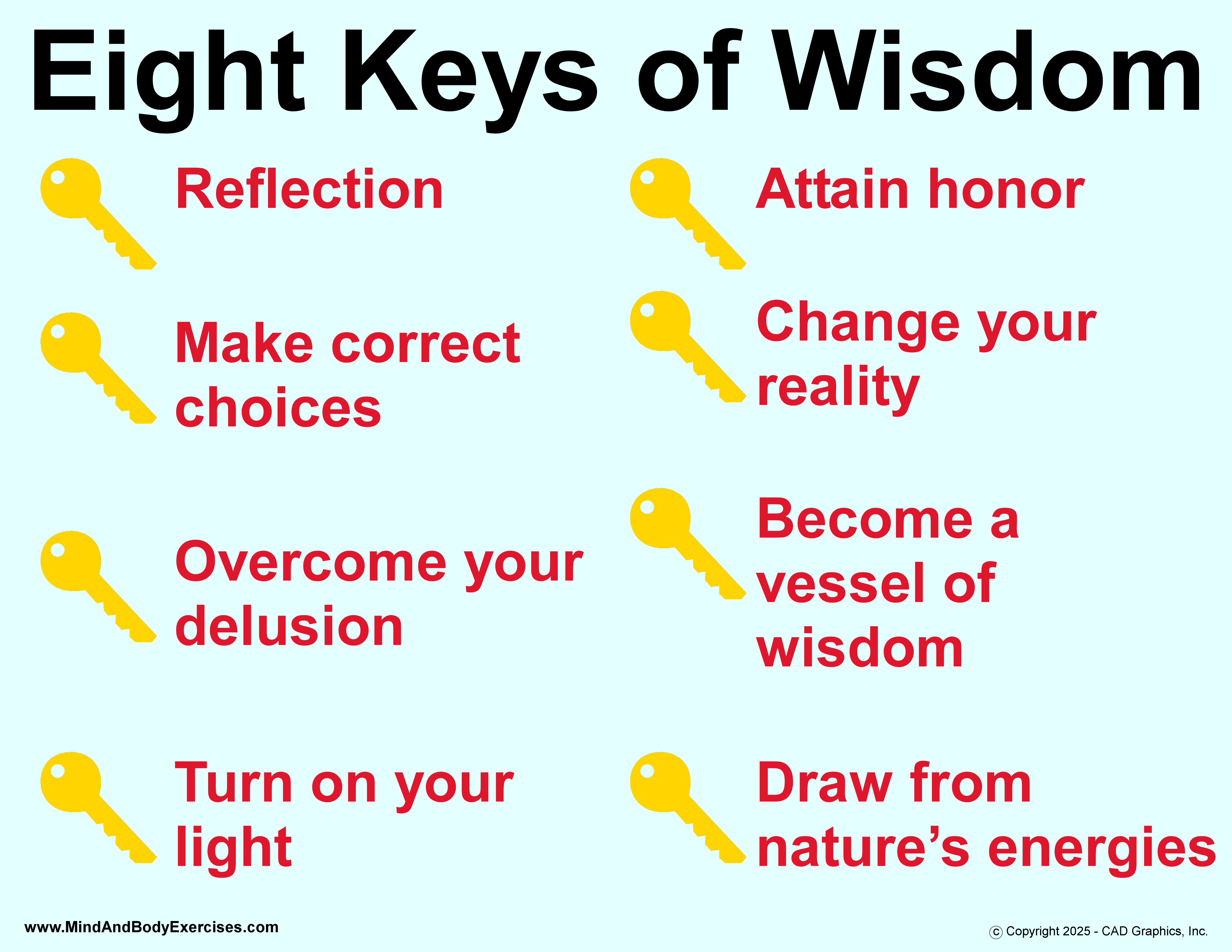
The Eight Keys of Wisdom

The Eight Keys of Wisdom are rooted in Taoist, Confucian, and Buddhist principles, such as:

  • Wu Wei (Effortless Action) in Taoism, similar to “Be Like Bamboo” (flexibility and balance).
  • Right Conduct and Ethics in Confucianism, similar to “The True-Right-Correct Method.”
  • Mindfulness and Detachment from Thought in Buddhism are reflected in “Stop Being Drunk on Your Own Thoughts.”

The Eight Keys of Wisdom serve as guiding principles for integrating mindfulness and meditation into daily life. Here’s a deeper look at each:

1. Reflection (Know Your True Self)

  • This key emphasizes self-awareness and authenticity.
  • It encourages recognizing personal strengths, weaknesses, and emotional patterns.
  • Understanding oneself allows for conscious decision-making and alignment with one’s true nature.

2. Make Correct Choices (The True-Right-Correct Method)

  • Rooted in Eastern philosophy, this principle teaches the importance of seeking truth and making ethical choices.
  • “True” represents inner wisdom, “Right” signifies ethical action, and “Correct” ensures that actions align with both personal integrity and universal balance.

3. Overcome Delusion (Stop Being Drunk on Your Own Thoughts)

  • Encourages detachment from overthinking and emotional reactivity.
  • Teaches mindfulness techniques to observe thoughts without being consumed by them.
  • Helps develop clarity and inner calm by breaking free from habitual negative thinking.

4. How Will You Be Remembered? (Plant Good Seeds)

  • Invites reflection on one’s legacy and the impact of actions on others.
  • Encourages living with purpose, kindness, and awareness of how one’s presence affects the world.
  • Turn on your light, becoming an inspiration and not a warning to others

5. Seek Connectedness & Honor (Be Like a Mountain)

  • Focuses on building meaningful relationships through respect, integrity, and compassion.
  • Recognizes the interconnectedness of all people and the importance of honoring those connections.
  • Teaches that true strength comes from unity rather than isolation.

6. Change Your Reality for the Better

  • Encourages personal responsibility in shaping one’s experiences.
  • Highlights the power of perspective—choosing optimism and proactive behavior over victimhood.
  • Teaches how shifting internal attitudes can influence external circumstances.

7. Become a Vessel of Wisdom (It Only Takes One Match to Light a Thousand)

  • Demonstrates the power of small actions in creating widespread change.
  • Encourages leading by example, where one positive act can inspire many others.
  • Stresses that transformation begins with individual effort, no matter how small.

8. Draw from Nature’s Energies (Be Like Bamboo)

  • Symbolizes resilience, flexibility, and strength.
  • Encourages adaptability in the face of challenges while maintaining inner strength.
  • Teaches that true power lies in balance, being strong yet flexible, firm yet yielding.

I look forward to further sharing more of my message by partnering with hospitals, wellness centers, VA centers, schools on all levels, businesses, and individuals who see the value in building a stronger nation through building a healthier population.

I also have hundreds of FREE education video classes, lectures, and seminars available on my YouTube channel at:

https://www.youtube.com/c/MindandBodyExercises

Many of my publications can be found on Amazon at:

http://www.Amazon.com/author/jimmoltzan

My holistic health blog is available at:

https://mindandbodyexercises.wordpress.com/

http://www.MindAndBodyExercises.com

Mind and Body Exercises on Google: https://posts.gle/aD47Qo

Jim Moltzan

407-234-0119
Spring has Sprung. Are You a Wood Element Constitution?

“Knowing others is intelligence;
Knowing
yourself is true wisdom.
Mastering others is strength;
Mastering yourself is true power.”
― Lao Tzu, Tao Te Ching

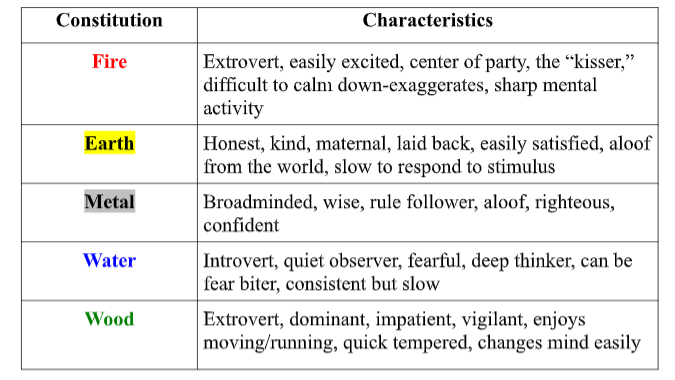
Knowing one’s own constitution, as well as others in their life can help to better understand how and why people behave the way they do under certain situations. Some may see this concept as somewhat controversial or as a version of “profiling.” However, this concept has been used for over thousands of years in various cultures across the world, such as with Traditional Chinese Medicine (the 5 Elements), Hippocratic & Greco-Roman Medicine (the Four Humors), Jungian Psychology, Tibetan Medicine (Sowa Rigpa), Western Biopsychological Models (Sheldon’s Somatotypes). Ayurveda (Indian “study of life”) and indigenous peoples across the globe.

The Wood Element in Traditional Chinese Medicine

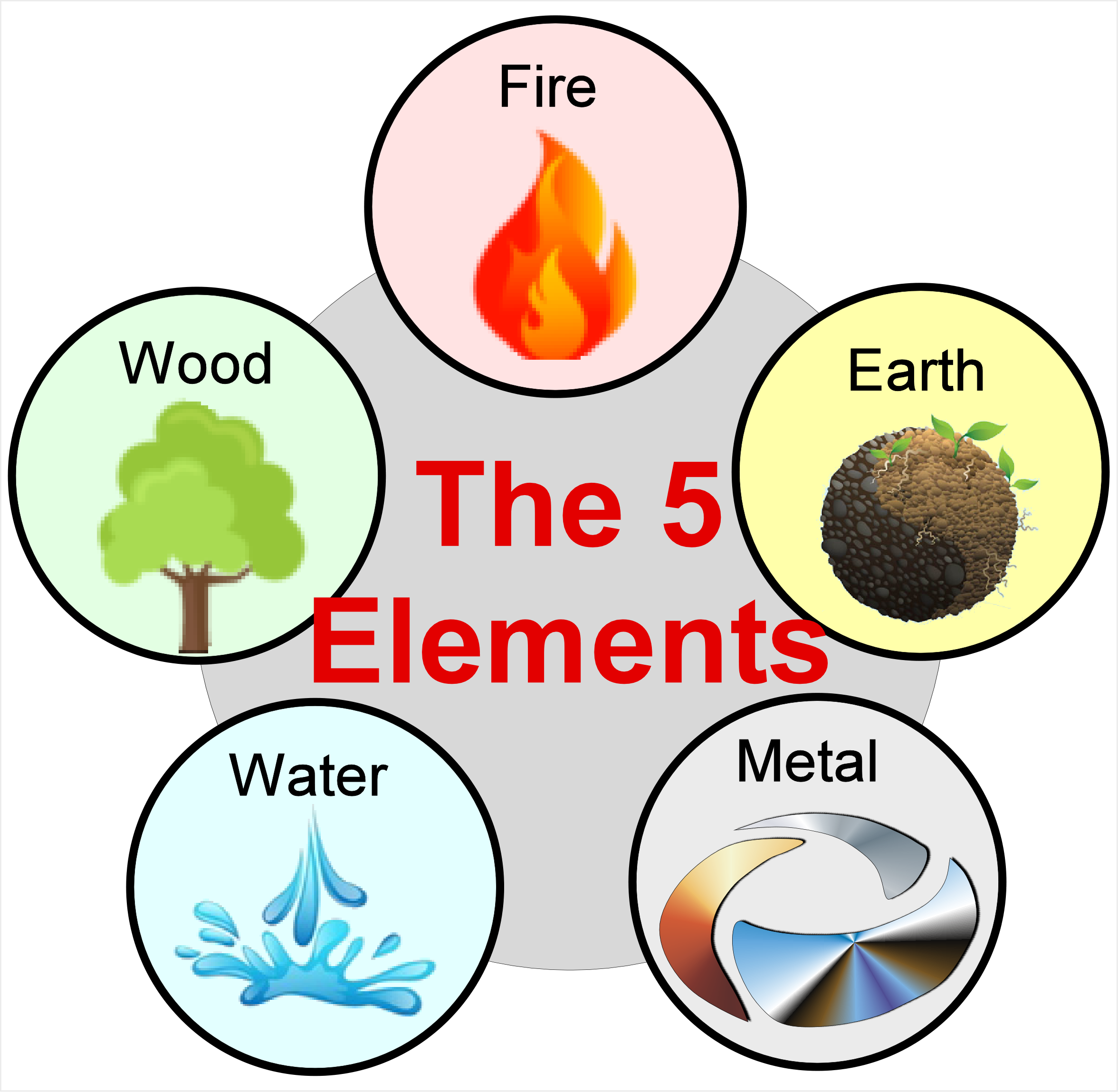
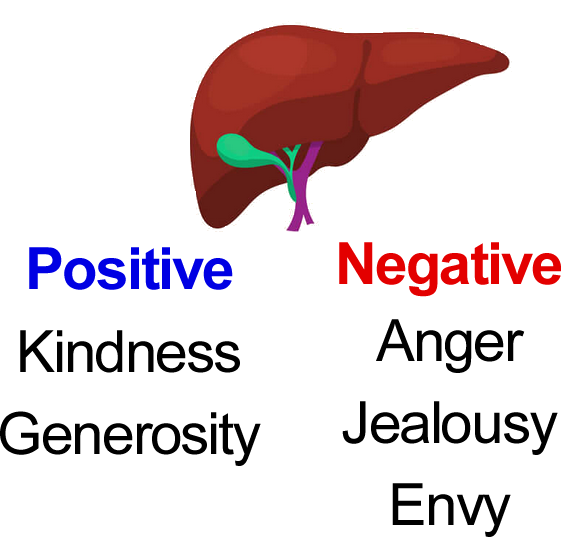
In Traditional Chinese Medicine (TCM), the Wood Element is one of the five fundamental forces in the Five Element Theory, which explains the interconnection between natural phenomena and human life. Each element of Wood, Fire, Earth, Metal, and Water, corresponds to specific seasons of the year, organs, emotions, and physiological processes. Wood, in particular, is linked to the season of spring, the liver and gallbladder, shaping both physical and psychological characteristics in individuals with a “Wood constitution.” The Wood Element is characterized by physical movement, ambition, and outward energy. While Wood types are dynamic and goal-driven, they must cultivate mental and physical flexibility and adequate rest to prevent stress and stagnation.

1. Physical Traits of a Wood Constitution

  • Body Structure: Individuals influenced by the Wood Element typically have a sinewy, muscular build, often appearing strong and tall with an inherent sense of vitality.
  • Strength and Flexibility: They usually possess endurance and adaptability, both physically and mentally, with a natural propensity toward movement and expansion.
  • Common Health Challenges: Wood types may encounter liver and/or gallbladder-related concerns, including digestive disturbances, migraines, muscle and tendon stiffness, and detoxification difficulties. Liver Qi stagnation can also lead to menstrual irregularities or eye discomfort.

2. Mental and Emotional Aspects

  • Core Emotion: The primary emotion linked to Wood is anger. When balanced, Wood individuals express healthy assertiveness, confidence, and determination. However, an imbalance can lead to frustration, irritability or struggles with managing emotions.
  • Personality and Leadership: Wood types are often natural leaders, driven by vision, ambition, and a desire for growth. They excel in planning and organization, where they always seek progress.
  • Decision-Making: They tend to be quite decisive and pioneering, eager to initiate change.
  • Emotional Imbalances: When unbalanced, Wood individuals may become uptight, rigid, impatient, overly perfectionistic, and prone to burnout from excessive effort.

3. Spiritual Dimensions

  • Growth and Transformation: The Wood Element embodies expansion, renewal, and personal evolution. Wood constitution individuals are often goal-oriented and deeply invested in self-improvement.
  • Purpose and Mission: They often possess a deep connection to their life’s purpose, inspired by justice, creativity, or a desire to bring new ideas into the world.
  • Bond with Nature: Reflecting the qualities of trees and plants, Wood types people often feel extremely connected to the natural world, drawing vitality and inspiration from outdoor environments.

4. Maintaining Balance in the Wood Element

To maintain harmony within the Wood Element, it is essential to cultivate their physical, emotional, and spiritual well-being:

  • Physical Care: Regular body movement, stretching, and flexibility exercises help to support the liver and gallbladder. Regular consumption of liver-friendly foods like leafy greens also promotes internal balance.
  • Emotional Regulation: Journaling, meditation, mindfulness, and relaxation techniques can help process emotions and reduce stress. Cultivating adaptability and releasing rigid perfectionism contribute to emotional equilibrium.
  • Spiritual Nourishment: Making time to be present in nature, engaging in continuous learning, and setting personal growth goals can cultivate a sense of fulfillment and alignment.

I teach and offer lectures about holistic health, physical fitness, stress management, human behavior, meditation, phytotherapy (herbs), music for healing, self-massage (acupressure), Daoyin (yoga), qigong, tai chi, and baguazhang.

Please contact me if you, your business, organization, or group, might be interested in hosting me to speak on a wide spectrum of topics relative to better health, fitness, and well-being.

I look forward to further sharing more of my message by partnering with hospitals, wellness centers, VA centers, schools on all levels, businesses, and individuals who see the value in building a stronger nation through building a healthier population.

I also have hundreds of FREE education video classes, lectures, and seminars available on my YouTube channel at:

https://www.youtube.com/c/MindandBodyExercises

Many of my publications can be found on Amazon at:

http://www.Amazon.com/author/jimmoltzan

My holistic health blog is available at:

https://mindandbodyexercises.wordpress.com/

http://www.MindAndBodyExercises.com

Mind and Body Exercises on Google: https://posts.gle/aD47Qo

Jim Moltzan

407-234-0119
The Great American Contradiction: Why We Say One Thing and Do Another

My posts are mostly about holistic health, wellness, and various methods to achieve balance in our lives. Human behavior or psychology are subjects I have delved deeper into, as our behavior dramatically affects our mental, physical, and spiritual well-being.

The United States is a nation built on ideals of freedom, opportunity, and justice, but beneath these principles lies a web of contradictions. Many Americans know systemic issues, broken systems, and political dysfunction, yet they often feel powerless to enact meaningful change. Some believe they have no viable alternatives, while others simply don’t care as long as the consequences don’t affect them directly. Lack of agency (ability to act and make choices independently) and lack of control (exerting power or influence over others or outcomes) can have deep psychological effects, leading to many chronic cognitive ailments such as depression, anxiety, insecurity, and others. It’s time for a collective reckoning. Perhaps it’s time to ask not just, “Are we part of the problem?” but also, “What can we do to be part of the solution?”

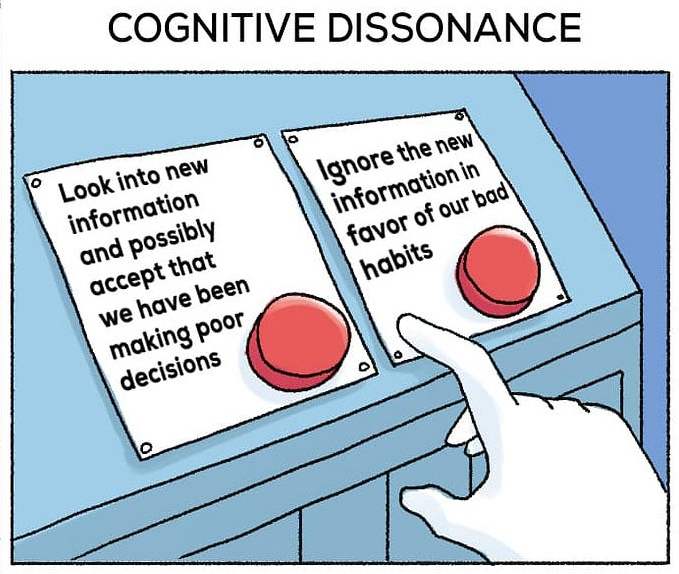
Here’s a closer look at some of the most glaring contradictions or cognitive dissonance (the discomfort of holding conflicting beliefs or values) in American society, grouped by their interrelated themes:


1. Term Limits vs. Career Politicians

There is widespread support for imposing term limits on politicians, yet career politicians dominate Washington. Many Americans believe fresh perspectives would benefit governance, but efforts to enforce limits consistently stall. Voters complain about corruption but continue re-electing the same people.


2. Politicians and Insider Trading vs. Public Trust

Most Americans believe politicians should not benefit from insider trading, yet cases of elected officials profiting from privileged information persist. Despite this, the same politicians often get re-elected. We claim to detest corruption but keep endorsing those who abuse their positions.


3. Foreign Wars vs. Public Opinion

A large portion of the population opposes foreign military interventions, yet the U.S. remains entangled in conflicts worldwide. Public sentiment rarely translates into policy changes, highlighting the disconnect between the will of the people and government actions.


4. Perceived Misuse of Tax Dollars vs. Continued Compliance

Taxpayers express frustration over how their money is spent, with glaring examples of inefficiency and corruption. For instance, California spent $24 billion to address homelessness, yet the crisis has only worsened. In November 2024, the Pentagon failed to pass its annual audit, meaning that it wasn’t able to fully account for how its $824 billion budget was used. This was the 7th failed audit in a row, since the Department of Defense became required to undergo yearly audits in 2018. Despite this, people continue paying taxes while feeling powerless to demand accountability.


5. Daylight Saving Time vs. Public Opinion

Twice a year, Americans grumble about the disruption caused by changing the clocks. Studies show that daylight saving time may increase health risks and reduce productivity, yet it persists. Despite widespread dissatisfaction, legislative inertia keeps the practice alive.


6. Limited Political Choices vs. Frustration with the Two-Party System

Americans lament the lack of political diversity and the stranglehold of the two-party system, yet alternative parties remain marginalized. Even though many feel disillusioned, they continue to choose between the “lesser of two evils.” Real change remains elusive because the system favors the status quo.


7. Support for Public Education vs. Private School Enrollment

Public education is hailed as the cornerstone of equal opportunity, yet families who can afford it often opt for private schooling. This creates a disconnect between advocating for public education and personal choices that contribute to inequality.


8. Supporting Local Businesses vs. Shopping Online

We talk about the importance of supporting local businesses, yet giants like Amazon, Walmart, and Starbucks continue to dominate, often putting small businesses out of business. Convenience, competitive pricing, and free shipping lure consumers away from their local economies.


9. Income Inequality vs. Celebrity Worship

While many decry income inequality and the wealth gap, America remains obsessed with celebrity culture and extravagant lifestyles. This fascination with the ultra-wealthy perpetuates distorted perceptions of success and value.


10. Perceived Value vs. Price Sensitivity

Consumers often complain about the declining quality of goods and services but continue purchasing cheap, mass-produced items instead of supporting higher-quality alternatives. The desire for instant gratification and low prices outweighs long-term sustainability.


11. Fast Food Consumption vs. Health Awareness

We know fast food is unhealthy. Obesity, diabetes, and other ailments continue to soar, yet fast-food chains thrive. Parents claim they care about their children’s health but often default to convenience, feeding them processed foods while allowing endless hours of screen time. Nutrition takes a backseat to ease, and the consequences are generational.


12. Sedentary Lifestyles vs. Advocacy for Healthy Living

We advocate for fitness, movement, and healthy living, yet modern lifestyles promote sedentary habits such as long hours at desks, excessive screen time, and minimal physical activity. Knowledge doesn’t always translate to action.


13. Healthcare System Criticism vs. Reliance on It

Americans recognize that the healthcare system is broken, yet they remain reliant on it. Pharmaceutical companies flood the media with advertisements, influencing consumers and doctors alike. Few healthcare professionals advocate for changes in lifestyle, diet, and exercise favoring “a pill for every ill.” The system favors profits over people, but viable alternatives are scarce, leaving many trapped in a cycle of dependency.


14. Body Positivity vs. Unrealistic Beauty Standards

The body positivity movement advocates for acceptance and inclusivity, but media, advertising, and Hollywood continue to promote unrealistic beauty standards. Thinness, youth, and perfection remain the ideal, perpetuating negative body image and self-esteem issues.


15. Desire for Work-Life Balance vs. Overworking Culture

Many Americans yearn for a better work-life balance, yet the culture of overwork persists. Long hours, limited vacation time, and a “hustle mentality” lead to burnout and mental health struggles. We value personal well-being in theory but often sacrifice it in practice.


16. Environmental Awareness vs. Consumerism

Many Americans express concern about climate change and environmental degradation but continue consuming at unsustainable levels. Convenience, affordability, and habit often override sustainable choices. The “Not in My Backyard” (NIMBY) mentality prevails, as people want solutions without altering their lifestyles.


17. Recycling Rhetoric vs. Minimal Action

Americans advocate for recycling and environmental protection, yet most recycling programs are underutilized or ineffective. Many items placed in recycling bins end up in landfills, and people often lack awareness of proper recycling practices.


18. Privacy Concerns vs. Social Media Addiction

Many express concerns over privacy and data security in the digital age, yet millions willingly share intimate details of their lives on platforms that harvest personal data. We fear surveillance but continue scrolling, liking, and posting. Convenience and entertainment often outweigh the fear of losing control over our private information.


19. Spam, Telemarketers, and Privacy Violations vs. Acceptance of Invasions

Americans complain about the relentless onslaught of spam calls, telemarketers, and digital intrusions, yet many accept these invasions as a normal part of modern life. We express frustration over privacy violations but rarely take steps to secure our information or demand accountability from corporations that exploit personal data.


20. Community Engagement vs. Social Isolation

Americans value community engagement and connection, yet the rise of digital communication and urbanization has led to increased social isolation. We crave connection but often retreat into virtual worlds, losing the sense of belonging that real communities provide. We see electronic devices as babysitters for children and adults alike, and then wonder why so many are depressed, anxious, and unable to be comfortable in real-life social settings.


21. Mistrust of Big Tech vs. Dependence on It

Americans frequently express mistrust of big tech companies, citing concerns about monopolies, privacy, and censorship. Yet, dependence on platforms like Google, Facebook, and Amazon remains pervasive. We resent their power but rely on their convenience.


22. Human Rights Advocacy vs. Selective Outrage

Many advocate for human rights and justice but remain selective in their outrage, often influenced by political affiliations or cultural biases. Genuine concern for equality should transcend partisanship, yet inconsistencies persist.


23. Religious Values vs. Material Pursuits

America prides itself on being a nation of faith, yet materialism and consumerism often overshadow spiritual values. Many profess religious beliefs but prioritize wealth, status, and success over moral and ethical principles.


24. Public Demand for Change vs. Fear of Disruption

Perhaps the most significant contradiction is that while Americans express a desire for change, they also fear the disruption that change may bring. Breaking free from familiar systems requires effort, sacrifice, and discomfort—something many are unwilling to endure.


25. The Forgotten Victims: Native Americans and Historical Amnesia

America celebrates its history of freedom and democracy while ignoring the ongoing consequences of genocide and displacement inflicted on Native American communities. Treaties were broken, lands were stolen, and entire cultures were nearly erased. Yet, mainstream narratives often gloss over these atrocities, perpetuating historical amnesia. The plight of Native Americans remains a footnote in history books, even as they continue to face systemic inequalities.


26. Advocacy for Social Justice vs. Ignoring Indigenous Struggles

While advocating for social justice and equality, many overlook the ongoing struggles of indigenous communities. Issues such as land sovereignty, environmental degradation, and broken treaties remain unresolved, highlighting a glaring inconsistency in America’s commitment to justice.


America’s contradictions are not just individual dilemmas—they reflect the collective psyche of a nation grappling with competing values and desires. To move forward, we must confront these inconsistencies with honesty and courage. True change starts not just by acknowledging these contradictions but by taking deliberate action to align our values with our behavior. “Change the world!” “Fix the system!”

I look forward to further sharing more of my message by partnering with hospitals, wellness centers, VA centers, schools on all levels, businesses, and individuals who see the value in building a stronger nation through building a healthier population.

I also have hundreds of FREE education video classes, lectures, and seminars available on my YouTube channel at:

https://www.youtube.com/c/MindandBodyExercises

Many of my publications can be found on Amazon at:

http://www.Amazon.com/author/jimmoltzan

My holistic health blog is available at:

https://mindandbodyexercises.wordpress.com/

http://www.MindAndBodyExercises.com

Mind and Body Exercises on Google: https://posts.gle/aD47Qo

Jim Moltzan

407-234-0119

“True words are seldom kind. Kind words are seldom true”

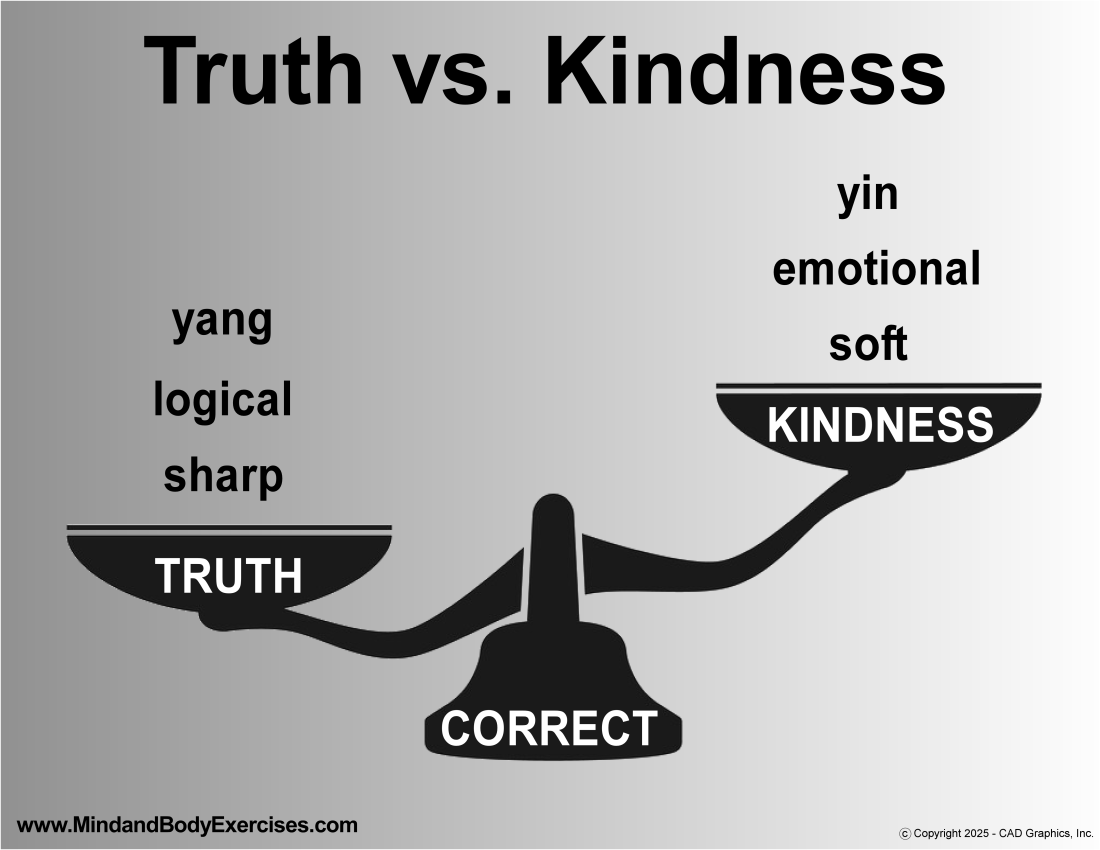
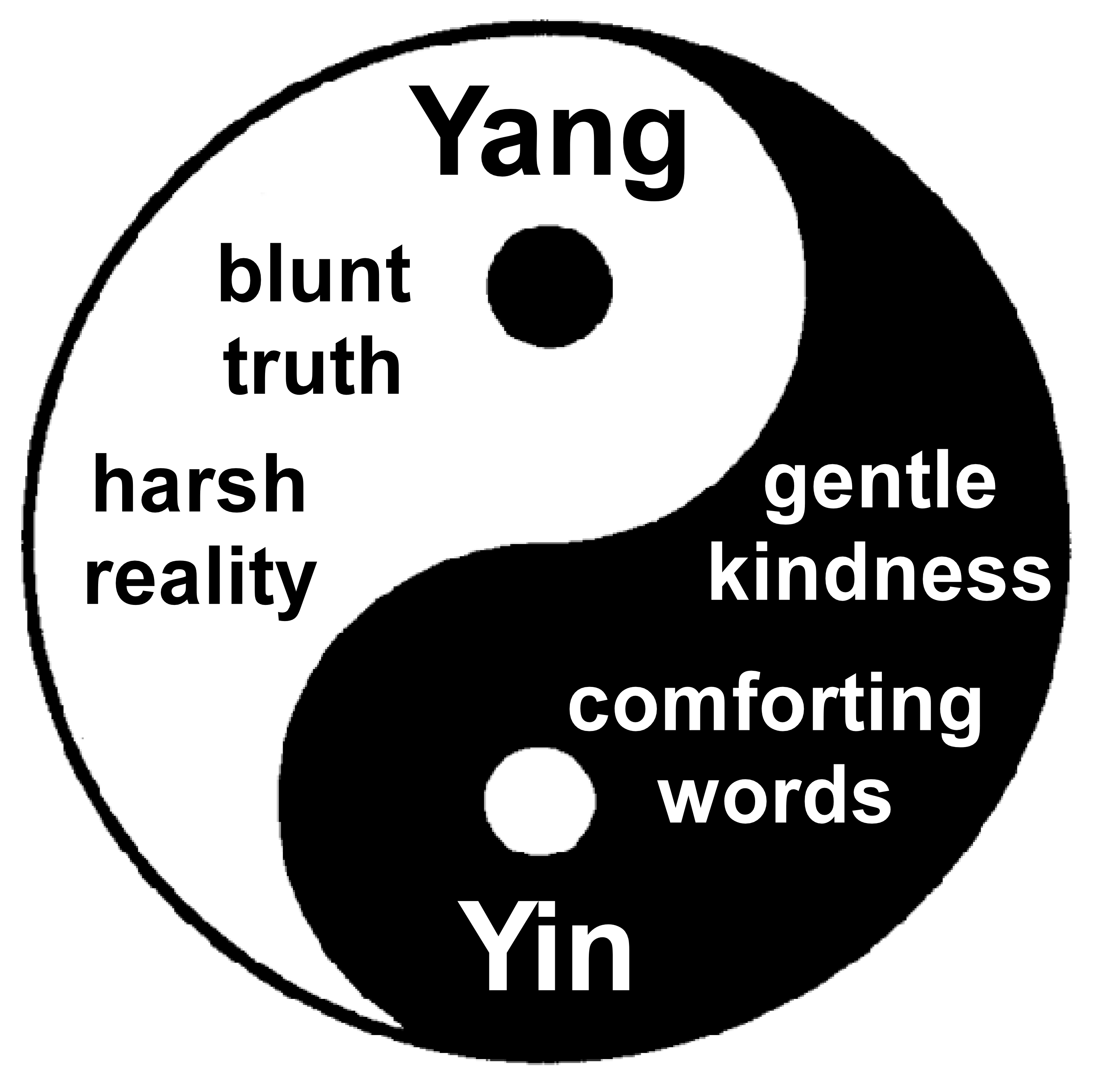
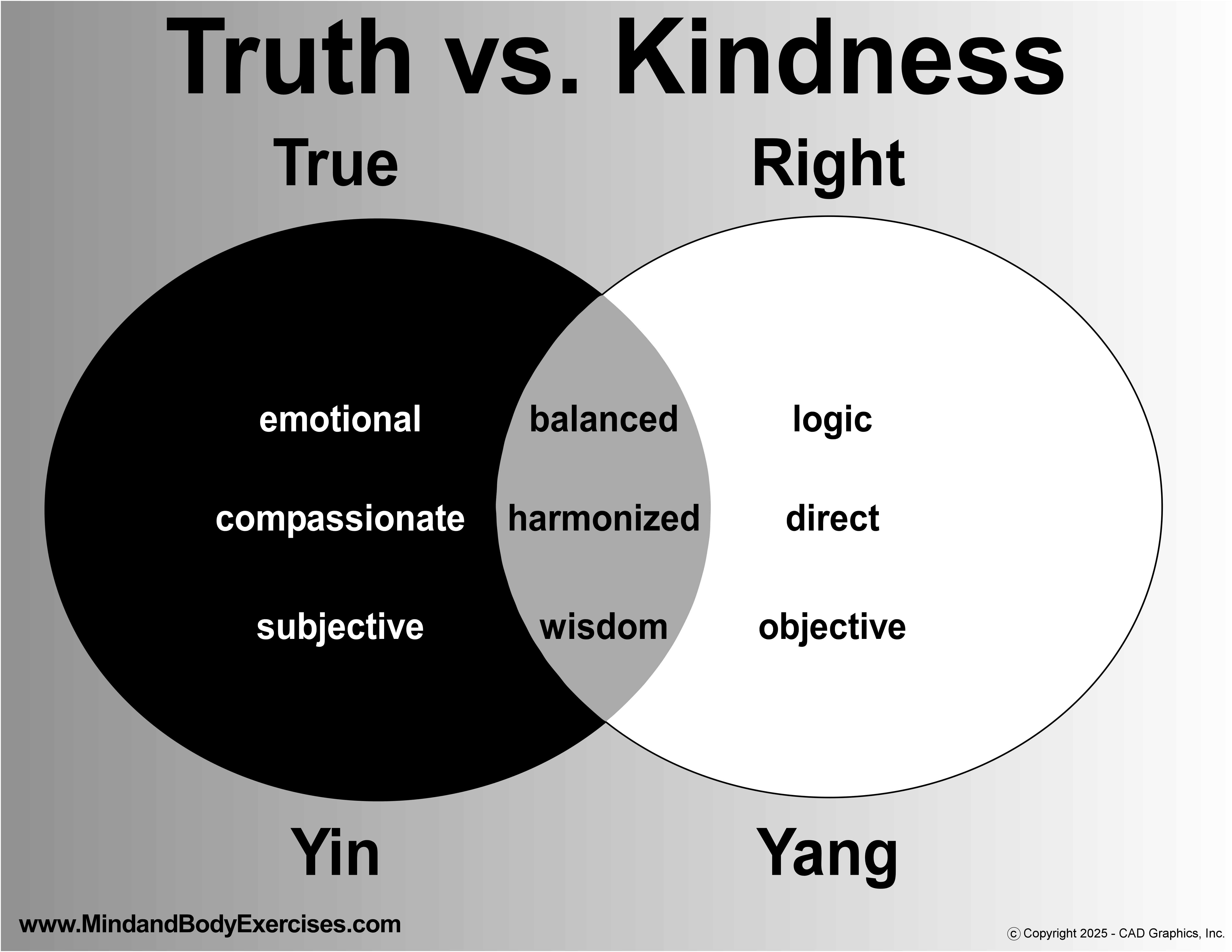
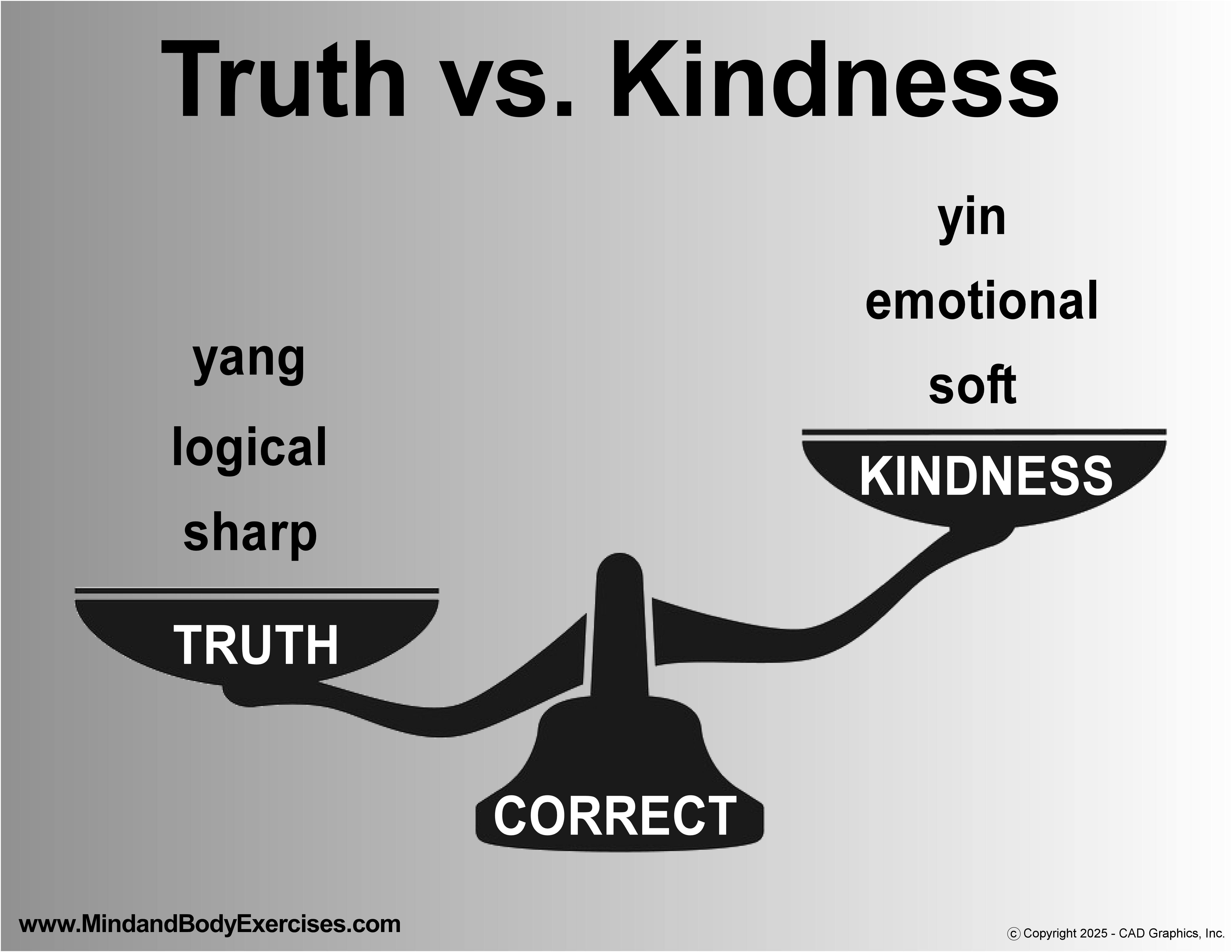
The statement, “True words are seldom kind. Kind words are seldom true,” reflects the dynamic interplay of yin and yang, as well as the balance between truth (emotion) and rightness (logic), with correctness emerging as their synthesis.

Yin and Yang in Truth and Kindness

  • Truth (Yang – Hard, Objective, Direct): Truth is clear and straightforward, focusing on facts rather than perceptions. It aligns with the logical aspect of “rightness,” emphasizing what is accurate over emotional considerations. Similar to yang, truth clarifies reality without prioritizing comfort.
  • Kindness (Yin – Soft, Subjective, Nurturing): Kindness is based on empathy and the emotional aspect of interactions. It often aims to soften the impact of truth to maintain harmony and relationships. This relates to the emotional side of “truthfulness,” focusing on how something feels rather than its factual accuracy. Similar to yin, kindness nurtures and soothes, sometimes prioritizing comfort over complete disclosure.

Correctness as Balance

Neither extreme of blunt truth nor gentle avoidance leads to effective communication. The optimal form of communication balances emotional sensitivity and logical correctness. Wisdom involves knowing when to emphasize accuracy, when to offer empathy, and how to integrate both aspects. Similar to how yin and yang transform under specific conditions, truth can be softened by kindness without compromising its integrity, while kindness can convey truth without becoming misleading. The skill of achieving balance lies in articulating what is true appropriately, ensuring it is both logically accurate and emotionally resonant.

Real-Life Examples of Truth vs. Kindness

Balanced (Correct – Yin-Yang): “I see your potential, and I think with some focused effort in these areas, you could perform at a higher level. I’d love to help you get there.”

Health & Well-Being:

Pure Truth (Yang): A doctor bluntly tells a patient, “You are dangerously overweight, and you need to lose weight immediately, or you risk serious health issues.”

Pure Kindness (Yin): “You’re perfect just the way you are. Don’t worry about your weight.”

Balanced (Correct – Yin-Yang): “Your health is important, and I want to support you in making changes that will help you feel better and live longer.”

Relationships & Personal Growth:

Pure Truth (Yang): A friend tells another, “Your behavior is selfish, and that’s why people distance themselves from you.”

Pure Kindness (Yin): “You’re wonderful just as you are. Everyone should accept you without question.”

Balanced (Correct – Yin-Yang): “I value you as a friend, and I’ve noticed that some of your actions push people away. Would you be open to talking about ways to strengthen your relationships?”

Work & Professional Feedback:

Pure Truth (Yang): A boss tells an employee, “Your work is subpar, and you might not last here if you don’t improve.”

Pure Kindness (Yin): “You’re doing just fine, no worries!” (even when the work needs improvement).

Balanced (Correct – Yin-Yang): “I see your potential, and I think with some focused effort in these areas, you could perform at a higher level. I’d love to help you get there.”

I look forward to further sharing more of my message by partnering with hospitals, wellness centers, VA centers, schools on all levels, businesses, and individuals who see the value in building a stronger nation through building a healthier population.

I also have hundreds of FREE education video classes, lectures, and seminars available on my YouTube channel at:

https://www.youtube.com/c/MindandBodyExercises

Many of my publications can be found on Amazon at:

http://www.Amazon.com/author/jimmoltzan

My holistic health blog is available at:

https://mindandbodyexercises.wordpress.com/

http://www.MindAndBodyExercises.com

Mind and Body Exercises on Google: https://posts.gle/aD47Qo

Jim Moltzan

407-234-0119