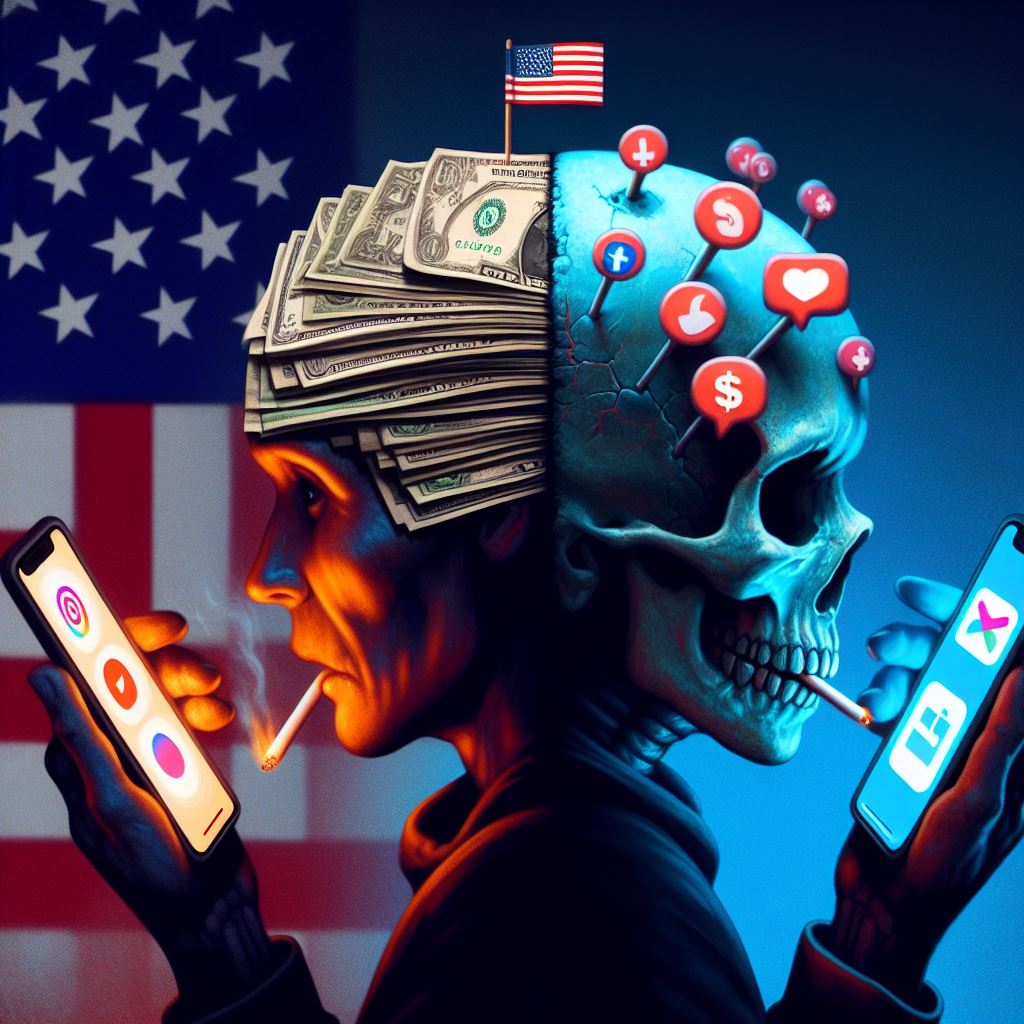
American people seem to finally be waking up to the fact that over-usage of smartphones and more specifically constant engagement in social media platforms, are detrimental to health and well-being. Social media addiction is the 2024 version of crack cocaine, where many people appear to be unable to go for more than a few minutes without their “fix” or dopamine dump from checking their phone for new messages, likes and other notifications. The Social Dilemma is a 2020 Netflix documentary that interviews many former software designers, investors, executives, and other insider occupations at social media platforms, such as Facebook, and Twitter(X). I did view this film back when it first aired but thought it would be insightful to watch and critique it more in detail today, as much has changed and/or advanced with most of these platforms, in the last fours years and even more recently.
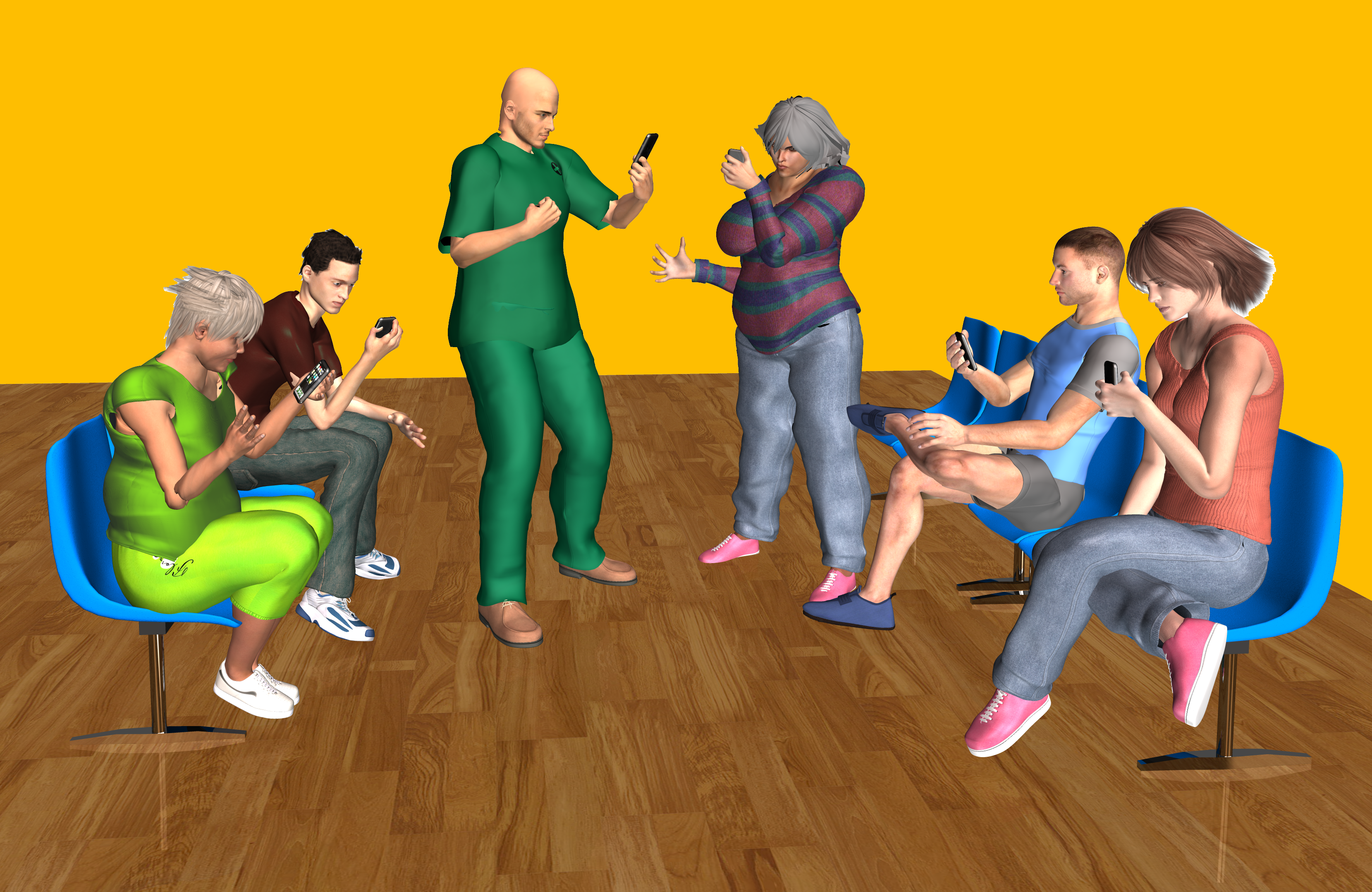
This documentary offers insights into the beginning stages of social media, and most specifically on how Facebook started out in 2004 as something totally different than what it is today. Social media and its widespread availability and popularity are a good example of an “evolutionary model of technological change” (Conerly, 2021a), where society has moved away from telephones being used merely for verbal communication. Smartphones have evolved to cameras, video recorders, email/text messaging devices and other uses way beyond telephones of years past. Most of those interviewed participated in the documentary because their experiences, hindsight and conscious has led them to think that such platforms purposefully manipulate a user’s attention and relative behavior. In doing so, users often develop a level of dopamine addiction when staying constantly engaged in interaction with social media either through smartphones, personal computers, or other electronic devices. Most of those interviewed see social media as neither inherently good nor bad, but rather as a tool to be used wisely as there exists a strong potential for addiction and abuse. They are careful to highlight the positive aspects of social media, such as offering ways for people to connect, re-connect, and stay abreast of current events and activities of friends and family.
However, it is the opposite side of these benefits that have gained attention. Specifically, the view that for a whole generation of people, online social media connections have become their primary group (Conerly, 2021b), or their most important and significant others in their circle of influence. Or as these insiders see them, as a generation that has been raised to form their self-worth and identity through social media technology and its manipulation (Watch the Social Dilemma | Netflix Official Site, 2020). They feel that young people have been gradually losing their ability to socialize in person, while having difficulty in occupying themselves without social media interaction. I am old enough to have seen this evolution transform, seemingly right before my eyes. In years past before the explosion of social media, I used to be able to stop in a restaurant, coffee shop, bar or other public venue and see young (and older) people interacting with one another through conversation, facial and hand gestures, and other forms of outward communication. Now it is most common to see people of all ages and walks of life, immersed in staring into their smartphone, seemingly oblivious to time and those around them. Young people today seem more anxious, fragile, depressed, less likely to take positive risks, drive less, and date less. More scientific evidence has been gathered, where many are believing that social media is a psychological, cultural, and sociological experiment on a large scale also referred to as a “contagion experiment.” The documentary states depression in youths spiked in 2011 with an increase of 62% for preteens, and 189% with teenagers and suicide increasing 70% for preteens and 151% with teenagers (Watch the Social Dilemma | Netflix Official Site, 2020).
The original innovators and designers had no true inclination of how technology would advance so quickly and exponentially, while the human brain cannot physiologically keep up. The expansion of these platforms has become quite profitable for companies that manage the information made available through social media. This is often seen as “gatekeeping” where those people in charge of the media can decide what the viewing public is exposed to (Conerly, 2021c). and people begin to not know what to believe as true or otherwise. These companies have become an“oligopoly,” where only a few firms dominate a marketplace (Conerly, 2021d). Social media addiction and abuse have been brought to the attention of congressional hearings where government leaders are asking the social media oligopoly CEOs how to make these platforms safer for all, but especially with the youth in the US (Associated Press, 2024). I do not think that the platforms will change their methods and policies on their own, for the betterment of the people. However, I do understand that all actions have consequences, whether deemed as good or bad. The consequences from years of rampant growth and manipulation of data and uses, have brought us to this point where members of congress are basically trying to reverse the legislation from years past and specifically something called Section 230. This law was passed in the earlier days of the internet and social media expansion (around 1996) that granted immunity to these companies from being sued by its users for unforeseen circumstances. The supreme court ruled in 2023 to keep the immunity in place, as it seems to fall under the freedom of speech (DEPARTMENT OF JUSTICE’S REVIEW OF SECTION 230 OF THE COMMUNICATIONS DECENCY ACT OF 1996, 2023). Congress members are now pushing for the tide to turn and have social media platforms able to be brought to trial for related injuries, deaths and other detrimental side effects. I think things will change dramatically if this happens, hopefully, for the better. But as with most things we don’t know or see the true results until time has passed.
Overall, I do feel The Social Dilemma is still very relevant to modern society, as these issues of addiction and abuse will not diminish on their own. With the rise of artificial intelligence (AI) and the daily increase in fake news and misinformation, I feel it is of the upmost importance that social media platforms and their leaders take actions that are based on mental health, rather than their stockholders and profits.
References:
Watch The Social Dilemma | Netflix Official site. (2020). https://www.netflix.com/title/81254224
Conerly, T. R. (2021a, June 3). 8.2 Media and Technology in Society – Introduction to Sociology 3E | OpenStax
Conerly, T. R. (2021b, June 3). 6.1 Types of Groups – Introduction to Sociology 3E | OpenStax.
Conerly, T. R. (2021c, June 3). 8.4 Theoretical Perspectives on Media and Technology – Introduction to Sociology 3E | OpenStax.
Conerly, T. R. (2021d, June 3). 8.3 Global Implications of Media and Technology – Introduction to Sociology 3E | OpenStax.
Associated Press. (2024, January 31). Senate hearing LIVE: Mark Zuckerberg, social media CEOs testify [Video]. YouTube. https://www.youtube.com/watch?v=HUjv2Ky7PcM
DEPARTMENT OF JUSTICE’S REVIEW OF SECTION 230 OF THE COMMUNICATIONS DECENCY ACT OF 1996. (2023, May 8). https://www.justice.gov/archives/ag/department-justice-s-review-section-230-communications-decency-act-1996
I teach and offer lectures about holistic health, stress management, qigong, tai chi, baguazhang, meditation, phytotherapy (herbs), music for healing, self-massage, and Daoyin (yoga).
I look forward to further sharing more of my message by partnering with hospitals, wellness centers, VA centers, schools on all levels, businesses and individuals that see the value in building a stronger nation through building a healthier population. I also have hundreds of FREE education video classes, lectures and seminars available on my YouTube channel at:
https://www.youtube.com/c/MindandBodyExercises
www.Amazon.com/author/jimmoltzan
Mind and Body Exercises on Google: https://posts.gle/aD47Qo
Jim Moltzan
407-234-0119