Rising Health Concerns Since 2020: A Holistic Overview of Emerging Trends

Since 2020, public attention has largely focused on infectious diseases such as COVID-19 and vaccine-preventable illnesses like measles and tuberculosis. However, an alarming rise in several chronic, developmental, and mental health conditions suggests a deeper crisis in population health, especially in the United States. This article outlines key health trends that deserve greater attention, including sudden cardiac events, mental health disorders, obesity and type 2 diabetes in adolescents, and the resurgence of various cancers.

Sudden Cardiac Death and Vascular Events

Sudden cardiac death (SCD), once relatively rare among young adults, has shown an increase in prevalence. Between 1999 and 2020, the age-adjusted mortality rate for SCD among U.S. adults aged 25-44 rose from 0.10 to 0.18 per 100,000; a significant public health concern (The Cardiology Advisor, 2025). Additionally, deaths from aortic aneurysms have become more frequent among adults, though definitive recent data is still emerging.

Infant Mortality and Early-Life Risk
The U.S. infant mortality rate rose by 3% in 2022 to 5.6 deaths per 1,000 live births, the first increase in two decades. The rise was especially significant in states like Georgia, Texas, and Missouri, and among infants born to White and Native American women. Contributing factors include maternal health complications and bacterial sepsis (Falconer, 2023).
(Winston & Winston, 2022)

Mental Health Crisis and Suicide
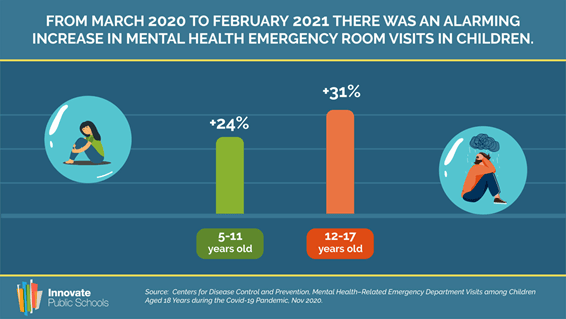
The COVID-19 pandemic has exacerbated mental health conditions, particularly among adolescents and young adults. Increased rates of anxiety, depression, and suicide have been documented, with long-term consequences expected. A significant contributing factor has been the reduction in school-based mental health support following the expiration of pandemic relief funding (Houston Chronicle, 2024).

Adolescent Obesity and Type 2 Diabetes
Obesity affects nearly 1 in 5 U.S. youth aged 2-19 years, with disproportionately high rates among Hispanic and non-Hispanic Black populations (Childhood Obesity Facts, 2024). Concurrently, the incidence of type 2 diabetes in adolescents has risen sharply. Projections suggest a 700% increase by 2060 if current trends continue (Diabetes in Young People Is on the Rise, 2024).

Alzheimer’s Disease: A Looming Epidemic
Currently, over 6.9 million Americans aged 65 and older are living with Alzheimer’s disease. This figure is expected to double to 13.8 million by 2060 due to aging demographics and unknown environmental and lifestyle factors (Alzheimer’s Association, 2024).

Colorectal and Pancreatic Cancers in Younger Adults
Although colorectal cancer rates have declined overall due to better screening in older adults, incidence in younger populations (ages 25-50) has doubled since 1995. Advanced-stage diagnoses are increasing at a rate of 3% annually in adults under 50 (American Cancer Society, 2023). Similarly, pancreatic cancer is on the rise, particularly among young women, with experts noting a significant and concerning shift in the disease burden (Harnisch-Weidauer, 2024).

Conclusion
The rise in both communicable and non-communicable diseases since 2020 signals a multi-faceted public health challenge. While infectious diseases tend to dominate media cycles, chronic conditions, mental health issues, and early-onset cancers are equally pressing. These trends underscore the urgent need for holistic prevention strategies, health education, and early interventions that go beyond vaccination campaigns and address root causes like nutrition, stress, environmental toxicity, and healthcare inequality.

References:

Alzheimer’s Association. (2024). *2024 Alzheimer’s disease facts and figures*. https://pubmed.ncbi.nlm.nih.gov/38689398/

American Cancer Society. (2023). Colorectal Cancer Facts & Figures 2023-2025. https://www.cancer.org/content/dam/cancer-org/research/cancer-facts-and-statistics/colorectal-cancer-facts-and-figures/colorectal-cancer-facts-and-figures-2023.pdf

Childhood obesity Facts. (2024, April 2). Obesity. https://www.cdc.gov/obesity/childhood-obesity-facts/childhood-obesity-facts.html

Diabetes in young people is on the rise. (2024, May 15). Diabetes. https://www.cdc.gov/diabetes/data-research/research/young-people-diabetes-on-rise.html

Falconer, R. (2023, November 1). U.S. infant mortality rate rises for first time in over 2 decades. Axios. https://www.axios.com/2023/11/01/us-infant-mortality-rate-rises-first-time-two-decades

Harnisch-Weidauer, L. (2024, November 18). What you need to know about rising pancreatic cancer rates. Dana-Farber Cancer Institute. https://blog.dana-farber.org/insight/2024/11/what-you-need-to-know-about-rising-pancreatic-cancer-rates/

Houston Chronicle. (2024). *Mental health crisis in students persists post-COVID*. https://www.houstonchronicle.com/news/houston-texas/education/hisd/article/texas-covid-mental-health-crisis-20205168.php

Partain, C. (2025, March 13). Houston students’ mental health still hasn’t rebounded from COVID. Houston Chronicle. https://www.houstonchronicle.com/news/houston-texas/education/hisd/article/texas-covid-mental-health-crisis-20205168.php

The Cardiology Advisor. (2025, March 5). Sudden cardiac death rate increasing for younger adults in the US. https://www.thecardiologyadvisor.com/news/sudden-cardiac-death-rate-increasing-for-younger-adults-in-the-us/

Winston, S., & Winston, S. (2022, May 13). COVID-19 has harmed students’ social-emotional wellbeing, making it even more difficult to learn | Innovate Public Schools. Innovate Public Schools | a World-Class Public School for Every Student. https://innovateschools.org/research-and-data/learning-loss/covid-19-has-harmed-students-social-emotional-wellbeing-making-it-even-more-difficult-to-learn/

I look forward to further sharing more of my message by partnering with hospitals, wellness centers, VA centers, schools on all levels, businesses, and individuals who see the value in building a stronger nation through building a healthier population.

I also have hundreds of FREE education video classes, lectures, and seminars available on my YouTube channel at:

https://www.youtube.com/c/MindandBodyExercises

Many of my publications can be found on Amazon at:

http://www.Amazon.com/author/jimmoltzan

My holistic health blog is available at:

https://mindandbodyexercises.wordpress.com/

http://www.MindAndBodyExercises.com

Mind and Body Exercises on Google: https://posts.gle/aD47Qo

Jim Moltzan

407-234-0119

Artificial Intelligence, Climate Change, and the Energy Dilemma

For decades, we have been told that climate change represents one of the greatest challenges facing humanity. Governments, businesses, and individuals have been encouraged to reduce energy consumption, lower carbon emissions, purchase more efficient appliances, drive fuel-efficient vehicles, and adopt sustainable practices. Entire industries have emerged around renewable energy, green building technologies, and environmental consulting. Trillions of dollars have been invested globally in efforts aimed at reducing humanity’s environmental footprint.

Yet today, a new technological race is underway.

Artificial intelligence has rapidly become one of the most influential and potentially transformative technologies in human history. The race to develop increasingly powerful AI systems has sparked unprecedented investment in data centers, computing infrastructure, electrical generation, and supporting technologies. What is particularly interesting from a holistic perspective is how quickly public attention has shifted. The environmental concerns that dominated headlines for years now seem to share the stage with a new priority: technological superiority.

This shift raises important questions about energy, sustainability, economics, and the long-term consequences of our collective choices.

The New Energy Frontier

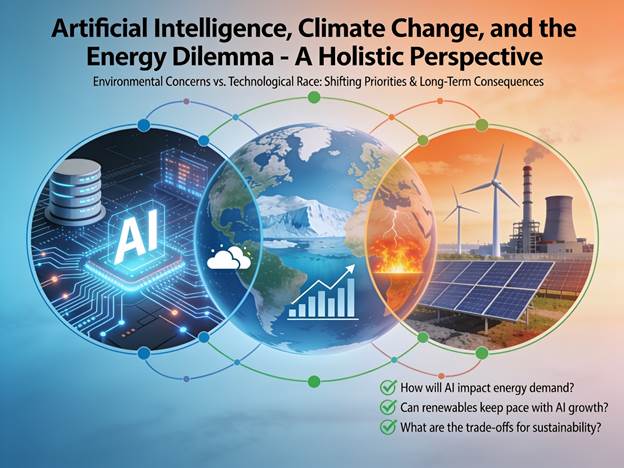
Artificial intelligence does not operate in a vacuum. Behind every AI-generated image, language model response, recommendation algorithm, or automated system lies an enormous amount of computing power. These systems require vast data centers containing thousands of processors operating around the clock. These facilities consume significant amounts of electricity while generating substantial heat that must be removed through sophisticated cooling systems.

As AI adoption accelerates, so does the demand for electrical power. According to the International Energy Agency (IEA, 2024), global electricity demand from data centers is expected to increase substantially over the coming decade, driven largely by artificial intelligence applications.

This expansion is creating economic opportunities. Construction companies, engineers, utility providers, software developers, and technology firms are all benefiting from the rapid growth of AI infrastructure. Entire regions are competing to attract new data centers due to the jobs, tax revenue, and economic development they can bring. However, every growth opportunity carries associated costs.

From a systems perspective, increasing electrical demand requires additional power generation, expanded transmission networks, upgraded substations, and ongoing maintenance of infrastructure. These realities exist regardless of whether the electricity is generated through fossil fuels, renewable energy, nuclear power, or some combination thereof.

The Aging Electrical Grid

The United States already faces significant challenges related to its aging electrical infrastructure. Much of the nation’s power grid was built decades ago and was not designed for the modern demands of electric vehicles, distributed renewable energy systems, electrified buildings, and AI-driven computing centers.

The American Society of Civil Engineers (2025) continues to identify portions of the nation’s electrical infrastructure as requiring substantial modernization investments. Grid reliability, transmission capacity, and resilience to extreme weather events remain ongoing concerns.

Adding AI-driven energy demands to an already strained system creates a complicated equation. More power plants may be required. Additional transmission lines will likely need to be constructed. Energy storage technologies must continue to improve. Policymakers, utility companies, and consumers will ultimately face difficult decisions regarding costs and priorities.

This reality illustrates an important holistic principle: solving one problem often creates new challenges that must also be addressed.

The Climate Contradiction

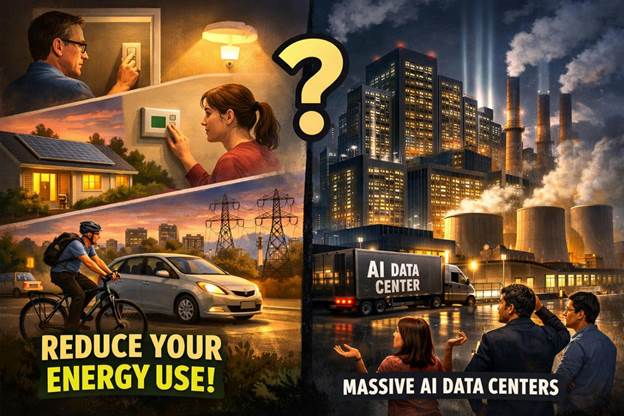
Many people understandably perceive a contradiction. For years, individuals were encouraged to reduce their personal energy consumption. They were told to turn off lights, reduce vehicle emissions, improve home insulation, and lower their carbon footprints. Meanwhile, massive AI data centers are being constructed that may consume electricity equivalent to that used by entire communities. From a public perception standpoint, this can appear inconsistent.

However, proponents of AI argue that the technology itself may contribute to solutions for environmental challenges. Artificial intelligence is already being used to optimize electrical grids, improve energy efficiency, enhance agricultural productivity, model climate systems, reduce industrial waste, and accelerate scientific research (Rolnick et al., 2022).

In other words, AI may increase energy consumption while simultaneously helping society become more efficient. Whether these benefits ultimately outweigh the costs remains a matter of ongoing debate.

The Geopolitical Reality

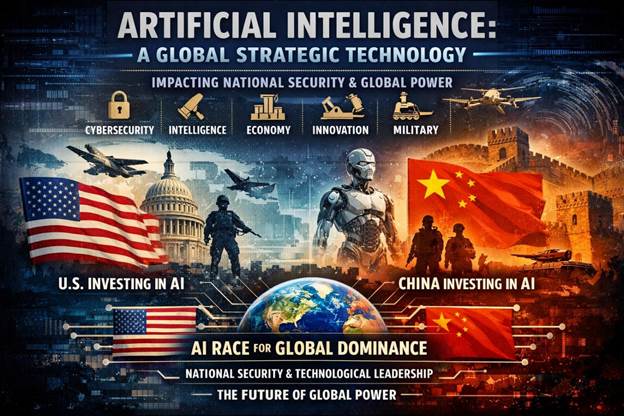
Environmental concerns are only one piece of the puzzle. Artificial intelligence is increasingly viewed as a strategic technology with implications extending far beyond commercial applications. Governments recognize its potential influence on cybersecurity, intelligence gathering, economic competitiveness, scientific innovation, and military capability.

The United States, China, and numerous other nations are investing heavily in AI development. Policymakers often view AI leadership not simply as an economic advantage but as a matter of national security.

History demonstrates that when nations perceive strategic competition, environmental concerns frequently become secondary priorities. Similar patterns were observed during the Industrial Revolution, the Space Race, and the Cold War. Scientific and technological advancement often accelerates when nations believe their security or economic future depends upon it. This does not necessarily mean that environmental stewardship is abandoned. Rather, competing priorities emerge and must be balanced against one another.

A Holistic Perspective on Progress

From a holistic perspective, this situation reflects a broader challenge that humanity has faced repeatedly throughout history.

Technological advancement often brings tremendous benefits. Modern medicine, transportation, communication systems, and computing technologies have improved quality of life for billions of people. At the same time, every technological breakthrough creates unintended consequences that require thoughtful management.

The question is not whether artificial intelligence is inherently good or bad. Nor is the question whether environmental sustainability is important. The deeper issue concerns balance. Human beings have demonstrated extraordinary ability to create powerful technologies. What often proves more difficult is developing the wisdom necessary to manage those technologies responsibly. Progress without foresight can create new problems even as old ones are solved.

A holistic approach recognizes that economic growth, environmental stewardship, technological innovation, public health, national security, and quality of life are interconnected components of a larger system. Focusing exclusively on one while ignoring the others can produce imbalances that eventually demand correction.

Just as holistic health emphasizes balance within the human body, sustainable progress requires balance within society. Energy production, environmental responsibility, economic opportunity, and technological advancement must be considered together rather than as isolated issues.

In conclusion, the rapid growth of artificial intelligence presents humanity with both remarkable opportunities and significant challenges. AI promises advances in medicine, science, communication, education, and countless other fields. Yet these benefits come with increased demands on energy infrastructure and natural resources.

The apparent tension between climate initiatives and AI expansion highlights a broader reality: modern societies are continually forced to balance competing priorities. Environmental sustainability remains important. Technological innovation remains important. Economic vitality remains important. National security remains important.

The challenge moving forward is not choosing one at the expense of the others. Rather, it is developing enough collective wisdom to pursue technological progress while maintaining responsible stewardship of the resources that sustain us. The future may ultimately depend not on how much power we generate, but on how wisely we choose to use it.

References

American Society of Civil Engineers. (2025). 2025 report card for America’s infrastructure. American Society of Civil Engineers. https://infrastructurereportcard.org

International Energy Agency. (2024). Electricity 2024: Analysis and forecast to 2026. International Energy Agency. https://www.iea.org/reports/electricity-2024

Rolnick, D., Donti, P. L., Kaack, L. H., Kochanski, K., Lacoste, A., Sankaran, K., Ross, A. S., Milojevic-Dupont, N., Jaques, N., Waldman-Brown, A., Luccioni, A. S., Maharaj, T., Sherwin, E. D., Mukkavilli, S. K., Kording, K. P., Gomes, C. P., Ng, A. Y., Hassabis, D., Platt, J. C., … Bengio, Y. (2022). Tackling climate change with machine learning. ACM Computing Surveys, 55(2), 1–96. https://doi.org/10.1145/3485128

United Nations Environment Programme. (2024). Global resources outlook 2024. United Nations Environment Programme. https://www.unep.org/resources/Global-Resource-Outlook-2024

Planting Poor Seeds of Misinformation

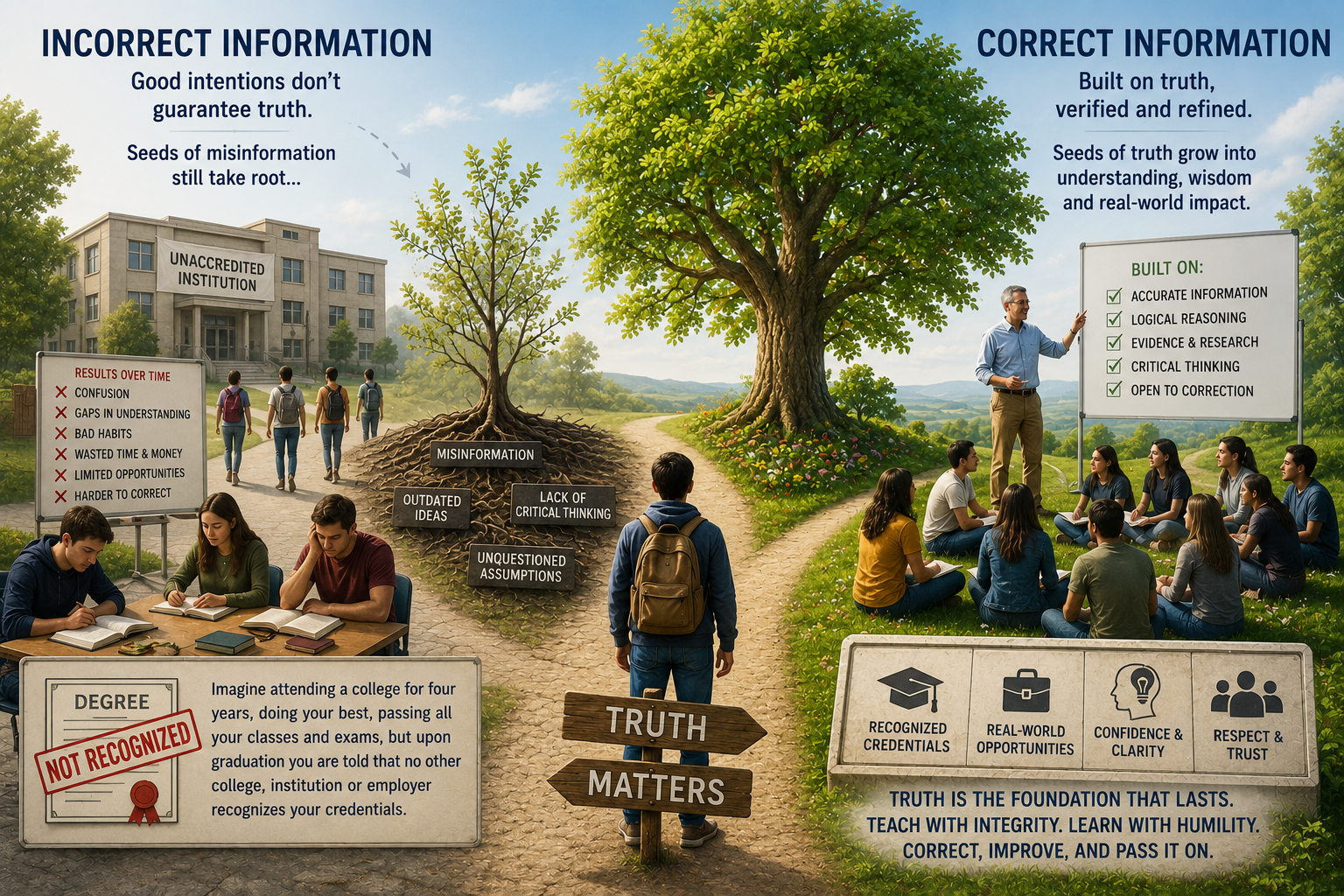
If someone teaches others using incorrect information, regardless of whether their intentions are good or whether the errors are made knowingly or unknowingly, they are planting seeds that will eventually need to be corrected. Misinformation has consequences. The longer it goes unchallenged, the more deeply it becomes rooted in the minds of students, making later correction more difficult.

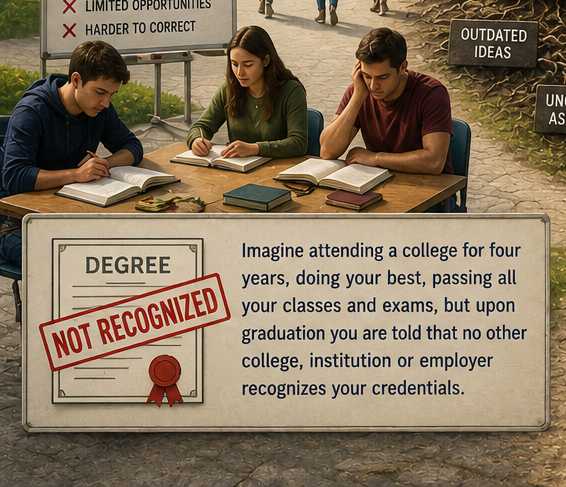
Imagine attending a college or university for four years. You faithfully attend classes, study diligently, complete assignments, pass every examination, and ultimately earn your degree. You have invested thousands of hours of your life, significant financial resources, and an enormous amount of effort. Then, upon graduation, you discover that no other accredited college, university, licensing board, or employer recognizes your credentials because the institution was never legitimately accredited or accepted within the broader academic community. While you may have learned valuable skills and developed personally during your education, the credential itself carries little or no recognized value beyond the walls of that institution. The realization would likely be disappointing, frustrating, and perhaps even life-changing.

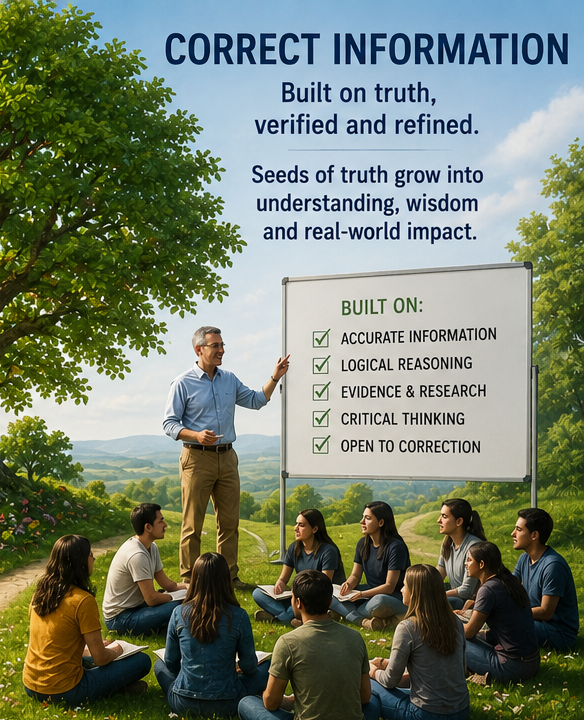
The same principle can apply in many other disciplines. Whether teaching arithmetic, grammar, history, science, or my particular concerns of yoga and martial arts, every educator assumes a responsibility to pursue accuracy, remain intellectually humble, and continually evaluate their understanding against credible evidence and recognized standards. Good intentions alone do not make inaccurate information correct. While sincere teachers deserve understanding rather than condemnation for honest mistakes, they also have an ethical obligation to acknowledge errors, correct them openly, and encourage their students to value truth over ego.

In fairness, many instructors who pass along inaccurate information are not intentionally deceptive. They are often teaching exactly what they themselves were taught by mentors whom they trusted and respected. In this way, misinformation can become multigenerational, passed from teacher to student and then from student to teacher. Breaking that cycle requires intellectual humility, a willingness to question long-held assumptions, and the courage to revise one’s understanding when compelling evidence points in a different direction

While institutions and instructors certainly bear responsibility for the quality of their instruction, students also have a responsibility to investigate, question, compare, and verify what they are being taught. Blind acceptance is rarely a substitute for thoughtful inquiry.

As both teachers and students, we should strive to build our knowledge upon foundations that can withstand thoughtful scrutiny. If we later discover that portions of our education were inaccurate, incomplete, or misrepresented, the appropriate response is not embarrassment or denial, but humility, curiosity, and a willingness to learn. Correcting our understanding may require additional time and effort, but it is far better to cultivate truth than to continue passing along misconceptions to the next generation. In doing so, we teach not only the subject itself, but one of the most valuable lessons of all: authentic education is a lifelong process of refinement, where intellectual honesty matters more than preserving one’s reputation, protecting one’s pride, or safeguarding one’s bank account.

Why U.S. Healthcare Costs Are So High – A System Out of Alignment

A Holistic Perspective on Price, Practice, and Prevention

The United States spends more on healthcare than any other nation in the world, yet it does not consistently produce better health outcomes. This paradox raises an important question:

Recent reporting highlights a central truth: the issue is not simply how much care Americans receive, but how the system is structured, priced, and incentivized (The Wall Street Journal, 2026).

The Price Problem: Paying More for the Same Care

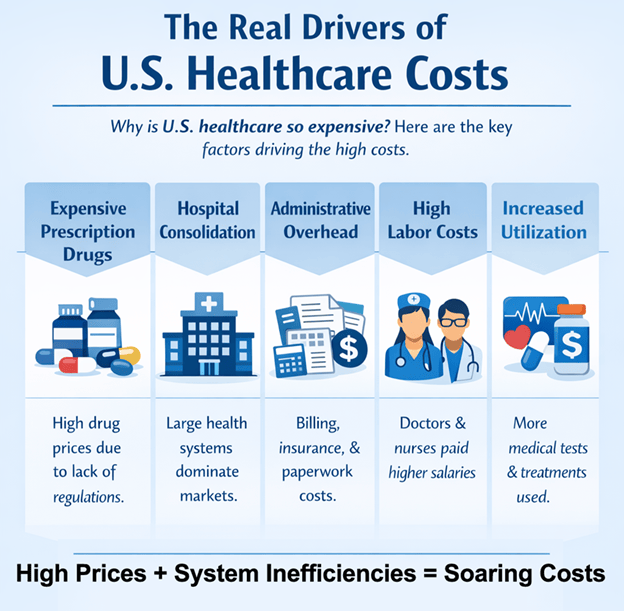
One of the most significant drivers of high healthcare costs in the United States is price inflation across nearly all services. Hospital stays, diagnostic tests, and procedures routinely cost far more than in other developed countries.

Unlike many nations that regulate or negotiate healthcare pricing, the U.S. system allows market dynamics, often dominated by large institutions, to dictate cost (Anderson et al., 2019). The result is a system where identical treatments can vary dramatically in price depending on geography, provider, and insurance arrangements.

Prescription Drugs: A Major Cost Driver

Prescription medications represent another critical factor. The U.S. is one of the few countries where drug manufacturers maintain substantial pricing power, often without strict government negotiation.

This leads to significantly higher costs for both patients and insurers, especially with the rise of new specialty medications, including those for chronic conditions and metabolic disorders (Cubanski et al., 2025).

Administrative Complexity: The Hidden Burden

Beyond clinical care, a large portion of healthcare spending is tied to administrative overhead. Billing systems, insurance claims processing, coding requirements, and compliance structures create a complex web of non-clinical expenses.

Research suggests that administrative costs account for a substantial percentage of total healthcare spending in the U.S., far more than in other countries with simpler systems (Woolhandler et al., 2003)

From a holistic standpoint, this represents energy and resources diverted away from actual healing.

Hospital Consolidation and Reduced Competition

Over the past two decades, hospitals and healthcare systems have increasingly merged into large networks. While consolidation can improve efficiency in some cases, it often leads to reduced competition and increased pricing power.

When fewer providers dominate a region, insurers have less leverage to negotiate lower rates, costs that are ultimately passed on to patients (Baker et al., 2015).

Labor Costs and Professional Compensation

Healthcare professionals in the United States are generally paid more than their counterparts in other countries, particularly physicians and specialists.

While this reflects the high level of training and responsibility required, it also contributes to overall system costs (Papanicolas et al., 2018). However, higher compensation alone does not explain the full disparity, pricing structures and system inefficiencies remain the dominant factors.

Utilization: More Care, Not Always Better Care

Americans also tend to use more healthcare services, including tests, procedures, and pharmaceutical treatments. In some cases, this reflects access to advanced technology and innovation. In others, it reflects defensive medicine, over-testing, or profit-driven care models.

Notably, increased utilization does not always translate to improved outcomes. In fact, excessive intervention can sometimes lead to unnecessary procedures, increased risk, and higher long-term costs (Brownlee et al., 2017).

A System Misaligned with Health

From a holistic health perspective, the deeper issue becomes clear:

Preventive strategies such as nutrition, movement, stress management, and community engagement, are often underemphasized or underfunded. Instead, the system incentivizes:

  • Procedures over prevention
  • Medication over lifestyle change
  • Intervention over education

This misalignment contributes not only to rising costs, but also to the growing prevalence of chronic conditions such as hypertension, obesity, and cardiovascular disease.

A Holistic Reflection

True health is not something that can be purchased at increasing cost. It is cultivated through daily habits, awareness, and personal responsibility.

While modern medicine offers extraordinary tools for acute care and life-saving interventions, it is not designed nor incentivized, to guide individuals toward long-term balance and resilience.

A more sustainable path forward may require a shift in perspective:

  • From treatment to prevention
  • From complexity to simplicity
  • From external dependence to internal responsibility

Conclusion

The rising cost of healthcare in the United States is not the result of a single factor, but rather a convergence of:

  • High service and drug prices
  • Administrative inefficiencies
  • Consolidated healthcare systems
  • Increased utilization

Ultimately, the system reflects its priorities.

And until those priorities shift toward true health rather than managed disease, costs will likely continue to rise, without a corresponding improvement in well-being.

References

Anderson, G. F., Hussey, P., & Petrosyan, V. (2019). It’s still the prices, stupid: Why the US spends so much on health care, and a tribute to Uwe Reinhardt. Health Affairs, 38(1), 87–95. https://doi.org/10.1377/hlthaff.2018.05144

Baker, L., Bundorf, M. K., & Kessler, D. (2015). The effect of Hospital/Physician Integration on hospital choice. National Bureau of Economic Research. https://doi.org/10.3386/w21497

Brownlee, S., Chalkidou, K., Doust, J., Elshaug, A. G., Glasziou, P., Heath, I., Nagpal, S., Saini, V., Srivastava, D., & Chalmers, K. (2017). Evidence for overuse of medical services around the world. The Lancet, 390(10090), 156–168. https://doi.org/10.1016/S0140-6736(16)32585-5

Cubanski, J., Neuman, T., & Freed, M. (2025, August 21). Explaining the prescription drug provisions in the Inflation Reduction Act. KFF. https://www.kff.org/medicare/explaining-the-prescription-drug-provisions-in-the-inflation-reduction-act/

Papanicolas, I., Woskie, L. R., & Jha, A. K. (2018). Health care spending in the United States and other high-income countries. JAMA, 319(10), 1024–1039. https://doi.org/10.1001/jama.2018.1150

The Wall Street Journal. (2026). Why U.S. healthcare costs are so high. https://www.wsj.com/health/healthcare/us-healthcare-cost-charts-0fccfc06

Woolhandler, S., Campbell, T., & Himmelstein, D. U. (2003). Costs of health care administration in the United States and Canada. New England Journal of Medicine, 349(8), 768–775. https://doi.org/10.1056/nejmsa022033

When Food Becomes the Problem

A Holistic Look at Diet, Disease, and the Modern Health Paradox

An estimated nearly half of American adults live with hypertension, a condition strongly associated with cardiovascular disease, stroke, and premature mortality (Centers for Disease Control and Prevention (High Blood Pressure Facts, 2025). At the same time, the modern food environment is saturated with sodium-rich, highly processed products, many of which dominate grocery shelves and restaurant menus.

This raises an important and uncomfortable question:

How did the very system designed to nourish us become one that so often contributes to chronic disease?

From a holistic perspective, this is not merely a nutritional issue, but rather it is a systemic imbalance involving food production, economic incentives, behavioral conditioning, and healthcare practices.

The Sodium Landscape and Hypertension

Sodium is essential for human physiology, playing a critical role in nerve conduction, muscle contraction, and fluid balance. However, excess sodium intake is a well-established contributor to elevated blood pressure, particularly in salt-sensitive individuals (He & MacGregor, 2009).

This creates a situation where individuals may unknowingly consume excessive sodium, even when attempting to make reasonable dietary choices.

Ultra-Processed Foods: The Hidden Driver

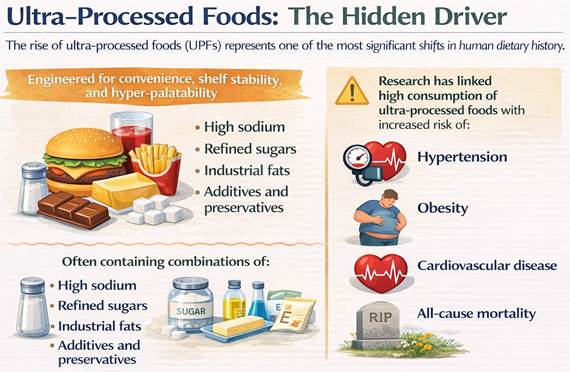
The rise of ultra-processed foods (UPFs) represents one of the most significant shifts in human dietary history. These foods are engineered for convenience, shelf stability, and hyper-palatability, often containing combinations of:

  • High sodium
  • Refined sugars
  • Industrial fats
  • Additives and preservatives

Research has linked high consumption of ultra-processed foods with increased risk of:

  • Hypertension
  • Obesity
  • Cardiovascular disease
  • All-cause mortality

(Monteiro et al., 2019; Srour et al., 2019)

Importantly, these foods are not inherently harmful because of a single ingredient, but because of their cumulative physiological impact and displacement of whole foods.

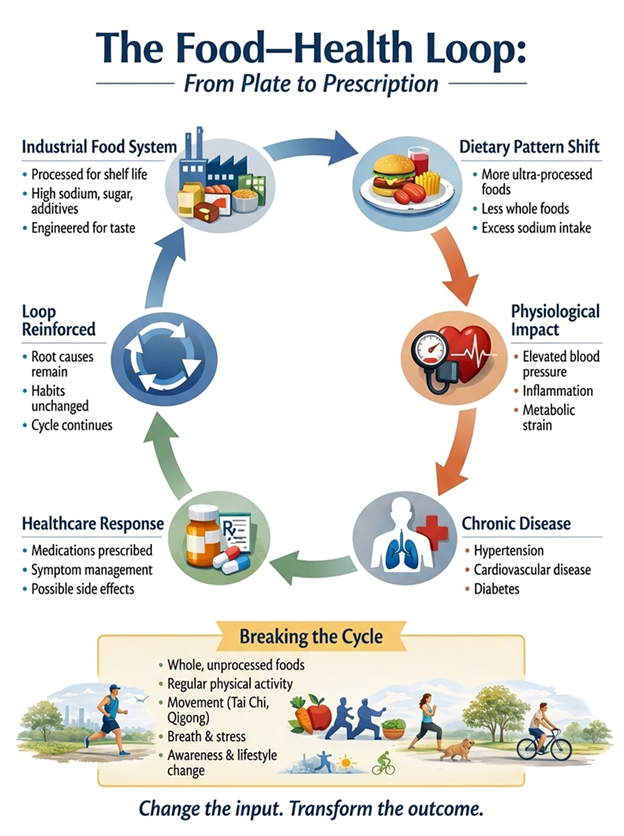
The Food–Healthcare Feedback Loop

A growing concern among both professionals and the public is the emergence of what can be described as a “food–healthcare feedback loop.”

The Pattern

  1. Industrial food systems prioritize scale, profit, and shelf life
  2. Diets shift toward processed, nutrient-poor foods
  3. Chronic diseases (e.g., hypertension, diabetes) increase
  4. Healthcare systems respond with pharmaceutical management
  5. Root causes of diet and lifestyle remain insufficiently addressed

This is not necessarily the result of coordinated intent, but rather misaligned incentives across systems.

Healthcare systems are largely structured around disease management, while food systems are driven by economic efficiency and consumer demand.

A Holistic Interpretation

From a holistic and Traditional Chinese Medicine (TCM) perspective, the modern dietary pattern reflects a deeper imbalance:

  • Excessive intake of salty, greasy, and processed foods contributes to internal disharmony
  • Chronic stress and overstimulation elevate internal tension (analogous to sympathetic dominance)
  • Insufficient restorative practices weaken the body’s regulatory systems

In TCM frameworks, hypertension may be interpreted through patterns such as:

  • Liver yang rising
  • Phlegm-damp accumulation
  • Kidney deficiency

While the language differs, these interpretations parallel modern understandings of:

  • Nervous system dysregulation

  • Inflammation
  • Metabolic dysfunction

Reframing the Narrative: Beyond “Food as Poison”

It is tempting to conclude that “food is either medicine or poison.” While compelling, this binary oversimplifies a complex reality.

A more precise and functional understanding is:

The health impact of food is determined by dose, quality, context, and pattern over time.

Even sodium, often vilified, is essential in appropriate amounts. Likewise, not all processed foods are harmful, and not all natural foods are beneficial in excess.

The true issue lies in chronic overexposure to low-quality dietary patterns combined with underexposure to protective lifestyle behaviors.

Personal Agency Within a Systemic Problem

While systemic reform is important, meaningful change often begins at the individual level. Evidence consistently supports the effectiveness of lifestyle interventions in reducing blood pressure and improving overall health (Appel et al., 1997).

Key strategies include:

  • Emphasizing whole, minimally processed foods
  • Reducing reliance on packaged and restaurant meals
  • Increasing potassium-rich foods (e.g., vegetables, fruits)
  • Engaging in regular physical activity
  • Practicing stress management techniques (e.g., breathwork, meditation)

These approaches align closely with traditional practices such as tai chi, qigong, and mindful movement, methods that address both physiological and psychological dimensions of health.

In conclusion, the modern food and healthcare systems are not functioning in harmony with long-term human health. Like a body out of balance, they reflect patterns of excess, deficiency, and misalignment, contributing to the widespread rise in chronic disease. The widespread prevalence of hypertension reflects not a single cause, but a convergence of dietary, behavioral, and systemic factors.

Yet within this complexity lies opportunity. By returning to fundamental principles of consuming whole foods, mindful consumption, movement, and self-regulation, individuals can reclaim a significant degree of control over their health outcomes.

In this sense, food is neither inherently medicine nor poison. It becomes one or the other through the patterns we create and sustain over time.

References

Appel, L. J., Moore, T. J., Obarzanek, E., Vollmer, W. M., Svetkey, L. P., Sacks, F. M., … Karanja, N. (1997). A clinical trial of the effects of dietary patterns on blood pressure. New England Journal of Medicine, 336(16), 1117–1124. https://doi.org/10.1056/NEJM199704173361601

He, F. J., & MacGregor, G. A. (2009). A comprehensive review on salt and health. Journal of Human Hypertension, 23(6), 363–384. https://doi.org/10.1038/jhh.2008.144

High blood pressure facts. (2025, January 28). High Blood Pressure. https://www.cdc.gov/high-blood-pressure/data-research/facts-stats/?CDC_AAref_Val=https://www.cdc.gov/bloodpressure/facts.htm

Monteiro, C. A., Cannon, G., Levy, R. B., Moubarac, J.-C., Louzada, M. L. C., Rauber, F., … Jaime, P. C. (2019). Ultra-processed foods: What they are and how to identify them. Public Health Nutrition, 22(5), 936–941. https://doi.org/10.1017/S1368980018003762

Srour, B., Fezeu, L. K., Kesse-Guyot, E., Allès, B., Méjean, C., Andrianasolo, R. M., … Touvier, M. (2019). Ultra-processed food intake and risk of cardiovascular disease. BMJ, 365, l1451. https://doi.org/10.1136/bmj.l1451