Cortisol Rhythms, Bright Light, and Migraine Experiences

Dr. Andrew Huberman’s exploration of cortisol profoundly reframed its role: it is far more than a “stress hormone.” Cortisol functions as a daily energy distributor, mobilizing glucose, especially to the brain so individuals can wake up, focus, and function effectively.

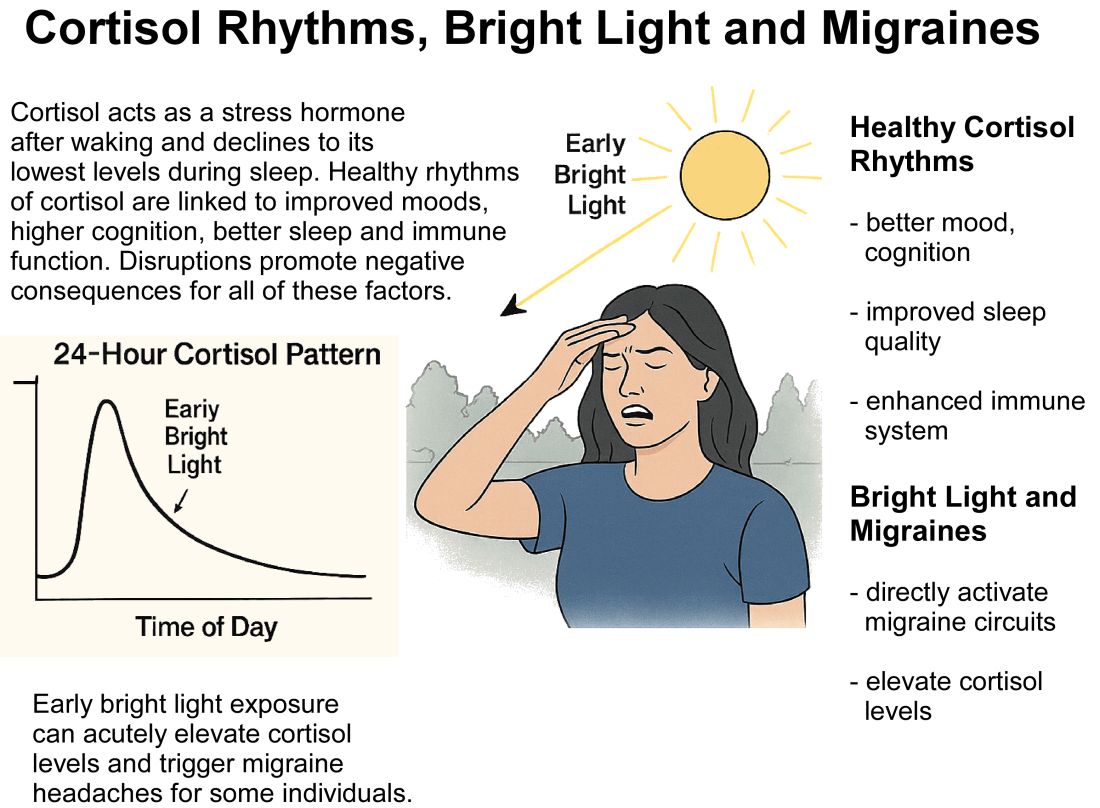
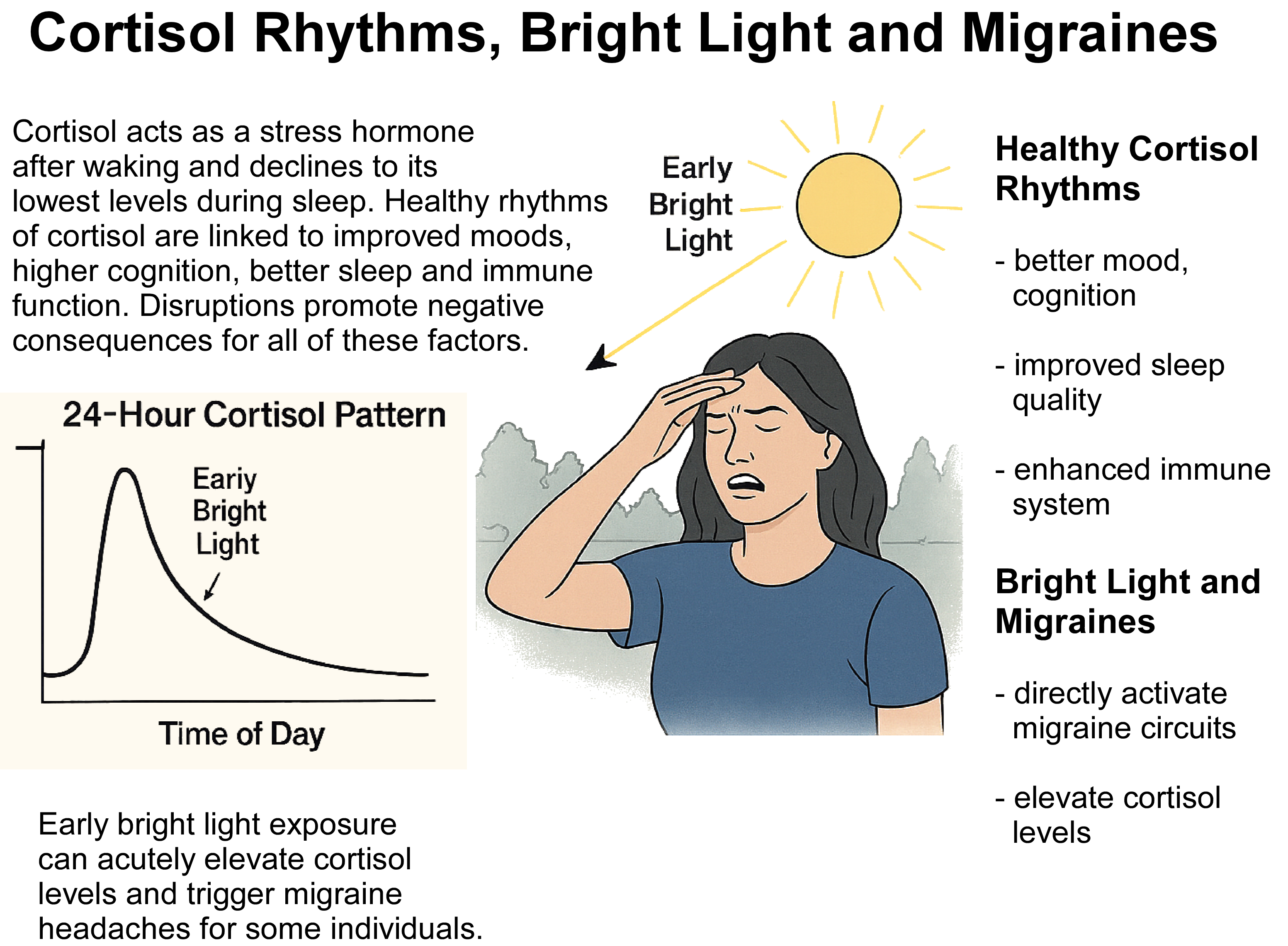
Cortisol exhibits a reliable 24-hour rhythm: following the cortisol awakening response (CAR), levels peak within 30–45 minutes of waking and subsequently decline to the lowest levels during early sleep (Fries, Dettenborn, & Kirschbaum, 2009; Rüger et al., 2006). When this rhythm remains intact, it supports resilience, mood, cognition, sleep, and immune function. Disruption via stress, poor habits, or inconsistent sleep can impair these domains (Franklyn-Miller, 2025).

Dr. Huberman describes how the HPA axis and the suprachiasmatic nucleus (SCN) collaborate to regulate cortisol. He advocates for morning light exposure (ideally natural sunlight) to boost early-day cortisol release and support circadian timing (Huberman Lab, 2025). Complementary strategies include hydration upon waking, delaying caffeine by an hour, exercising consistently, and supporting sustained energy through nutrition. Also, sometimes using agents like grapefruit or black licorice to modestly extend cortisol’s effects (with caution due to potential risks). Evening strategies include dimming lights, especially minimizing blue light, avoiding late caffeine, incorporating starchy carbohydrates at dinner, and using non-sleep deep rest (NSDR) or slow breathing to facilitate healthy cortisol decline.

Huberman also outlines burnout archetypes: those who wake wired but crash afternoon, and those sluggish in the morning but restless at night, each necessitating tailored protocols. He warns of cortisol’s long-term neurological impact: chronic mis-timed elevation can damage the hippocampus, a key structure for learning and memory, and aging or chronic illness often blunt the cortisol curve, increasing health risks and decreasing resilience (Franklyn-Miller, 2025; Huberman Lab, 2025).

Empirical Migraine Observations Connect with Cortisol and Light

Across four decades of journaling, I myself have observed that bright light exposure near the time of sunrise consistently triggered migraines. This pattern occurred regardless of hydration, caffeine, food, or sleep quality, which indicates a robust and reliable relationship between early-day light and migraine onset.

Scientific literature supports a dual pathway effect:

  1. Morning light influences the CAR – some studies show early-light exposure enhances CAR (Petrowski et al., 2019; Petrowski et al., 2022), while others reveal variability based on timing, intensity, and wavelength (Jung, 2010; Rahman et al., 2019; Leproult, Colecchia, L’Hermite-Baleriaux, & Van Cauter, 2001).
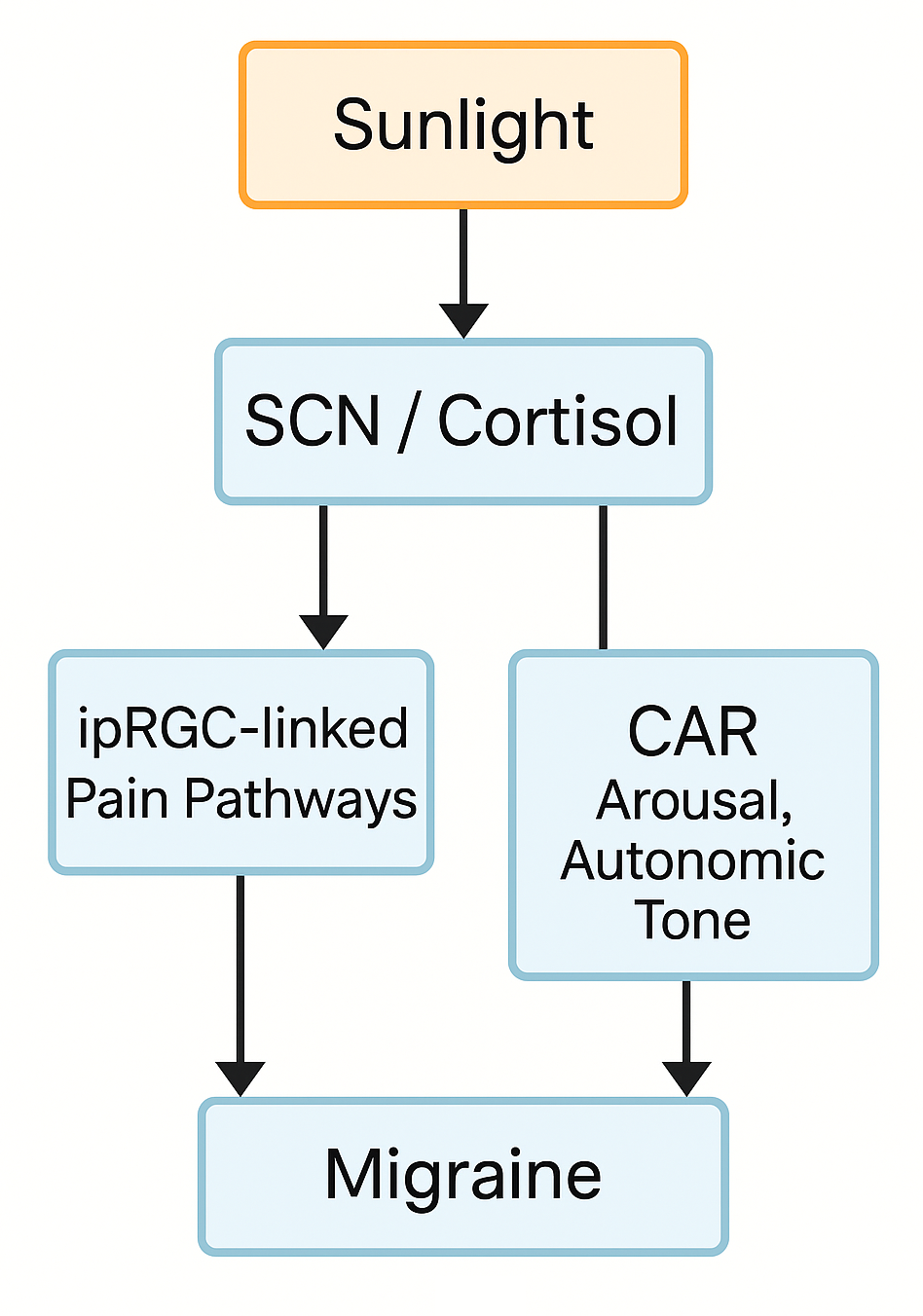
  2. Light directly triggers migraine via ipRGCs – melanopsin-containing intrinsically photosensitive retinal ganglion cells transmit light signals not only to the SCN but also to pain-processing regions (Noseda et al., 2010; McAdams et al., 2020). In migraineurs, these cells are hypersensitive to blue light; blocking their activity or using optical tints can reduce photophobia and pain (Posternack et al., 2023; Nagata et al., 2024). Experimental research confirms blue light triggers stronger pupillary and neurological responses than other wavelengths in migraine patients (Ali et al., 2021; Antemie et al., 2023).
____________

A Dual-Trigger Model

The data supports a dual-trigger model:

  • Immediate photonic activation: Intense early light activates ipRGC-driven migraine pathways.
  • Cortisol modulation: Simultaneously, light affects the CAR, either amplifying or suppressing cortisol, which may modulate susceptibility to migraine, increasing vulnerability in sensitized individuals.

This model explains why identical light exposures may be innocuous for many but debilitating for individuals with migraine sensitivity tied to cortisol and ipRGC pathways.
Evidence-Based Strategy for Prevention

Combining biological insights with lived experience suggests effective strategies:

  • Minimize direct sunrise glare – via hats, dawn-dimming curtains, or adjustable blinds.
  • Delay full bright-light exposure until later in the morning.
  • Use green-enriched lighting during early hours, as green wavelengths are less likely to trigger migraine (BrainFacts, 2019; Antemie et al., 2023).
  • Maintain consistent routines (hydration, caffeine timing, exercise) to stabilize cortisol rhythm.
  • Consider optical tints targeting ipRGC stimuli as adjunct preventive tools (Posternack et al., 2023).

Conclusion

Cortisol is a pivotal entrainer of daily energy rhythms, yet bright light, though beneficial for circadian health, can serve as a migraine trigger. In individuals with long-established patterns, sunrise light carries dual potency: energizing via cortisol rhythms and activating pain pathways via ipRGCs. By recognizing and balancing these realities, and protecting against light-triggered migraines while preserving circadian rhythm integrity, individuals can optimize energy, cognition, and long-term health.

References:

Ali, E. N., et al. (2021). Assessing migraine patients with multifocal pupillographic perimetry: pupillary abnormalities following migraine attacks. BMC Neurology, 21, Article 239. https://doi.org/10.1186/s12883-021-02239-z

Antemie, R. G., et al. (2023). Blue light—ocular and systemic damaging effects. International Journal of Molecular Sciences, 24(6), 5998. https://doi.org/10.3390/ijms24065998

Fries, E., Dettenborn, L., & Kirschbaum, C. (2009). The cortisol awakening response (CAR): Facts and future directions. International Journal of Psychophysiology, 72(1), 67–73. https://doi.org/10.1016/j.ijpsycho.2008.03.014

Franklyn-Miller, A. (2025, July 20). Expert shares the surprising role cortisol plays in our sleep—and why it’s just as important as melatonin. Tom’s Guide. Retrieved from Tom’s Guide website. https://health.yahoo.com/wellness/sleep/articles/expert-shares-surprising-role-cortisol-053000626.html

Huberman Lab. (2025, March). Using light for health [Newsletter]. Huberman Lab. Retrieved from Huberman Lab website.

Jung, C. M., Khalsa, S. B. S., Scheer, F. a. J. L., Cajochen, C., Lockley, S. W., Czeisler, C. A., & Wright, K. P. (2010). Acute effects of bright light exposure on cortisol levels. Journal of Biological Rhythms, 25(3), 208–216. https://doi.org/10.1177/0748730410368413

Leproult, R., Colecchia, E. F., L’Hermite-Balériaux, M., & Van Cauter, E. (2001). Transition from Dim to Bright Light in the Morning Induces an Immediate Elevation of Cortisol Levels1. The Journal of Clinical Endocrinology & Metabolism, 86(1), 151–157. https://doi.org/10.1210/jcem.86.1.7102

McAdams, H., et al. (2020). Selective amplification of ipRGC signals accounts for paradoxical behavioral light aversion in migraine patients. Proceedings of the National Academy of Sciences, 117(38), 23276–23283. https://doi.org/10.1073/pnas.2007402117

Noseda, R., Kainz, V., Jakubowski, M., Gooley, J. J., Saper, C. B., Digre, K., & Burstein, R. (2010). A neural mechanism for exacerbation of headache by light. Nature Neuroscience, 13(2), 239–245. https://doi.org/10.1038/nn.2475

Nagata, E., et al. (2024). Hypersensitivity of intrinsically photosensitive retinal ganglion cells in migraine. International Journal of Molecular Sciences, 25(14), 7980. https://doi.org/10.3390/ijms25147980

Petrowski, K., Schmalbach, B., Linhardt, M., Mekschrat, L., & Rohleder, N. (2022). The inflammatory immune system after wake up in healthy male individuals: A highly standardized and controlled study. Brain Behavior & Immunity – Health, 25, 100504. https://doi.org/10.1016/j.bbih.2022.100504

Petrowski, K., Schmalbach, B., Niedling, M., & Stalder, T. (2019). The effects of post-awakening light exposure on the cortisol awakening response in healthy male individuals. Psychoneuroendocrinology, 108, 28–34. https://doi.org/10.1016/j.psyneuen.2019.05.016

Posternack, C., Kupchak, P., Capriolo, A. I., & Katz, B. J. (2023). Targeting the intrinsically photosensitive retinal ganglion cell to reduce headache pain and light sensitivity in migraine: A randomized double-blind trial. Journal of Clinical Neuroscience, 113, 22–31. https://doi.org/10.1016/j.jocn.2023.04.015

Rahman, S. A., Wright, K. P., Lockley, S. W., Czeisler, C. A., & Gronfier, C. (2019). Characterizing the temporal Dynamics of Melatonin and Cortisol Changes in Response to Nocturnal Light Exposure. Scientific Reports, 9(1). https://doi.org/10.1038/s41598-019-54806-7

Rüger, M., Gordijn, M. C. M., Beersma, D. G. M., de Vries, B., & Daan, S. (2006). Time-of-day-dependent effects of bright light exposure on human cortisol responses. American Journal of Physiology-Regulatory, Integrative and Comparative Physiology, 290(1), R141–R147. https://doi.org/10.1152/ajpregu.00121.2005

About the Instructor, Author & Artist – Jim Moltzan

My journey into health, fitness, and martial arts began at the age of 16. At the time, I could not have imagined that something I started as a teenager would continue to shape nearly every stage of my adult life. What began primarily as physical training gradually developed into a much broader study of the relationship between body, mind, health, and personal development. Nearly 45 years later, I am still training, still teaching, and perhaps most importantly, still learning.

Martial arts provided the foundation. My early years were rooted in Korean martial arts, eventually expanding into practices such as BaguaZhang, tai chi, qigong, and other Eastern mind-body disciplines. Over the years I trained with a wide variety of teachers, earned a 5th-degree black belt in Korean Kung Fu through the Dong Han lineage, and accumulated well beyond 10,000 hours as a student and instructor. Yet some of the most valuable lessons came from discovering that rank, titles, forms, and years of training do not necessarily equal wisdom. They represent experience, but what we do with that experience matters much more.

My path was never particularly direct. I continued training while attending school, working multiple jobs, raising a family, and building businesses. I eventually moved from the Midwest to Florida in pursuit of a long-held goal of owning a martial arts school and ultimately became an owner of two martial arts and wellness schools. In time, however, I discovered that owning a school and being a teacher were not necessarily the same thing. Running a business could consume much of the time and energy that originally drew me to the work. I eventually chose to place greater emphasis on teaching, personal cultivation, writing, and sharing what I had learned.

That transition also changed the way I thought about health. Decades of martial arts had already introduced me to qigong, Traditional Chinese Medicine, meditation, breathing practices, and Eastern philosophy, but I wanted to understand these ideas from perspectives outside the traditions in which I had originally encountered them. In my late 50s, I returned to college and completed a Bachelor of Science degree in Holistic Health. The experience exposed me to a much broader academic examination of human health, behavior, stress, nutrition, psychology, physiology, culture, and different approaches to medicine. More importantly, it encouraged me to compare what I had learned through decades of experience with modern research and other ways of understanding health.

Teaching has remained the common thread connecting all of these experiences. I have had the opportunity to work with hundreds of people, from younger martial artists to older adults and individuals facing chronic health challenges. My teaching has taken me into martial arts schools, hospitals, wellness programs, churches, and community organizations. As I have grown older myself, my interests have naturally evolved. I remain interested in what the human body can accomplish, but I am equally interested in how we preserve movement, balance, confidence, independence, curiosity, and purpose throughout life.

Writing has become another way of teaching. Books, articles, educational materials, and hundreds of videos allow me to share what I have learned with people I may never have the opportunity to meet personally. My goal is not to present myself as a guru or someone who possesses all the answers. After theses many years, I probably have more questions than I once did. Experience has taught me to respect traditional knowledge without assuming that everything old is true, and to respect modern knowledge without assuming that everything new is necessarily better.

Perhaps the greatest change has been in how I now define health itself. I once approached health largely through training and physical capability. Today, I see it as something far more interconnected. How we move and eat certainly matters, but so do the people around us, the way we think, our ability to adapt, our sense of purpose, and whether we continue to participate meaningfully in our own lives. Good health has always required an investment of some kind, whether through time, effort, resources, sacrifice, or a combination of them. No teacher, physician, healer, or health system can make that investment entirely on our behalf.

Now, as a husband, father of two grown children, teacher, author, and lifelong student entering my own later years, I find myself less interested in accumulating and more interested in integrating. I want to make better use of what I have already learned, continue questioning what I think I know, and share whatever may be useful to others. If nearly 45 years of training and teaching have taught me anything, it is that there probably is no final destination called mastery. There is simply another opportunity to learn, adapt, help someone else, and become a little better version of ourselves along the way.

Be Well.


Jim Moltzan

www.MindAndBodyExercises.com

https://www.facebook.com/MindAndBodyExercises

https://www.youtube.com/c/MindandBodyExercises

https://mindandbodyexercises.wordpress.com

https://www.amazon.com/author/jimmoltzan

https://substack.com/@mindandbodyexercises

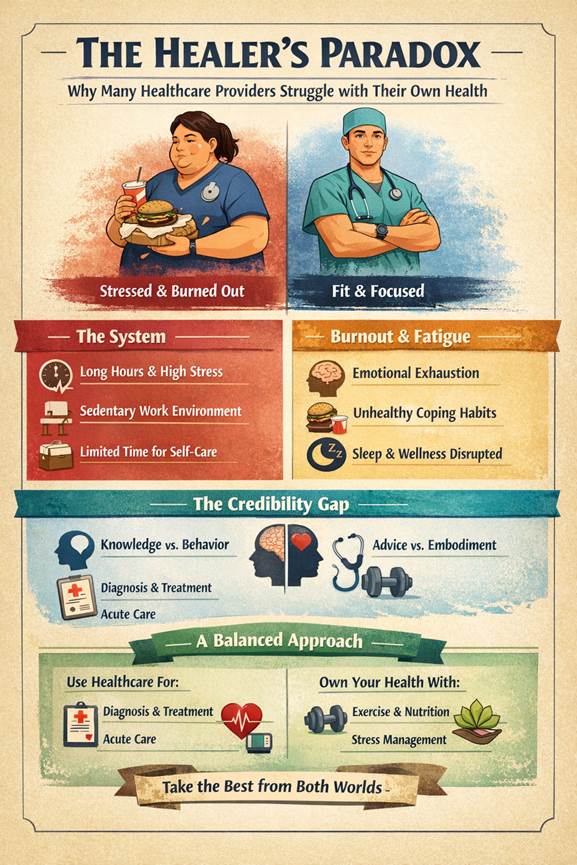
The Healer’s Paradox: When Healthcare Providers Struggle with Their Own Health

A Holistic Reflection on Credibility, Burnout, and the Modern Medical System

It is not uncommon for individuals committed to a disciplined lifestyle, regular movement, mindful nutrition, and stress management to encounter a perplexing contradiction within the modern healthcare system. Many patients report a growing sense of frustration when the very professionals advising them on weight management, exercise, and lifestyle modification appear to be struggling with those same issues themselves.

This observation raises an important question:

How should one reconcile medical advice when the messenger does not appear to embody the message?

This is not merely a personal frustration; it reflects a deeper paradox within contemporary healthcare.

The Knowledge–Behavior Gap

Healthcare professionals are extensively trained in anatomy, physiology, pathology, and disease management. They understand, often better than most, the importance of:

  • Regular physical activity
  • Nutrient-dense diets
  • Sleep hygiene
  • Stress regulation

Yet research consistently shows that knowledge alone does not guarantee behavior change. This phenomenon is often referred to as the knowledge–behavior gap and is well documented in behavioral science (Kwasnicka et al., 2016).

Even highly educated individuals are subject to:

  • Decision fatigue
  • Self-regulation depletion
  • Emotional exhaustion

In other words, knowing what to do and having the capacity to consistently do it are two very different things.

An Unhealthy System Producing Unhealthy Outcomes

A critical factor often overlooked is the structure of the healthcare system itself.

Healthcare professionals frequently work under conditions that are inherently misaligned with health:

  • Long shifts (often exceeding 10–12 hours)
  • Irregular schedules and sleep disruption
  • High patient volumes
  • Administrative overload
  • Continuous exposure to illness, trauma, and mortality

These conditions create a physiological environment characterized by chronic stress activation. Elevated cortisol levels, disrupted circadian rhythms, and prolonged sedentary behavior all contribute to metabolic dysfunction, weight gain, and declining overall health (Melamed et al., 2006; Shanafelt et al., 2015).

Thus, the issue is not simply individual failure, it is systemic.

Burnout: The Silent Epidemic Among Healthcare Workers

Burnout has become one of the most significant occupational hazards in healthcare. It is defined by:

  • Emotional exhaustion
  • Depersonalization
  • Reduced sense of personal accomplishment

Studies suggest that a substantial proportion of physicians and healthcare workers experience burnout at some point in their careers (Shanafelt et al., 2015).

From a physiological and behavioral perspective, burnout leads to:

  • Reduced motivation for self-care
  • Increased reliance on convenience foods
  • Decreased physical activity
  • Impaired emotional regulation

What may appear externally as neglect or hypocrisy is often the visible manifestation of internal depletion.

Why Do Some Providers Appear Healthier Than Others?

Interestingly, many individuals observe that certain specialists, particularly surgeons, often appear to maintain better physical condition.

Several factors may contribute:

  • Selection bias: Surgical fields tend to attract highly disciplined, performance-oriented individuals
  • Cultural expectations: Physical stamina and endurance are often emphasized
  • Financial resources: Greater access to high-quality food, fitness facilities, and time-saving services
  • Career autonomy: Increased control over scheduling later in practice

However, it is important to note that even within these groups, burnout and stress-related disorders remain prevalent.

The Credibility Dilemma

From a holistic perspective, credibility is not derived solely from knowledge, it is also rooted in embodiment.

When a healthcare provider advises:

  • “Lose weight”
  • “Exercise more”
  • “Reduce stress”

…yet appears to struggle with those same challenges, it can create a disconnect that undermines trust.

This tension highlights an important distinction:

Clinical Expertise vs. Personal Practice

A provider may possess:

  • High-level diagnostic and medical knowledge

…while simultaneously lacking:

  • Consistent personal health practices

These are not mutually inclusive domains.

A Clash of Health Paradigms

At a deeper level, this issue reflects a broader divide between two models of health:

Conventional Medical Model

  • Disease management
  • Symptom control
  • Pharmaceutical intervention
  • Reactive care

Holistic Model

  • Prevention and self-regulation
  • Mind–body integration
  • Lifestyle as medicine
  • Personal responsibility

For individuals grounded in holistic disciplines such as yoga, tai chi, qigong, and mindful living, this divergence can feel particularly stark.

A Practical and Balanced Approach

Rather than rejecting conventional medicine outright, or accepting it without question, a more refined approach is warranted.

Utilize the Healthcare System For:

  • Diagnostic testing and screening
  • Acute and emergency care
  • Risk assessment and monitoring

Cultivate Personal Responsibility For:

  • Daily movement and exercise
  • Nutritional choices
  • Stress management practices
  • Sleep and recovery

Seek Alignment When Possible

There is a growing field of practitioners who bridge both worlds:

  • Lifestyle medicine physicians
  • Integrative and functional medicine providers
  • Practitioners who embody the principles they teach

Final Reflection

The apparent contradiction within healthcare providers is not simply hypocrisy. It is a reflection of:

  • Human limitations
  • Chronic systemic stress
  • A disconnect between knowledge and lived experience

For the discerning individual, the path forward is not one of rejection, but of discernment.

Take what is useful. Question what is not. And remain rooted in practices that cultivate true health from within.

In doing so, one becomes not merely a patient within a system—but an active participant in their own well-being.

References

Kwasnicka, D., Dombrowski, S. U., White, M., & Sniehotta, F. (2016). Theoretical explanations for maintenance of behaviour change: A systematic review of behaviour theories. Health Psychology Review, 10(3), 277–296. https://doi.org/10.1080/17437199.2016.1151372

Melamed, S., Shirom, A., Toker, S., Berliner, S., & Shapira, I. (2006). Burnout and risk of cardiovascular disease: Evidence, possible causal paths, and promising research directions. Psychological Bulletin, 132(3), 327–353. https://doi.org/10.1037/0033-2909.132.3.327

Shanafelt, T. D., Hasan, O., Dyrbye, L. N., Sinsky, C., Satele, D., Sloan, J., & West, C. P. (2015). Changes in burnout and satisfaction with work-life balance in physicians and the general US working population between 2011 and 2014. Mayo Clinic Proceedings, 90(12), 1600–1613. https://doi.org/10.1016/j.mayocp.2015.08.023

Boost Your Brainpower: Use Hearing and Balance to Sharpen Focus

In the realm of holistic wellness, we often focus on diet, exercise, breath, and mindset, but how often do we consider our ears and our sense of balance as essential tools for mental clarity and cognitive performance?

Dr. Andrew Huberman, a Stanford neuroscientist and host of the Huberman Lab Podcast, explores this overlooked territory in his episode “How Hearing & Balance Enhance Focus & Learning.” As someone deeply invested in integrating modern science with ancient wellness practices, I found this episode not only affirming but eye-opening. Let me break down some of the most practical insights.

The Auditory System: A Biological Prism for the Mind

Huberman explains the auditory system in great detail: how the outer ear captures sound waves, how the eardrum passes those vibrations through three tiny bones (malleus, incus, stapes), and how the cochlea, which is the fluid-filled spiral in the inner ear, transforms those vibrations into neural signals.

What stood out was the prism-like function of the cochlea. Much like a prism that separates light into colors, the cochlea separates sound into different frequencies. This allows the brain to decipher complex soundscapes like music, voices, and environmental cues. For those of us practicing mindfulness, this gives new meaning to the phrase “intentional listening.”

Binaural Beats: Sound as a Mental Tuning Fork

Huberman dives into the use of binaural beats, where two slightly different frequencies are played in each ear. The brain interprets the difference as a single beat, which can influence brainwave activity. He shares that binaural beats can help promote states such as focus (beta waves), calm (alpha), and deep meditation (theta). While not a cure-all, they are a valuable tool, especially when integrated with practices like breathwork, yoga, or qigong.

  • Delta and Theta: Sleep and deep meditation
  • Alpha: Calm focus
  • Beta: Alertness
  • Gamma: Heightened cognition and insight

White Noise: A Double-Edged Sword

Surprisingly, Huberman discusses how low-level white noise can actually enhance learning and motivation. It does this by increasing dopamine release, which is our brain’s reward chemical. This may explain why many people, me included, prefer ambient noise while working or studying.

However, there’s a cautionary note: prolonged white noise exposure in infants may hinder healthy auditory development. White noise lacks the variation necessary to develop tonotopic maps, which are the brain’s way of organizing sound frequencies. In short, while useful for adults, white noise can be detrimental if misused during critical developmental windows in children.

The Cocktail Party Effect: Cognitive Load in Action

Another fascinating point is the cocktail party effect, where the brain’s ability to focus on a single voice (selective awareness) in a noisy room. Huberman emphasizes how much effort this takes. It’s a reminder that modern life, full of overlapping stimuli, can tax our nervous system in subtle but real ways. As holistic practitioners, this reinforces the importance of quiet time, sound baths, and low-stimulation environments to support mental clarity.

Balance and the Vestibular System: Movement as Medicine

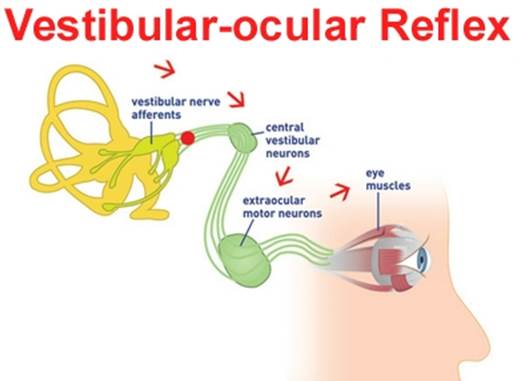
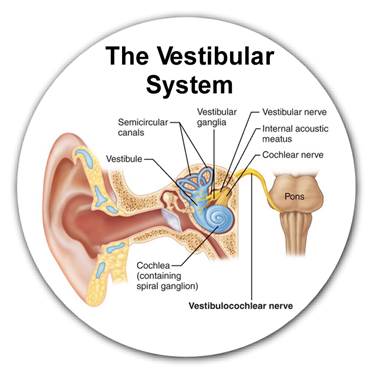
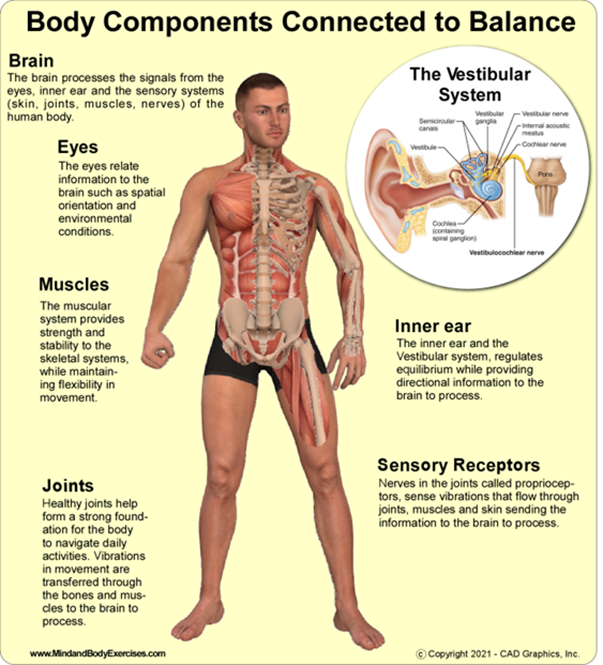
Perhaps the most profound yet underappreciated insight from Dr. Huberman’s episode is the role of the vestibular system. This is the sensory network within the inner ear that helps detect head orientation and movement. Though commonly associated with balance, this system is directly linked to emotional regulation, attention, and brain flexibility.

When we engage in movements that challenge balance, like skateboarding, walking on uneven terrain, or even standing on one leg with eyes closed, we activate the semicircular canals and otolith organs that send signals to the brainstem about head motion and gravitational shifts. These inputs, in turn, stimulate the release of dopamine and serotonin, the neurochemicals responsible for motivation, well-being, and neuroplasticity (Huberman, 2025).

Why This Matters:

  • Dopamine fuels focus, drive, and memory encoding.
  • Serotonin calms the nervous system and stabilizes mood.

Vestibular engagement stimulates these systems through subtle head movements and changes in posture. Simple activities such as:

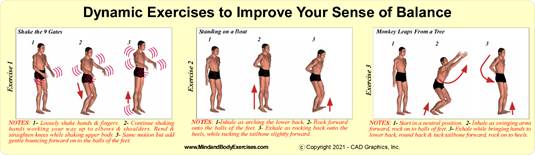
  • Balancing with eyes closed,
  • Turning the head during walking,
  • Forward-accelerating sports like biking or skating,
  • Practicing head tilts during yoga, qigong, tai chi and other martial arts

These activities can elevate mood and sharpen learning by improving sensory-motor integration and activating brain regions like the locus coeruleus and ventral tegmental area (VTA), critical dopamine centers (Hitier et al., 2014).

From a holistic point of view, these effects mirror what Eastern disciplines have long known that physical movement, balance, and breath are gateways to emotional equilibrium and mental clarity. By training the vestibular system regularly, we condition the brain to stay agile, focused, and resilient under pressure.

Holistic Takeaways: Harmonizing the Senses

Dr. Huberman’s breakdown of the hearing and balance systems mirrors much of what traditional holistic systems have long emphasized: sensitivity, movement, and sensory integration are keys to mental clarity. As a practitioner and educator of mind-body methods, I see incredible value in integrating these insights:

  • Use binaural beats or ambient nature sounds during meditation or study sessions.
  • Encourage balance training as part of daily physical routines with eyes-closed stance work, walking meditation (Tai Chi, Qigong, BaguaZhang), or even play-based movement.
  • Be mindful of auditory overload in modern environments. Sometimes, the most powerful medicine is silence.

Final Thoughts

In holistic health, we strive for integration of not just the body, mind, and spirit, but also of physiological systems that we often take for granted. Dr. Huberman’s insights into hearing and balance affirm that our senses are not passive. They are gateways to enhanced learning, mood regulation, and cognitive vitality.

By engaging in the auditory and vestibular systems intentionally, we can improve not just our ability to hear or stand upright but to learn, grow, and live with greater awareness.

Reference:

Huberman, A. (2025, May 8). How hearing & balance enhance focus & learning. YouTube. https://www.youtube.com/watch?v=fSBgDq2ttCw

Hitier, M., Besnard, S., & Smith, P. F. (2014). Vestibular pathways involved in cognition. Frontiers in Integrative Neuroscience, 8, 59. https://doi.org/10.3389/fnint.2014.00059

Lopez, C., Blanke, O., & Mast, F. W. (2012). The human vestibular cortex revealed by coordinate-based meta-analysis. Neuroscience, 212, 159–179. https://doi.org/10.1016/j.neuroscience.2012.03.028

Smith, P. F., & Zheng, Y. (2013). From ear to uncertainty: vestibular contributions to cognitive function. Frontiers in Integrative Neuroscience, 7. https://doi.org/10.3389/fnint.2013.00084

Rising Health Concerns Since 2020: A Holistic Overview of Emerging Trends

Since 2020, public attention has largely focused on infectious diseases such as COVID-19 and vaccine-preventable illnesses like measles and tuberculosis. However, an alarming rise in several chronic, developmental, and mental health conditions suggests a deeper crisis in population health, especially in the United States. This article outlines key health trends that deserve greater attention, including sudden cardiac events, mental health disorders, obesity and type 2 diabetes in adolescents, and the resurgence of various cancers.

Sudden Cardiac Death and Vascular Events

Sudden cardiac death (SCD), once relatively rare among young adults, has shown an increase in prevalence. Between 1999 and 2020, the age-adjusted mortality rate for SCD among U.S. adults aged 25-44 rose from 0.10 to 0.18 per 100,000; a significant public health concern (The Cardiology Advisor, 2025). Additionally, deaths from aortic aneurysms have become more frequent among adults, though definitive recent data is still emerging.

Infant Mortality and Early-Life Risk
The U.S. infant mortality rate rose by 3% in 2022 to 5.6 deaths per 1,000 live births, the first increase in two decades. The rise was especially significant in states like Georgia, Texas, and Missouri, and among infants born to White and Native American women. Contributing factors include maternal health complications and bacterial sepsis (Falconer, 2023).

(Winston & Winston, 2022)

Mental Health Crisis and Suicide
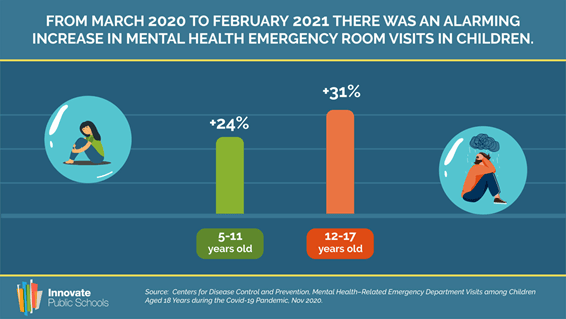
The COVID-19 pandemic has exacerbated mental health conditions, particularly among adolescents and young adults. Increased rates of anxiety, depression, and suicide have been documented, with long-term consequences expected. A significant contributing factor has been the reduction in school-based mental health support following the expiration of pandemic relief funding (Houston Chronicle, 2024).

Adolescent Obesity and Type 2 Diabetes
Obesity affects nearly 1 in 5 U.S. youth aged 2-19 years, with disproportionately high rates among Hispanic and non-Hispanic Black populations (Childhood Obesity Facts, 2024). Concurrently, the incidence of type 2 diabetes in adolescents has risen sharply. Projections suggest a 700% increase by 2060 if current trends continue (Diabetes in Young People Is on the Rise, 2024).

Alzheimer’s Disease: A Looming Epidemic
Currently, over 6.9 million Americans aged 65 and older are living with Alzheimer’s disease. This figure is expected to double to 13.8 million by 2060 due to aging demographics and unknown environmental and lifestyle factors (Alzheimer’s Association, 2024).

Colorectal and Pancreatic Cancers in Younger Adults
Although colorectal cancer rates have declined overall due to better screening in older adults, incidence in younger populations (ages 25-50) has doubled since 1995. Advanced-stage diagnoses are increasing at a rate of 3% annually in adults under 50 (American Cancer Society, 2023). Similarly, pancreatic cancer is on the rise, particularly among young women, with experts noting a significant and concerning shift in the disease burden (Harnisch-Weidauer, 2024).

Conclusion
The rise in both communicable and non-communicable diseases since 2020 signals a multi-faceted public health challenge. While infectious diseases tend to dominate media cycles, chronic conditions, mental health issues, and early-onset cancers are equally pressing. These trends underscore the urgent need for holistic prevention strategies, health education, and early interventions that go beyond vaccination campaigns and address root causes like nutrition, stress, environmental toxicity, and healthcare inequality.

References:

Alzheimer’s Association. (2024). *2024 Alzheimer’s disease facts and figures*. https://pubmed.ncbi.nlm.nih.gov/38689398/

American Cancer Society. (2023). Colorectal Cancer Facts & Figures 2023-2025. https://www.cancer.org/content/dam/cancer-org/research/cancer-facts-and-statistics/colorectal-cancer-facts-and-figures/colorectal-cancer-facts-and-figures-2023.pdf

Childhood obesity Facts. (2024, April 2). Obesity. https://www.cdc.gov/obesity/childhood-obesity-facts/childhood-obesity-facts.html

Diabetes in young people is on the rise. (2024, May 15). Diabetes. https://www.cdc.gov/diabetes/data-research/research/young-people-diabetes-on-rise.html

Falconer, R. (2023, November 1). U.S. infant mortality rate rises for first time in over 2 decades. Axios. https://www.axios.com/2023/11/01/us-infant-mortality-rate-rises-first-time-two-decades

Harnisch-Weidauer, L. (2024, November 18). What you need to know about rising pancreatic cancer rates. Dana-Farber Cancer Institute. https://blog.dana-farber.org/insight/2024/11/what-you-need-to-know-about-rising-pancreatic-cancer-rates/

Houston Chronicle. (2024). *Mental health crisis in students persists post-COVID*. https://www.houstonchronicle.com/news/houston-texas/education/hisd/article/texas-covid-mental-health-crisis-20205168.php

Partain, C. (2025, March 13). Houston students’ mental health still hasn’t rebounded from COVID. Houston Chronicle. https://www.houstonchronicle.com/news/houston-texas/education/hisd/article/texas-covid-mental-health-crisis-20205168.php

The Cardiology Advisor. (2025, March 5). Sudden cardiac death rate increasing for younger adults in the US. https://www.thecardiologyadvisor.com/news/sudden-cardiac-death-rate-increasing-for-younger-adults-in-the-us/

Winston, S., & Winston, S. (2022, May 13). COVID-19 has harmed students’ social-emotional wellbeing, making it even more difficult to learn | Innovate Public Schools. Innovate Public Schools | a World-Class Public School for Every Student. https://innovateschools.org/research-and-data/learning-loss/covid-19-has-harmed-students-social-emotional-wellbeing-making-it-even-more-difficult-to-learn/

I look forward to further sharing more of my message by partnering with hospitals, wellness centers, VA centers, schools on all levels, businesses, and individuals who see the value in building a stronger nation through building a healthier population.

I also have hundreds of FREE education video classes, lectures, and seminars available on my YouTube channel at:

https://www.youtube.com/c/MindandBodyExercises

Many of my publications can be found on Amazon at:

http://www.Amazon.com/author/jimmoltzan

My holistic health blog is available at:

https://mindandbodyexercises.wordpress.com/

http://www.MindAndBodyExercises.com

Mind and Body Exercises on Google: https://posts.gle/aD47Qo

Jim Moltzan

407-234-0119