
A Holistic Examination of Blood Pressure, Lifestyle, and Modern Healthcare
A Growing Diagnosis
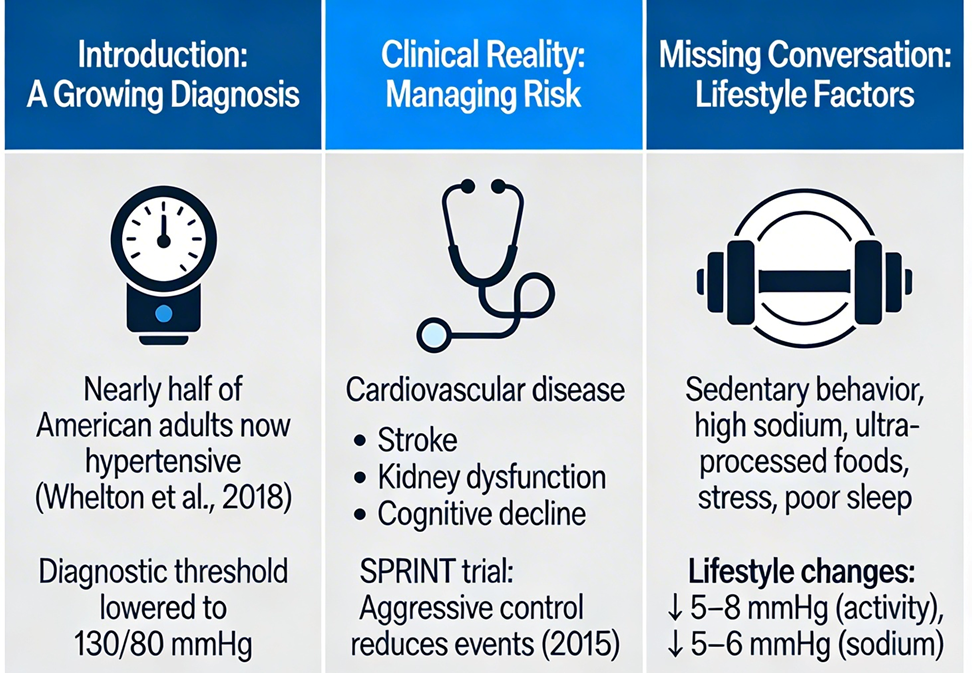
Hypertension, or high blood pressure, has become one of the most commonly diagnosed conditions in modern healthcare. Following updated guidelines from the American College of Cardiology and American Heart Association, nearly half of American adults are now classified as hypertensive (Whelton et al., 2018).
This dramatic increase did not arise from a sudden decline in national health, but rather from a redefinition of the diagnostic threshold, lowering the standard from 140/90 mmHg to 130/80 mmHg.
While this change aims to promote early detection and prevention, it raises an important question:
Are we treating the underlying causes of hypertension—or simply managing the numbers?
The Clinical Reality: Managing Risk
From a conventional medical standpoint, hypertension is a serious and well-documented risk factor for:
- Cardiovascular disease
- Stroke
- Kidney dysfunction
- Cognitive decline
The landmark SPRINT trial demonstrated that more aggressive blood pressure control could reduce cardiovascular events and mortality (SPRINT Research Group, 2015).
As a result, physicians are trained to act decisively. Elevated reading often leads to:
- Monitoring
- Follow-up visits
- Pharmacological intervention
This approach is rooted in risk reduction, and not necessarily in neglect.
The Missing Conversation: Lifestyle Factors
Despite clear evidence supporting lifestyle modification as a first-line intervention, many patients report that the following factors are minimally addressed, or overlooked entirely:
- Sedentary behavior
- High sodium intake
- Ultra-processed food consumption
- Chronic stress
- Poor sleep patterns
Research consistently demonstrates that lifestyle changes can significantly reduce blood pressure:
- Regular physical activity: ↓ 5–8 mmHg
- Sodium reduction: ↓ 5–6 mmHg
- Weight loss: substantial reductions depending on baseline
- Stress management: measurable improvements in autonomic regulation (Brook et al., 2013)
Yet in many clinical encounters, these interventions are not emphasized with the same urgency as medication.
Why the Gap Exists
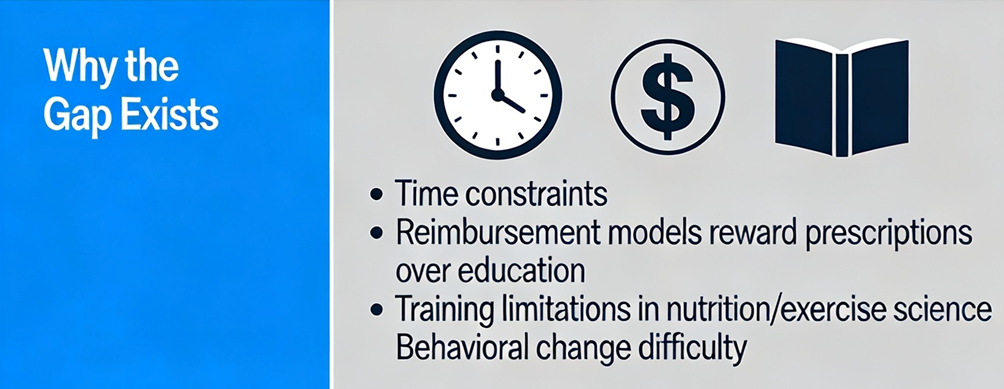
The disconnect between ideal care and real-world practice is not always a matter of negligence, it is often systemic.
1. Time Constraints
Most physicians operate within brief appointment windows, limiting their ability to provide detailed lifestyle counseling.
2. Reimbursement Models
Healthcare systems tend to reward:
- Prescriptions
- Procedures
More than:
- Preventive education
- Behavioral coaching
3. Training Limitations
Medical education has historically emphasized:
- Pathology
- Pharmacology
While offering limited training in:
- Nutrition
- Exercise science
- Stress physiology
4. Behavioral Reality
Sustainable lifestyle change is difficult. Physicians may default to medication because it offers a predictable and immediate effect, whereas behavioral change requires time, effort, and patient adherence.
The Pharmaceutical Question
It is reasonable to question whether expanded diagnostic criteria increase the number of individuals exposed to pharmaceutical treatment.
However, data suggests a more nuanced picture:
- While hypertension prevalence increased significantly,
- The proportion of individuals recommended for medication rose more modestly (Muntner et al., 2018)
Still, the broader concern remains valid:
When diagnosis expands, so too does the potential for medical intervention. This creates a tension between preventive care and over-medicalization.
A Holistic Perspective: Beyond the Numbers
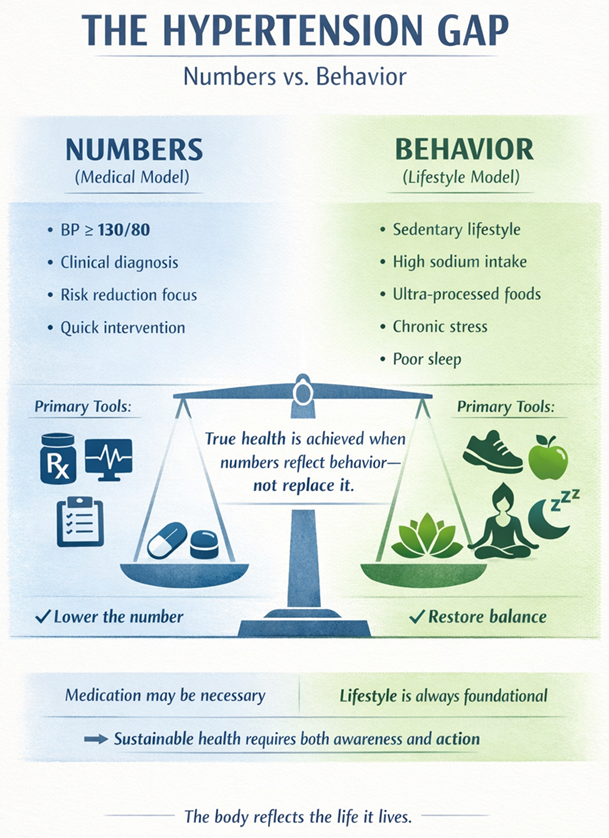
From a holistic health standpoint, blood pressure is not merely a number. It is an expression of systemic balance.
Elevated blood pressure may reflect:
- Chronic sympathetic nervous system activation
- Poor vascular elasticity
- Metabolic imbalance
- Emotional and psychological stress
In this context, hypertension is less a disease to suppress and more a signal to interpret.
Bridging the Divide
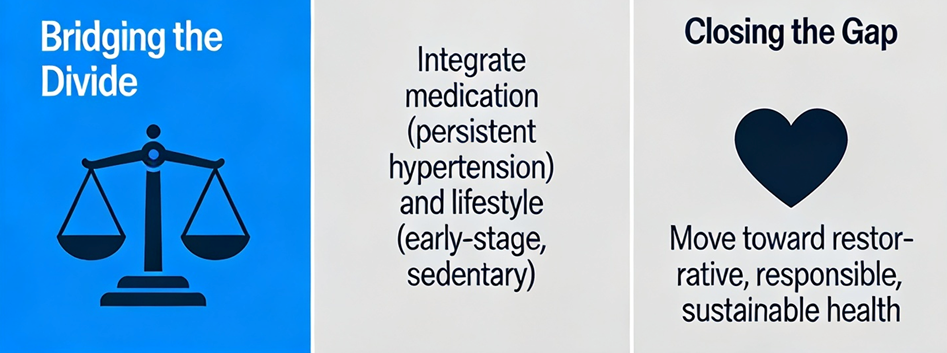
An effective approach to hypertension should not reject modern medicine, nor rely on it exclusively. Instead, it should integrate both perspectives:
When Medication Is Appropriate
- Persistent hypertension despite lifestyle efforts
- High cardiovascular risk
- Advanced age with comorbidities
When Lifestyle Must Lead
- Early-stage hypertension (130–139 / 80–89)
- Sedentary individuals
- Diet-related contributors
- Stress-driven elevations
The Responsibility of the Individual
One of the most important, yet often overlooked, truths is this:
No medication can fully compensate for a lifestyle that promotes disease.
Sustainable health requires:
- Daily movement
- Thoughtful nutrition
- Stress management
- Sleep hygiene
- Self-awareness
These are not quick fixes. They are disciplines.
In conclusion, we must strive to close the gap.The rise in hypertension diagnoses reflects both advances in medical understanding and limitations in how care is delivered.
While medications play an important role, they should not become a substitute for addressing the root causes of dysfunction.The true solution lies in closing the gap between:
- Numbers and behavior
- Treatment and education
- Intervention and prevention
In doing so, we move toward a model of health that is not only reactive, but restorative, responsible, and sustainable.
References
Brook, R. D., Appel, L. J., Rubenfire, M., Ogedegbe, G., Bisognano, J. D., Elliott, W. J., … Rajagopalan, S. (2013). Beyond medications and diet: Alternative approaches to lowering blood pressure. Hypertension, 61(6), 1360–1383. https://doi.org/10.1161/HYP.0b013e318293645f
Muntner, P., Carey, R. M., Gidding, S., Jones, D. W., Taler, S. J., Wright, J. T., & Whelton, P. K. (2018). Potential US population impact of the 2017 ACC/AHA high blood pressure guideline. Circulation, 137(2), 109–118. https://doi.org/10.1161/CIRCULATIONAHA.117.032582
SPRINT Research Group. (2015). A randomized trial of intensive versus standard blood-pressure control. New England Journal of Medicine, 373(22), 2103–2116. https://doi.org/10.1056/NEJMoa1511939
Whelton, P. K., Carey, R. M., Aronow, W. S., Casey, D. E., Collins, K. J., Dennison Himmelfarb, C., … Wright, J. T. (2018). 2017 ACC/AHA guideline for the prevention, detection, evaluation, and management of high blood pressure in adults. Hypertension, 71(6), e13–e115. https://doi.org/10.1161/HYP.0000000000000065


 United Martial Arts Association