Over the years, my understanding of what it means to be a healer has changed considerably. When many people hear the word healer, they may picture someone who possesses a special ability to cure another person, remove their pain, correct their illness, or somehow make them whole again. In this model, the healer does the healing while the person in need receives it. One person is active, while the other is largely passive. That has never completely fit with how I have come to understand healing.
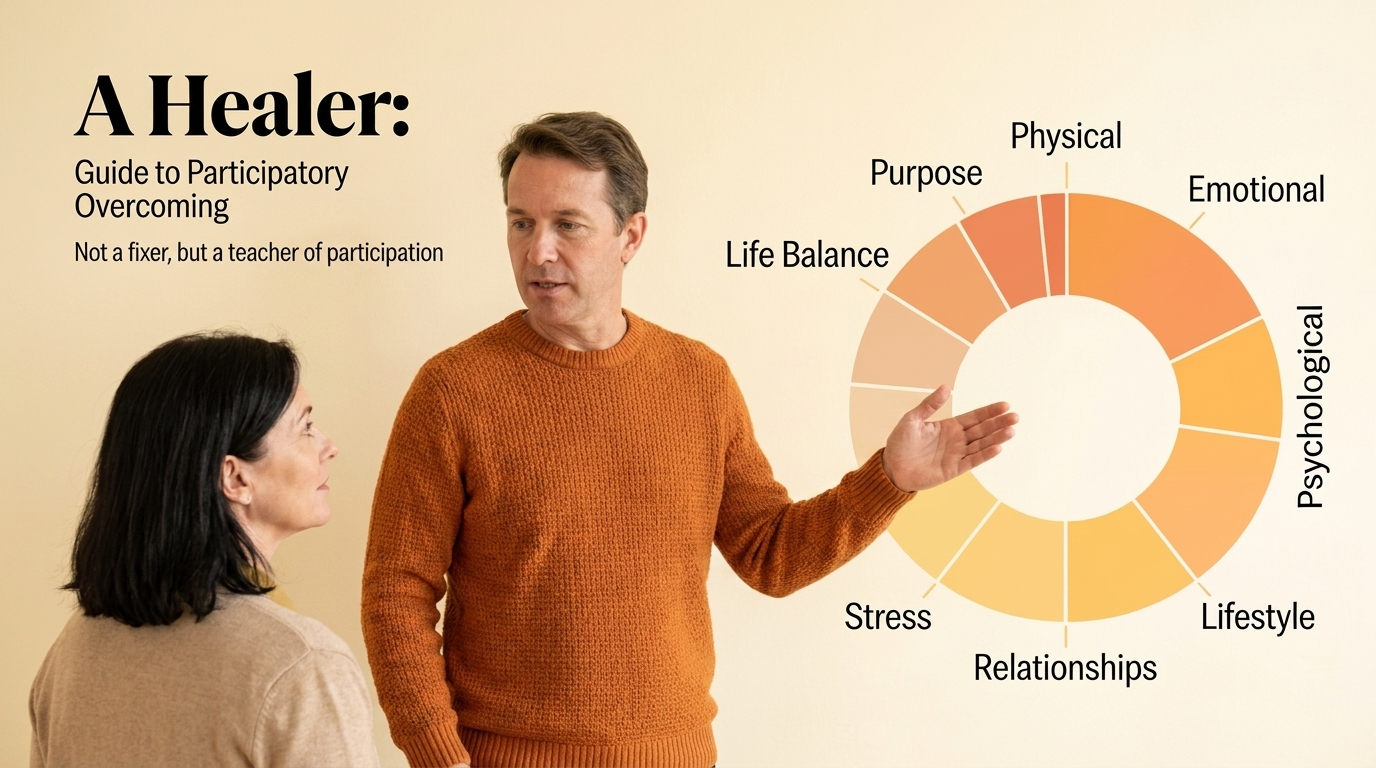
My definition of a healer is not necessarily someone who cures or fixes another person. Rather, I see a healer as someone who shows, helps, guides, or teaches another person how to participate more fully in overcoming whatever may be troubling them. Sometimes that trouble is physical. Sometimes it is emotional or psychological. Sometimes it involves lifestyle, relationships, stress, purpose, or simply the realization that the way we have been living is no longer working very well. This distinction may seem subtle, but I believe it is important.
A healer can provide knowledge, encouragement, perspective, techniques, and perhaps even treatment. But ultimately, much of the work of healing still takes place within the individual.
I often think of something as simple as preparing a meal. I can teach someone how to make a healthy meal. I can explain the ingredients, demonstrate how to prepare them, discuss why certain foods may be beneficial, and perhaps even stand beside that person while they cook. But at some point, they have to make the meal themselves. More importantly, I cannot eat the meal for them and somehow transfer the nutritional benefits into their body. Their body has to chew it, digest it, absorb it, and make use of what has been provided. Healing often works in much the same way.
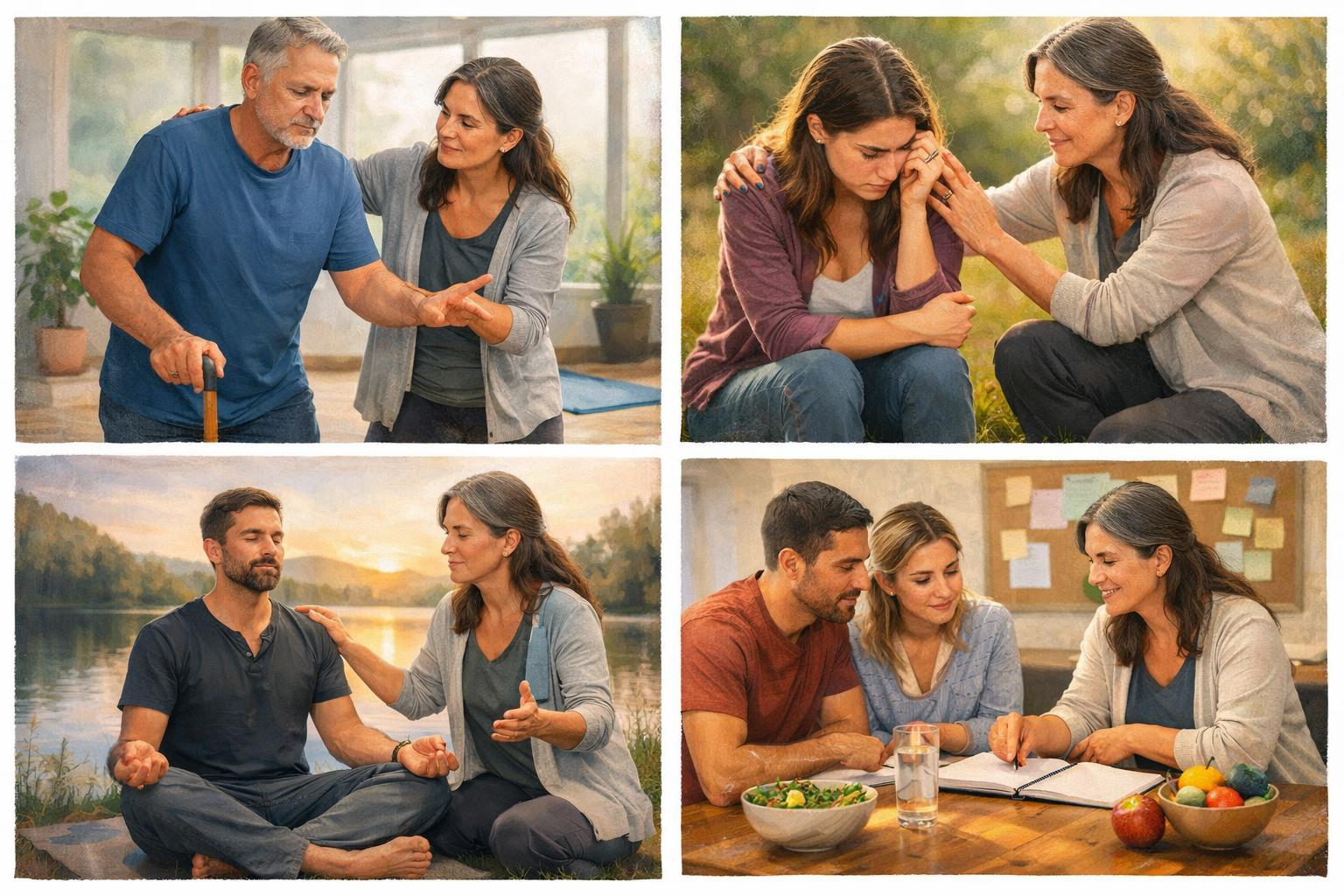
A physician can explain why someone needs to exercise, but the physician cannot perform the exercise for the patient. A physical therapist can teach movements that may restore strength and mobility, but the therapist cannot make the muscles stronger without the patient’s participation. A counselor can help someone recognize unhealthy patterns of thought or behavior, but eventually that person must practice responding differently when those patterns appear in everyday life.
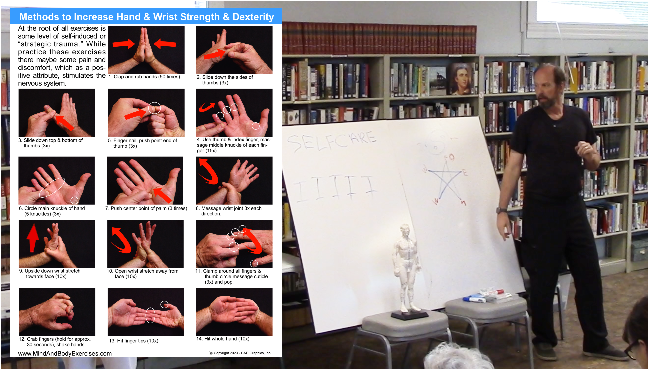
The same is true within many of the practices I have studied and taught over the years. I can teach someone tai chi, qigong, breathing exercises, meditation, stretching, strengthening, posture, relaxation, or other methods of self-care. I can explain the principles behind them and help correct mistakes. I can encourage someone when progress seems slow. But I cannot practice for them.
That is where I believe an important part of healing is sometimes overlooked.
We have become accustomed to thinking of health care as something that is primarily done to us. We go somewhere, receive something, and hopefully leave feeling better. Certainly, there are situations where this is exactly what is needed. If I break a bone, suffer a serious infection, require surgery, or experience a medical emergency, I am very grateful that trained professionals can intervene. There are times when another person’s expertise and intervention may literally save our lives.
But that is only one part of the much larger picture of health and healing.
There is also the enormous territory between being perfectly healthy and experiencing a medical emergency. This is where we live most of our lives. It includes how we sleep, breathe, move, eat, manage stress, maintain relationships, respond to setbacks, use our bodies, and care for ourselves day after day. No practitioner can completely control those things for another person.
This is why I tend to think of the healer as being closer to a teacher, guide, or facilitator than a repair technician. A good teacher does not simply give students answers. A good teacher helps students develop the ability to find answers themselves. In the same way, a good healer should ideally help people develop greater awareness and greater participation in their own well-being.
This does not mean blaming people for becoming sick or suggesting that every illness can be overcome through positive thinking, exercise, diet, or self-discipline. Biology is far more complicated than that. Genetics, injury, aging, infection, environment, socioeconomic circumstances, and simple chance can all affect our health. There are conditions that cannot simply be exercised, meditated, or breathed away. But recognizing those realities does not mean that personal agency disappears.
There is usually a difference between asking, Who is going to fix me? and asking, What can I do to participate in getting better?
That second question can change the relationship between the practitioner and the person seeking help.
Instead of saying, “Heal me,” we begin asking, “Teach me.”
Teach me what I can do.
Teach me what I may be doing that is making the situation worse.
Teach me what signs I should pay attention to.
Teach me how to move differently.
Teach me how to breathe differently.
Teach me how to strengthen what has become weak.
Teach me how to recognize when I need professional help and when I can safely help myself.
This type of relationship does not diminish the importance of physicians, therapists, counselors, teachers, coaches, or other practitioners. I believe it actually makes their knowledge more valuable because their expertise becomes something that can continue working through the individual long after an appointment, treatment, or class has ended.
This has always been one of the things that appeals to me about teaching mind-body practices. If I teach someone a simple breathing exercise that helps them calm themselves during stressful situations, they now possess a tool that can potentially be used for the rest of their life. If I teach an older adult how to improve balance and leg strength, that knowledge does not belong to me anymore. It belongs to them. If someone learns how to recognize unnecessary tension in their shoulders, change their posture, move more efficiently, or calm their breathing, they have gained something far more valuable than simply receiving temporary relief.
They have gained another degree of independence.
Perhaps this is one of the differences between treatment and healing. Treatment may sometimes be something we receive. Healing, however, often requires participation.
Even the word practice tells us something important. We practice tai chi. We practice qigong. We practice meditation, better eating habits, communicating with others, managing stress and becoming more aware of what our bodies and minds are telling us.
There is rarely a point where someone announces, “That’s it. I have mastered my health and never have to think about it again.” Life keeps changing, and so do we.
What worked for us at twenty may not work the same way at forty. What worked at forty may require modification at sixty, seventy, or eighty. Injuries happen. Responsibilities change. Stress comes and goes. Our bodies age. Our priorities shift. The person who understands how to participate in their own well-being is better equipped to adapt to these changes than someone who has always expected another person to provide the solution.
This is also why I am cautious about placing healers on pedestals. The idea that another person possesses some special knowledge or power that we cannot possibly understand can easily create dependency. Certainly, expertise matters. Someone who has spent decades studying medicine, physical therapy, psychology, nutrition, martial arts, traditional practices, or any other discipline should know considerably more about that subject than the average person.
But expertise should ideally empower others rather than make them permanently dependent upon the expert.
The best teachers I have encountered throughout my life did not seem interested in keeping knowledge locked away. They wanted students to understand it, test it, practice it, question it, and eventually make it their own. Their success was not measured by how helpless their students remained without them. It was measured, at least in part, by how capable their students became. I believe healing can follow a similar philosophy.
Perhaps one of the greatest things a healer can eventually hear is, “I know what to do now.” That does not mean the person will never need help again. None of us becomes completely independent. We all need teachers, physicians, friends, family members, mentors, and communities at different times throughout our lives. Independence and interdependence can exist together.
But there is an enormous difference between receiving help and surrendering responsibility. I can point toward the path. I can walk beside someone for part of the journey. I can share what I have learned from my own experience and from the teachers who came before me. I can offer tools, encouragement, and perspective. But eventually, each person has to take their own steps.
Just as I cannot eat your meal and digest it for you, I cannot exercise your muscles for you, breathe your breaths for you, change your habits for you, or live your life for you.
Perhaps what a true healer does is not say, “I will heal you.”
But someone who says, “Let me show you what you may be able to do for yourself.”
To me, that is not a lesser form of healing. It may be one of its most meaningful forms, because instead of simply helping someone feel better today, we may be helping them become more capable of caring for themselves tomorrow.