The One-Handed Bow and Shaolin Salute

A Symbolic Gesture Bridging Buddhism, Martial Arts, and Philosophy

Among the many ritual gestures in martial arts and Buddhist practice, few are as rich in symbolism as the one-handed bow and the Shaolin salute. These simple movements embody centuries of cultural synthesis, spanning Buddhist devotion, Confucian ethics, and Taoist philosophy. Though often performed without conscious reflection, these gestures are living links to profound stories of sacrifice, humility, and moral discipline.

It is also important to distinguish between “bowing toward” someone and “bowing down to” them. In Buddhist and martial traditions, a bow is not a sign of subjugation or inferiority, but rather a gesture of mutual respect, recognition, and presence. To bow toward someone is to acknowledge their humanity, their role as teacher or peer, or their shared path. In contrast, bowing down to someone implies surrender, hierarchy, or submission, a dynamic not typically encouraged in authentic Chan or martial teachings, which emphasize non-attachment, humility, and equality of spirit (Suzuki, 1956; Shahar, 2008). The gesture is not about worship, but about mindful reverence for the moment and the relationship.

The Story of Huike and the One-Handed Bow

The origins of the one-handed bow can be traced to a pivotal moment in Chan (Zen)Buddhist history. In the 5th or 6th century CE, the Indian monk Bodhidharma (Damo) traveled to China, bringing the profound teachings of Dhyana (meditation) Buddhism. According to legend, Bodhidharma secluded himself in a cave near the Shaolin Temple, meditating in silence for nine years (Suzuki, 1959).

During this time, a Chinese monk named Huike sought to become his disciple. Initially rejected, Huike demonstrated his unwavering determination by standing outside Bodhidharma’s cave through a snowstorm. To further prove his sincerity, Huike cut off his own hand and presented it to Bodhidharma. Moved by this act of sacrifice, Bodhidharma finally accepted him as a student (Cleary, 1999).

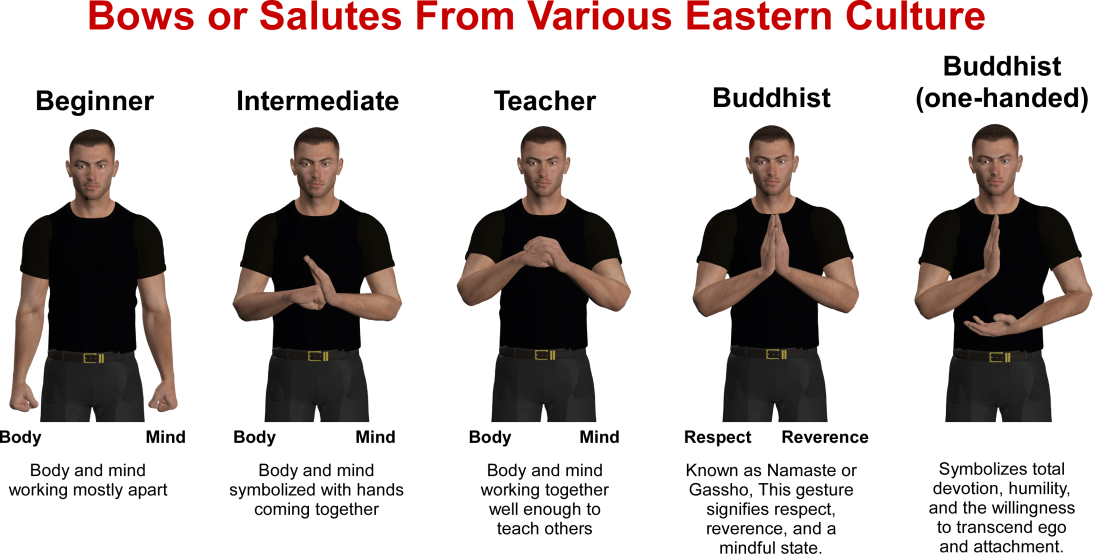
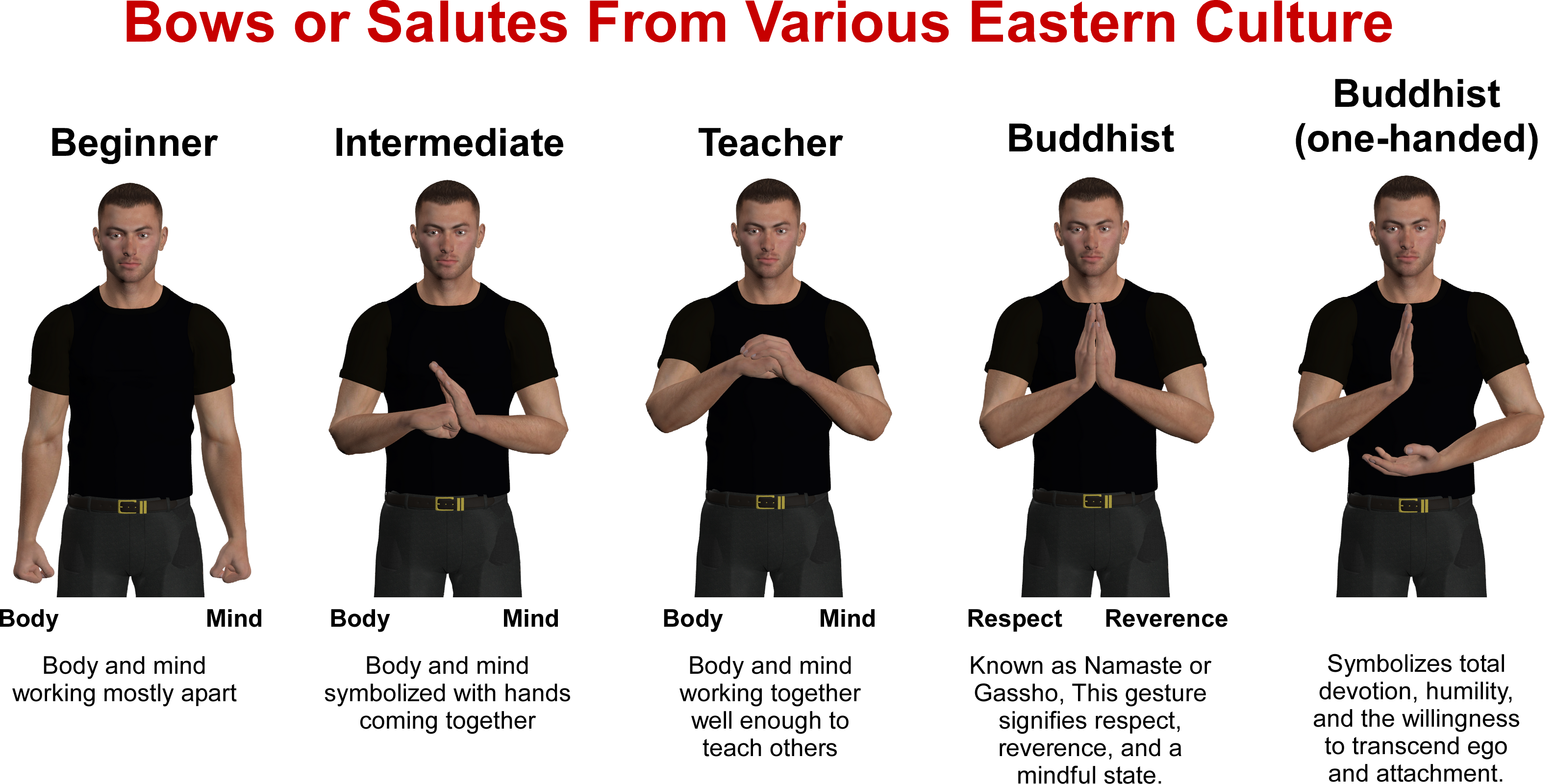
The one-handed bow evolved partly from this story. In Chan circles, bowing with one hand came to symbolize total devotion, humility, and the willingness to transcend ego and attachment. The gesture visually echoes Huike’s sacrifice, representing a commitment to the Dharma that goes beyond the physical form.
Practical Monastic Roots

Beyond its symbolic meaning, the one-handed bow also has practical origins. Buddhist monks traditionally carried alms bowls or staffs, often leaving one hand occupied. The gesture of bowing with the free hand thus became a mindful adaptation, embodying presence and respect even in simple actions (Strong, 2001).

In Shaolin monastic life, where martial training intertwined with Buddhist practice, this gesture naturally merged with martial etiquette. Over time, it evolved into the more formalized Shaolin salute, now widely recognized across martial arts traditions.
The Shaolin Salute (Fist Wrapped in Palm)

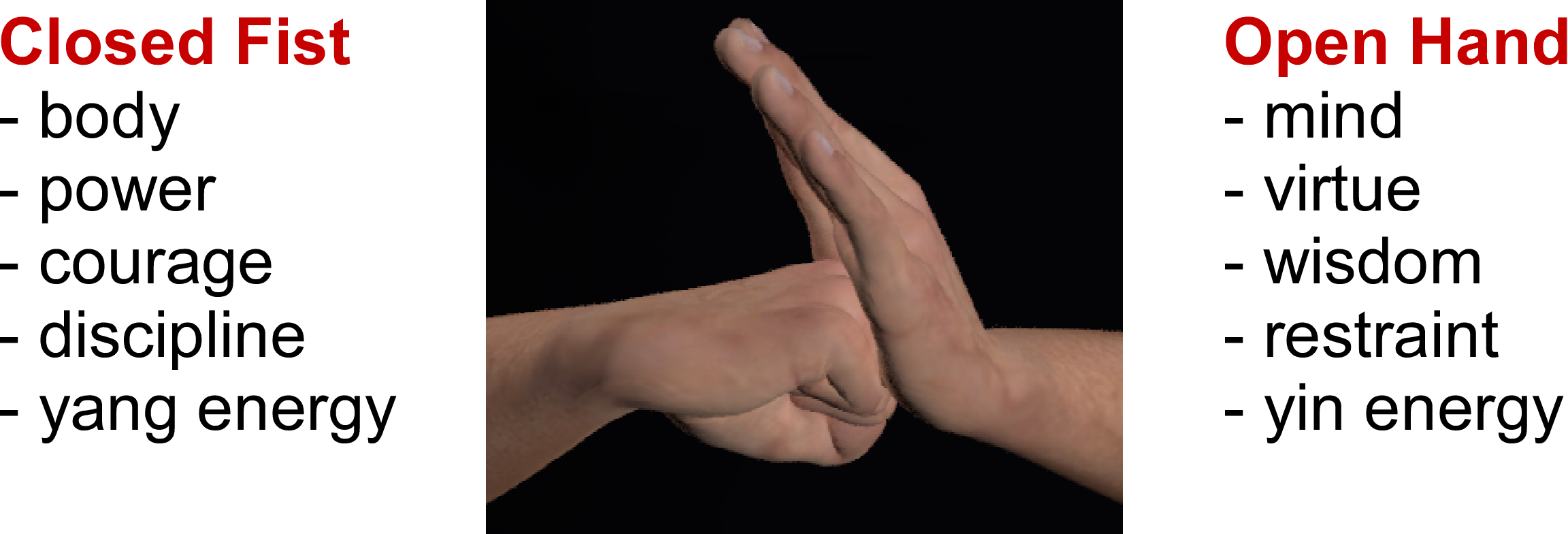
The Shaolin salute, performed with the left open palm wrapping over the right closed fist encapsulates a deep philosophical message:

  • The left palm symbolizes wisdom, virtue, and restraint.
  • The right fist represents martial strength and discipline.
  • Together, they convey the ideal that strength must serve wisdom, and that martial power should always be governed by moral integrity (Henning, 1999).

The gesture is performed at the start and end of training, as a sign of respect toward teachers, fellow practitioners, and the lineage itself.

Northern vs. Southern Shaolin Variations

Northern Shaolin

  • Gesture held closer to the chest, with a more upright posture.
  • Strong emphasis on Chan Buddhist origins, honoring the story of Huike and Bodhidharma.
  • Used as a reminder that martial arts is a spiritual path, not merely a physical practice.

Southern Shaolin

  • Gesture held lower, sometimes with a deeper bow.
  • Greater incorporation of Confucian and Taoist elements:
    • The left palm represents civil virtue (wen).
    • The right fist represents martial courage (wu).
  • Symbolizes the ideal of the “complete person” where one who balances civil ethics with martial prowess.

Across both traditions, the salute serves as a bridge between physical mastery and spiritual cultivation, reminding practitioners to walk the martial path with awareness, humility, and virtue.

Philosophical Layers of the Salute

InfluenceLeft PalmRight FistCombined Gesture
Buddhism (Chan)Wisdom, compassionStrength, disciplineStrength governed by wisdom
ConfucianismRitual propriety (礼, li)Martial courageHarmony of civil and martial virtues
TaoismYin (open hand)Yang (closed fist)Balance of opposites, alignment with Dao

These layers reflect the syncretic nature of Chinese culture, where Buddhism, Confucianism, and Taoism enriched one another and deeply influenced the martial arts (Shahar, 2008).

The Gesture Today

In modern martial arts, the Shaolin salute is used worldwide. Yet, many practitioners are unaware of its spiritual and historical dimensions. The story of Huike’s sacrifice, the practicality of the one-handed bow, and the layered meaning of the salute all remind us that external movements can carry profound internal significance.

Every time a martial artist performs this gesture, they are participating in a lineage that spans centuries of wisdom, discipline, and moral cultivation. In a world often dominated by superficial strength, the Shaolin salute offers a timeless reminder:
True power lies in restraint, and the greatest warrior is one whose actions serve a higher wisdom.

Conclusion

The evolution of the one-handed bow and Shaolin salute exemplifies the essence of holistic practice, integrating the body, mind, and spirit. These gestures are not mere formalities; they are expressions of a worldview where humility tempers strength, and discipline serves compassion.

As we move through modern life, whether in the dojo, temple, or daily interactions, this simple bow invites us to embody presence, respect, and the pursuit of wisdom in every action.

References:

Cleary, T. (1999). Zen Dawn: Early Zen Texts from Tun Huang. Shambhala Publications.

Henning, S. E. (1981). The Chinese martial arts in historical perspective. In Military Affairs (Issue 4, pp. 173–179). Society for Military History. https://themartialscholar.yolasite.com/resources/henning.pdf

Shahar, M. (2008). The Shaolin Monastery: History, Religion, and the Chinese Martial Arts. University of Hawaii Press. The Shaolin Monastery: History, Religion, and the Chinese Martial Arts on JSTOR

Strong, J. S. (2001). The Experience of Buddhism: Sources and Interpretations (2nd ed.). Wadsworth/Thomson Learning. https://openlibrary.org/books/OL7785420M/The_Experience_of_Buddhism

Suzuki, D. T. (1959). Zen Buddhism and Its Influence on Japanese Culture. Princeton University Press. https://archive.org/details/in.gov.ignca.16794

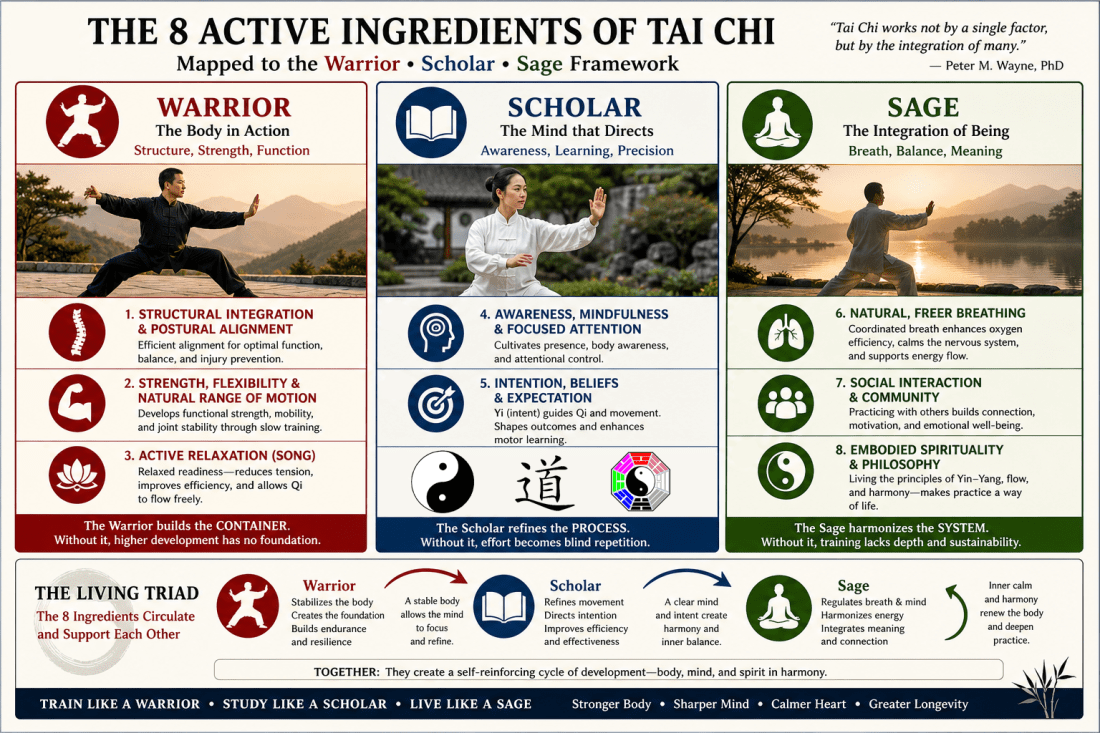
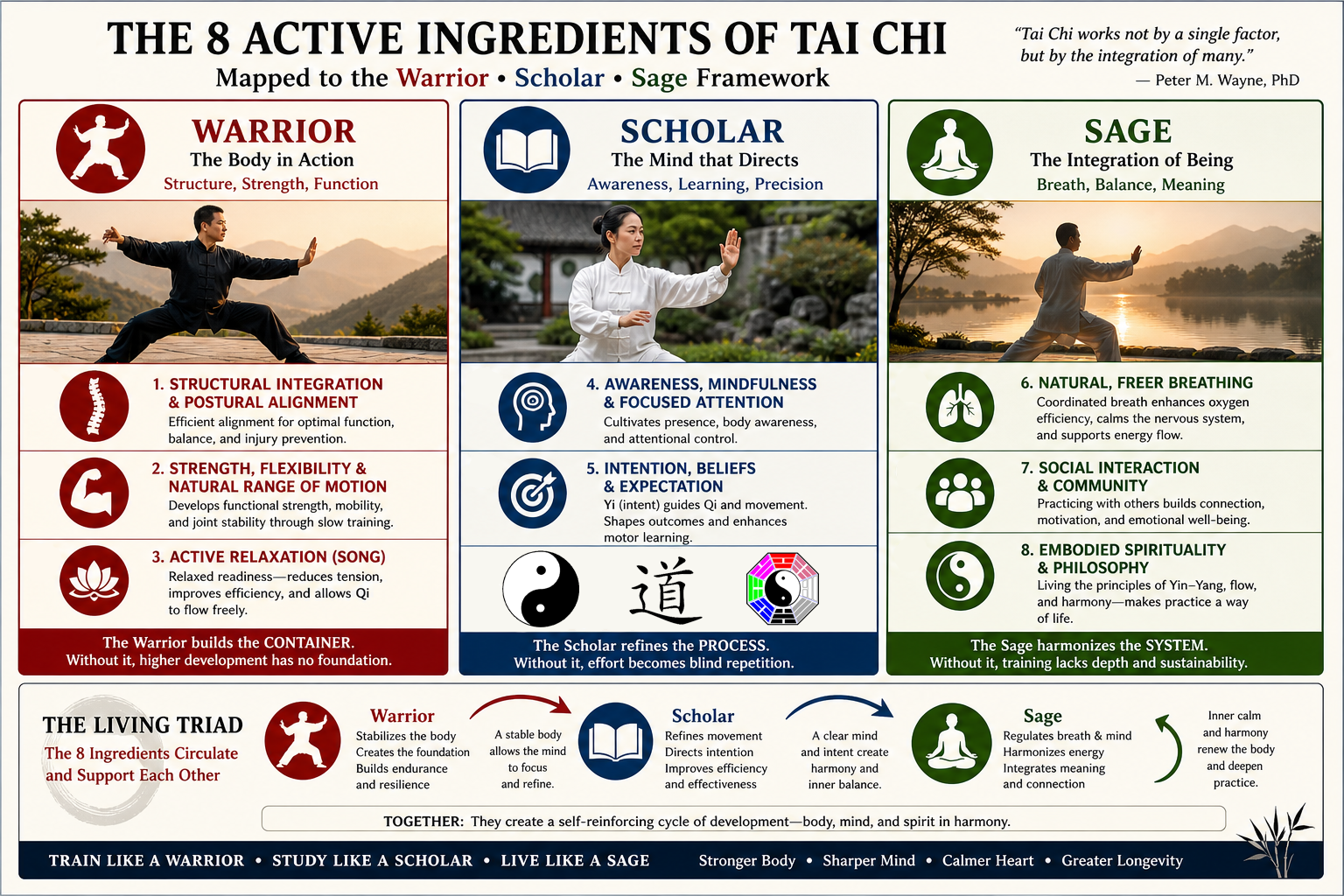
The 8 Active Ingredients of Tai Chi: A Warrior, Scholar & Sage Perspective

We often hear that Tai Chi is good for balance, relaxation, and overall health. But the deeper question is this:

In The Harvard Medical School Guide to Tai Chi, Peter M. Wayne introduces the concept of the “8 active ingredients” of Tai Chi. His research-based perspective frames Tai Chi not as a single exercise, but as a multi-system method that integrates body, mind, and breath into a unified practice (Wayne & Fuerst, 2013; Wayne, 2014).

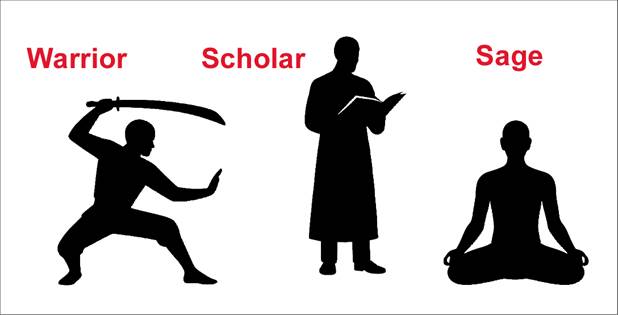
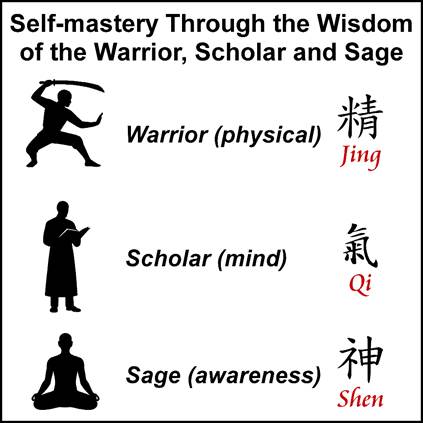
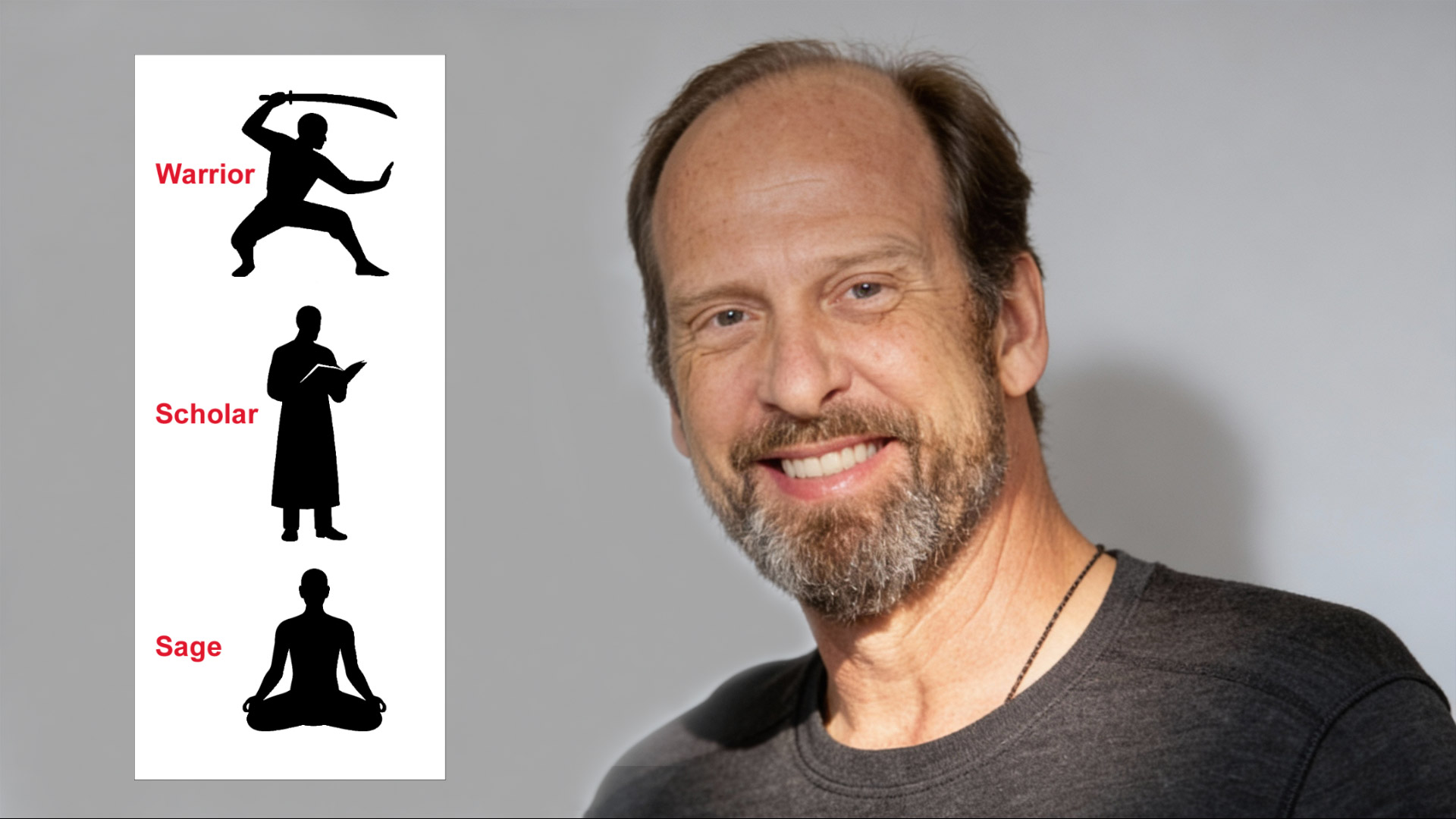
From my perspective, after more than four decades of training, teaching, and living these methods, these “ingredients” map clearly into a timeless framework:

This triad provides a practical and philosophical lens to understand how Tai Chi truly develops the human being.

Tai Chi as a Complete System

Wayne’s eight ingredients include:

  • Awareness and mindfulness
  • Intention and expectation
  • Structural alignment
  • Active relaxation (song)
  • Strength and flexibility
  • Breathing
  • Social interaction
  • Philosophy and meaning

Individually, each has value. But together, they create something far more powerful:

A self-reinforcing system of physical conditioning, mental refinement, and internal regulation (Wayne & Fuerst, 2013).

Research on Tai Chi consistently shows improvements across multiple systems, including musculoskeletal strength, balance, cardiovascular health, and psychological well-being, supporting its role as a multicomponent intervention rather than a single-modality exercise (Wang et al., 2010; Wayne et al., 2014).

The Warrior represents the physical foundation of practice.

This includes:

  • Structural alignment and posture (somatic re-calibration)
  • Functional strength and mobility
  • Active relaxation under load

Through stance training, controlled movement, and progressive endurance, the body becomes:

  • Stable
  • Rooted
  • Reliable under stress

This is not bodybuilding. It is functional integrity.

Modern research supports Tai Chi’s ability to improve balance, lower extremity strength, and reduce fall risk, particularly in aging populations (Li et al., 2005; Wayne et al., 2014).

In Traditional Chinese terms, this develops the body’s Jing, the physical essence that supports all higher functions.

_____

The Scholar represents awareness, learning, and intention.

This includes:

  • Mindfulness and focused attention
  • The use of intention (Yi) to guide movement
  • Continuous self-correction and refinement (iterative cultivation)

This is where practice shifts from repetition to intelligent training.

You begin to notice:

  • Where tension exists
  • Where alignment breaks down
  • Where effort is wasted

The mind becomes an active participant, not a passive observer.

Research in neuroscience shows that mindful movement practices like Tai Chi enhance attention, cognitive function, and neuroplasticity, while also reducing stress-related reactivity (Larkey et al., 2009; Wayne et al., 2014).

This aligns with the cultivation of Qi, the functional energy that animates movement and coordination.

_____

The Sage represents balance, breath, and meaning.

This includes:

  • Natural, coordinated breathing
  • Nervous system regulation
  • Philosophical understanding (yin and yang, flow, harmony)
  • Connection with others through shared practice
  • All of the above = transmutation

At this level, Tai Chi becomes more than exercise. It becomes:

  • Restorative
  • Meditative
  • Sustainable for a lifetime

Breathing practices associated with Tai Chi have been shown to enhance parasympathetic activity, improve heart rate variability, and support emotional regulation (Brown & Gerbarg, 2005; Wayne et al., 2014).

Social engagement and group-based movement practices also contribute to improved adherence and psychological well-being (Wayne & Fuerst, 2013).

This is the cultivation of Shen, the spirit or integrated awareness.

_____

The Living Triad: How It All Works Together

These are not separate stages. They are interdependent processes.

And in return:

  • A calm mind improves movement
  • Better movement improves structure
  • Strong structure supports deeper relaxation

This creates a continuous loop of development:

Body → Mind → Breath → Awareness → Back to Body

This systems-based interaction is precisely why Tai Chi produces broad, cross-domain health benefits, influencing physical, cognitive, and emotional systems simultaneously (Wayne et al., 2014; Wang et al., 2010).

A Practical Takeaway

If you are practicing—or teaching—Tai Chi, consider this simple framework:

  • Train like a Warrior
    Build strength, structure, and endurance
  • Study like a Scholar
    Refine awareness, intention, and precision
  • Live like a Sage
    Breathe, balance, and harmonize

When all three are present, practice becomes complete.

Modern science is beginning to validate what traditional systems have long understood:

True development is not isolated. It is integrated.The body, mind, and spirit are not separate systems to be trained independently, but aspects of a single, living process.

Tai Chi, when practiced correctly, is one of the clearest expressions of this truth (Wayne & Fuerst, 2013; Wayne et al., 2014).

References

Brown, R. P., & Gerbarg, P. L. (2005). Sudarshan Kriya yogic breathing in the treatment of stress, anxiety, and depression: Part I—Neurophysiologic model. Journal of Alternative and Complementary Medicine, 11(1), 189–201. https://doi.org/10.1089/acm.2005.11.189

Larkey, L., Jahnke, R., Etnier, J., & Gonzalez, J. (2009). Meditative movement as a category of exercise: Implications for research. Journal of Physical Activity and Health, 6(2), 230–238. https://doi.org/10.1123/jpah.6.2.230

Li, F., Harmer, P., Fisher, K. J., & McAuley, E. (2005). Tai Chi and fall reductions in older adults: A randomized controlled trial. Journals of Gerontology Series A: Biological Sciences and Medical Sciences, 60(2), 187–194. https://doi.org/10.1093/gerona/60.2.187

Wang, C., Collet, J. P., & Lau, J. (2004). The effect of Tai chi on health outcomes in patients with chronic conditions. Archives of Internal Medicine, 164(5), 493. https://doi.org/10.1001/archinte.164.5.493

Wayne, P. M., Berkowitz, D. L., Litrownik, D. E., Buring, J. E., & Yeh, G. Y. (2014). What do we really know about the safety of tai chi?: A systematic review of adverse event reports in randomized trials. Archives of Physical Medicine and Rehabilitation, 95(12), 2470–2483. https://doi.org/10.1016/j.apmr.2014.05.005

Wayne, P. & Mark Fuerst. (2012). The Harvard Medical School Guide to Tai Chi: 12 weeks to a healthy body, strong heart, and Sharp mind [Health]. In The Harvard Medical School Guide to Tai Chi (12 Weeks). Harvard Health Publications. https://honhuhai.wordpress.com/wp-content/uploads/2016/08/tai-chi-the_harvard_m.pdf

Wayne, P. M. (2014). The active ingredients of Tai Chi. Harvard Health Publishing.

The “Naegong House”: Internal Energy, Transmission, and the Reality Behind Esoteric Martial Traditions

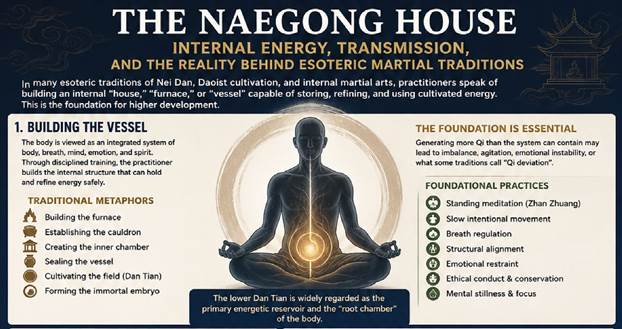
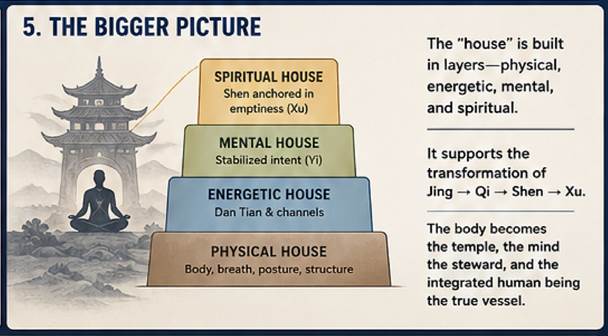
Within the worlds of Neidan, Daoist cultivation, and certain internal martial arts traditions, there are recurring references to building an internal “house,” “furnace,” “cauldron,” or “vessel” capable of storing and refining cultivated energy. While terminology varies among lineages, the underlying concept remains remarkably consistent: before one can safely cultivate higher levels of internal development, one must first develop the structure capable of containing it.

In some traditions this concept is associated with Nei Dan (internal alchemy), while in Korean systems it may be discussed under Naegong or internal power cultivation. Although modern practitioners sometimes interpret these teachings literally or mystically, many of the ideas may also correspond to practical physiological, psychological, and neurological adaptations developed through long-term training.

Building the Vessel

Traditional internal systems often describe the body as more than flesh and bone. The practitioner is viewed as an integrated system of body, breath, mind, emotion, and spirit. Through years of disciplined training, the individual gradually “builds the vessel” capable of stabilizing cultivated internal force.

Classical Daoist literature frequently uses symbolic language such as:

  • Building the furnace
  • Establishing the cauldron
  • Creating the inner chamber
  • Sealing the vessel
  • Cultivating the field
  • Forming the immortal embryo

These metaphors are generally associated with the development of the Dan Tian, especially the lower Dan Tian, which many traditions regard as the primary energetic reservoir of the body (Kohn, 2008).

The concept is not merely about accumulating “energy,” but about refining and integrating the practitioner as a whole. Traditional teachers often warned that attempting advanced energetic practices without sufficient preparation could result in imbalance, emotional instability, agitation, or what some systems referred to as “Qi deviation” (Despeux & Kohn, 2003).

For this reason, authentic systems historically emphasized foundational practices such as:

  • Standing meditation (Zhan Zhuang)
  • Slow intentional movement
  • Breath regulation
  • Structural alignment
  • Emotional restraint
  • Ethical conduct
  • Mental stillness
  • Conservation of vitality

In martial systems, these methods were believed to strengthen the body’s capacity to tolerate increased internal pressure, focus, and energetic intensity.

A Modern Physiological Perspective

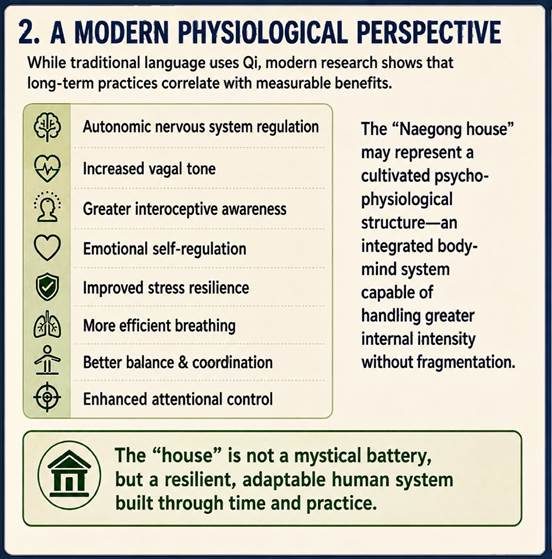
Although traditional terminology uses the language of Qi and internal energy, some aspects of these practices may correlate with modern understandings of human physiology and psychology.

Long-term breath training, posture work, meditative focus, and slow movement practices have been associated with improvements in:

  • Autonomic nervous system regulation
  • Vagal tone
  • Interoceptive awareness
  • Emotional self-regulation
  • Stress resilience
  • Breath efficiency
  • Balance and coordination
  • Attentional control

Research on contemplative movement systems such as Tai Chi and Qigong has shown measurable effects on stress reduction, mood regulation, balance, and psychophysiological health (Wayne & Kaptchuk, 2008; Wang et al., 2010).

From this perspective, the “Naegong house” may represent a metaphor for developing a more integrated and resilient body-mind system. The practitioner gradually becomes capable of handling greater internal intensity without fragmentation, impulsivity, or emotional instability.

In other words, the “house” may not be a mystical battery storing supernatural force, but rather a cultivated psychophysiological structure developed through years of disciplined practice.

Can Internal Energy Be Passed to Another Person?

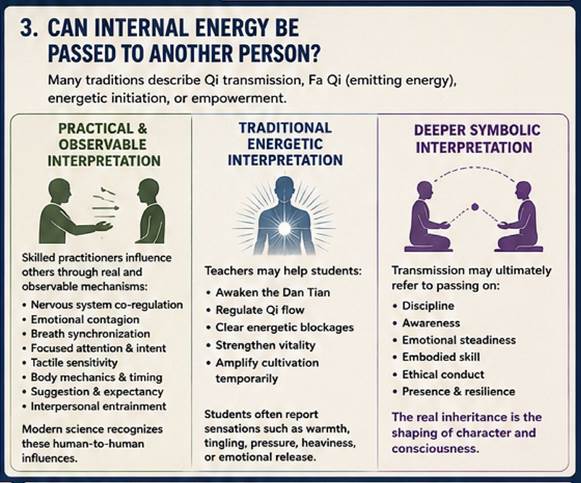
One of the more controversial aspects of internal martial and alchemical traditions involves the belief that cultivated energy or internal force can be transmitted from teacher to student.

Many traditional systems discuss concepts such as:

  • Qi transmission
  • Fa Qi (“emitting energy”)
  • Energetic initiation
  • Empowerment
  • Transmission of the “seed”
  • Establishing the furnace
  • Opening the channels

Some practitioners report sensations during such experiences including warmth, tingling, heaviness, emotional release, pressure, or involuntary movement. These reports are common across many contemplative and spiritual traditions worldwide.

However, interpretations of these experiences vary significantly.

The Practical and Observable Interpretation

A grounded interpretation suggests that experienced practitioners can indeed strongly influence others through mechanisms that are entirely real and observable.

These include:

  • Nervous system co-regulation
  • Emotional contagion
  • Breath synchronization
  • Focused attention
  • Tactile sensitivity
  • Body mechanics
  • Suggestion and expectancy
  • Interpersonal entrainment

Modern neuroscience and psychology recognize that human beings constantly influence one another physiologically and emotionally (Porges, 2011). A calm and highly regulated practitioner may affect another person’s breathing patterns, muscular tension, emotional state, and sense of safety.

Likewise, highly skilled internal martial artists often demonstrate remarkable efficiency through coordinated biomechanics, fascial connectivity, timing, and intent rather than brute muscular force alone.

To an outside observer, these effects may appear mysterious or “energetic,” even when rooted primarily in refined physical and neurological skill.

The Risk of Mystification

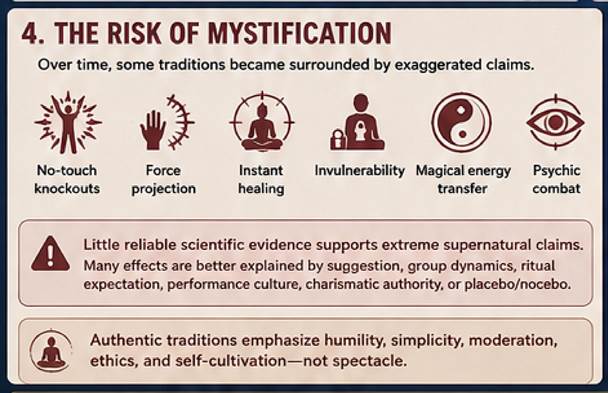
As with many esoteric traditions, internal martial arts also accumulated layers of mythologizing over time. Stories emerged involving:

  • No-touch knockouts
  • Supernatural force projection
  • Psychic combat
  • Instant healing abilities
  • Magical energy transfer
  • Invulnerability

While such claims remain popular in some circles, there is little reliable scientific evidence supporting extreme supernatural interpretations.

Many demonstrations of extraordinary “Qi powers” have failed under controlled testing conditions. In some cases, the effects may be better explained by:

  • Suggestion
  • Group dynamics
  • Compliance
  • Ritual expectation
  • Performance culture
  • Charismatic authority
  • Placebo and nocebo responses

This becomes especially important in high-control environments where mystical narratives can reinforce hierarchy, dependency, and unquestioned authority.

Historically, many authentic traditions actually warned against obsession with displays of power. Classical Daoist teachings frequently emphasized humility, simplicity, moderation, ethics, and self-cultivation over spectacle (Kohn, 2008).

The Deeper Meaning of Transmission

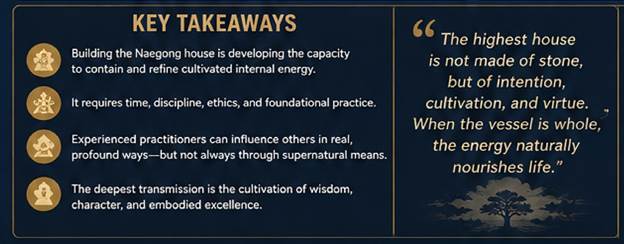
At its highest level, the idea of “passing the house” may not refer to transferring mystical energy at all. Instead, it may symbolize the transmission of cultivated human qualities developed through disciplined practice and lived experience.

A mature teacher may pass on:

  • Emotional steadiness
  • Discipline
  • Awareness
  • Presence
  • Resilience
  • Embodied knowledge
  • Ethical conduct
  • Refined perception

These qualities profoundly affect students over time.

In this sense, the real “transmission” may not be supernatural energy storage, but the gradual shaping of the practitioner’s nervous system, awareness, behavior, and character through years of intentional cultivation.

The body becomes the temple, the mind becomes the steward, and the “house” becomes the integrated human being itself.

References

Despeux, C., & Kohn, L. (2003). Women in Daoism. Three Pines Press. https://archive.org/details/womenindaoism0000desp

Kohn, L. (2008). Chinese healing exercises: The tradition of Daoyin. University of Hawai‘i Press. https://archive.org/details/chinesehealingex0000kohn

Porges, S. W. (2011). The polyvagal theory: Neurophysiological foundations of emotions, attachment, communication, and self-regulation. W. W. Norton & Company. https://archive.org/details/polyvagaltheoryn0000porg

Wang, C., Collet, J. P., & Lau, J. (2004). The effect of Tai Chi on health outcomes in patients with chronic conditions. Archives of Internal Medicine, 164(5), 493–501. https://doi.org/10.1001/archinte.164.5.493

Wang, F., Lee, E. K. O., Wu, T., Benson, H., Fricchione, G. L., Wang, W., & Yeung, A. S. (2010). The effects of Tai Chi on depression, anxiety, and psychological well-being: A systematic review and meta-analysis. International Journal of Behavioral Medicine, 17(4), 261–271. https://www.ncbi.nlm.nih.gov/books/NBK164598/

Wayne, P. M., & Kaptchuk, T. J. (2008). Challenges inherent to T’ai Chi research: Part I—T’ai Chi as a complex multicomponent intervention. Journal of Alternative and Complementary Medicine, 14(1), 95–102. https://doi.org/10.1089/acm.2007.7170A

Beyond the Books

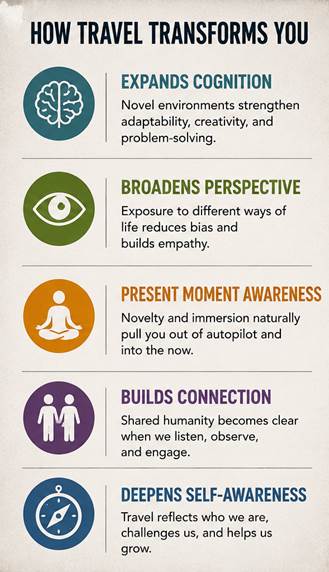
How Travel Expands Cognition, Perspective, and Present-Moment Awareness

Many people read books, study history, watch documentaries, and intellectually explore the customs, politics, and philosophies of other nations. These pursuits are valuable and often essential. Through literature, education, and observation, one can gain important knowledge about geography, economics, religion, language, and cultural behavior. However, there remains a profound difference between learning about a culture and physically stepping into it. To travel is not merely to relocate the body across geographical boundaries; it is often to reposition the mind beyond habitual assumptions, challenge personal perspectives, and invite a deeper awareness of oneself and others.

Having traveled throughout much of the United States, while also visiting Canada, the Bahamas, and parts of Europe, I have repeatedly observed that travel offers something books alone cannot fully replicate: lived immersion. One can read about how societies differ, but standing within those environments by walking unfamiliar streets, hearing another language, adapting to different social norms, witnessing architecture shaped by centuries of history, and observing how people move through daily life, often provides a far deeper education. Travel becomes more than movement; it becomes embodied learning.

The Difference Between Knowing and Experiencing

Cognitive psychologists have long distinguished between declarative knowledge (facts and concepts) and experiential knowledge (learning through direct interaction and experience) (Kolb, 1984). Reading about another country may build intellectual understanding, but physically experiencing a place often integrates emotional, sensory, and contextual learning that deepens retention and insight.

A traveler who studies France may understand historical facts, social systems, or cuisine. Yet walking through neighborhoods in Paris, observing social etiquette, public transportation rhythms, street culture, and local behavioral norms creates a multidimensional learning experience. The brain does not simply process information through abstraction; it interprets experience through sensory and emotional encoding.

This aligns with experiential learning theory, which suggests that concrete experience followed by reflection produces stronger adaptation and understanding than passive acquisition alone (Kolb, 1984). In many ways, the traveler becomes both student and participant.

Travel and Cognitive Flexibility

One of the greatest psychological benefits of travel is enhanced cognitive flexibility, where one develops the ability to adapt thinking, shift perspectives, and respond effectively to unfamiliar situations. Routine environments often reinforce fixed patterns of thought. Travel disrupts these patterns.

Unfamiliar currencies, transportation systems, languages, social customs, food practices, and interpersonal expectations require the brain to continuously reassess, compare, and adapt. This process challenges rigid thinking and may strengthen executive functioning associated with attention, working memory, and adaptive reasoning (Diamond, 2013).

Research suggests that multicultural exposure and international experiences can improve creativity and cognitive complexity because individuals are forced to reconcile multiple viewpoints and behavioral frameworks (Maddux & Galinsky, 2009). Exposure to difference can expand problem-solving capacity by reducing overly simplistic “one-way” thinking.

From the perspective of the Scholar, travel becomes cognitive training.

Travel as a Means to Put Oneself “In the Moment”

Modern life often places people on cognitive autopilot. Familiar roads, repetitive schedules, predictable environments, and habitual routines can reduce conscious attention. Many individuals move through daily life physically present, yet mentally elsewhere, thinking about deadlines, obligations, worries, or digital distractions.

Travel often interrupts this pattern.

When one enters an unfamiliar city, boards a train in another country, navigates a foreign airport, or walks through a cultural district unlike anything at home, attention naturally heightens. The brain becomes alert because novelty demands engagement.

This is one of travel’s overlooked benefits: it places people in the moment.

Psychological research suggests that novelty increases attentional engagement and memory encoding because unfamiliar stimuli require more active cognitive processing (Kandel et al., 2013). A person walking through a market in another country notices sounds, accents, smells, architecture, body language, and social rhythms more consciously than they may notice their own neighborhood.

This resembles mindfulness—not necessarily formal meditation, but situational presence.

Instead of operating through habitual mental drift, the traveler becomes more aware of:

  • surroundings
  • movement
  • sensory detail
  • interpersonal behavior
  • timing
  • uncertainty
  • emotional responses

In Eastern traditions, awareness is often cultivated through presence, observation, and reduction of unnecessary mental distraction. Taoist and contemplative systems emphasize alignment with reality as it unfolds rather than attachment to internal agitation or distraction (Lao Tzu, trans. 1988). Travel can unintentionally foster this state by requiring full engagement with the immediate environment.

From the lens of the Warrior, travel sharpens awareness.

Embodied Learning and Sensory Cognition

Travel is not merely intellectual. It is somatic.

The body learns through movement, orientation, climate adaptation, fatigue, rhythm, and sensory immersion. Walking unfamiliar streets, standing in long transit lines, climbing hills, adjusting to jet lag, hearing non-native speech patterns, tasting unfamiliar foods, and experiencing different physical spaces all contribute to embodied cognition.

Embodied cognition theory suggests that cognition is deeply influenced by physical interaction with the environment rather than existing solely as abstract mental processing (Wilson, 2002). This means learning through travel is partly neurological and partly physiological.

When people physically experience different climates, infrastructure, public norms, and spatial organization, they often understand societal differences in a much deeper way.

From the Scholar and Sage, travel teaches through both observation and embodiment.

Humility, Perspective, and Reduced Ethnocentrism

Travel also challenges egocentric and ethnocentric assumptions.

Many individuals unconsciously view their own societal norms as “normal” or superior simply because they are familiar. Exposure to different systems of governance, transportation, food culture, social etiquette, family dynamics, healthcare, work-life patterns, and public behavior can challenge narrow assumptions.

This does not require idealizing other nations. Every society carries strengths, weaknesses, contradictions, and complexities. Yet observing other systems often reminds us that our worldview is only one lens among many.

Intercultural exposure has been associated with increased openness, empathy, and reduced social rigidity (Nguyen & Benet-Martínez, 2013). Perspective broadening may help individuals better tolerate ambiguity and diversity.

From the Sage, travel cultivates humility.

Travel, Time Perception, and Richer Memory

One fascinating cognitive phenomenon is that travel often makes time feel fuller.

Routine compresses memory. Repetitive days blend together because the brain encodes fewer distinct markers. Novel experiences, however, often create stronger episodic memory formation.

This helps explain why one week abroad may feel psychologically richer than several ordinary weeks at home.

Novel environments create stronger hippocampal encoding, which contributes to vivid recall and perceived experiential depth (Kandel et al., 2013). Travel may therefore enhance not only memory, but the felt richness of life.

Being “in the moment” contributes to this effect.

Travel as a Mirror of Self-Awareness

Perhaps one of travel’s most powerful lessons is not what we discover about other cultures, but what we discover about ourselves.

Unfamiliar environments often reveal:

  • patience or impatience
  • fear or courage
  • gratitude or entitlement
  • adaptability or rigidity
  • curiosity or resistance
  • emotional resilience under uncertainty

Without familiar comforts, many internal patterns become visible. Travel can therefore serve as a mirror.

The Warrior learns resilience.
The Scholar gains perspective.
The Sage develops humility.

A Holistic View of Travel and Human Development

From a holistic wellness perspective, meaningful travel can support cognitive growth, emotional intelligence, sensory awareness, adaptability, humility, and present-moment engagement.

Books educate the intellect.
Travel educates the whole person.

To read is valuable.
To study is essential.
To immerse oneself is transformative.

When approached mindfully, travel becomes more than recreation. It becomes a practice of awareness, a disruption of autopilot living, and an opportunity to refine perspective. In a world increasingly shaped by digital observation rather than lived participation, stepping physically into unfamiliar places may be one of the most practical ways to strengthen cognition, deepen empathy, and reconnect with the present moment.

Sometimes the greatest education begins when we leave the familiar behind.

References

Diamond, A. (2013). Executive functions. Annual Review of Psychology, 64, 135–168. https://doi.org/10.1146/annurev-psych-113011-143750

Kandel, E. R., Schwartz, J. H., Jessell, T. M., Siegelbaum, S. A., & Hudspeth, A. J. (2013). Principles of neural science (5th ed.). McGraw-Hill.

Kolb, D. A. (1984). Experiential learning: Experience as the source of learning and development. Prentice Hall.

Lao Tzu. (1988). Tao Te Ching (S. Mitchell, Trans.). Harper Perennial.

Maddux, W. W., & Galinsky, A. D. (2009). Cultural borders and mental barriers: The relationship between living abroad and creativity. Journal of Personality and Social Psychology, 96(5), 1047–1061. https://doi.org/10.1037/a0014861

Nguyen, A. M. D., & Benet-Martínez, V. (2013). Biculturalism and adjustment: A meta-analysis. Journal of Cross-Cultural Psychology, 44(1), 122–159. https://doi.org/10.1177/0022022111435097

Wilson, M. (2002). Six views of embodied cognition. Psychonomic Bulletin & Review, 9(4), 625–636. https://doi.org/10.3758/BF03196322

Dom/Dam – Trapped Air and Energetic Stagnation

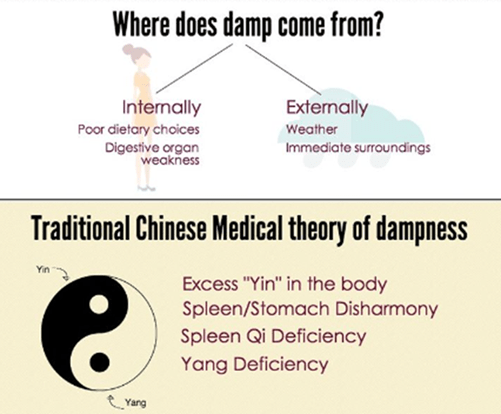
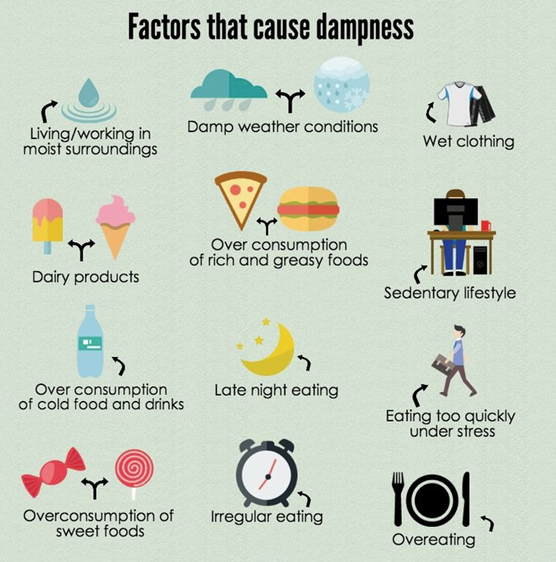
In some Korean martial and healing traditions, the term dom (often a variant of dam) describes a condition thought to arise from exposure to cold drafts or sleeping with a window open. Symptoms include lack of vitality, discomfort, heaviness, and energetic stagnation. While not commonly discussed in English by this name, the concept closely parallels the Traditional Chinese Medicine (TCM) categories of phlegm–dampness and wind–cold invasion.

Traditional Medical Background

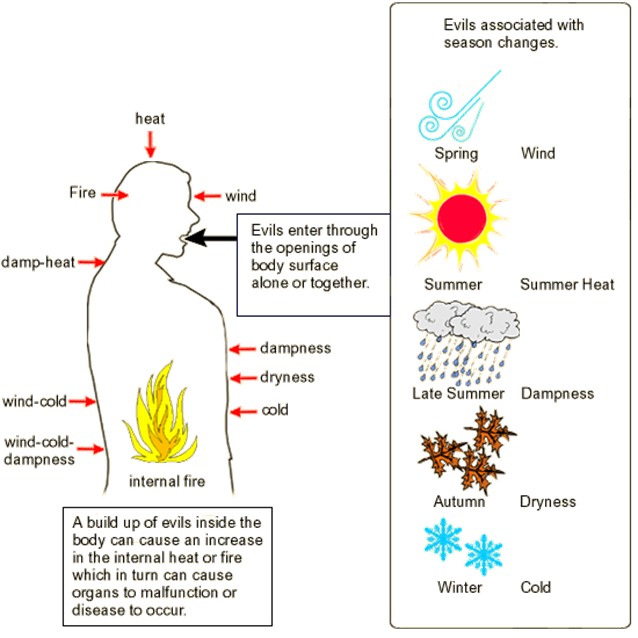
In TCM, pathogenic factors such as wind and cold are considered external influences that can enter the body when its defenses are lowered. This invasion disrupts the circulation of qi (vital energy) and blood, leading to stiffness, fatigue, and discomfort (Dashtdar et al., 2016). Similarly, dampness and phlegm are understood as byproducts of impaired fluid metabolism, often linked to cold exposure or digestive weakness. These accumulations obstruct energetic pathways, creating heaviness, fogginess, and stagnation (Zhang et al., 2020).

The Korean medicine concept of dam-eum, or “phlegm fluids,” corresponds to these pathological states, describing the presence of stagnant fluids that may not be visible but are experienced as internal fullness, lack of energy, or digestive discomfort (Li et al., 2012). Martial and Taoist teachers often simplified this into the shorthand dom, framing it as “trapped air” or “blocked energy.”

Symptoms and Manifestations

English language descriptions of phlegm–dampness and wind–cold invasion list many of the same features attributed to dom/dam:

  • Fatigue, sluggishness, and heaviness in the body (Wang et al., 2013).
  • Cold sensitivity, stiffness, and discomfort after exposure to drafts (Me & Qi, 2023).
  • Digestive issues such as bloating and poor appetite, associated with damp accumulation (Zhang et al., 2020).
  • Mental cloudiness or lack of clarity, often linked to phlegm obstructing the head and chest (Dashtdar et al., 2016).

Prevention and Treatment Approaches

Traditional approaches emphasize prevention, such as avoiding exposure to drafts during sleep, especially after exertion or sweating. Lifestyle recommendations include warming foods, avoiding raw or cold diets, and using movement or breathwork to restore circulation (Allina Health, 2023). In clinical TCM practice, herbal formulas like Er Chen Tang for phlegm–dampness or Ma Huang Tang for wind–cold invasion are applied (Me & Qi, 2023).

TCM/Korean‐medicine TermWhat It Means / RoleHow It Relates to Dom/Dam
Wind-Cold InvasionAn external pathogenic factor (wind + cold) enters the body’s surface (defensive Qi layer), disturbing the balance, causing symptoms like chills, stiffness, aversion to cold, lack of warmth, heaviness.The triggering condition in dom/dam is often cold or draft exposure. The cold “invasion” idea explains how external air (wind/cold) is believed to penetrate and cause internal stagnation. Sources: Me & Qi (“Wind-Cold invading the Lungs”) overview. (meandqi.com)
Phlegm-Dampness / phlegm-damp)When the body’s fluid metabolism is impaired (often via weak spleen/stomach function in TCM), fluids accumulate, become turbid, sticky, heavy. These can become invisible but felt as heaviness, fullness, sluggishness, obstructing Qi flow. Also called “damp-phlegm.”Dom/dam’s description of “trapped air,” heaviness, discomfort matches many symptoms of phlegm-dampness. Also, sleep in damp/cold drafts can promote formation of dampness + phlegm in TCM doctrine. Sources: Phlegm-Dampness Constitution studies; “What is Phlegm?” overview. (Wang et al., 2013)
Exterior Cold / Tai Yang PatternIn the Six Stages theory (e.g. Shang Han Lun), exposure to cold at the exterior (surface) level can produce Tai Yang syndromes: stiff neck or muscles, chills, sensitivity to cold, no sweat, etc. Early cold invasion that, if not resolved, can lead to deeper pathology. (Wikipedia)Dom/dam appears sometimes as a mild or chronic form of cold exposure: not always acute chills or fever, more an ongoing discomfort, stagnation, and lowered function. This maps to weaker or lingering exterior cold/dampness invasion.

The martial arts term dom can thus be understood as a culturally adapted expression of the broader East Asian medical concepts of phlegm–dampness and wind–cold invasion. It highlights the belief that environmental exposure, particularly to cold drafts, can impair vitality, obstruct energy flow, and lead to discomfort or stagnation. In both martial and medical contexts, the focus is on protecting the body from harmful influences while maintaining balance through lifestyle, environment, and practice.

References:

Allina Health. (2023). Fight the cold and flu with Chinese medicine. Allina Health. https://www.allinahealth.org/healthysetgo/care/fight-the-cold-and-flu-with-chinese-medicine

Chan, D., & Chan, D. (2023, October 14). Dampness – Everything you need to know |. ‣. https://dougleschan.com/health/dampness/

Dashtdar, M., Dashtdar, M. R., Dashtdar, B., Kardi, K., & Shirazi, M. K. (2016). The concept of wind in traditional Chinese medicine. Journal of Pharmacopuncture, 19(4), 293–302. https://doi.org/10.3831/kpi.2016.19.030

Me & Qi. (2023). Wind–cold invading the lungs. Me & Qi Traditional Chinese Medicine Education Center. https://www.meandqi.com/tcm-education-center/patterns/wind-cold-invading-the-lungs

Wang, J., Wang, Q., Li, L., Li, Y., Zhang, H., Zheng, L., Yang, L., Zheng, Y., Yang, Y., Peng, G., Zhang, Y., & Han, Y. (2013). Phlegm-Dampness Constitution: Genomics, Susceptibility, Adjustment and Treatment with Traditional Chinese Medicine. The American Journal of Chinese Medicine, 41(02), 253–262. https://doi.org/10.1142/s0192415x13500183

Wikipedia contributors. (2025, May 6). Shanghan Lun. Wikipedia. https://en.wikipedia.org/wiki/Shanghan_Lun?utm_source=chatgpt.com

Zhang, Y., Wang, Z., Zhang, Y., Tong, H., Zhang, Y., & Lu, T. (2020). Potential mechanisms for traditional Chinese medicine in treating airway mucus hypersecretion associated with coronavirus Disease 2019. Frontiers in Molecular Biosciences, 7. https://doi.org/10.3389/fmolb.2020.577285