In contemporary wellness, spiritual, and martial arts communities, appeals to ancient or royal lineage are frequently used to establish credibility, legitimacy, and market value. Such claims, however, often rest on little more than family narrative, leaving the public to accept assertions without evidence. When those same families or leaders have verifiable legal or ethical controversies in their past, the selective presentation of positive stories while suppressing inconvenient truths creates a distorted portrait of authority. This article explores the tension between lineage claims and documentary evidence, and how omission and unverified narratives can distort the perception of authenticity.
The Value of Documented Lineage
Lineage is a cornerstone in many cultural traditions, whether in royal genealogies, hereditary medical practices, or martial arts lineages. Authenticity is typically verifiable through archives, registries, or institutional recognition. In Europe, for instance, royal dynasties such as the Habsburgs, Tudors, or Romanovs maintained exhaustive genealogical records, legal decrees, and official chronicles that precisely document succession, marriages, and bloodlines. These records are often traceable back centuries, leaving little ambiguity about who succeeded whom and how power and heritage were passed down.
The Confucian monarchies of East Asia provide a similarly rigorous example. As Kalton, (1989) notes in A Heritage of Kings, Korean dynasties such as the Joseon meticulously preserved royal succession records as a matter of both political legitimacy and moral governance. These archives include annals, genealogical charts, and state-sanctioned biographies, were considered essential to the moral order of the state, reflecting the Confucian belief that authority must be both inherited and documented. The process of verifying a monarch’s lineage was not merely historical curiosity; it was a core element of political stability and social harmony.
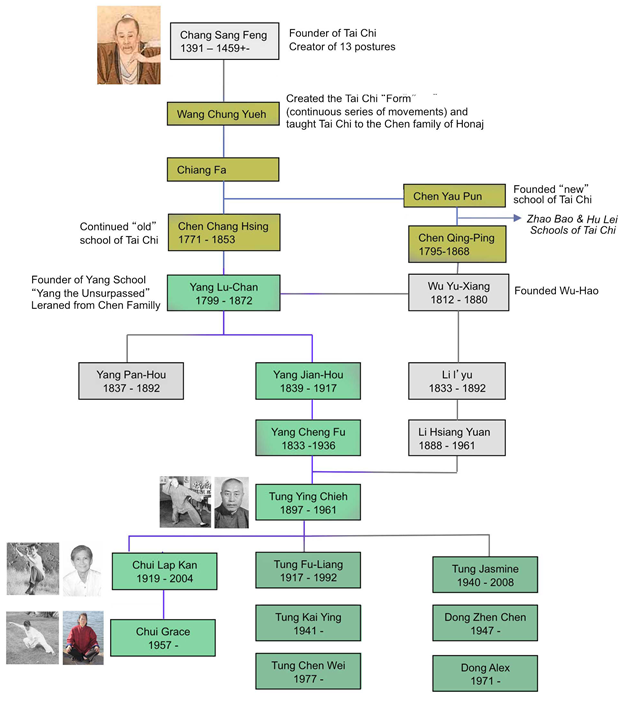
The same emphasis on verifiable lineage appears across multiple martial traditions. In China, the Chen, Yang, Wu, and Sun families of Tai Chi maintain extensive genealogical records, often detailing the names, dates, and relationships of successive masters (Wile, 1996; Henning, 1994). These are corroborated by written manuals, temple archives, and recognized lineage associations (Shahar, 2008). Likewise, systems such as Wing Chun, Shaolin, and Aikido document their transmission histories through monastic registries, institutional charters, and formal certification processes (Pranin, 1991). In Japan, arts such as Judo, Shotokan Karate, and classical koryu systems preserve official records through governing bodies and densho documents, ensuring that claims of authority can be traced and verified (Ben-Ari et al., 1999).
When modern figures assert descent from a prestigious tradition, the expectation is that verifiable records, such as birth certificates, institutional acknowledgments, lineage charts, or peer recognition will substantiate the claim. Without these, lineage becomes a matter of belief rather than fact.
Unsubstantiated Claims in Wellness and Martial Arts
By contrast, in the global wellness and martial arts industries, claims of ancient medical or spiritual lineage are often presented without supporting evidence. Oral family stories are used in lieu of records, and branding strategies highlight terms such as “royal lineage,” “master of a particular generation” or even “reached enlightened at an early age” without producing verifiable documentation. These assertions may resonate with consumers seeking authenticity, but without independent verification, they remain marketing narratives rather than historical facts.
Internal Experience Versus External Recognition
An important distinction exists between qualities that originate within an individual and those that depend upon recognition by others. Happiness, fulfillment, inner peace, wisdom, purpose, and many forms of genuine success are fundamentally internal experiences. A title, organization, institution, or teacher cannot simply make another person happy or fulfilled if those qualities are not personally experienced. They arise from one’s own character, perceptions, values, and lived experiences.
Titles, ranks, honors, offices, and lineage claims are fundamentally different. They are social constructs whose legitimacy depends upon recognition by others and, ideally, upon documentary evidence. A university degree derives its value because accredited institutions acknowledge it. Military rank exists because an established organization confers and records it. Judicial appointments, medical licensure, and academic professorships likewise depend upon institutional recognition rather than self-proclamation.
History demonstrates this principle repeatedly. There could be no King Louis XIX of France if there were no historical record identifying the eighteen Louis rulers who preceded him. There cannot be a forty-eighth President of the United States without an established succession documenting the previous forty-seven presidents. The succession of Britain’s Mountbatten-Windsor royal family is meaningful because each monarch is connected through well-preserved historical records. Even in modern commerce, Apple could hardly announce an eighteenth-generation device if there was no evidence that the previous seventeen generations ever existed. Boeing aircraft, Windows versions, or Olympic Games, with documented succession are even more straightforward.
Numbering without continuity is merely a label; continuity supported by evidence gives that label meaning.
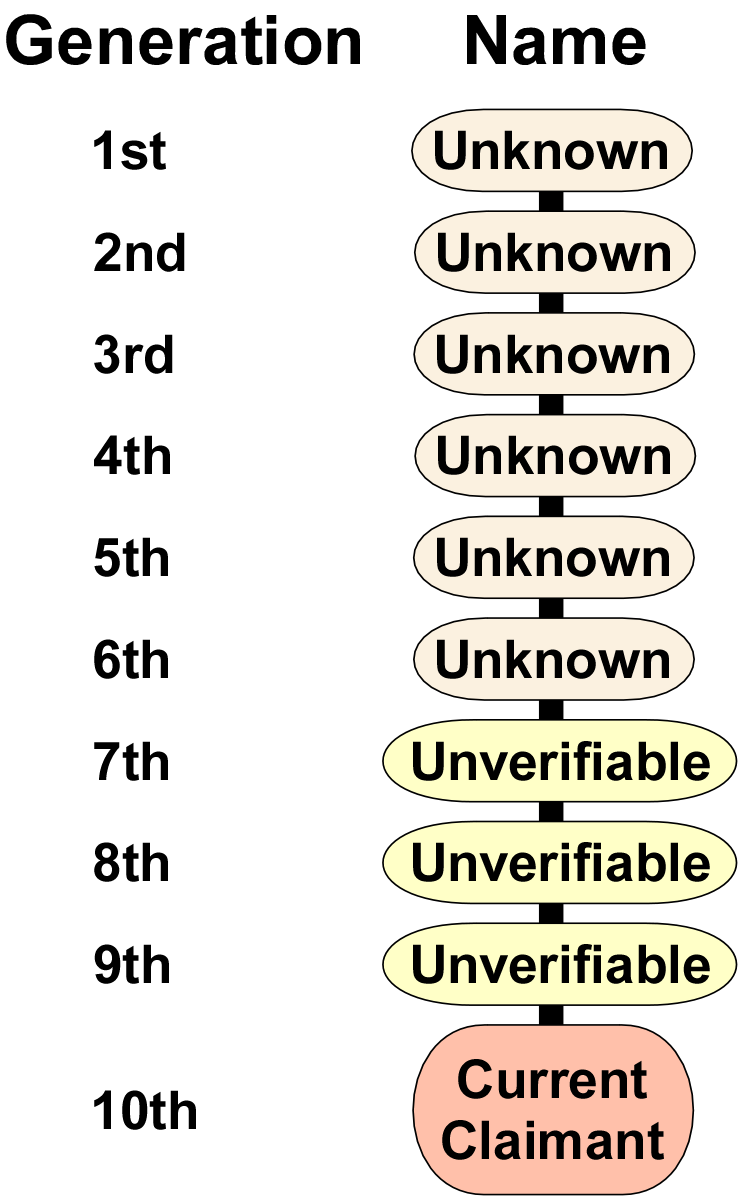
The same reasoning applies to claims of generational authority in martial arts, traditional medicine, and spiritual systems. A claim of being a tenth-, fifteenth-, or twentieth-generation successor necessarily implies that the preceding generations can be identified through credible documentation, institutional recognition, or broad peer acknowledgment. When those preceding generations cannot be established, the numerical designation itself becomes difficult to distinguish from marketing or self-promotion.
Ironically, some critics suggest that Asian cultures traditionally failed to preserve lineage documentation. The historical record demonstrates quite the opposite. The descendants of Confucius possess one of the longest continuously documented family genealogies in human history. The lineage traditionally attributed to Genghis Khan has been studied extensively through both historical scholarship and modern genetic research. Likewise, Korea’s great clan registries, including the Jeonju Yi, Gimhae Kim, Miryang Park, and Gyeongju Kim lineages, preserve family records extending back centuries. Throughout much of East Asia, genealogy was not regarded as optional; it served as a cornerstone of identity, inheritance, governance, and historical continuity. This distinction illustrates why documentation remains essential. Inner realization may require no external validation, but claims regarding historical succession, inherited authority, or generational lineage necessarily invite objective scrutiny. Extraordinary claims about historical continuity should therefore be supported by evidence commensurate with the significance of the claim.
The Problem of Selective Narratives
In many cases, leaders or organizations present a carefully curated history that emphasizes noble origins, spiritual insight, or ancient wisdom while omitting less flattering details, such as including legal actions, financial scandals, or organizational misconduct. Such omissions create an incomplete picture, raising questions about whether the narrative being offered is educational or deliberately deceptive. If an individual or group wishes to highlight ancient knowledge or moral teachings, omission of significant and verifiable historical events constitutes deception by omission. Transparency requires acknowledging both contributions and failures. Selective storytelling, particularly in industries that depend on consumer trust, undermines credibility and places the burden of due diligence on the public.
The Question of Enlightenment and the Logic of Lineage Claims
A further complication in evaluating claims of authority in spiritual or medical traditions lies in the near impossibility of objectively verifying “enlightenment.” Across philosophical and religious systems, enlightenment is often described as the culmination of inner transformation, a state beyond ego, marked by wisdom, compassion, or union with the ultimate nature of reality. Yet, despite centuries of discourse, no universally accepted standard exists for identifying or measuring such a state. There is no diploma for enlightenment, no certifying body that can issue recognition, and no empirical test that can confirm its attainment. Historically, recognition was often conferred by respected elders, monastic councils, or scholarly lineages, but even these determinations were subject to disagreement and human fallibility (Olson, 2008)
In the absence of objective criteria, claims of enlightenment frequently rely on nothing more than self-declaration or the uncritical acceptance of followers.
This ambiguity invites a deeper question: Who decides when someone is enlightened? If there is no shared standard, virtually anyone can declare themselves enlightened, just as anyone can claim descent from a royal bloodline or a centuries-old medical tradition. Without documentation, institutional recognition, or consensus within the relevant tradition, such proclamations are indistinguishable from fabrication. The same principle applies to lineage. If an individual claims to be the “next-generation successor” of a specific tradition, it is reasonable to expect that they can identify and provide credible evidence for who the preceding lineage holders were. If that information is unknown, missing, or unverifiable, the lineage ceases to function as historical fact and instead becomes an empty narrative.
The absurdity of unverifiable claims is most apparent when one considers how easily they can be fabricated. In the absence of evidence, nothing would prevent someone from declaring themselves the “twentieth-generation grand master of the Order of Come-Worship-Me.” The title would be meaningless, yet it might still carry persuasive power for those unaware of its fictitious nature. This illustrates why transparency, documentation, and peer recognition are indispensable for evaluating the legitimacy of lineage claims. Without them, assertions of enlightenment or generational authority risk being little more than sophisticated marketing or worse, deliberate deception (Lopez, 2008).
Why Is This Important?
Lineage is meaningful only insofar as it is verifiable. A truly credible heritage should be supported by documentary evidence, independent recognition, and transparency about both strengths and flaws. The danger of accepting lineage claims at face value is that the public is asked to believe in ancient wisdom while the historical record may tell a very different story. In the age of easily accessible court documents, archival materials, and digital records, unsubstantiated claims and omitted histories must be scrutinized. Otherwise, lineage becomes not a testament to history, but a tool of mythmaking.
References:
Ben-Ari, E., Friday, K. F., & Humitake, S. (1999). Legacies of the Sword: the Kashima-Shinryu and Samurai Martial Culture. Pacific Affairs, 72(1), 116. https://doi.org/10.2307/2672362
Henning, S. E. (1994). Academia encounters the Chinese martial arts. China Review International, 1(2), 321–336. https://www.jstor.org/stable/23732172
Kalton, M. C. (1989). A Heritage of Kings: One Man’s Monarchy in the Confucian World. By JaHyun Kim Haboush. Studies in Oriental Culture 21. New York: Columbia University Press, 1988. xiv, 327 pp. $35.00. The Journal of Asian Studies, 48(4), 886–887. https://doi.org/10.2307/2058186
Lopez, D. S. (2008). Buddhism and Science: A Guide for the Perplexed. University of Chicago Press.
Olson, C. (2008). Introducing Buddhism – By Charles S. Prebish and Damien Keown. Teaching Theology & Religion. https://doi.org/10.1111/J.1467-9647.2008.00447.X
Pranin, S. (1991). Aikido Masters: Prewar Students of Morihei Ueshiba. Aiki News.
Shahar, M. (2008). The Shaolin Monastery: History, Religion, and the Chinese Martial Arts. University of Hawai‘i Press. https://archive.org/details/shaolinmonastery0000shah/page/n9/mode/2up
Wile, D. (1996). Lost T’ai-chi Classics from the Late Ch’ing Dynasty. State University of New York Press. https://doi.org/10.2307/jj.18255579
Writer, T. (n.d.). The Masters – Tai Chi Club. https://www.taichiclub.com/tai-chi-history/the-masters/