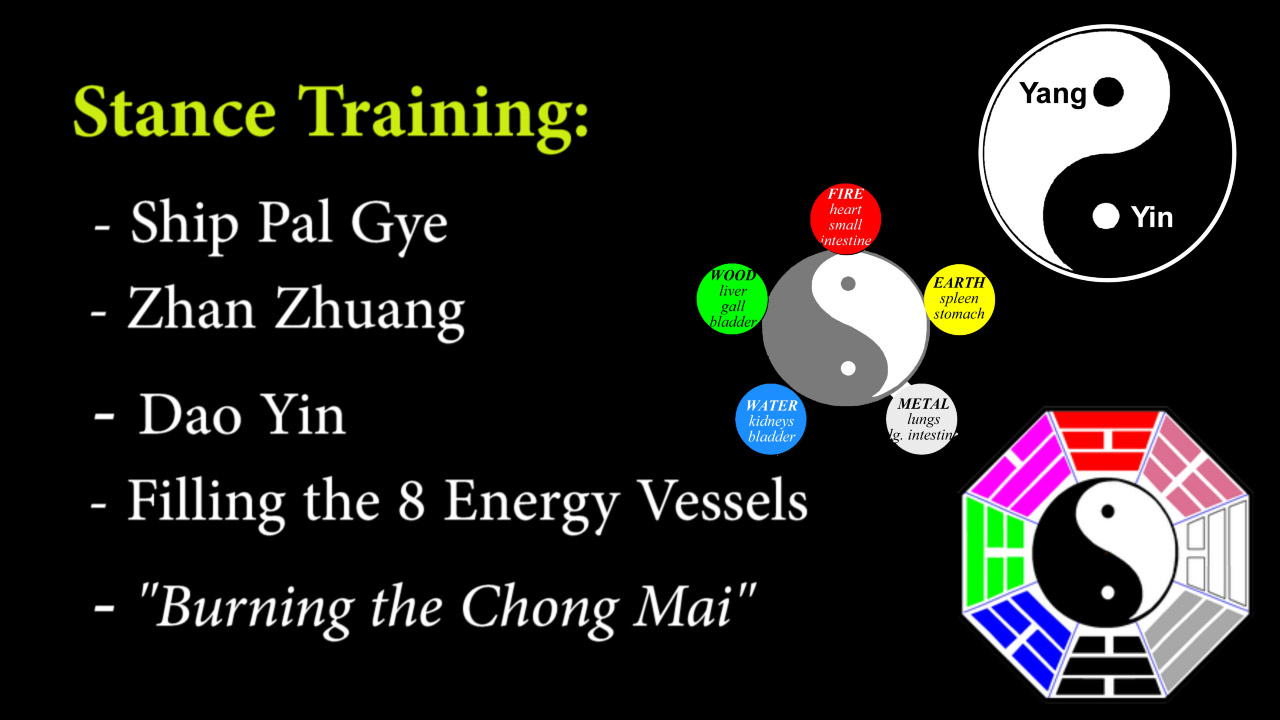

Stance training is a foundational practice in traditional martial arts and mind-body cultivation, developing physical strength, structural alignment, balance, endurance, concentration, and nervous system resilience. Drawing upon Ship Pal Gye (18 Qi Exercises), Zhan Zhuang (standing Pole Qigong), and Dao Yin (Guiding Qi while stretching) , these exercises integrate intentional posture, controlled breathing, and focused awareness. By progressively increasing the duration and intensity of standing postures, we introduce manageable physical and psychological challenges that encourage adaptation. Rather than reacting to muscular fatigue and discomfort with unnecessary tension, we learn to regulate our breathing, maintain composure, and remain mentally focused. Over time, this deliberate conditioning can improve postural stability, muscular endurance, body awareness, and our ability to manage stress without becoming overwhelmed.
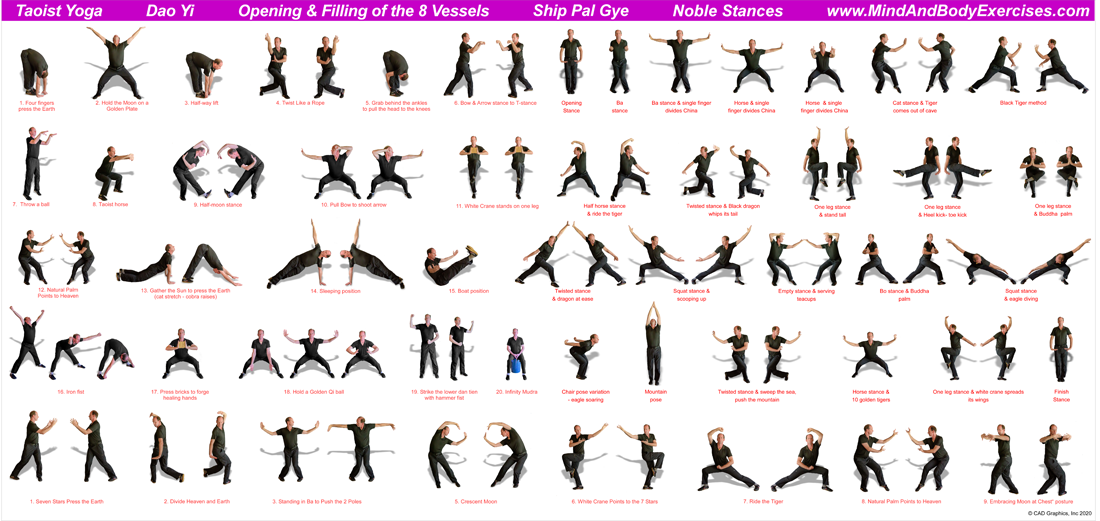
This video also explores traditional Chinese energetic cultivation through the Eight Extraordinary Vessels, including a practice is referred to as “Burning the Chong Mai,” or expansion of the Thrusting Vessel. Within traditional Chinese medicine, these practices are associated with cultivating and regulating Qi throughout the body. From a physiological perspective, progressive stance training challenges the neuromuscular system while providing opportunities to practice autonomic regulation, attentional control, and relaxation under physical demand. The objective is not simply to stand still or tolerate discomfort, but to gradually strengthen our capacity to remain physically stable, mentally focused, and emotionally composed. Through consistent practice, we cultivate greater self-regulation, resilience, and confidence in our ability to respond effectively to life’s challenges


