
In the realm of holistic wellness, we often focus on diet, exercise, breath, and mindset, but how often do we consider our ears and our sense of balance as essential tools for mental clarity and cognitive performance?
Dr. Andrew Huberman, a Stanford neuroscientist and host of the Huberman Lab Podcast, explores this overlooked territory in his episode “How Hearing & Balance Enhance Focus & Learning.” As someone deeply invested in integrating modern science with ancient wellness practices, I found this episode not only affirming but eye-opening. Let me break down some of the most practical insights.
The Auditory System: A Biological Prism for the Mind
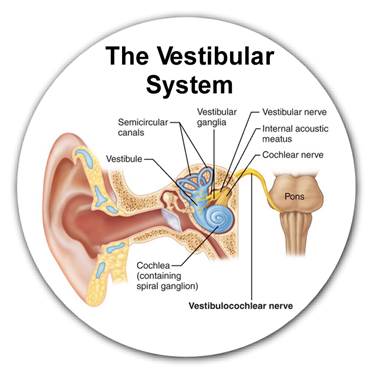
Huberman explains the auditory system in great detail: how the outer ear captures sound waves, how the eardrum passes those vibrations through three tiny bones (malleus, incus, stapes), and how the cochlea, which is the fluid-filled spiral in the inner ear, transforms those vibrations into neural signals.
What stood out was the prism-like function of the cochlea. Much like a prism that separates light into colors, the cochlea separates sound into different frequencies. This allows the brain to decipher complex soundscapes like music, voices, and environmental cues. For those of us practicing mindfulness, this gives new meaning to the phrase “intentional listening.”
Binaural Beats: Sound as a Mental Tuning Fork
Huberman dives into the use of binaural beats, where two slightly different frequencies are played in each ear. The brain interprets the difference as a single beat, which can influence brainwave activity. He shares that binaural beats can help promote states such as focus (beta waves), calm (alpha), and deep meditation (theta). While not a cure-all, they are a valuable tool, especially when integrated with practices like breathwork, yoga, or qigong.
- Delta and Theta: Sleep and deep meditation
- Alpha: Calm focus
- Beta: Alertness
- Gamma: Heightened cognition and insight
White Noise: A Double-Edged Sword
Surprisingly, Huberman discusses how low-level white noise can actually enhance learning and motivation. It does this by increasing dopamine release, which is our brain’s reward chemical. This may explain why many people, me included, prefer ambient noise while working or studying.
However, there’s a cautionary note: prolonged white noise exposure in infants may hinder healthy auditory development. White noise lacks the variation necessary to develop tonotopic maps, which are the brain’s way of organizing sound frequencies. In short, while useful for adults, white noise can be detrimental if misused during critical developmental windows in children.
The Cocktail Party Effect: Cognitive Load in Action
Another fascinating point is the cocktail party effect, where the brain’s ability to focus on a single voice (selective awareness) in a noisy room. Huberman emphasizes how much effort this takes. It’s a reminder that modern life, full of overlapping stimuli, can tax our nervous system in subtle but real ways. As holistic practitioners, this reinforces the importance of quiet time, sound baths, and low-stimulation environments to support mental clarity.
Balance and the Vestibular System: Movement as Medicine
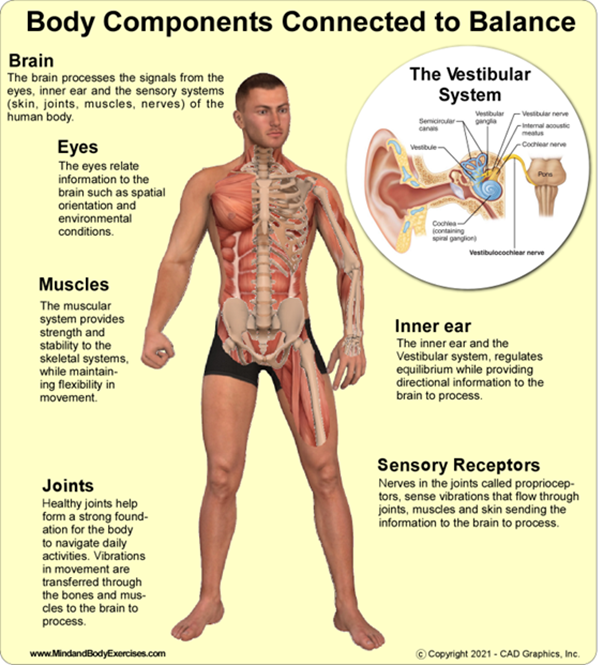
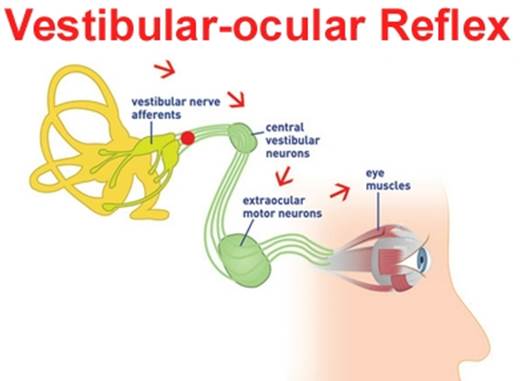
Perhaps the most profound yet underappreciated insight from Dr. Huberman’s episode is the role of the vestibular system. This is the sensory network within the inner ear that helps detect head orientation and movement. Though commonly associated with balance, this system is directly linked to emotional regulation, attention, and brain flexibility.
When we engage in movements that challenge balance, like skateboarding, walking on uneven terrain, or even standing on one leg with eyes closed, we activate the semicircular canals and otolith organs that send signals to the brainstem about head motion and gravitational shifts. These inputs, in turn, stimulate the release of dopamine and serotonin, the neurochemicals responsible for motivation, well-being, and neuroplasticity (Huberman, 2025).
Why This Matters:
- Dopamine fuels focus, drive, and memory encoding.
- Serotonin calms the nervous system and stabilizes mood.
Vestibular engagement stimulates these systems through subtle head movements and changes in posture. Simple activities such as:
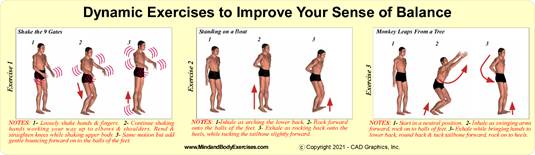
- Balancing with eyes closed,
- Turning the head during walking,
- Forward-accelerating sports like biking or skating,
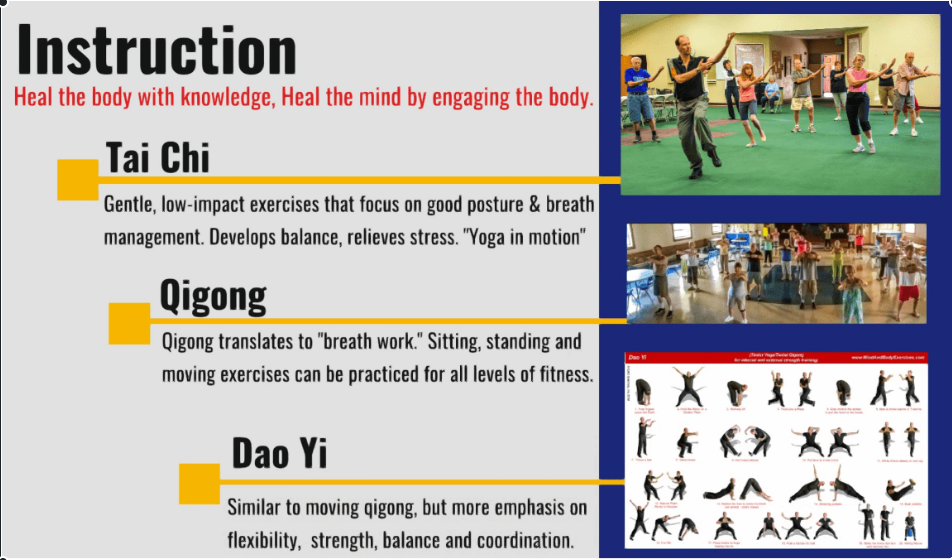
- Practicing head tilts during yoga, qigong, tai chi and other martial arts
These activities can elevate mood and sharpen learning by improving sensory-motor integration and activating brain regions like the locus coeruleus and ventral tegmental area (VTA), critical dopamine centers (Hitier et al., 2014).
From a holistic point of view, these effects mirror what Eastern disciplines have long known that physical movement, balance, and breath are gateways to emotional equilibrium and mental clarity. By training the vestibular system regularly, we condition the brain to stay agile, focused, and resilient under pressure.
Holistic Takeaways: Harmonizing the Senses
Dr. Huberman’s breakdown of the hearing and balance systems mirrors much of what traditional holistic systems have long emphasized: sensitivity, movement, and sensory integration are keys to mental clarity. As a practitioner and educator of mind-body methods, I see incredible value in integrating these insights:
- Use binaural beats or ambient nature sounds during meditation or study sessions.
- Encourage balance training as part of daily physical routines with eyes-closed stance work, walking meditation (Tai Chi, Qigong, BaguaZhang), or even play-based movement.
- Be mindful of auditory overload in modern environments. Sometimes, the most powerful medicine is silence.
Final Thoughts
In holistic health, we strive for integration of not just the body, mind, and spirit, but also of physiological systems that we often take for granted. Dr. Huberman’s insights into hearing and balance affirm that our senses are not passive. They are gateways to enhanced learning, mood regulation, and cognitive vitality.
By engaging in the auditory and vestibular systems intentionally, we can improve not just our ability to hear or stand upright but to learn, grow, and live with greater awareness.
Reference:
Huberman, A. (2025, May 8). How hearing & balance enhance focus & learning. YouTube. https://www.youtube.com/watch?v=fSBgDq2ttCw
Hitier, M., Besnard, S., & Smith, P. F. (2014). Vestibular pathways involved in cognition. Frontiers in Integrative Neuroscience, 8, 59. https://doi.org/10.3389/fnint.2014.00059
Lopez, C., Blanke, O., & Mast, F. W. (2012). The human vestibular cortex revealed by coordinate-based meta-analysis. Neuroscience, 212, 159–179. https://doi.org/10.1016/j.neuroscience.2012.03.028
Smith, P. F., & Zheng, Y. (2013). From ear to uncertainty: vestibular contributions to cognitive function. Frontiers in Integrative Neuroscience, 7. https://doi.org/10.3389/fnint.2013.00084


 United Martial Arts Association
… liked this!
LikeLike